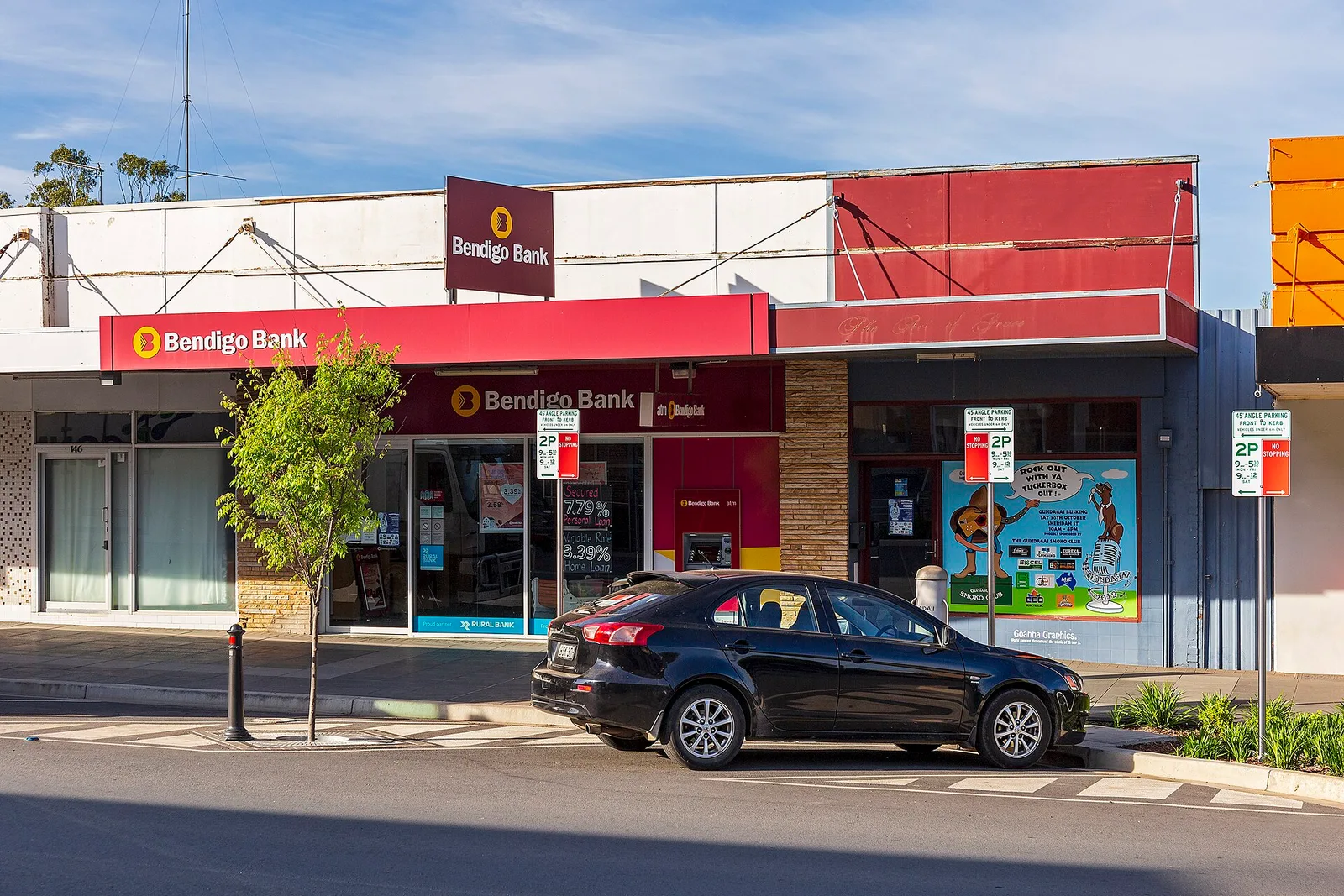
Bendigo Bank was ordered to pay A$8m by Australia's Federal Court on Tuesday 24 November over a 2023 hack of its Alliance Bank customers. Court papers show 1,598 Alliance Bank accounts were protected by the password "123456" when the attack began. The penalty is about 16 times the value of the hacker's transactions, and a security test had flagged the weakness in 2020.
The Bendigo Bank penalty in numbers
- A$8m the penalty the Federal Court ordered on Tuesday 24 November 2026
- 1,598 Alliance Bank accounts protected by the password "123456" when the attack began
- 16.3 times the penalty as a multiple of the hacker's A$490,330 of transactions
Why Bendigo Bank was ordered to pay A$8m
The Federal Court found that Bendigo Bank broke Australia's banking accountability law by leaving the logins of its Alliance Bank customers poorly protected. Bendigo and Adelaide Bank Limited (ASX: BEN), known as Bendigo Bank, had admitted the breach and agreed the sum in August.
Justice O'Bryan approved the penalty on Tuesday, said the Australian Prudential Regulation Authority (APRA), the country's banking regulator.
The law that applied was the Banking Executive Accountability Regime, or BEAR. It required a bank to run its business with due skill, care and diligence, and to make a named senior executive accountable for every part of it.
Bendigo Bank failed on both counts, the court declared.
Alliance Bank was a network of five partners that operated under Bendigo's banking licence. It had about 38,000 of the group's 1.88 million customers in July 2020.
Bendigo shares closed about 1.5% higher at A$10.49 in Sydney on Tuesday, market data show.
The ASX 200 gained 1.8%, its first daily rise in nearly two weeks after a sell-off in miners, the ABC reported.

How the hacker got into Alliance Bank accounts
The hacker got into about 257 Alliance Bank accounts between 3 and 7 March 2023 by running automated login attempts with simple passwords.
The target was Service One, one of the five Alliance Bank partners, court papers agreed by APRA and the bank show. At least 211 of its accounts opened with "123456" in the first three days, and at least 18 more with "12345678" on the morning of 7 March.
The intruder changed the password on at least 218 accounts to "BANNERX6", locking the real owners out.
The bank noticed nothing for about four days. A customer's report of fraudulent transactions alerted it at about 11:12am on 7 March.
By then the hacker had made 286 transactions across 87 accounts, worth about A$490,000.
How the A$8m penalty compares with the money taken
The A$8m penalty is about 16 times the value of everything the hacker moved, and about 57 times the money the bank could not get back.
| Item | Amount |
|---|---|
| Transfers between accounts (66) | A$217,190 |
| Payments out of accounts (154) | A$273,140 |
| Total value of the hacker's transactions | A$490,330 |
| Payments stopped by the bank's fraud controls (51) | A$133,030 |
| Payments that went through and were not recovered (103) | A$140,110 |
| Penalty ordered by the court | A$8,000,000 |
No customer ended up out of pocket. Bendigo repaid the A$140,110 around 11 March 2023, within four days of learning of the attack.
The bank also paid about A$610,000 to CyberCX to review the attack. Add the refunds and the penalty, and the bill for a A$490,000 break-in comes to about A$8.75m.
Why Alliance Bank logins were easy to break
Alliance Bank logins were weak in four ways, and a security tester had spelled out the dangers in June 2020, almost three years before the attack.
What was wrong with Alliance Bank logins
- At three partners, passwords needed only six characters with at least one number, so "123456" was allowed
- The login page's error messages revealed which customer numbers were real
- Mobile banking had no CAPTCHA, the "prove you are human" test that slows automated guessing
- One-time codes sent by text message were optional
The other two partners required only four characters. At one of them, default passwords made "1234" the most common choice.
CQR Consulting, now known as CyberCX, ran a penetration test, a break-in attempt the client pays for, on the Service One system. It reported around 2 June 2020 and rated the password and customer-number findings a "moderate" risk.
The findings were logged in a tracking tool but never escalated to management, and the flaws stayed until March 2023.
A warning shot came around 27 October 2022, when an attacker tried automated logins at two Alliance Bank partners. No account was opened, but thousands of customers were locked out.
Bendigo then added a CAPTCHA to online banking on computers but, by mistake, not to mobile banking. The March 2023 attack showed up as a surge in mobile banking traffic.
What the Bendigo Bank case means for bank customers
The Bendigo Bank case shows that a bank's own password rules can be the weak point, and the court papers point to two habits that blunt this kind of attack.
The first is length. The tester recommended at least eight characters, preferably 12, mixing upper and lower case, a number and a symbol.
The second is one-time codes sent to a phone. The hacker added new payees in accounts where those codes were switched off, and Bendigo later made them compulsory for certain transactions.
Customers elsewhere are wary of technology too: a run of tech outages, one of them at JPMorgan Chase, pushed US emergency-preparedness spending about 400% above last year's level.
APRA said the bank has since fixed the problems. The Alliance Bank model was discontinued by June 2024, the agreed facts say. They add that Bendigo did not act deliberately and accepts responsibility.
"Today's orders are a reminder that banks, insurers and superannuation trustees must take their cyber security obligations very seriously," APRA deputy chair Therese McCarthy Hockey said. Superannuation is Australia's pension system.
She added that the risk of cyber attacks is rising, "fuelled by developments in frontier AI". Defending against them is big business: cyber security firm CrowdStrike agreed to buy Zscaler for $43.9bn on Monday 23 November.
APRA named no other institution on Tuesday 24 November, but said it expects every firm it regulates to test its cyber defences regularly.
Why was Bendigo Bank fined A$8m?
Bendigo and Adelaide Bank was ordered to pay A$8m by the Federal Court on 24 November 2026 after admitting it breached the Banking Executive Accountability Regime. Weak logins at Alliance Bank let a hacker into about 257 accounts in March 2023.
Did Bendigo Bank customers lose money in the 2023 hack?
No customer was left out of pocket. Bendigo Bank repaid the A$140,110 it could not recover around 11 March 2023.
What passwords did the Bendigo Bank hacker use?
The hacker opened at least 211 Alliance Bank accounts with the password "123456" between 3 and 5 March 2023, court papers show.
Sources
- APRA: APRA secures $8 million penalty against Bendigo and Adelaide Bank over cyber incident
- APRA: Bendigo and Adelaide Bank admits to breaching its BEAR obligations in relation to cyber incident
- Federal Court filing, published by APRA: Statement of Agreed Facts and Admissions, APRA v Bendigo and Adelaide Bank Limited
- ABC News: Wall St's one-day rally bigger than ASX 200 as Nvidia reinstates Jensen Huang, as it happened