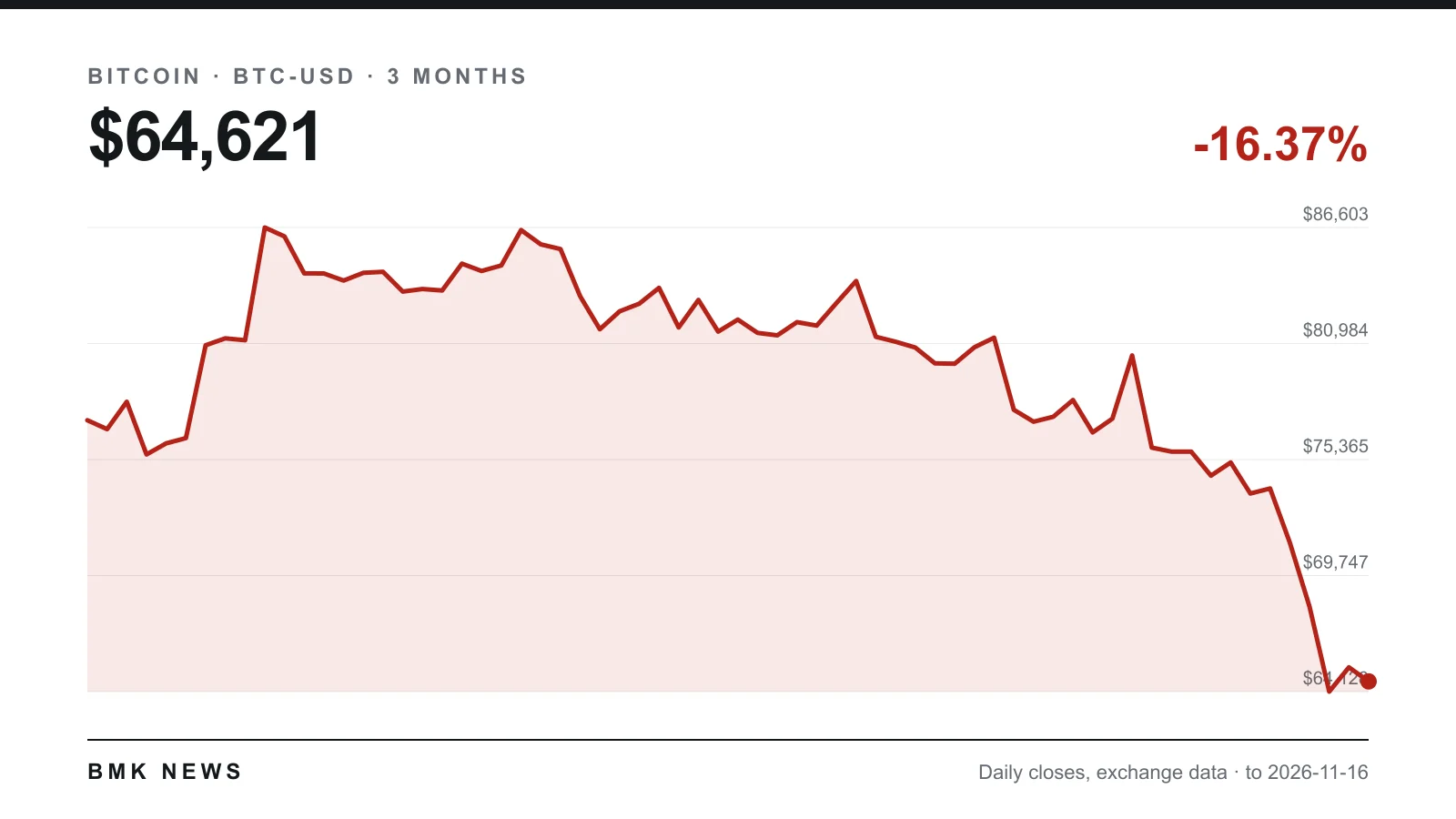
Bitcoin fell to about $62,000 over the weekend as roughly $2bn of leveraged crypto bets were forcibly closed, stretching its losing run to six straight weeks. It clawed back to about $65,000 on Monday 16 November, but the $60,000 to $62,000 zone is now the line that matters, both for holders and for the listed companies that keep bitcoin on their balance sheets.
Bitcoin's rough weekend in three numbers
- $62,100 Sunday low, according to CoinDesk
- $2bn crypto liquidations in 24 hours, mostly bets on rising prices
- $1.91bn taken out of US spot bitcoin ETFs in seven straight sessions
A forced-selling cascade did most of the damage
The real damage started when bitcoin broke below its 200-day moving average during the week, CNBC reported. That long-run trend line sits at about $73,000.
Traders who had borrowed to bet on higher prices then hit their limits. Exchanges closed those positions automatically, selling into a falling market, and each wave of forced sales set off the next.
CoinDesk counted about $2bn of crypto liquidations over 24 hours at the weekend, mostly long positions, or bets that prices would rise. Saturday 14 November alone accounted for more than $1.9bn. Then the selling ran out of fuel: over the next 24 hours, liquidations fell 91% to $176m.
Data providers differ on the low. CoinDesk put it at $62,100 on Sunday, the lowest level since 14 July. CNBC, citing Coin Metrics, said bitcoin touched about $62,000 late on Saturday, its lowest level since August.
Bitcoin traded at about $64,300 on Monday morning in New York, according to CoinDesk, and was back at the $65,000 level by the evening, CNBC reported.
Six weeks of losses and money leaving the ETFs
Bitcoin has now fallen for six weeks in a row, its longest run of weekly losses since the end of February, according to CoinDesk data. CNBC traced the decline to late October and worries about AI valuations and a tech sell-off, made worse by a $6.3bn hack at the Binance exchange and weaker institutional demand for bitcoin funds.
The fund flows show it. US spot bitcoin exchange-traded funds, which let investors hold bitcoin in an ordinary brokerage account, lost $185m on Friday 13 November, according to Farside Investors data cited by CoinDesk. It was the seventh straight session of outflows, taking the total since 5 November to about $1.91bn.
On Friday the dollar index hit its highest level since April 2025 after hotter-than-expected US inflation figures raised expectations of further tightening by the Federal Reserve, CNBC reported. That pushed the dollar and Treasury yields higher and put pressure on both bitcoin and gold.
CoinMarketCap's Fear and Greed Index, a gauge of crypto sentiment, stood at 12 on Monday, in its "extreme fear" band, down from 19 on Friday.
The levels analysts are watching
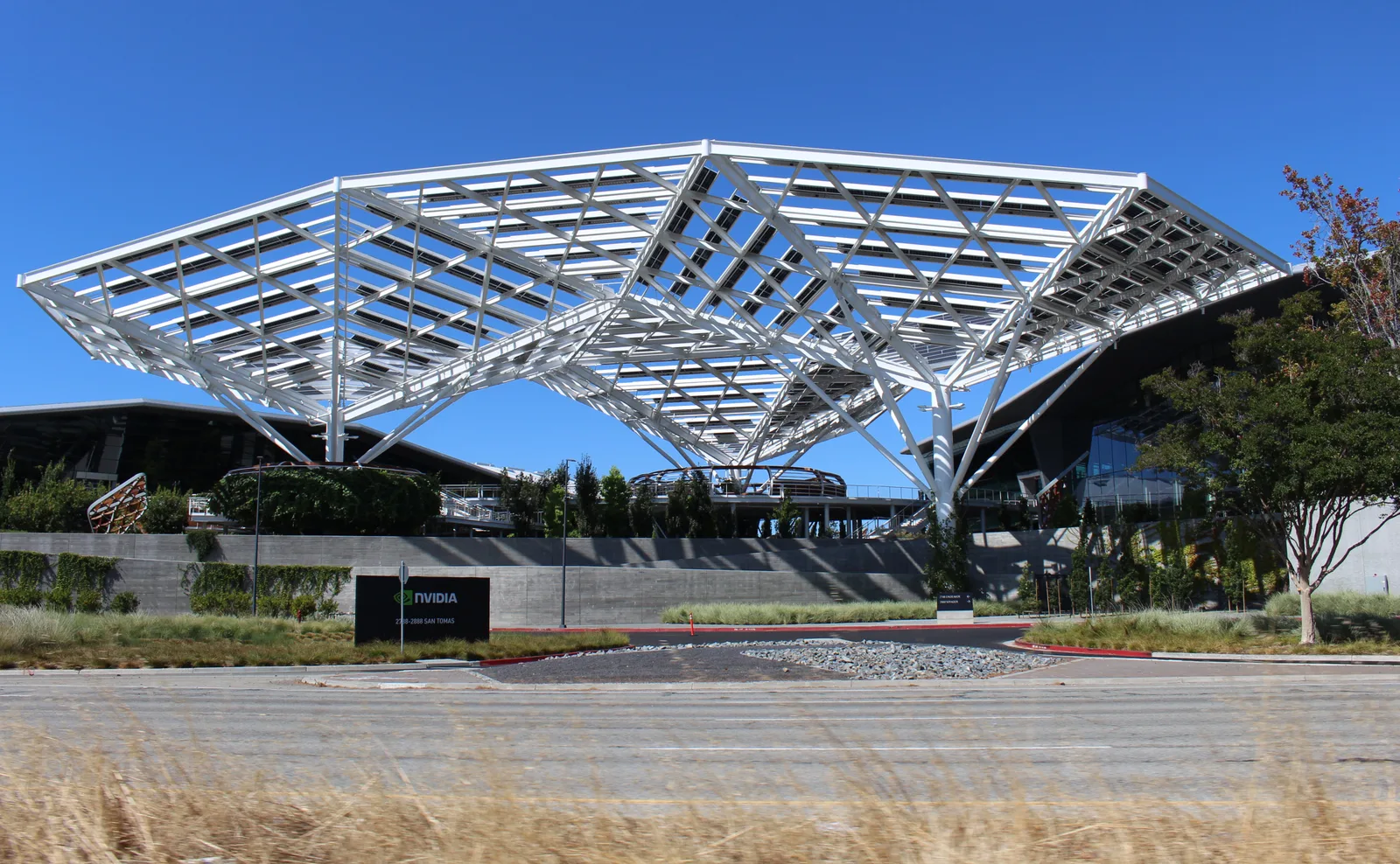
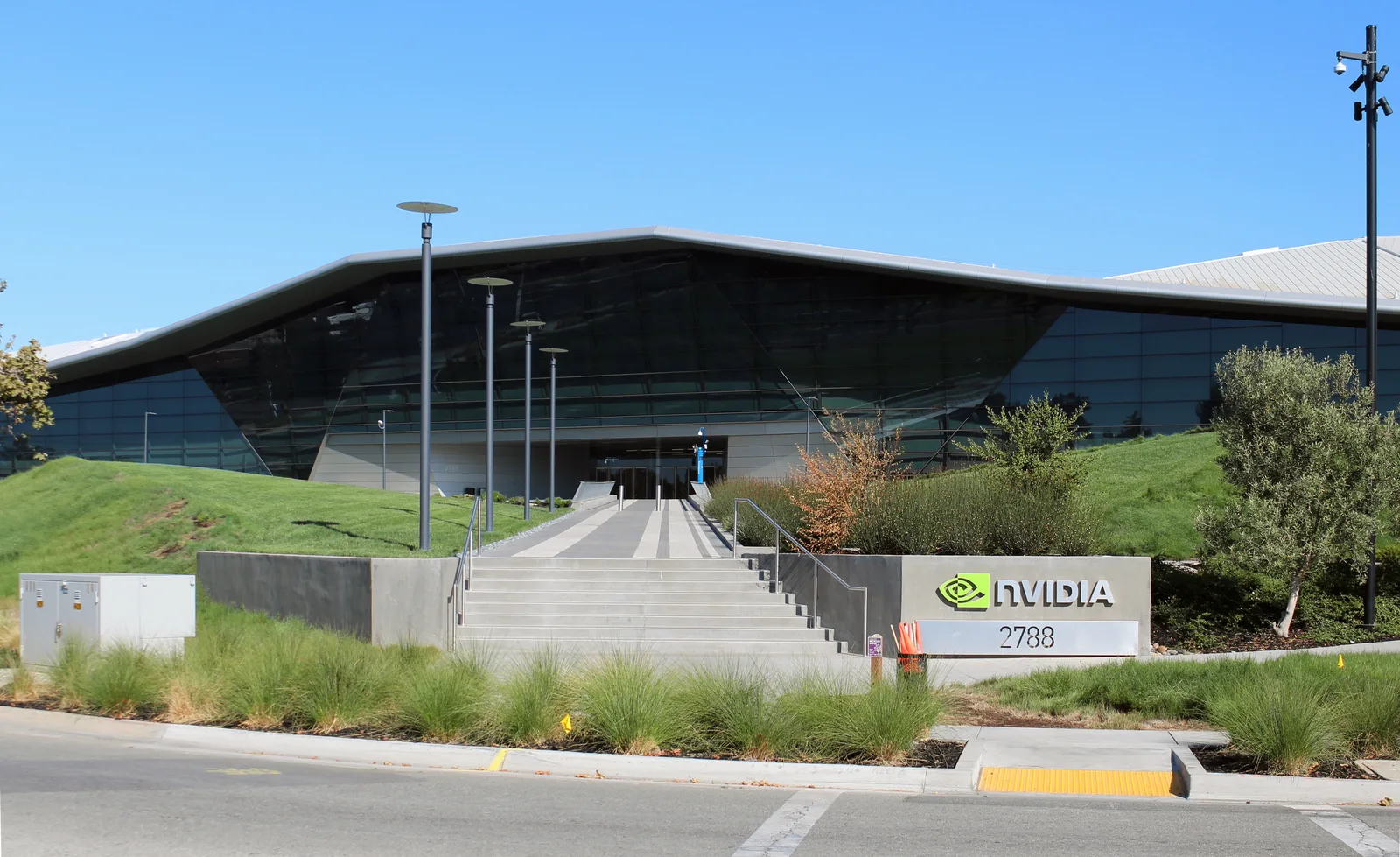
Nicolai Sondergaard, a research analyst at the blockchain data firm Nansen, told CNBC that $60,000 to $62,000 is bitcoin's next critical test. "A break below $60,000 is possible if Nvidia's results add to the tech selling," he said. The chipmaker reports on Tuesday 17 November, according to CoinDesk.
Nvidia: share price, chart and news
On the way up, his marker is the old trend line. He said a close back above $73,000 would be the first sign that the selling is over, and that the triggers for a recovery are mostly macro: a softer dollar and falling real yields, meaning interest rates after inflation.
| Level | Why it matters | Source |
|---|---|---|
| $73,000 | 200-day average; a close above it would signal the selling is over | Nansen |
| $60,000 to $62,000 | The next critical test | Nansen |
| $50,000 to $58,000 | Most-traded put strikes for the 27 November options expiry | CoinDesk |
Derivatives lean the same way. Funding rates were negative for most coins on Binance, OKX and Bybit, CoinDesk reported, meaning traders betting on falls are paying those betting on rises. Put options, which pay out if prices drop, still cost more than calls.
Edwin Mata, chief executive of the tokenisation platform Brickken, told CNBC that clearing out leveraged longs can slow the selling, but a lasting rebound needs spot buyers to keep showing up once the forced selling has passed.
What it means for holders and bitcoin treasury shares
For people who own bitcoin outright, much of the weekend's fall came from borrowed money being forced out rather than holders choosing to sell. If a recovery comes, Sondergaard said, bitcoin would enter it carrying less leverage than in October.
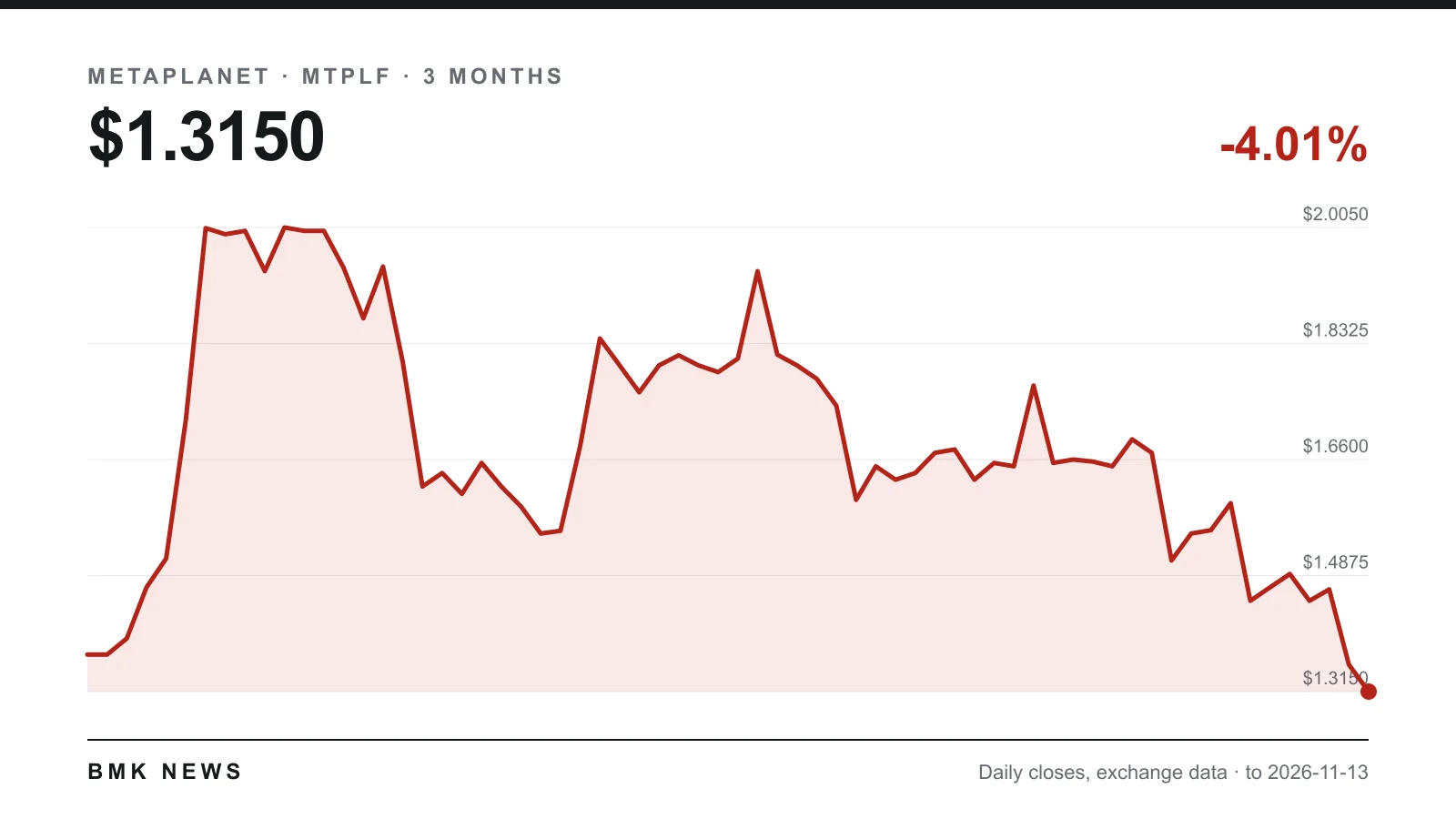
For companies that hold bitcoin as their main treasury asset, every swing lands in the accounts. Tokyo-listed Metaplanet said in a filing on Friday 13 November that it booked a ¥116.4bn loss on the valuation of its bitcoin in the first quarter and a ¥67.9bn loss in the second, followed by a ¥176.3bn gain in the third quarter. Over the nine months to 30 September that left a net valuation loss of ¥8.04bn. The company also reported a ¥19.2bn loss on the sale of bitcoin, which it said was mainly due to a subsidiary selling 10,000 BTC.
Metaplanet: share price, chart and news
In London, The Smarter Web Company calls itself the UK's leading bitcoin treasury company, "strategically building a Bitcoin-backed balance sheet", so its shareholders carry the same exposure.
The Smarter Web Company: share price, chart and news
Questions and answers
Why did bitcoin fall to $62,000?
It dropped below its 200-day moving average near $73,000, setting off forced selling of leveraged bets. About $2bn of crypto positions were liquidated at the weekend.
What price levels are analysts watching for bitcoin?
Nansen analyst Nicolai Sondergaard told CNBC that $60,000 to $62,000 is the next critical test. He said a close back above $73,000 would be the first sign the selling is over.
What is a crypto liquidation?
When a trader who borrowed to bet on a price move runs out of margin, the exchange closes the position automatically. When many are closed at once, the forced selling can push prices lower still.
Sources
- CoinDesk: Bitcoin slips after rebounding from July 14 low that triggered $2 billion of liquidations
- CNBC: Bitcoin slides to $62,000 following liquidation cascade, then rebounds slightly
- Metaplanet: Notice Regarding the Recording of Non-Operating Income, Non-Operating Expenses (Including Loss on Valuation of Bitcoin), and Income Tax Adjustments
- The Smarter Web Company: Company website