K92 Mining ended the third quarter with a record $355.4m of net cash and its second-best quarter of output. Yet in results published on Monday 16 November, the Vancouver-based gold miner reported a $39.5m net loss for the three months to 30 September, because a $90.3m tax charge, on which no cash was paid, wiped out $52.5m of adjusted earnings.
K92 Mining, third quarter of 2026
- $355.4m net cash, a company record, up from $310.0m at the end of June
- $39.5m reported net loss, or 16 cents a share
- $52.5m adjusted net earnings, or 21 cents a share, before the tax charge
A tax bill on paper turned a profit into a loss
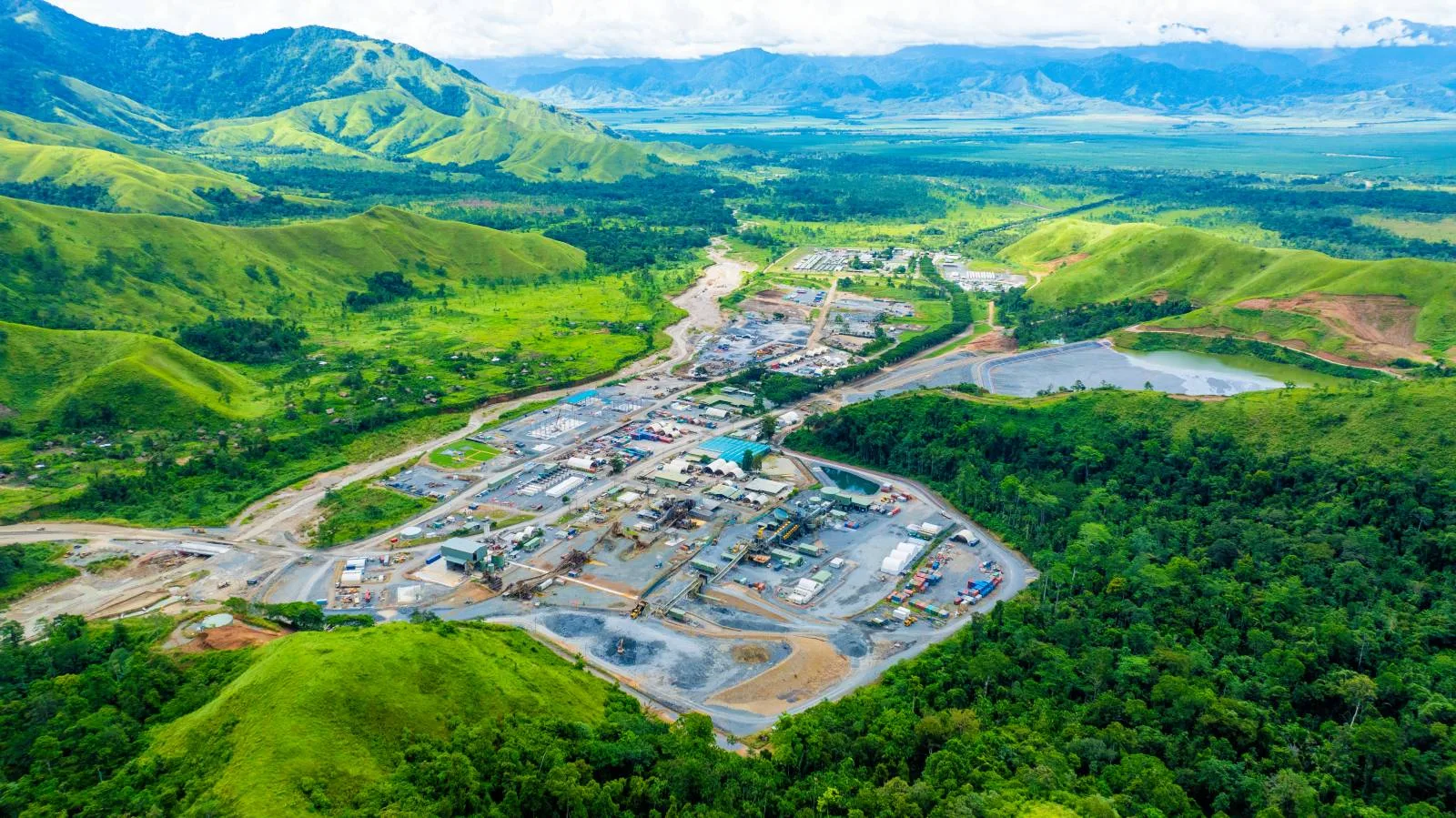
K92 owns the Kainantu gold mine in the Eastern Highlands of Papua New Guinea, which is run by a local operating subsidiary. In the third quarter that subsidiary paid its first dividend to the Canadian parent, and $14.8m of withholding tax, a levy deducted when profits are paid out of the country, went with it, according to K92's management's discussion and analysis (MD&A) for the quarter.
The bigger number followed. Management now intends to send the subsidiary's earnings to Canada on an ongoing basis, so accounting rules required K92 to book the withholding tax due on all the profits still held in Papua New Guinea. That is the $90.3m deferred tax expense. The tax itself is only paid when dividends are paid, the company said, so no cash left the business for it in the quarter.
The charge is so large because it covers profits built up over earlier years. From now on only changes in that liability will run through the income statement, the MD&A said.
How to read a headline loss against adjusted earnings
Reported profit follows the accounting rules. Adjusted earnings are the company's own measure, with items it treats as unusual stripped out. Three questions help.
First, what was taken out? K92 removed two items: the $90.3m tax charge and a $1.6m loss on derivatives. Its derivatives are gold put options, contracts that pay out if the gold price falls below a set level. Add both items back to the $39.5m loss and you arrive at roughly the $52.5m adjusted figure.
Second, will it ever cost cash? Yes. The liability becomes real tax as dividends flow to Canada. Non-cash today does not mean free for ever.
Third, does the cash back up the story? K92 generated $72.5m of operating cash flow before working capital changes and EBITDA (earnings before interest, tax, depreciation and amortisation) of $110.8m. Net cash rose by $45.4m in three months, mid-expansion.
The underlying quarter was softer than the second
In the second quarter K92 reported net income of $84.6m on revenue of $205.2m. In the third, revenue slipped to $176.5m because it sold less gold than it produced: 41,587 ounces against 46,063. Unsold gold in stock rose by 3,286 ounces to 12,511 ounces.
| Measure | Q3 2026 | Q2 2026 | Q3 2025 |
|---|---|---|---|
| Revenue | $176.5m | $205.2m | $177.5m |
| Gold produced | 46,063 oz | 42,931 oz | 42,244 oz |
| Gold sold | 41,587 oz | 46,682 oz | 45,006 oz |
| All-in sustaining cost per oz of gold | $1,441 | $1,376 | $1,254 |
Source: K92 Mining. Costs are net of copper and silver sales.
All-in sustaining cost, the full cost of producing an ounce including upkeep spending, has crept up. Over nine months it averaged $1,413 an ounce, above the $1,250 to $1,350 range in K92's 2026 outlook. The ore is also poorer: each tonne fed to the plant held 6.1 grams of gold, against 10.7 grams a year earlier.
K92 made up for it with volume, processing a record 250,042 tonnes, up 82% on a year earlier. The gold price helped: it realised $4,236 an ounce, net, against $3,361 a year earlier.
Stage 3 is almost paid for
The cash matters because K92 is midway through a big expansion. At 30 September, 98% of the Stage 3 growth capital was spent or committed. "Stage 3, our most transformational expansion to date, remains on budget," said chief executive David Medilek, who took the job on 1 October.
Where Stage 3 stands
- The new 1.2m tonne-a-year process plant, commissioned in December 2025, handled a record 92,937 tonnes in September
- The underground paste plant, which will fill mined-out space with paste made from filtered tailings, should start commissioning in late Q4 2026
- A ventilation upgrade finished commissioning in late October, lifting airflow from about 350 to 600 cubic metres a second
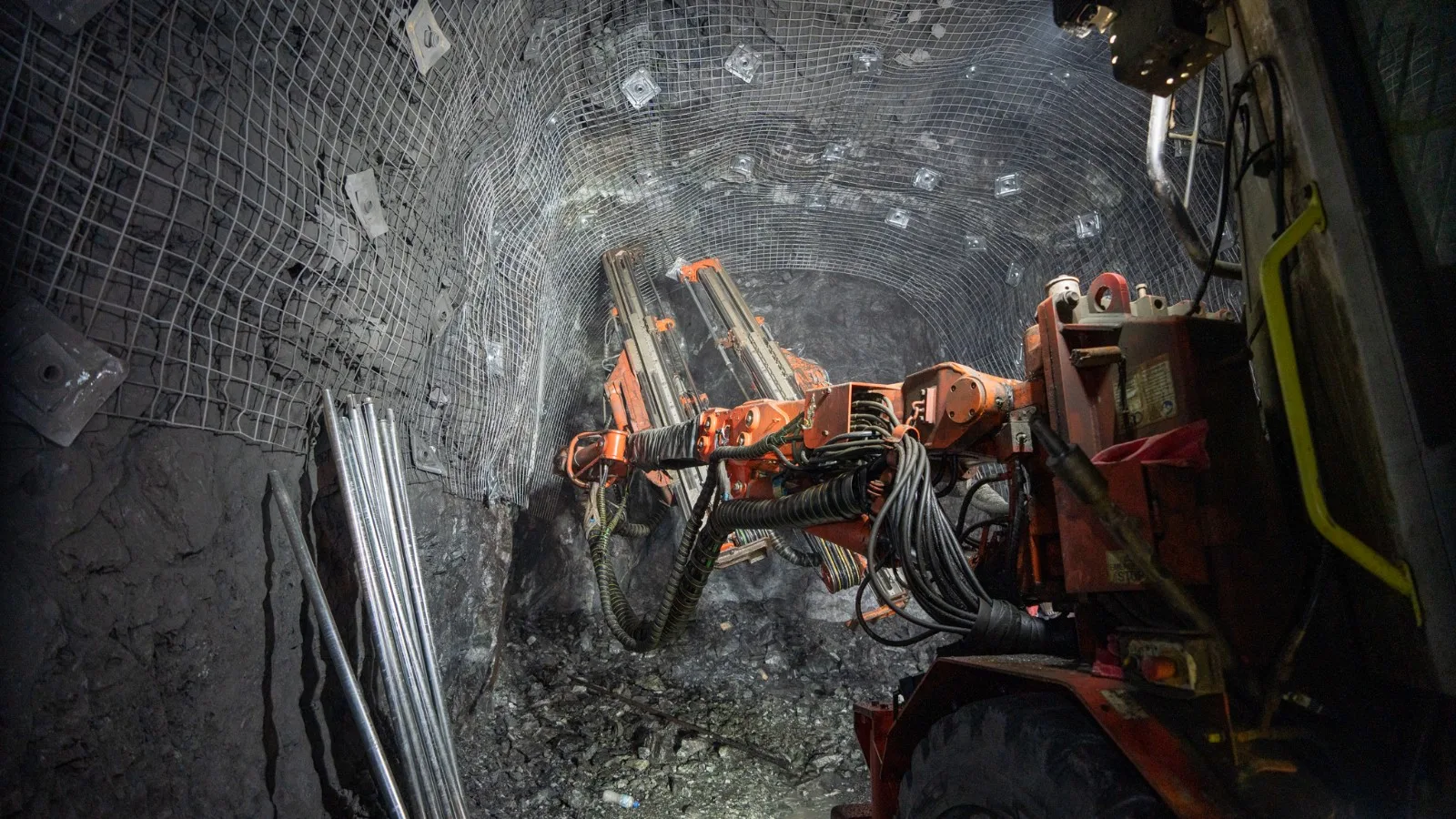
- New bridges and a river crossing let surface trucks carry 60 tonnes instead of 20; five new 60-tonne trucks are on site and three more are due in Q4
The fourth quarter has to be the strongest
K92 kept its 2026 production guidance of 190,000 to 225,000 ounces of gold equivalent, a measure that converts copper and silver output into gold ounces. After nine months it had produced 142,612 ounces, so it needs at least 47,388 in the final quarter to reach the bottom of the range.
"We expect Q4 to be our strongest production quarter of the year and reiterate our 2026 production guidance," Medilek said. The company pointed to a planned run of higher-grade ore and rising mining rates as new mining fronts ramp up.
A first resource estimate for the Arakompa deposit is targeted for late Q4 2026 or early Q1 2027.
Questions and answers
Why did K92 Mining report a loss in Q3 2026?
K92 booked a $90.3m deferred charge for Papua New Guinea withholding tax on profits it now expects to send to Canada. No cash was paid on it, but it turned the quarter into a $39.5m net loss.
What were K92 Mining's adjusted earnings in Q3 2026?
Adjusted net earnings were $52.5m, or 21 cents a share. The figure excludes the $90.3m tax charge and a $1.6m loss on derivatives.
What is K92 Mining's 2026 production guidance?
K92 expects 190,000 to 225,000 ounces of gold equivalent in 2026 and says the fourth quarter should be its strongest of the year.