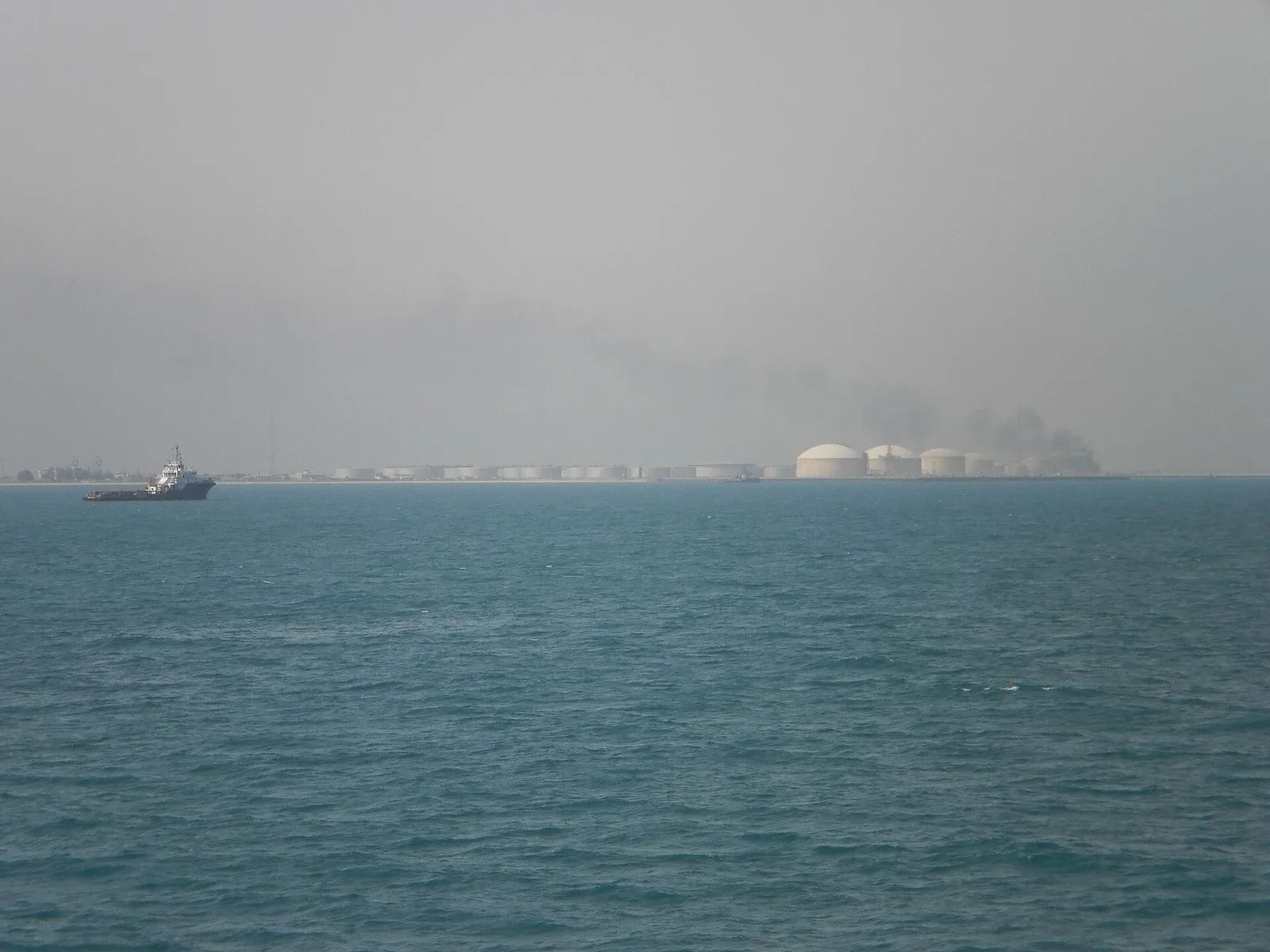
Brent crude jumped 3.5% to $94.61 a barrel on Wednesday 25 November, almost $6 above the $88.67 it fetched early on Tuesday, after Yemen's Houthis claimed a strike on Ras Tanura, Saudi Arabia's biggest refinery. The Saudi-led coalition says it shot down four drones, but NASA satellite images reviewed by Reuters showed thick black smoke around the refinery. Tuesday's price was near a three-month low, and OPEC+ meets on Sunday to set 2027 output policy.
Oil after the Ras Tanura claim
- $94.61 Brent settlement on Wednesday 25 November, up 3.5%
- $83.68 US crude (WTI) settlement on Wednesday, up 2%
- 550,000 barrels a day processed at Ras Tanura, about 16% of Saudi refining
What you need to know
- Brent rose 3.5% on Wednesday after the Houthis claimed a hit on Saudi Arabia's largest refinery.
- The Saudi-led coalition said it downed four drones and did not say the refinery was hit.
- OPEC+ ministers meet on Sunday 29 November to set output policy for 2027.
Why Brent jumped 3.5% on Wednesday
Brent jumped 3.5% on Wednesday 25 November because the Houthis said they had attacked Ras Tanura. The Yemeni group also claimed a strike on the King Abdullah Financial District in Riyadh.
Ras Tanura is no ordinary plant. The export terminal next door can load about 6.5 million barrels of crude a day, OilPrice.com reported.
Houthi military spokesman Yahya Saree called the strike "accurate and direct" and said it started fires. NASA satellite images reviewed by Reuters showed thick black smoke around the refinery, covering about 600 square kilometres.
The Saudi side told a smaller story. Turki Al-Maliki, spokesman for the Saudi-led coalition, said air defences destroyed four drones over Ras Tanura on Wednesday morning.
Falling fragments caused no injuries, and the coalition did not say the refinery was hit. Saudi Aramco did not reply to Reuters.
The site has been hit before. Loadings at Ras Tanura stopped for about four months after a drone attack on 2 March and only restarted in late June.
How Brent climbed almost $6 from a three-month low in two days
Brent climbed almost $6 in two trading days, from $88.67 early on Tuesday to $94.61 at Wednesday's close. On Tuesday morning it sat near its lowest level in three months, after Monday's slide below $90.
PVM oil analyst Tamas Varga told Reuters the Houthi statement raised the geopolitical risk premium. That is the extra price traders pay when they fear supply could vanish. Traders closing bets on falling prices before Thanksgiving could add more, he said.
The rally held overnight. Shortly after 06:00 in Central Europe on Thursday, a delayed OilPrice.com feed showed Brent at $95.32.
| When | Brent price | Source |
|---|---|---|
| Tuesday 24 November, early trade | $88.67 | OilPrice.com |
| Wednesday 25 November, settlement | $94.61 | Angel One |
| Thursday 26 November, about 06:10 CET | $95.32 | OilPrice.com (delayed feed) |
The bounce still leaves oil nearly 20% lower in November, according to Angel One. It also echoes last week's Houthi strike on Riyadh, which failed to stop a third weekly loss.
Why traders still fear too much oil
Traders still fear a glut because supply keeps coming. The International Energy Agency (IEA) expects the world oil market to tip into surplus in the fourth quarter.
US data added to that worry on Wednesday. Commercial crude stocks rose by 1.1 million barrels to 418.9 million in the week to 20 November, the US Energy Information Administration said.
What OPEC+ decides on Sunday 29 November
OPEC+ ministers meet on Sunday 29 November to set output policy for 2027. OPEC+ is the wider club of oil producers that includes Iraq, Kazakhstan and Russia.
The big fight is over capacity, meaning how much oil each member can pump. The group is running its first capacity review, and the US consultancy DeGolyer and MacNaughton is checking every member except Russia, Iran and Venezuela.
The numbers matter because they shape each country's quota, its official production limit. Russian Deputy Prime Minister Alexander Novak said the review ends this year.
| Producer | Current position | What it wants |
|---|---|---|
| Iraq | Quota of 4.431 million barrels a day; preliminary capacity finding of 4.9 million | Recognition of about 6 million barrels a day |
| Kazakhstan | Quota of 1.628 million barrels a day; October output of 1.76 million (IEA estimate) | A higher capacity rating |
| United Arab Emirates | Left OPEC and OPEC+ on 1 May | No longer bound by group limits |
LSEG analyst Zhenqiang Seto said uncertainty over OPEC+ policy for 2027 is also lifting prices.
What this means for you
Higher crude only lifts fuel and heating bills if it lasts, so one day's jump does not set your winter costs.
In the US, regular petrol averaged $3.59 a gallon on Wednesday, down from $4.29 a month earlier, AAA data show.
That still left it within a cent of a record Thanksgiving price at the pump. Diesel is the sorer point: it averaged $5.76 a gallon on Wednesday, against $3.79 a year earlier.
Crude is also only part of the bill. Refining margins, the profit refiners make turning crude into fuel, explain why pump prices can outrun crude.
Why did oil prices go up on Wednesday 25 November?
Brent rose 3.5% to $94.61 on Wednesday 25 November after the Houthis claimed a strike on Ras Tanura, Saudi Arabia's largest refinery.
Was the Ras Tanura refinery hit?
The Houthis said their strike on Wednesday 25 November hit Ras Tanura and caused fires. The Saudi-led coalition said air defences destroyed four drones over the site and did not say the refinery was hit.
When is the next OPEC+ meeting?
OPEC+ ministers meet on Sunday 29 November 2026 to set output policy for 2027.
Next, watch the OPEC+ meeting on Sunday 29 November and any Saudi word on what happened at Ras Tanura.
Sources
- OilPrice.com: Oil Jumps Over 2% as Saudi Arabia Downs Drones Over Ras Tanura
- Angel One: Crude Oil Prices Gain as Saudi Oil Attacks Raise Supply Fears
- OilPrice.com: Oil Prices Hold Near Three-Month Lows Despite Hormuz Mine Claims
- OilPrice.com: Kazakhstan Joins Iraq in Pushing OPEC+ for a Higher Capacity Rating
- OilPrice.com: Iraq Refuses to Accept OPEC+ Assessment of its Production Capacity
- US Energy Information Administration: Weekly Petroleum Status Report summary, week ending 20 November 2026
- OilPrice.com: Oil Price Charts
- AAA: Gas Prices, national averages