Diesel and petrol prices in the euro area reached new peaks in September, and crude oil explains only part of it. The bigger change this year is the margin refiners earn on turning crude into fuel, which has more than tripled from a year earlier as the Iran war disrupts Gulf supply.
What Goes Into a Litre at the Pump
A litre of diesel or petrol on a European forecourt is built in layers. The first is the cost of the crude oil. The second is the refining margin, the gap between what a refinery pays for a barrel of crude and what it earns selling the fuels made from it. Then come transport, storage, wholesale and retail costs, and finally taxes: a fixed excise duty per litre set by each government, with value added tax charged on top of everything else.
In much of the EU, taxes make up a large share of the final price. That has an odd effect. Because excise is fixed per litre, a 10 percent rise in crude does not mean a 10 percent rise at the pump. But it also means that when the layers below the tax line rise together, as they have this year, VAT turns every extra cent of crude and refining cost into a slightly bigger increase for the driver.
For most of the past decade, the crude layer did most of the moving. In 2026 the refining layer has become just as important, and for diesel it is arguably the main story.
Shell: share price, chart and news
The Refining Margin Has More Than Tripled
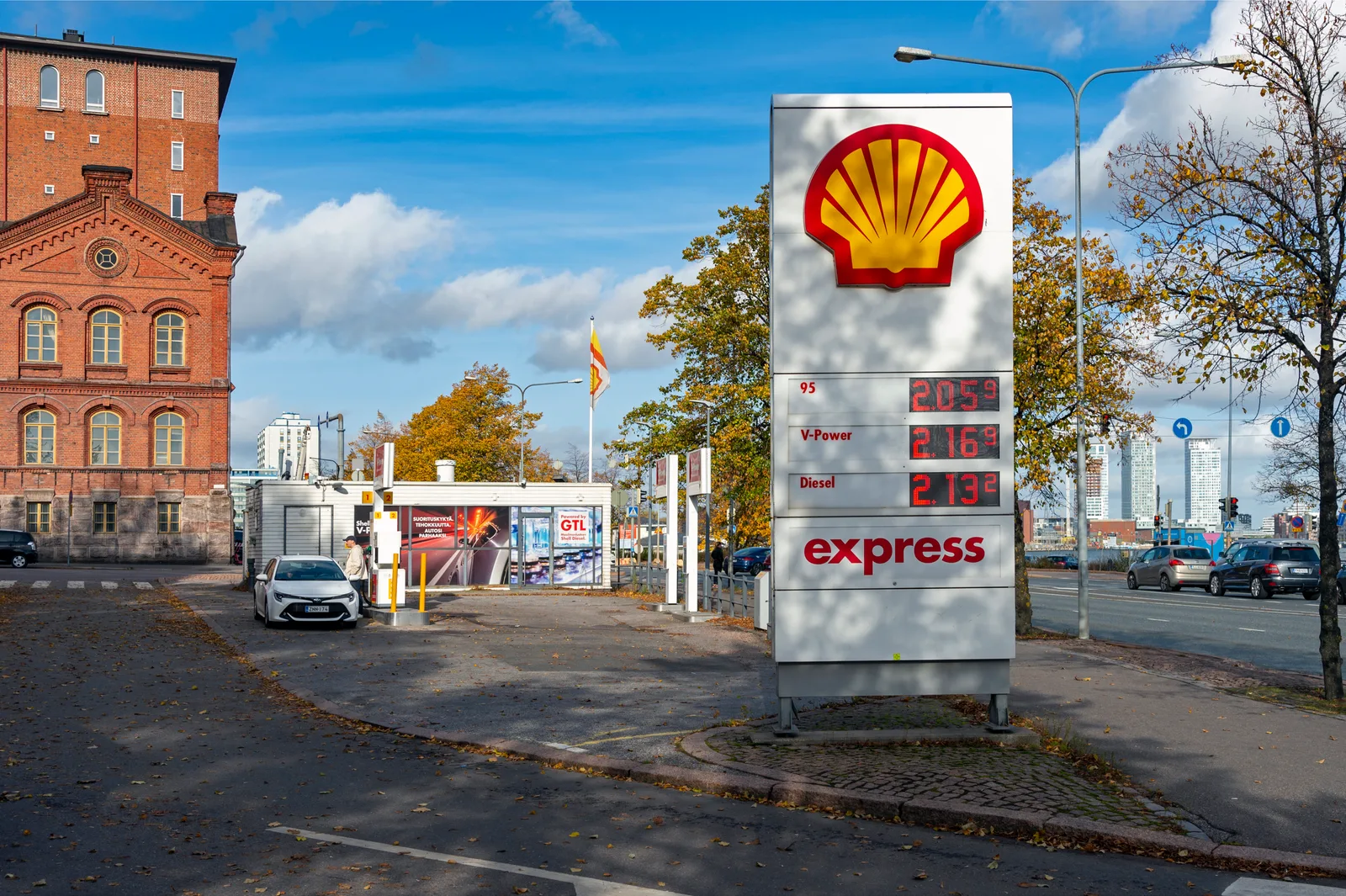
The clearest public measure comes from Shell, one of Europe's largest fuel producers. Its global indicative refining margin, a benchmark of what a typical refinery earns per barrel processed, was $42 a barrel in the third quarter. That compares with $24 in the second quarter and $11.6 a year earlier.
| Period | Shell indicative refining margin |
|---|---|
| Third quarter 2025 | $11.6 a barrel |
| Second quarter 2026 | $24 a barrel |
| Third quarter 2026 | $42 a barrel |
Shell's third-quarter profit of $10.81 billion was almost double the $5.43 billion of a year earlier, and it raised its quarterly share buyback from $3 billion to $5 billion. Refiners are being paid handsomely for every barrel they can process, because buyers of finished fuel are competing for a smaller pool of supply.
Crude itself has risen too, but not by as much in proportional terms. When both the crude layer and the refining layer jump at once, the pump price rises faster than the oil price on its own would suggest. A driver comparing today's Brent headline with the forecourt sign is watching two separate price shocks stacked on top of each other, not one.
Europe's fuel squeeze in three numbers
- $42 Shell refining margin per barrel, third quarter
- 3.8% euro-area inflation, September
- 2.5% ECB deposit rate, held on 29 October
Why Diesel Is Hit Hardest
Europe has long been short of diesel. Its refineries do not make enough middle distillates, the family of fuels that includes diesel, heating oil and jet fuel, to meet demand, so the continent relies on imports. Since the EU banned imports of refined products from Russia in 2023, a larger part of that gap has been filled by cargoes from the Middle East, India and the United States.
That is why the war that began in February matters so much at the pump. Gulf refineries are major exporters of diesel and jet fuel, and much of their output has to leave through the Strait of Hormuz or along the Red Sea. When that flow is disrupted, Europe has to bid for replacement cargoes against Asia and the Americas, and the price of finished diesel rises faster than the price of the crude it is made from.
The pressure has not let up. Every attack on refineries, export terminals or tankers in the region tightens the market for finished fuel, not just for crude, because a damaged refinery takes diesel off the market even when crude keeps flowing. Shell's own results show the knock-on effect on supply: its oil and gas output fell 17 percent in the first nine months of the year, largely because the conflict cut volumes from Qatar.
The effect is already visible in prices. Diesel and petrol in the euro area hit new peaks in September, according to the European Central Bank, the month in which euro-area inflation jumped to 3.8 percent from 3.2 percent in August.
How the Squeeze Reaches Household Budgets
Fuel is the most visible channel, but not the only one. Diesel moves almost everything that ends up on a supermarket shelf, so higher freight costs feed into food and goods prices with a lag. Households that heat with oil, common in parts of Germany, Austria, Belgium and Ireland, pay a price closely linked to diesel, just as the heating season starts.
The squeeze also shows up in interest rates. The ECB left its deposit rate at 2.5 percent on Thursday after raising it twice earlier this year. It said energy prices had risen above the path assumed in its September staff projections and that this is likely to push inflation higher in the near term and keep headline inflation well above its 2 percent target. For anyone with a variable-rate mortgage or a loan due for refinancing, that keeps borrowing costs higher for longer than looked likely at the start of the year.
The same pattern is showing up across the Atlantic. Around the Federal Reserve's meeting on 28 October, Tom Graff of the wealth manager Facet said the recent surge in diesel prices had not yet fully passed through to US consumer prices. If that holds in Europe too, some of the increase is still on its way into shop prices.
Why Pump Prices Can Lag on the Way Down
Drivers often notice that pump prices rise quickly when crude jumps and fall slowly when it eases, a pattern economists call "rockets and feathers". Part of the reason is stock: retailers price their next delivery, not the fuel already in their tanks. Part is the refining margin itself, which does not have to fall just because crude does.
That matters for the months ahead. A drop in crude prices on a ceasefire headline would help, but if refined fuel supply stays tight, the refining margin can absorb much of the relief before it reaches the forecourt.
What could bring pump prices down
- A US-Iran agreement that restores normal tanker traffic through Hormuz and the Red Sea
- An end to attacks on Gulf refineries, export terminals and tankers
- Lower crude prices, which help only if refining margins fall at the same time
- Weaker demand: high prices reduce driving and freight over time, which eventually cools margins
- Fuel tax changes, which some governments use during price spikes, at a cost to public budgets
Three numbers tell readers most of what they need to know about where fuel bills go next. The first is Brent crude, the headline price. The second is the gap between diesel and crude prices, which measures how tight refined fuel supply is; refiners' quarterly results, such as Shell's, give a public read on it. The third is the euro-area flash inflation estimate, which shows how much of the fuel shock is reaching wider prices and shaping the ECB's next move.
For now all three point the same way. Crude is high, refining margins are far above normal and inflation is well above target. Until Gulf supply is restored, the pump price is likely to keep moving faster than the oil price alone would imply.