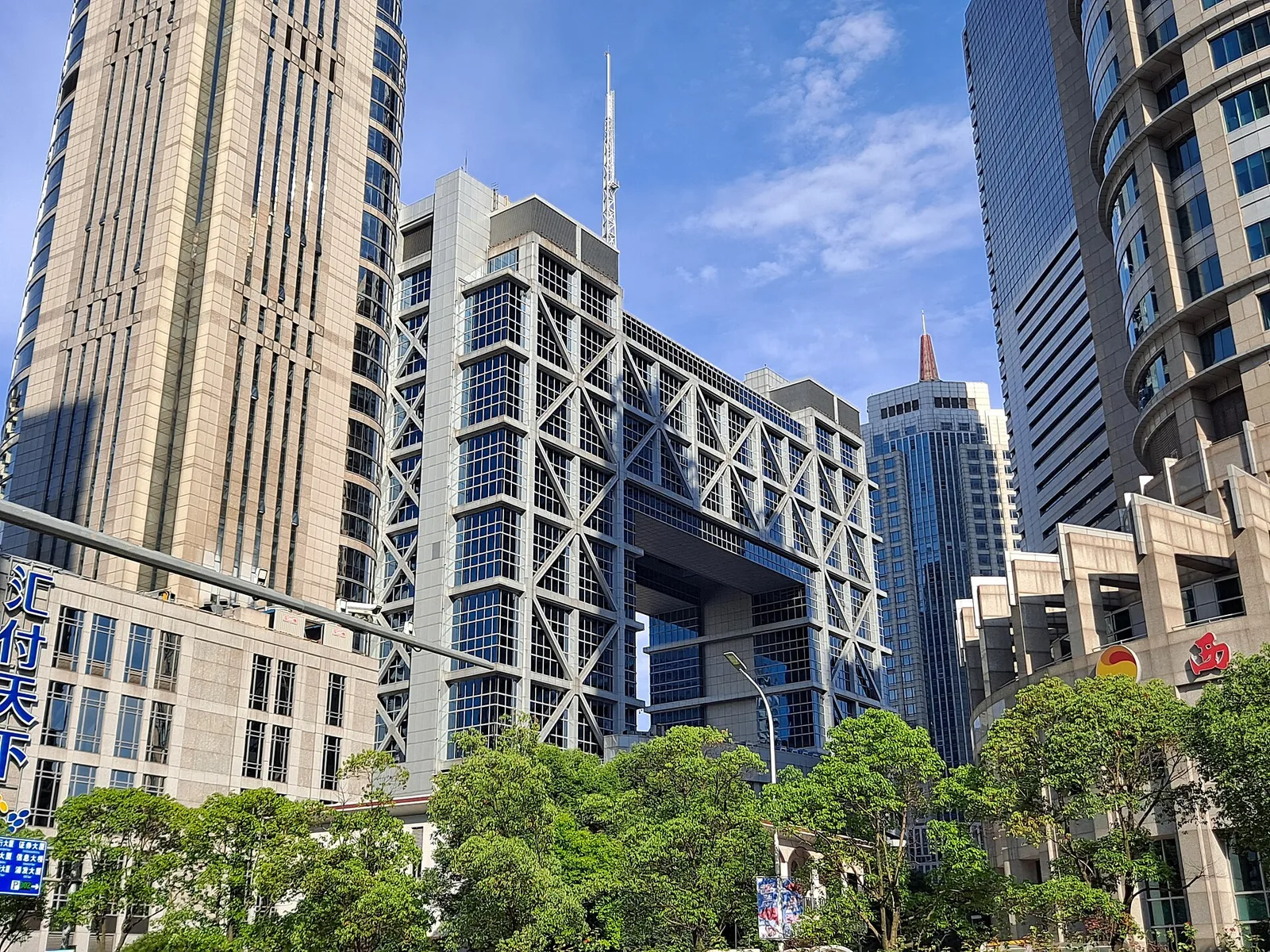
China's stock exchanges said on Sunday 22 November that they will cut the collateral investors need to buy shares with borrowed money, a change that state news agency Xinhua says could free nearly 400bn yuan ($59.6bn). The Shanghai Composite fell anyway, down 1.5% at 3,481.37 by 10:40 local time on Monday 23 November. In Hong Kong, which the cut does not cover, the Hang Seng was down 401 points and Tencent sank to its lowest price since April 2024.
China's stock market support package in numbers
- 80% the new minimum margin ratio for borrowing to buy shares, down from 100%, from Monday 30 November
- Nearly 400bn yuan the extra buying power the cut could free in theory, about $59.6bn, according to Xinhua
- 3,481.37 the Shanghai Composite at 10:40 local time on Monday 23 November, down 1.5%
What China's margin ratio cut means for investors
The rule is simple. Until now, an investor in Shanghai, Shenzhen or Beijing who wanted to borrow 1m yuan from a broker to buy shares had to put up 1m yuan of collateral: a margin ratio of 100%. From Monday 30 November the minimum drops to 80%, the Shanghai Stock Exchange said on Sunday, with the approval of the China Securities Regulatory Commission. The same 1m yuan will then support 1.25m yuan of borrowing, a quarter more, the Global Times reported.
The cut releases a brake applied only ten months ago. In January the exchanges lifted the ratio from 80% to 100% to stop borrowed bets piling up. Now, the Shanghai exchange said, margin trading has clearly cooled and overall leverage is not high.
The 400bn yuan is an estimate, and Xinhua attached the word "theoretically" to it. About 300bn yuan of it would come from applying the lower ratio to loans already outstanding, the Global Times reported.
Whether anyone wants the money is another matter. Margin loans stood at about 2.19tn yuan on 19 November, according to CITIC Securities, which described borrowed money as flowing steadily out of the market. Beijing is offering a bigger overdraft to investors who have been busy paying theirs down.
How the Shanghai Composite and Hang Seng traded on Monday
The first verdict came at the opening bell. The Shanghai Composite started 0.86% lower at 3,503.52, exchange data show, and kept sliding. At 10:40 in Shanghai it stood at 3,481.37, down 1.5% from Friday's close of 3,533.79, which was itself the lowest finish since July 2025.
Financial and energy companies led the selling, with PetroChina down 4.2% in early trade, Trading Economics reported. Mainland indices had been falling for days, Xinhua noted, and US stocks plunged on Friday to cap the Nasdaq's worst week since March 2020.
| Index or share | Level at 10:40 local time (03:40 CET) | Change from Friday |
|---|---|---|
| Shanghai Composite | 3,481.37 | Down 1.5% |
| STAR 50 (Shanghai tech) | 1,180.27 | Down 4.1% |
| Hang Seng Index | 22,009.63 | Down 1.8% |
| Tencent | HK$333.20 | Down 3.1% |
| Alibaba | HK$79.85 | Down 4.2% |
Hong Kong fared worse. The margin cut applies only to the three mainland exchanges, so the Hang Seng had nothing new to lean on. It opened at 22,168.19, 243 points below Friday's close of 22,410.80, which was already its lowest finish since 30 April 2025. By 10:40 in Hong Kong it was down 401 points, or 1.8%, at 22,009.63.
Then there is Tencent. Its shares were down 3.1% at HK$333.20 by 10:40, their lowest since April 2024, after last week's results showed a 6% drop in adjusted profit and a sixfold jump in capital spending. On 6 October 2025 the shares closed at HK$677.50. More than half of that has gone in under 14 months.
Why Chinese stocks keep falling despite Beijing's support
Sunday's package was not Beijing's first attempt this month. The central bank had already cut the rate on a lending scheme for share buybacks, Xinhua reported. The slide continued.
At 10:40 on Monday the Shanghai Composite stood 18% below its closing high for the year, 4,242.57 on 13 May, exchange data show. The Hang Seng was 21% below its own, 27,968.09 on 29 January.
Much of the pressure comes from abroad. Technology shares have sold off around the world as investors question whether vast AI spending will pay, and expectations of a tougher Federal Reserve have dulled the appetite for risk, Trading Economics said on Monday. Hong Kong traders also fear that tighter US chip export rules will slow China's AI development, it said on Friday. This month Washington moved to close China's cloud route to AI chips.
The economy at home offers little cushion. Official data a week ago showed that retail sales grew just 0.4% in October.
What CITIC Securities and other brokers forecast for 2027
China's brokers spent the weekend telling clients not to despair. CITIC Securities said in a note carried by Sina Finance on Monday that the correction has been pulled forward into this year, and that it expects the rally to broaden in 2027. Its picture is a barbell: traders crowd into technology at one end, long-term money into high-dividend shares at the other, and the leaders in between are left cheap. That gap will close, CITIC argued, possibly next year.
Its rivals are split. Shenwan Hongyuan sees rising odds of a real rebound in spring 2027, according to a Sina Finance round-up of ten brokers' weekend notes, while CSC Financial said the bottom has not yet been found. Trading Economics' model points lower still, to 3,198.79 for the Shanghai Composite in 12 months.
These are forecasts, and forecasts can be wrong. Wang Peng of the Beijing Academy of Social Sciences told the Global Times that extra liquidity can lift the mood, but lasting gains depend on the economy and the quality of listed companies. The next test is Monday 30 November, when the 80% ratio takes effect. Asia is running a second experiment in official support: Taipei's curbs on short selling also began on Monday.
Why are Chinese stocks falling today?
Chinese stocks fell on Monday 23 November 2026 because selling led by financial and energy shares outweighed Beijing's new support measures, Trading Economics reported. The Shanghai Composite was down 1.5% at 10:40 local time.
What is China's new margin ratio for buying stocks?
China's minimum margin ratio for buying shares with borrowed money falls from 100% to 80% on 30 November 2026, so 1m yuan of collateral will support 1.25m yuan of borrowing.
Why is the Hang Seng Index falling?
The Hang Seng fell 1.8% to 22,009.63 by 10:40 Hong Kong time on Monday 23 November 2026 as technology shares sold off again, Trading Economics reported.
Sources
- Shanghai Stock Exchange: 沪深北交易所调整融资保证金比例 (Shanghai, Shenzhen and Beijing exchanges adjust the margin financing ratio)
- Xinhua: China announces measures to steady stock market
- People's Daily Online (Global Times): China cuts minimum stock margin requirement to 80%, potentially freeing up 400b yuan in additional funds
- Sina Finance: 中信证券:市场调整已经前置 看好明年行情宽度拓展 (CITIC Securities: the correction has been front-loaded, next year's rally should broaden)
- Sina Finance (Brokerage China): 十大券商策略:不必过度悲观!市场或逐渐企稳 关注均衡配置 (Ten brokers' strategies: no need for excessive pessimism)
- Trading Economics: China Shanghai Composite Stock Market Index
- Trading Economics: Hong Kong Stock Market Index (HK50)