Prosus shares fell 6% on Wednesday 18 November after Tencent, the Chinese internet group that is by far its best-known investment, reported a 6% drop in adjusted profit and capital spending more than six times last year's level. Tencent's revenue still grew 8% to RMB207.3bn, but the cost of building artificial intelligence pushed its free cash flow to minus RMB69.1bn for the quarter.
Tencent's third quarter in three numbers
- RMB81.4bn capital spending, up from RMB13.0bn a year earlier
- 6% fall in adjusted profit for shareholders, to RMB66.5bn
- -RMB69.1bn free cash flow, after large upfront payments for computing power
Prosus fell harder than Tencent
Prosus has owned part of Tencent since 2001, and the stake is the investment it is best known for, according to Wikipedia, which put it at just under 23% in July 2025. South Africa's Naspers is in turn Prosus's majority shareholder. When Tencent reports, Prosus moves.
Tencent filed its figures with the Hong Kong stock exchange at 4.30pm local time, 9.30am in Amsterdam. By 1.38pm Central European Time, Prosus was down 6.0% at €32.44 on Tradegate, a German exchange that trades from 7.30am to 10pm, after touching €31.26 at its low. Tencent's own shares traded in Germany were down 3.9% at €41.70. The holding company fell harder than the asset underneath it.
The drop leaves Prosus well below the price it paid for its own shares last week. Between 9 and 13 November it bought back 2,337,350 shares at an average of €36.83, spending €86.1m, it said on Tuesday 17 November. At €32.44 the shares were almost 12% under that average.
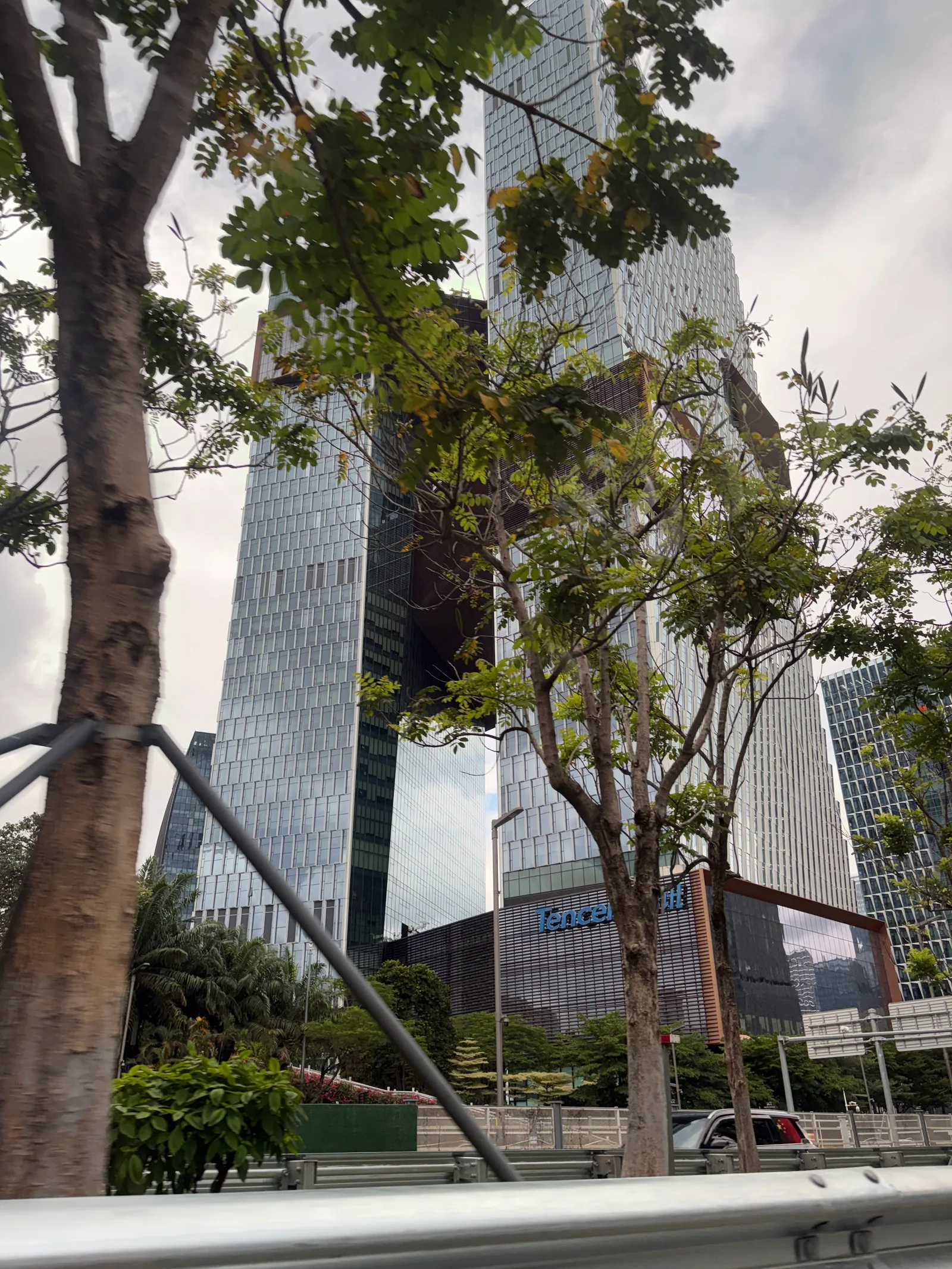
Revenue grew, but profit slipped
Tencent said revenue for the three months to 30 September rose 8% to RMB207.3bn. Reported profit attributable to shareholders edged up 0.8% to RMB63.6bn. The adjusted, or non-IFRS, figures that Tencent puts first tell a weaker story. They strip out items such as share-based pay and gains on investments, and on that basis profit fell 6% to RMB66.5bn while operating profit fell 6% to RMB68.1bn.
| Business | Q3 revenue | Change on a year |
|---|---|---|
| Domestic games | RMB47.6bn | +11% |
| International games | RMB18.9bn | -9% |
| Social networks | RMB31.8bn | -1% |
| Marketing services | RMB43.0bn | +19% |
| Fintech and business services | RMB63.7bn | +9% |
Games at home grew on the back of Delta Force, VALORANT MOBILE and Honour of Kings, the company said. Games abroad fell against a strong quarter a year earlier, which had included a burst of social media excitement around some Supercell games and sales of Dying Light: The Beast. Advertising rose 19% as Tencent sharpened its AI-driven ad and content recommendations, a solid result at a time when China's retail sales grew just 0.4% in October. Cloud revenue rose 35% on demand for AI services.
The AI bill landed in the cash flow
Capital expenditure, the money spent on servers, chips, data centres and other long-term assets, reached RMB81.4bn in the quarter. A year earlier it was RMB13.0bn, and in the second quarter of this year RMB52.8bn. Over the first nine months of 2026 it came to RMB166.2bn, nearly three times the RMB59.6bn of the same period in 2025.
Running costs climbed too. General and administrative expenses, which at Tencent include research and development, rose 29% to RMB44.1bn, driven by work on its Hy family of AI models and on AI features for Weixin. Tencent said that without its new AI products, such as WorkBuddy and the Yuanbao assistant, adjusted operating profit would have risen 8% to RMB83.3bn. The gap between that and the reported RMB68.1bn, about RMB15.2bn, is a rough measure of what those products cost in a single quarter.
The cash flow shows the strain most clearly. Operating activities brought in just RMB2.6bn, because Tencent made large prepayments to secure computing capacity, while payments for capital spending came to RMB65.1bn. Free cash flow, the money left after running the business and paying for investment, was minus RMB69.1bn. Tencent said that without those prepayments it would have been a positive RMB16.9bn.
The group also swung from net cash of RMB58.2bn at the end of June to net debt of RMB13.7bn at the end of September. That is the kind of shift the Fed and the ECB have warned about: the cost of the AI race moving from cash piles onto balance sheets.
The same strain, now in China
American investors know the pattern. In October, Meta's AI spending pushed its cash flow negative for the first time since 2012.
Amazon told a similar story a week later, when its free cash flow turned negative even as its AWS cloud arm grew at its fastest pace in nearly five years.
Tencent has an extra problem: getting the chips at all. Its results follow Washington's move to close China's cloud route to AI chips. For now the company says its products are winning users. WorkBuddy had more than 10 million daily users consuming over 100 trillion tokens a day, the small chunks of text that AI models read and write, and Tencent called it the most used AI product in China by that measure.
What to watch next
- How Tencent's shares trade in Hong Kong on Thursday 19 November, the first full session after the results
- Whether prepayments for computing power keep Tencent's free cash flow negative
- Whether net debt, RMB13.7bn at the end of September, keeps rising
Why did Prosus shares fall today?
Prosus fell about 6% on Wednesday 18 November after Tencent, its best-known investment, reported a 6% drop in adjusted profit and capital spending of RMB81.4bn, more than six times the level of a year earlier.
How much is Tencent spending on AI?
Tencent spent RMB81.4bn on capital expenditure such as servers and data centres in the third quarter of 2026, up from RMB13.0bn a year earlier. Over the first nine months of the year the total was RMB166.2bn.
Does Prosus own part of Tencent?
Yes. Prosus has held a stake in Tencent since 2001, and it was just under 23% in July 2025, according to Wikipedia.