The uranium price is still about $90 a pound, yet on Friday 20 November the Sprott Physical Uranium Trust, the biggest fund that simply holds the metal, closed 20.27% below the value of its assets, nearly all uranium. The miners look worse: Cameco ended the week 57% under its January high and Energy Fuels 82% under. Sprott, which runs the trust, said in October that forced selling across risky assets was to blame, not any change in the market for reactor fuel.
Uranium and its stocks at Friday's close
- $90.10 Uranium a pound in Stockhead's price list on Monday 23 November
- 20.27% The Sprott trust's discount to its net asset value, per Sprott
- 60% The fall in the URNM uranium miners fund from its January high
Why the Sprott uranium trust trades 20% below its uranium
At Friday's close the trust, which Sprott calls the world's largest physical uranium fund, held 81,697,348 pounds of uranium oxide, the powder known as yellowcake, its website shows. Sprott valued the stockpile at $7.35bn, or about $90 a pound. Each unit had a net asset value, or NAV, of $21.60. On the Toronto Stock Exchange the same unit closed at $17.22 in US dollars (C$24.67 for the Canadian-dollar units).
At that price the market values the whole trust at about $5.93bn, roughly $1.5bn less than its net assets. On Sprott's figures, a buyer of the units was paying the equivalent of roughly $72 a pound.
Nobody can simply pocket the difference. The trust is a closed-end fund, and holders have no direct way to swap units for the pounds behind them, the mining news site Discovery Alert noted on Sunday.
Sprott's tally shows the units traded below NAV on all 63 trading days of the third quarter. In a report on Wednesday 28 October, the firm said a discount of roughly 15% was "near the negative two-standard-deviation boundary" of the trust's history, a statistician's phrase for rare. It has widened by about five points since.
How far uranium stocks have fallen from their highs
The companies that dig the stuff up have had it far rougher. The six North American names at the top of the table closed Friday within pennies of their lowest in a year, exchange data show.
| Stock | Close, Friday 20 November | Below 52-week high |
|---|---|---|
| Cameco | $58.00 | 57% |
| NexGen Energy | C$9.19 | 51% |
| Denison Mines | C$2.41 | 60% |
| Uranium Energy | $5.30 | 74% |
| Energy Fuels | $4.96 | 82% |
| Atha Energy | C$0.57 | 59% |
| Paladin Energy | A$5.85 | 61% |
| Boss Energy | A$1.25 | 42% |
| Bannerman Energy | A$3.06 | 42% |
| Silex Systems | A$2.45 | 76% |
| Peninsula Energy | A$0.16 | 85% |
Cameco lost 18% in five sessions, during the Nasdaq's worst week since 2020. URNM, Sprott's fund of uranium miners, closed at $33.61, down 60% from its January peak.
The starkest case is Energy Fuels, which sold uranium at $88.90 a pound in the third quarter and has watched its shares sink below $5.
Sydney traded first on Monday 23 November, and it wobbled before it steadied. Paladin Energy fell as far as A$5.61, a new one-year low, then clawed most of that back. At about 13:52 Sydney time (03:52 Central European Time) it stood at A$5.845, down 0.1%. Boss Energy was up 2.4% at A$1.28, exchange data showed.
Why uranium stocks are falling while the uranium price holds
Nothing much has happened to the fuel. Cameco's month-end table, an average of prices from UxC and TradeTech, put spot uranium at $91.55 a pound on 30 October, up from $81.55 at the end of 2025. The long-term price, the benchmark for the multi-year contracts utilities sign, stood at $98.00, the highest in that table.
So what is being sold? Baskets. Nuclear power was pitched to investors as the supplier of electricity to AI data centres, and uranium shares were added to baskets of AI and momentum stocks that trade as a single position, Discovery Alert reported. When the baskets are dumped, the miners go too.
Sprott's October report put it another way: measured against the wider market, the miners were "behaving more like a liquidity trade than a uranium trade". Tim Gitzel, Cameco's chief executive, said with his results on Friday 30 October: "it is important to distinguish between changes in market sentiment and changes in underlying fundamentals."
Not all of it is mechanical. That day Cameco narrowed its 2026 output range to between 19.5m and 20.5m pounds, lopping a million off the top.
Cheap shares also make new money expensive. Paladin Energy raised A$525m at A$7.80 a share earlier this month. The shares closed on Friday at A$5.85, a quarter lower.
Why Peninsula Energy shares are halted on the ASX
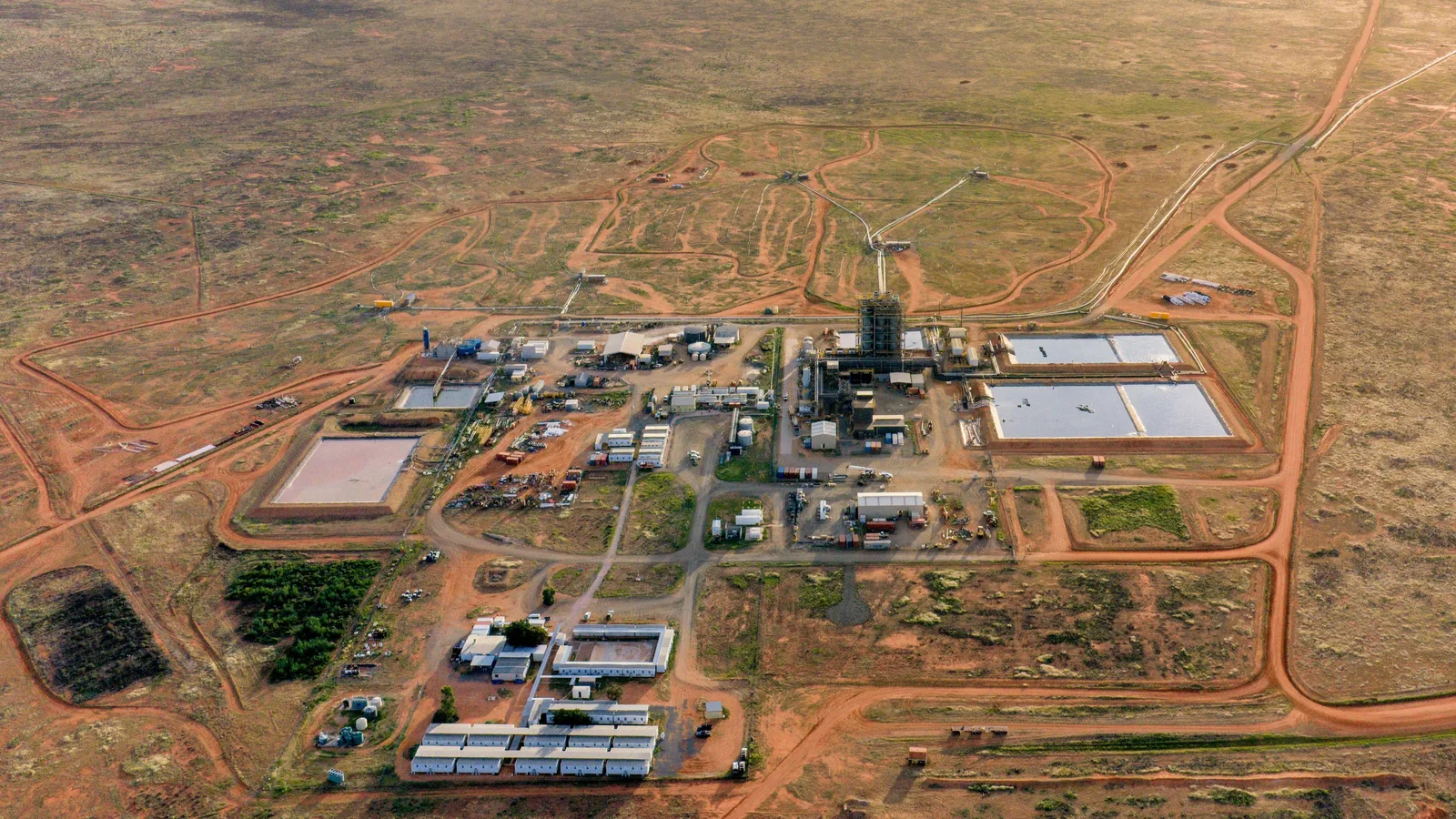
One uranium stock had not traded at all by early afternoon in Sydney on Monday. Peninsula Energy asked the ASX to halt its shares, and not because of markets. The company cited "a cybersecurity incident which occurred at the Lance Project in Wyoming, USA, late Friday night (AWST), 20 November 2026".
Peninsula said the breach reached its operating system only, not its administrative systems, and "will temporarily affect its operations". The halt lasts until the company says more, or until trading opens on Wednesday 25 November.
It is a blow the miner did not need: Lance produced only 17,968 pounds in the September quarter.
What could close the gap between uranium and uranium stocks
The next dated test is Monday 28 December, when bids are due in a tender from Korea Hydro & Nuclear Power for 600 tonnes of uranium oxide a year, or 1.32m pounds, from 2028 to 2037, Energy Intelligence reported on Friday.
Sprott's report said calmer markets and more long-term contracts could reconnect the miners with the metal. Of the trust's discount, it wrote that such extremes have historically been "associated with subsequent rebounds from the lows", and called that "a probability assessment rather than a forecast or recommendation".
That comes with caveats. Sprott manages both the trust and URNM, such assessments can be wrong, and this one is already being tested: the discount was about 15% when the report came out and is 20% now.
Why are uranium stocks falling when the uranium price is $90?
Uranium stocks are falling because investors are dumping baskets of risky shares, not because the fuel got cheaper, according to Sprott's report of 28 October 2026.
What is the Sprott Physical Uranium Trust's discount to NAV?
The Sprott Physical Uranium Trust's discount was 20.27% at the close on Friday 20 November 2026: units at $17.22 against a net asset value of $21.60, according to Sprott.
Sources
- Sprott: Sprott Physical Uranium Trust, pricing and holdings at 20 November 2026
- Sprott: Uranium Miners: A Liquidity Shock, Not a Broken Thesis
- Cameco: Uranium Price (month-end spot and long-term averages)
- Cameco: Cameco Reports 2026 Third Quarter Results
- Peninsula Energy: Trading Halt (ASX announcement)
- Energy Intelligence: KHNP Issues 10-Year Uranium Tender
- Discovery Alert: Why Uranium Stocks Have Halved While Spot Holds Near US$90/lb
- Stockhead: Rise and Shine: Everything you need to know before the ASX opens