South Korea's Kospi was down 5.3% at 4,613.92 at 11:36 Korea Standard Time on Monday 23 November, its lowest level in about 10 months, a day after the government readied a 10.76 trillion won ($8bn) market stabilisation fund that Seoul has not deployed since 2008. The index had already lost 47% from this year's high by Friday, after foreigners sold a net $121.7bn of Korean shares since May, according to Hana Securities. The same morning, customs data showed exports in the first 20 days of November doubling to a record $77.4bn, with chips making up half.
The Kospi's Monday morning in three numbers
- 4,613.92 the Kospi at 11:36 KST on Monday, 5.3% below Friday's close
- 10.76tn won the stabilisation fund Seoul readied on Sunday, about $8bn
- $77.4bn exports in the first 20 days of November, up 101.5% on a year earlier
How far the Kospi fell on Monday morning
The Kospi opened at 4,734.90, down 2.77%, Korea JoongAng Daily reported. Then it kept sliding. By 11:36 Korea Standard Time (KST) it stood at 4,613.92, exchange data show, 5.3% below Friday's close of 4,869.96. That is less than half the all-time high of 9,385.59, which Trading Economics dates to June.
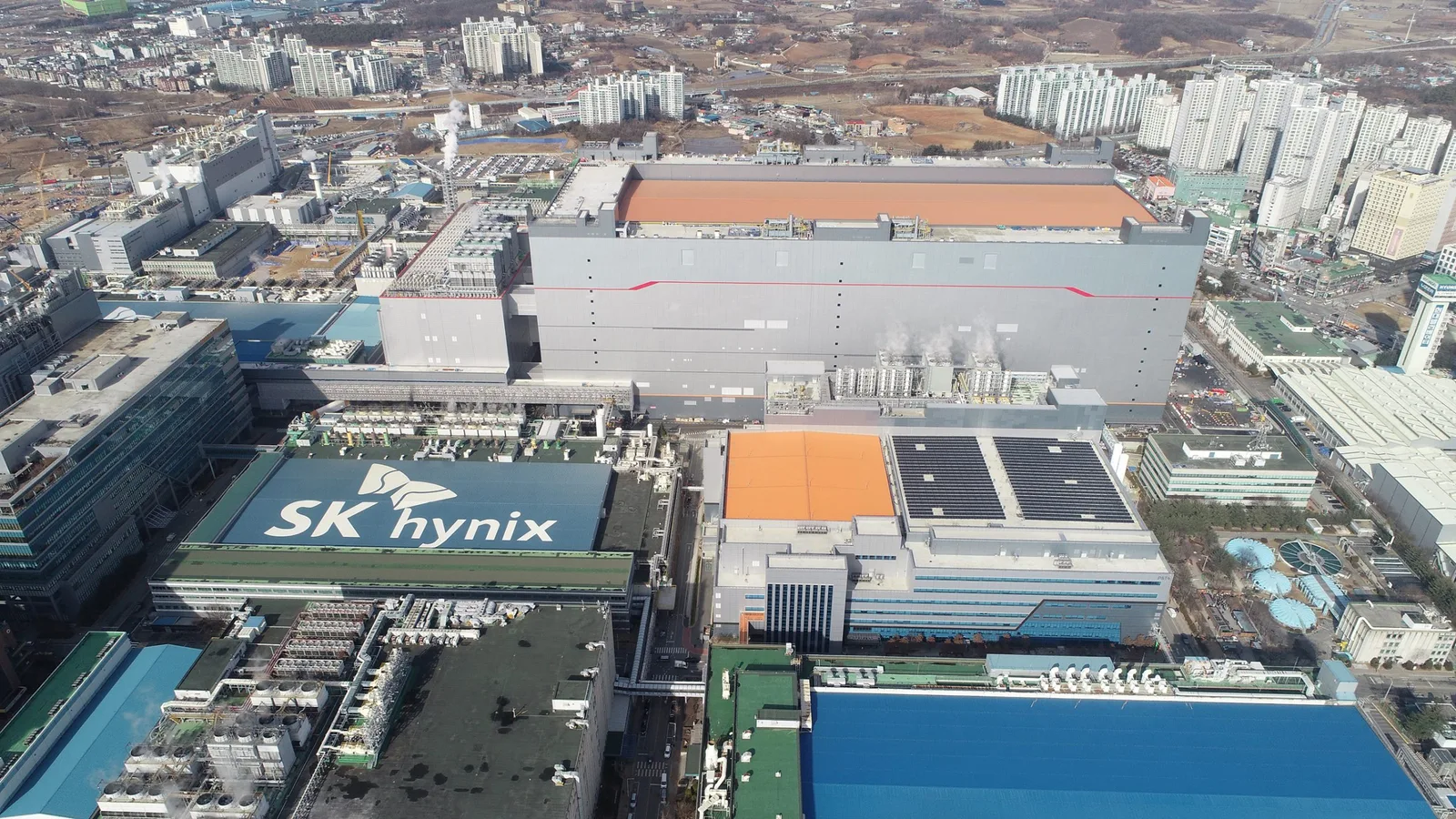
The two big chipmakers led the way down. Samsung Electronics was off 3.39% and SK hynix 2.34% in early trading, Yonhap reported. By 11:36 KST the losses had widened to 5.7% and 5.6%, exchange data show.
Monday's slide followed the Nasdaq's worst week since 2020. The Kospi fell 5.21% on Friday to its lowest close since 16 January. Kospi night futures then dropped 7.0% as the Philadelphia Semiconductor Index lost 10.7%, Korea Investment & Securities analyst Kim Dae-joon said, according to Seoul Economic Daily.
What the 10.76 trillion won stabilisation fund is
Finance Minister Lee Hyoung-il chaired an emergency meeting with Bank of Korea governor Shin Hyun-song and the heads of the two financial regulators on Sunday 22 November, The Korea Times reported. They agreed to prepare the market stabilisation fund so that it can be switched on at once if needed.
The fund pools money from financial institutions to buy shares, mainly index-tracking products, and cushion a fall. Korea raised 10.76 trillion won for it during the Covid-19 market rout, according to The Korea Times, and has not deployed such a fund since 2008. Using it now would be a first in 18 years, Seoul Economic Daily said.
Two smaller steps came with it. From Tuesday 24 November, listed companies get more room in their daily share buyback orders for three months, and regulators will tighten surveillance of illegal short selling, the sale of borrowed shares to profit from a fall. Seoul stopped short of Taiwan's curbs on short sellers, which took effect on Monday.
Set against the selling, the fund is small. Foreigners have sold a net 168 trillion won of Kospi shares since May, by Hana's count, almost 16 times its size.
The signal may matter more than the cash. "Feedback from foreign investors suggests that even a signal that the market stabilization fund could be activated would help curb short-selling activity," Kim Jin-wook, chief economist at Citi Korea, said at a policy meeting on 13 November, according to The Korea Times.
Why the Kospi is 47% below this year's high
Hana Securities said on Sunday that the Kospi had fallen 47% from this year's high. That is more than the 44% lost in the pandemic and close to the 55% lost in the global financial crisis, Bloomingbit reported. Foreigners have been net sellers for seven straight months, and their 168 trillion won ($121.7bn) of sales equals 4.3% of the market's value, against 4.4% in the financial crisis.
Two companies explain most of it. Samsung Electronics and SK hynix account for 68% of the market value lost since the peak, Hana said. It was only in October that Samsung estimated its first 100 trillion won quarterly profit.
Hana analyst Lee Jae-man said the index could fall to about 4,300 if its price-to-book ratio, share prices measured against net assets, slips to 0.94, its level of August 2025. That is one analyst's scenario, and forecasts can be wrong. Even after the slide, Friday's close left the Kospi 26% higher than a year earlier, according to Trading Economics.
Korea's exports doubled to a record the same morning
As Monday's session got under way, the Korea Customs Service reported exports of $77.4bn for 1-20 November, up from $38.4bn a year earlier and the most for the first 20 days of any month, Yonhap reported. Chip shipments nearly quadrupled to a record $38.5bn, or 49.7% of everything Korea sold abroad.
| 1-20 November | Value | Change on year |
|---|---|---|
| Total exports | $77.4bn | +101.5% |
| Semiconductors | $38.5bn | +294.4% |
| Cars | $3.59bn | -5.6% |
| Imports | $50.3bn | +39.4% |
Chips are now half of what Korea sells abroad, and Samsung Electronics and SK hynix are 49% of the Kospi by weight, according to Hana. Share prices look ahead; customs data look back. Yonhap tied the selling to fears of tighter US curbs on chip exports, after reports that AMD, like Nvidia, could face risks over its business with China. Nvidia fell 14% on Friday, Trading Economics data show.
The Bank of Korea decides on Thursday
The central bank sets interest rates on Thursday 26 November, and some analysts expect a rise from 3.00% to 3.25%, Seoul Economic Daily reported. Borrowing costs may therefore go up in the same week that a rescue fund sits on standby.
Other tests come first. Wednesday brings US PCE inflation for October, and US markets shut on Thursday for Thanksgiving.
Why did the Kospi fall today?
The Kospi was down 5.3% at 4,613.92 at 11:36 KST on Monday 23 November, after US chip stocks plunged on Friday and Kospi night futures dropped 7%.
What is South Korea's stock market stabilisation fund?
It is a 10.76 trillion won pool, about $8bn, raised from financial institutions to buy shares in a crisis. The government began preparing on Sunday 22 November to activate it, which Korea has not done since 2008, The Korea Times reported.
When is the Bank of Korea's next interest rate decision?
The Bank of Korea decides on Thursday 26 November. Some analysts expect a rise of 0.25 percentage points to 3.25%, Seoul Economic Daily reported, though forecasts can be wrong.
Sources
- The Korea Times: KOSPI rout fuels calls for bolder stabilization measures
- The Korea Times: Taiwan, China tap market rescue funds. Why won't Korea?
- The Korea Times (Yonhap): Seoul shares open over 2% lower amid AI fears
- The Korea Times (Yonhap): Exports more than double in 1st 20 days of November, with chip shipments surging to new high
- Korea JoongAng Daily: Kospi opens 2.8% lower as AI and chip export fears rattle Seoul stocks
- Seoul Economic Daily: Korea Stocks Face Policy Test as Stabilization Fund Readied
- Seoul Economic Daily: KOSPI Hits 10-Month Low as Korea Readies First Stock Fund in 18 Years
- Seoul Economic Daily: Korea's Nov. 1-20 Exports Hit Record $77.4 Billion, Chips Near Half
- Bloomingbit: Kospi Drops 47% From Peak as Foreign Selling Hits $121.7 Billion, Nearing Financial-Crisis Levels
- Bloomingbit: Kospi Falls More Than 3% on US AI Stock Rout; Government Prepares Market-Stabilization Fund
- Trading Economics: South Korea Stock Market