Novo Nordisk raised its 2026 outlook on Wednesday after third-quarter adjusted operating profit jumped 27 percent at constant exchange rates to DKK 31.7 billion, driven by DKK 5.4 billion of sales of its new Wegovy pill. The shares rose as much as 6 percent in early trading.
A Clear Beat on Sales and Profit
Net sales in the third quarter came to DKK 79.2 billion, up 4 percent at constant exchange rates and 6 percent as reported. Analysts polled by FactSet had expected DKK 73.6 billion. Adjusted operating profit of DKK 31.7 billion compared with expectations of about DKK 28.6 billion.
Obesity care was the engine, with sales up 22 percent to DKK 26.1 billion. Both regions grew: US sales rose 1 percent and international sales 8 percent.
Novo Nordisk, third quarter 2026
- DKK 79.2bn net sales, up 4% at constant currencies
- DKK 31.7bn adjusted operating profit, up 27%
- DKK 5.4bn Wegovy pill sales
Novo Nordisk: share price, chart and news
Impairments Pull Reported Profit Lower
The headline numbers on a reported basis look weaker. Operating profit fell 9 percent at constant exchange rates to DKK 23.0 billion after DKK 8.7 billion of non-cash impairments, and net profit dropped 16 percent to DKK 16.7 billion.
Two charges explain the gap. Novo wrote down DKK 4.6 billion on ziltivekimab, a heart drug candidate whose late-stage trials missed their main goals, and DKK 4.1 billion on right-sizing its manufacturing network. The first is a reminder of pipeline risk; the second suggests Novo now expects to need less production capacity than it had planned.
Guidance Moves From Decline to Flat
The company now expects adjusted sales and adjusted operating profit to change by between minus 2 and plus 2 percent at constant exchange rates this year, compared with a range of minus 6 to 0 percent before. It also lifted its free cash flow guidance by DKK 15 billion at both ends.
| 2026 guidance | Previous | New |
|---|---|---|
| Adjusted sales growth | -6% to 0% | -2% to +2% |
| Adjusted operating profit growth | -6% to 0% | -2% to +2% |
| Free cash flow | DKK 45bn to 55bn | DKK 60bn to 70bn |
Free cash flow through September was already DKK 83.8 billion, so the new range implies an outflow of between DKK 13.8 billion and DKK 23.8 billion in the fourth quarter.
The Pills Are Doing the Work
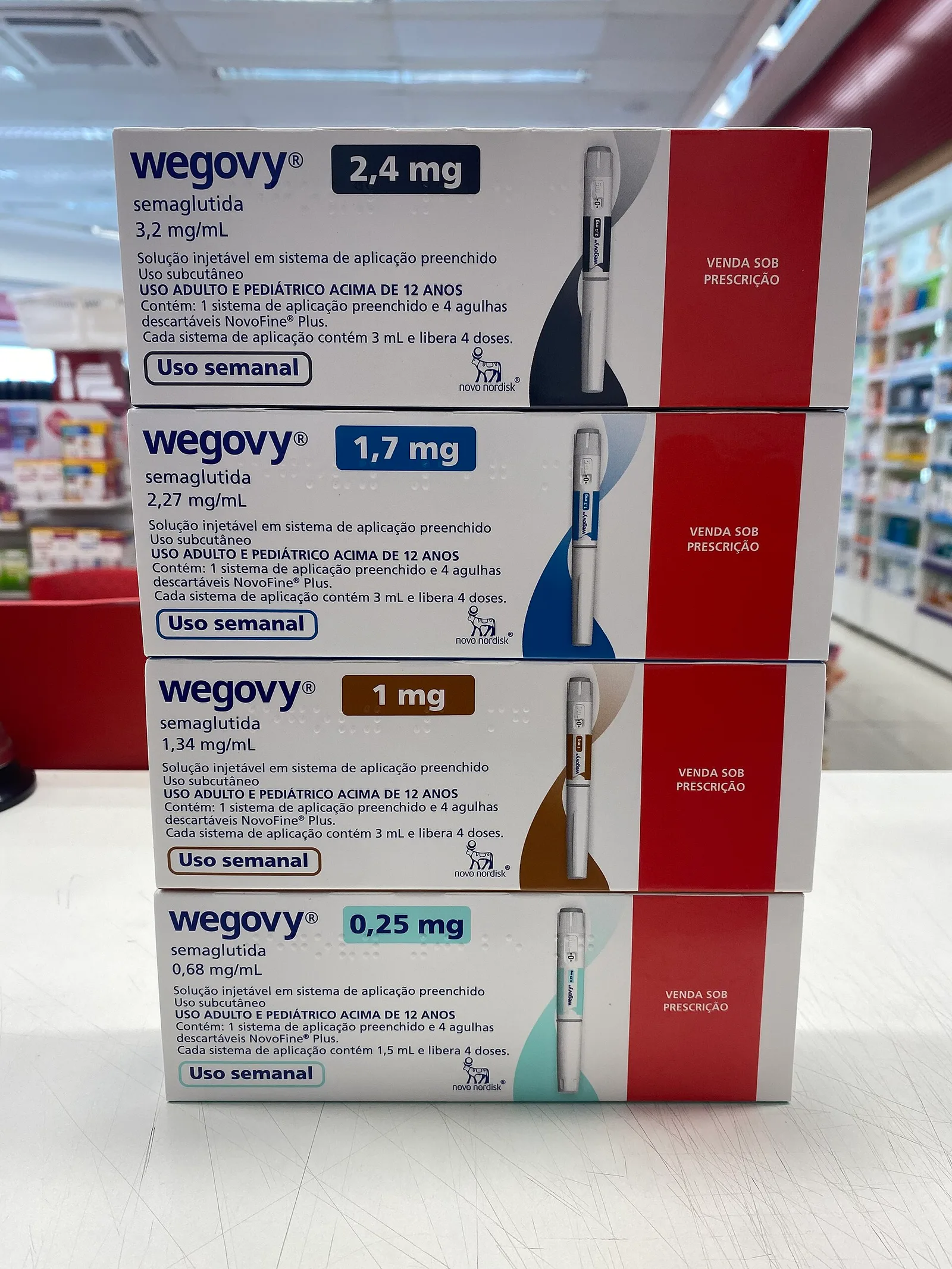
The Wegovy pill, launched in the United States in January, brought in DKK 5.4 billion in the quarter and has passed 8 million US prescriptions since launch. By the end of September it was also on sale in the United Arab Emirates, Britain and Germany, and it has since reached eight markets.
The Ozempic pill, launched in the US in May, is adding to that. Weekly new-to-brand prescriptions are running about 100 percent above the levels of Rybelsus, Novo's older oral diabetes drug, before the launch.
For comparison, Eli Lilly reported $184 million of third-quarter sales for Foundayo, its rival GLP-1 pill. On these numbers Novo has a clear early lead in oral obesity treatment, the segment that has become the main test of whether the company can return to growth after a difficult stretch.
What the Stock Now Has to Prove
The share price reaction reflects relief that the bottom of the guidance range has moved up, and that a product launched this year is already contributing a meaningful slice of sales. European markets were broadly firmer on Wednesday morning, with the Stoxx 600 up 0.44 percent in early trading after the Democrats' sweep of the US midterm elections.
Three issues will shape how far the recovery can go. First, pricing: from 1 January Novo plans to cut the US list price of Wegovy by about half and Ozempic by about 35 percent. The company expects that to weigh on 2027 cash flow and is counting on higher volumes to compensate.
Second, the pipeline. CagriSema, its next obesity drug, is planned for a US launch in early 2027 if approved, while the ziltivekimab write-down shows that not every late-stage bet pays off.
Third, competition. Lilly's oral drug is still small next to the Wegovy pill, but it is now on the market, and Novo's own planned US list-price cuts show how quickly pricing in this class can shift.
Chief executive Mike Doustdar's quarter gives investors evidence that oral drugs can widen the market rather than simply replace injections. Whether that holds once US prices fall in January is the question the next set of results will have to answer.