BigBear.ai raised its revenue forecast for 2026 after third-quarter sales grew 31%, helped by government demand for the generative AI platform it bought last December. The US defence and national-security software company still reported a net loss of $91.9 million, mostly because of a $76.7 million write-down of goodwill.
Sales growth speeds up
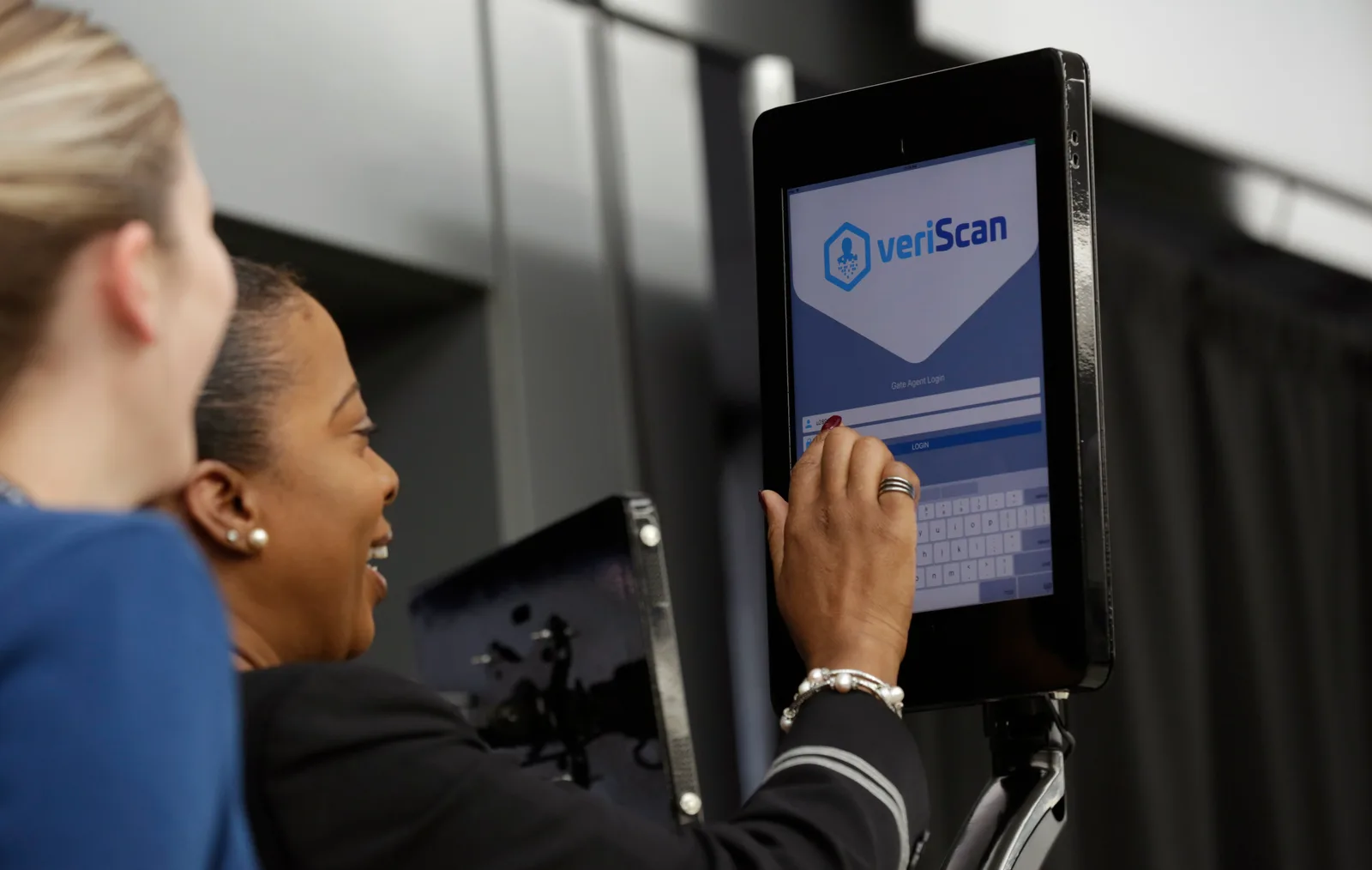
Revenue for the three months to 30 September rose to $43.6 million from $33.1 million a year earlier, the company said on Tuesday 27 October. It called this its third straight quarter of organic growth, meaning growth not bought through acquisitions, and credited mainly the BigBear Generative AI Platform, formerly known as Ask Sage.
BigBear.ai now expects 2026 revenue of $150 million to $165 million, which it said lifts the midpoint of its previous range by 5%. Nine-month revenue was $114.8 million, so the new range implies fourth-quarter sales of roughly $35 million to $50 million.
Third quarter 2026
- $43.6m revenue, up 31% year on year
- 31.2% gross margin, up from 22.4%
- $330m backlog, up 22% from the end of June
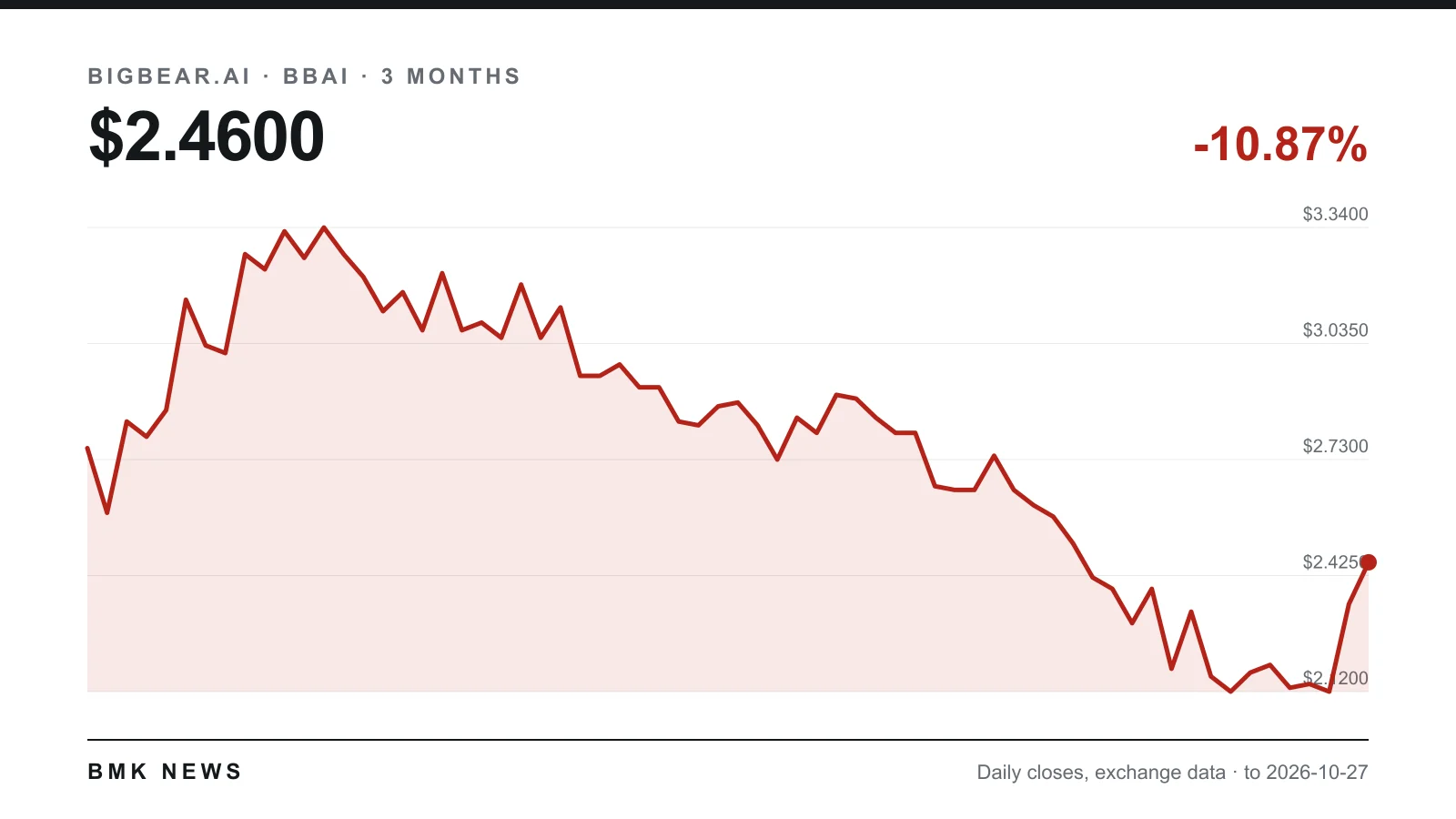
BigBear.ai: share price, chart and news
Margins improve, but the loss deepens
Gross margin rose to 31.2% from 22.4%, and gross profit rose 84% to $13.6 million from $7.4 million. Costs rose too. Selling, general and administrative expenses climbed by $6.1 million to $31.3 million, including $2.4 million of extra amortisation linked to the Ask Sage purchase and higher staff and marketing spending. Research and development rose to $5.4 million from $3.4 million.
The quarter's result was dominated by a non-cash goodwill impairment of $76.7 million, which the company attributed mainly to a change in its forecast during the quarter. Goodwill, the premium paid for past acquisitions, fell to $161.7 million from $241.1 million at the end of 2025. The net loss was $91.9 million, or 19 cents a share, against net income of $2.5 million a year earlier, when gains on the value of derivatives had flattered the result.
On the company's adjusted EBITDA measure, which leaves out the impairment and other items, the loss narrowed slightly to $9.1 million from $9.4 million.
| Measure | Q3 2026 | Q3 2025 |
|---|---|---|
| Revenue | $43.6m | $33.1m |
| Gross margin | 31.2% | 22.4% |
| Net result | -$91.9m | +$2.5m |
| Adjusted EBITDA | -$9.1m | -$9.4m |
Contract wins behind the backlog
Backlog reached about $330 million at 30 September, up 22% since June, though only about 23% of it is funded. On 13 October the company said it had won more than $225 million of contracts since July, including more than 25 generative AI awards for agencies such as the FBI, NASA, the US Coast Guard, the Department of Energy and the Department of Veterans Affairs, two recompeted contracts with US Customs and Border Protection, new work for US Central Command and US Southern Command, and classified intelligence awards.
That figure is total contract value, which includes unexercised options and ceilings. The company itself warns that government contracts are funded in stages, can be cut or ended, and that the revenue it eventually earns may differ materially.
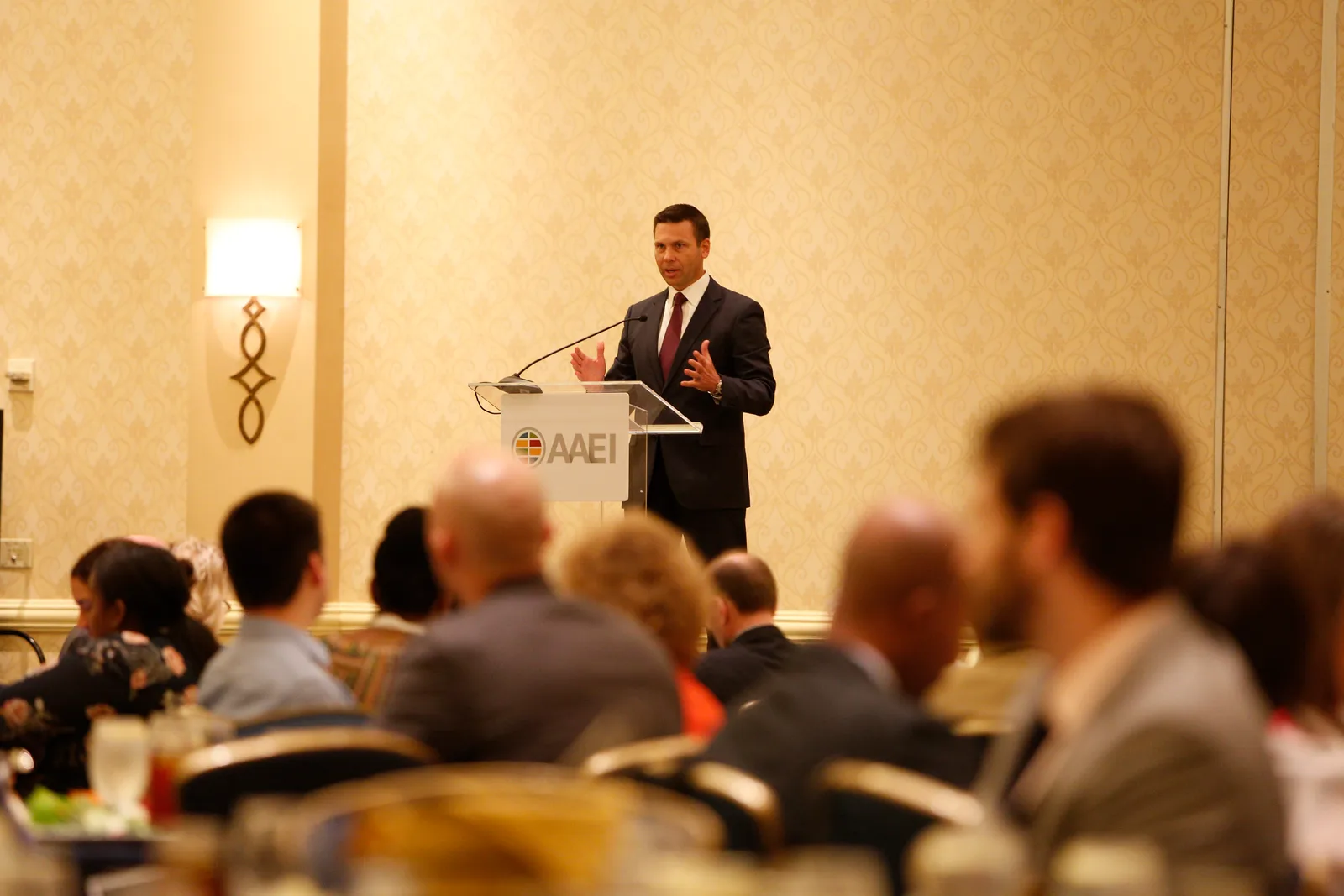
Chief executive Kevin McAleenan said: "We believe that puts us in a strong position to grow in 2027."
Cash is ample, but so is the share count
BigBear.ai ended September with $77.1 million of cash and $321.9 million of investments, about $399 million in total. Long-term debt fell to zero from $90.5 million at the end of 2025 after its 2029 convertible notes were turned into shares, leaving $16.7 million of debt due within a year.
The conversions and other issuance lifted the share count to 480.4 million from 437.0 million at the end of last year, and the number of authorised shares was doubled to one billion. Operating cash outflow was $49.8 million in the first nine months.
The company remains loss-making, depends heavily on US government spending, and has diluted shareholders repeatedly. The latest impairment also shows that the value placed on past acquisitions can be cut when forecasts change.