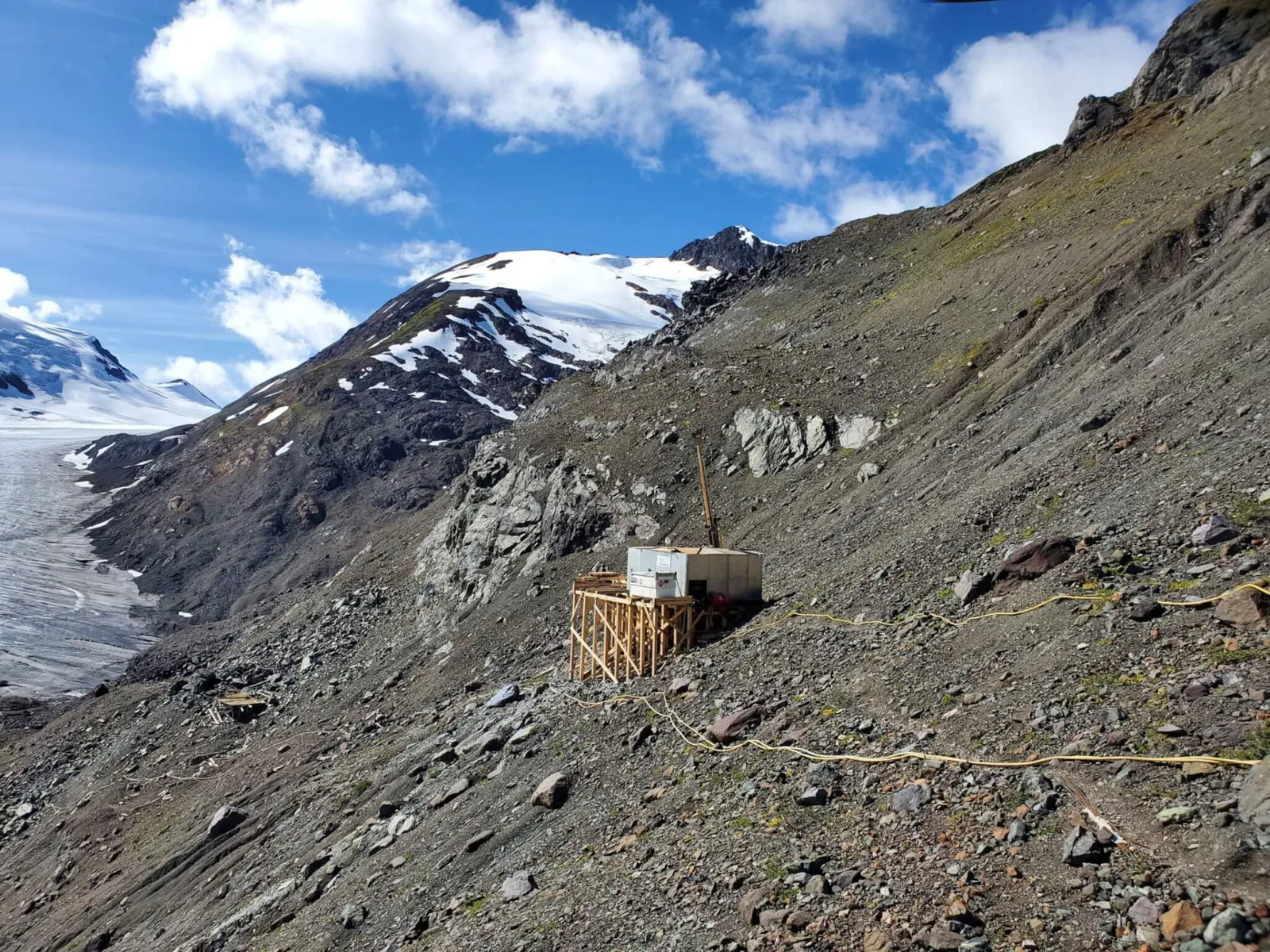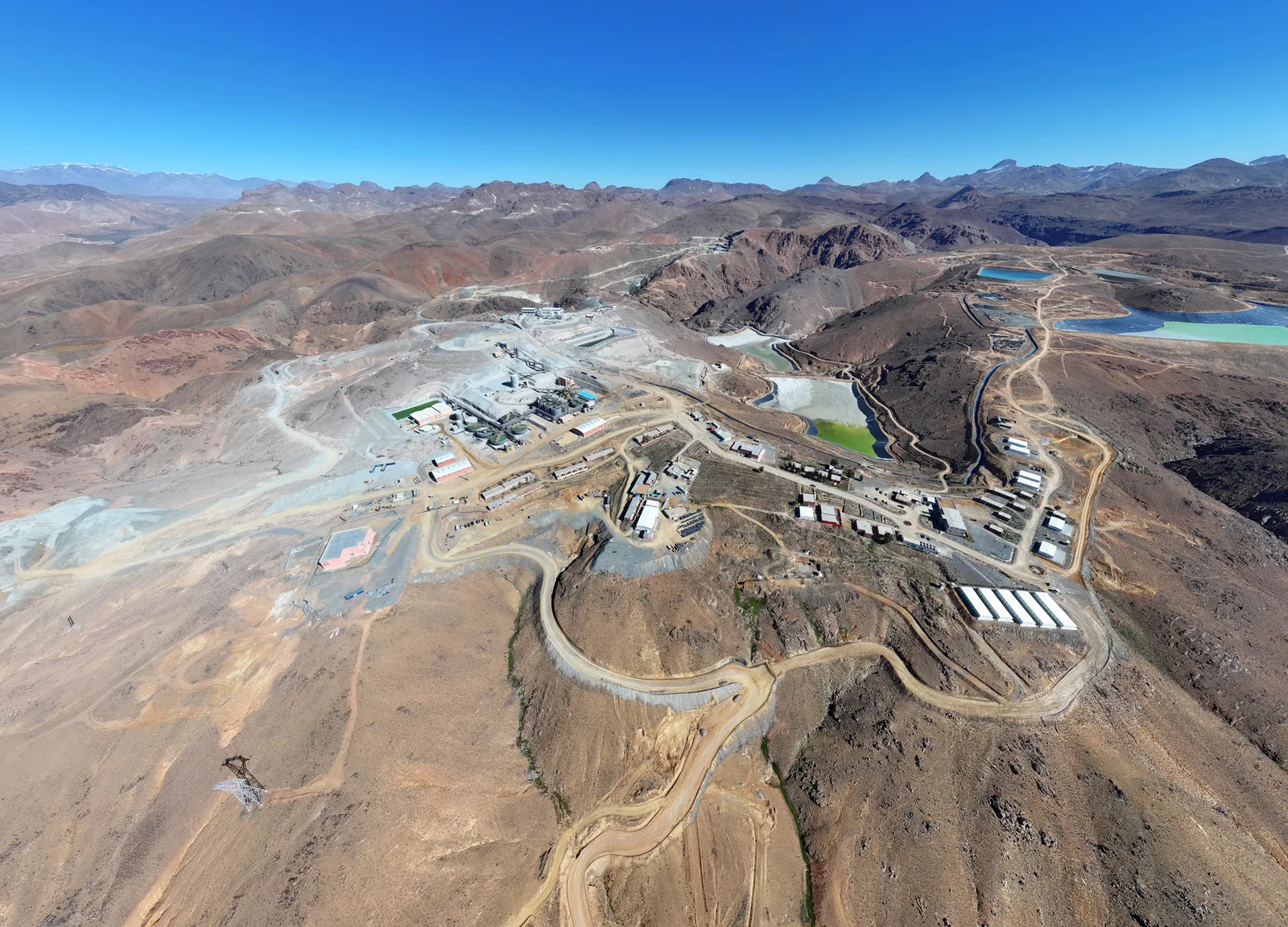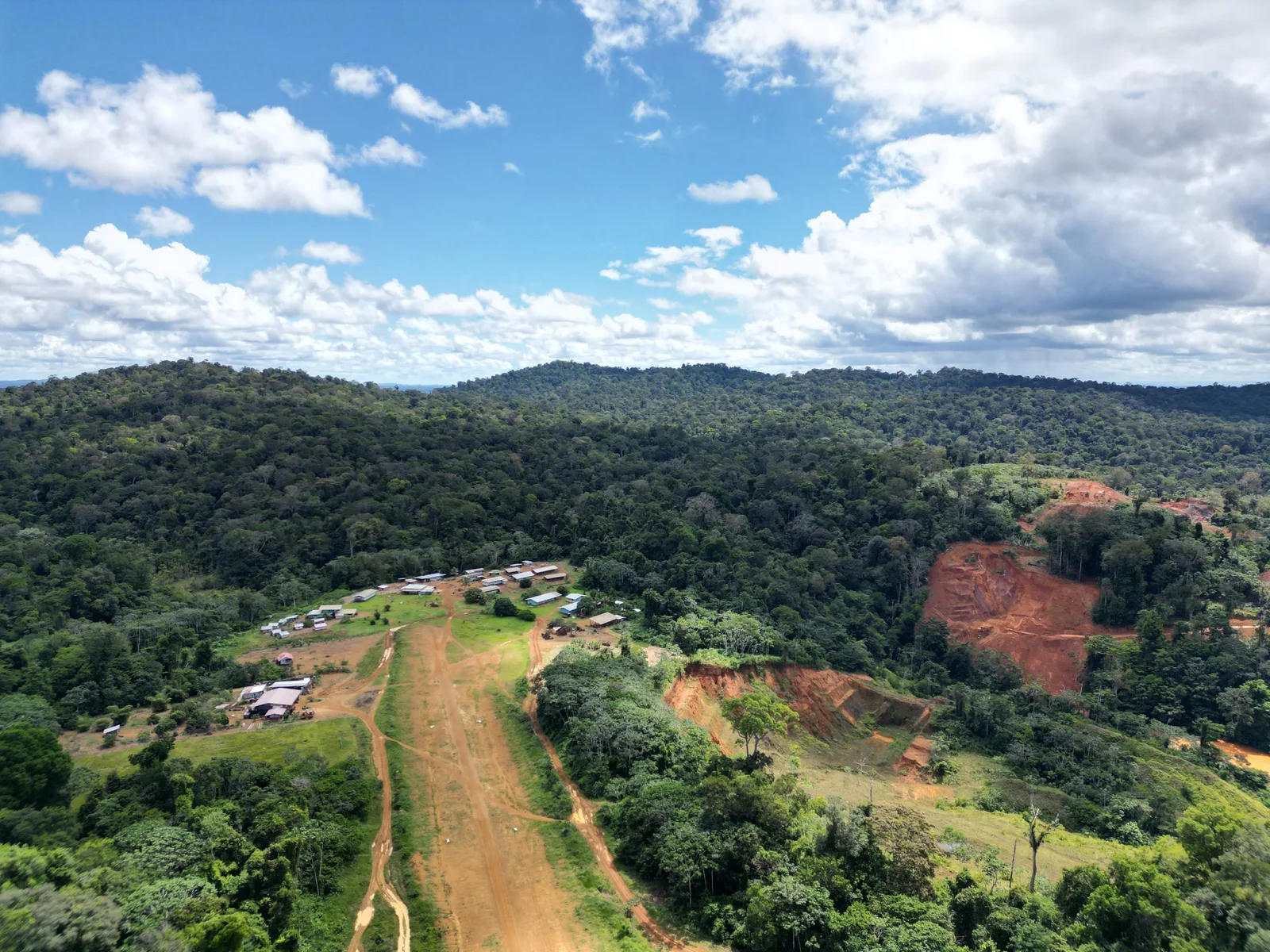
Tudor Gold owns most of Treaty Creek, a large gold-silver-copper project in north-west British Columbia. Its first mine study is close, its 2026 drilling has opened a second target, and a legal fight over a neighbour's tunnels hangs over the project. This guide sets out the assets, the numbers from its latest filing, the risks and the dates to watch.
What Tudor does
Tudor Gold is based in Vancouver and listed on the TSX Venture Exchange under the symbol TUD. It has one project, Treaty Creek, in the Golden Triangle about 75 km north-north-west of Stewart. The property covers 47 claims and 17,966 hectares and is reached by helicopter. It borders Seabridge Gold's KSM project to the south-west and Newmont's Brucejack mine property to the south.
Tudor holds 80% of the joint venture, after buying partner American Creek Resources in September 2025. Teuton Resources owns the other 20%, which is carried through exploration until a production notice is given, and holds a 0.98% net smelter royalty on the claims that contain the Goldstorm resource.
The company has no production and no revenue.
Tudor Gold: share price, chart and news

Goldstorm, and Perfectstorm next door
An updated estimate by Garth Kirkham of Kirkham Geosystems, effective 30 November 2025, was prepared for a potential underground block cave mine. It assumes gold at US$2,925 an ounce, silver at US$34 and copper at US$4.25 a pound.
| Category | Tonnes (m) | Gold (g/t) | Silver (g/t) | Copper (%) | Gold (m oz) |
|---|---|---|---|---|---|
| Indicated | 912.3 | 0.85 | 5.07 | 0.15 | 24.9 |
| Inferred | 86.1 | 1.43 | 5.22 | 0.17 | 4.0 |
The company also published higher-grade sensitivities at stricter cut-offs, for example 102.1 million Indicated tonnes at 1.78 g/t gold at a US$125 a tonne NSR cut-off, against US$50 a tonne in the base case. Tudor stresses these are for comparison and are not mineral resources.
Consultants Fuse Advisors are preparing a preliminary economic assessment (PEA) of an underground mine targeting Goldstorm's higher-grade gold. In January chief executive Joe Ovsenek pointed to an initial production rate of roughly 300,000 ounces of gold a year. Tudor's latest quarterly report, dated 12 November, says the study is being finalised and results are expected shortly. Metallurgical work is aimed mainly at producing a sulphide gold concentrate, and is also testing whether a separate copper concentrate can be made.
The 2026 programme drilled 22,511 metres in 44 holes, more than double the 10,000-metre minimum planned in May. Every set of drill results published since August has come from Perfectstorm, about 1 km south-west of Goldstorm.
- The PSP porphyry zone measured about 850 by 750 metres in October and is open in all directions. Hole PS-26-35 returned 49.80 metres at 0.93 g/t gold from 1,042.95 metres.
- A vein and breccia system returned 9.50 metres at 9.00 g/t gold in hole PS-26-36 and 37.50 metres at 2.25 g/t in PS-26-34. These are downhole lengths; true widths are unknown.
Nineteen holes are still at the lab. Tudor plans a maiden resource for the PSP zone once all assays are in.
Money and shares
At 30 September 2026
- C$15.8m working capital, of which C$1.87m in cash
- C$8.4m net loss over nine months
- 413.6m shares at 12 November, 479.5m fully diluted
Tudor's working capital includes short-term investments it has been cashing in to pay for drilling: it redeemed C$12.0m in the nine months and spent C$11.7m in cash on exploration, while its operating activities used a further C$2.2m. Its accumulated deficit reached C$64.7m at 30 September. Its last equity raise closed in December 2025, when it sold 13.2 million flow-through units at C$0.95 for C$12.5m. It must still spend C$5.3m of that on qualifying exploration by 31 December 2026.
The nine-month loss of C$8.4m, up from C$2.4m, was driven mainly by share-based pay and deferred tax. Outstanding are 36.9 million options exercisable at C$0.27 to C$2.07 and 29.1 million warrants at C$0.50 to C$1.20.
The company's website lists a company linked to Eric Sprott with 14.1% and Tudor Holdings with 13.3%, as of 26 January 2026. The shares closed at C$0.72 on 12 November, per TMX Money data, valuing Tudor at about C$298m.
The main risks
- Going concern. The September quarterly report states material uncertainties that may cast significant doubt on Tudor's ability to continue as a going concern, given limited resources and no revenue. New funding would likely mean more shares.
- The tunnel dispute. Seabridge wants to run its roughly 22 km Mitchell-Treaty Twin Tunnels through Goldstorm and Perfectstorm. In April British Columbia's Major Mines Office declined to deliberate on Seabridge's permit amendment without more legal certainty. Tudor has a civil claim against the province and a petition for judicial review before the BC Supreme Court; no hearing dates are set. Tudor says it prefers to negotiate.
- Scale and access. Goldstorm is large but mostly low grade, and a block cave or underground mine in remote, helicopter-access terrain would need very large capital and permits.
- Early-stage targets. Perfectstorm has no resource yet, and narrow high-grade intervals may not carry into tonnage.
What to watch
| Timing | Event |
|---|---|
| Expected shortly | Goldstorm PEA from Fuse Advisors |
| Coming months | Assays for 19 Perfectstorm holes, including PS-26-37 and PS-26-38 |
| After all assays | Maiden PSP zone resource estimate |
| By 31 December 2026 | C$5.3m of flow-through exploration spending due |
| No date set | Court hearings against the province; ramp permit for the SC-1 zone |
Sources
- Tudor Gold: Interim MD&A for the period ended 30 September 2026
- Tudor Gold: Expands Footprint of Treaty Creek's Perfectstorm Zone (11 November 2026)
- Tudor Gold: Expands Perfectstorm Copper-Gold Porphyry System and Updates Status of PEA (14 October 2026)
- Tudor Gold: Updated Mineral Resource Estimate for Treaty Creek (22 January 2026)
- Tudor Gold: Investors
- TMX Money: Tudor Gold (TUD) price history