United States Antimony lifted third-quarter revenue by 16% to $10.1 million and more than doubled its gross profit, but its net loss almost doubled to $9.5 million. The Dallas-based company also withdrew its 2026 revenue guidance and switched to sales-volume targets, after deliveries of antimony ingots to the US Defense Logistics Agency took longer to be accepted than it had planned.
A better margin, a wider loss
The figures, for the three months to 30 September, were published on Thursday 12 November. Gross margin rose to about 42% from 23% a year earlier, and gross profit climbed to $4.3 million from $2.0 million. In the second quarter the margin had been just 7%.
The improvement did not reach the bottom line. Operating expenses rose to $10.3 million from $6.9 million, including $4.4 million of exploration spending, up from $1.0 million mainly because of work in Alaska. The net loss of $9.5 million, or 6 cents a share, included a $3.8 million unrealised loss on the company's stake in ASX-listed Larvotto Resources and $2.1 million of share-based pay. Over nine months, revenue slipped to $24.8 million from $26.2 million and the net loss widened to $20.7 million from $4.1 million.
Revenue also fell well short of what analysts had pencilled in. A preview by Earnings Whispers put the consensus at about $17.1 million.
Third quarter 2026
- $10.1m revenue, up 16% from a year earlier
- 42% gross margin, up from 23%
- $9.5m net loss, up from $4.8m
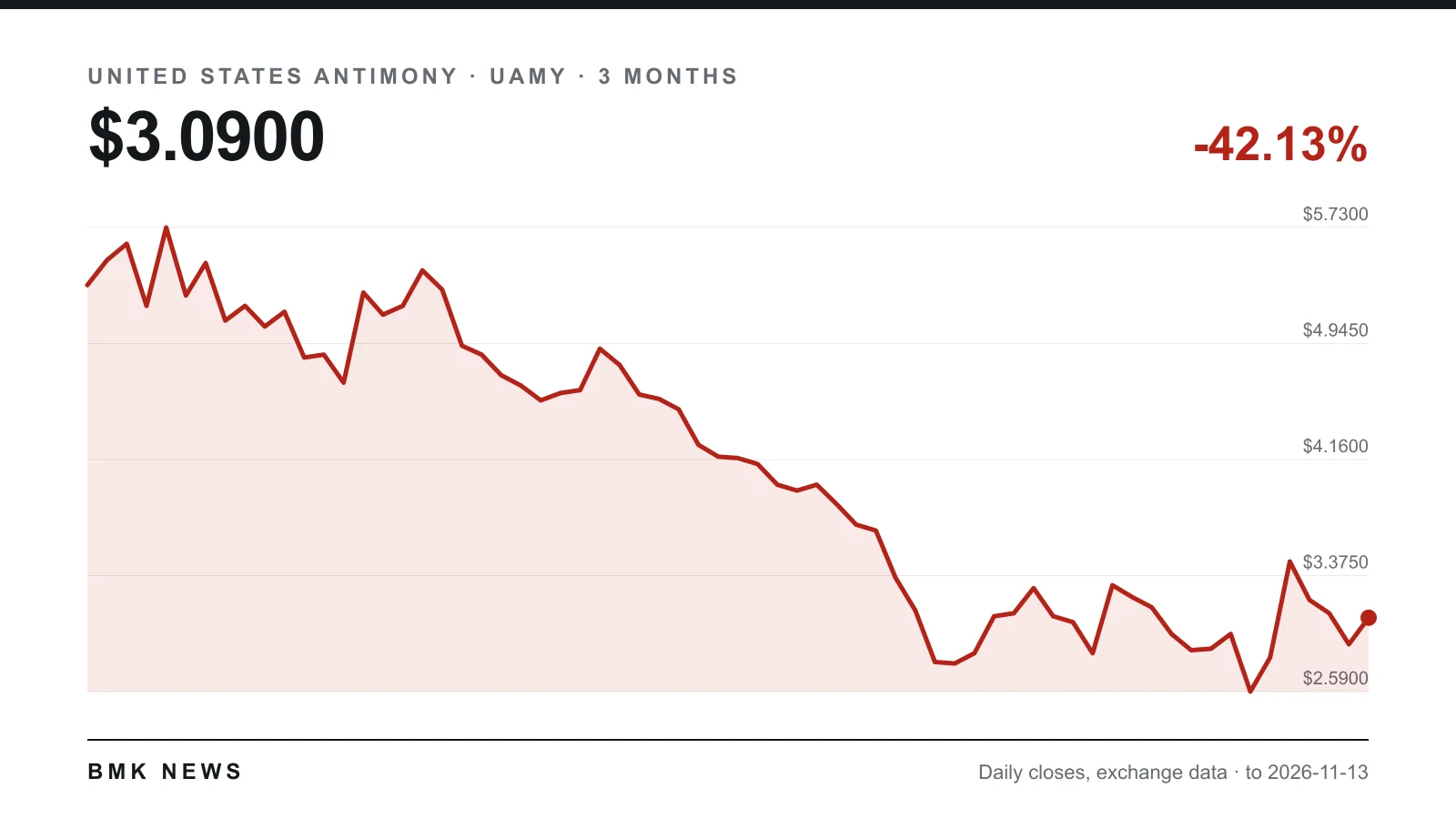
United States Antimony: share price, chart and news
Pentagon deliveries take longer than planned
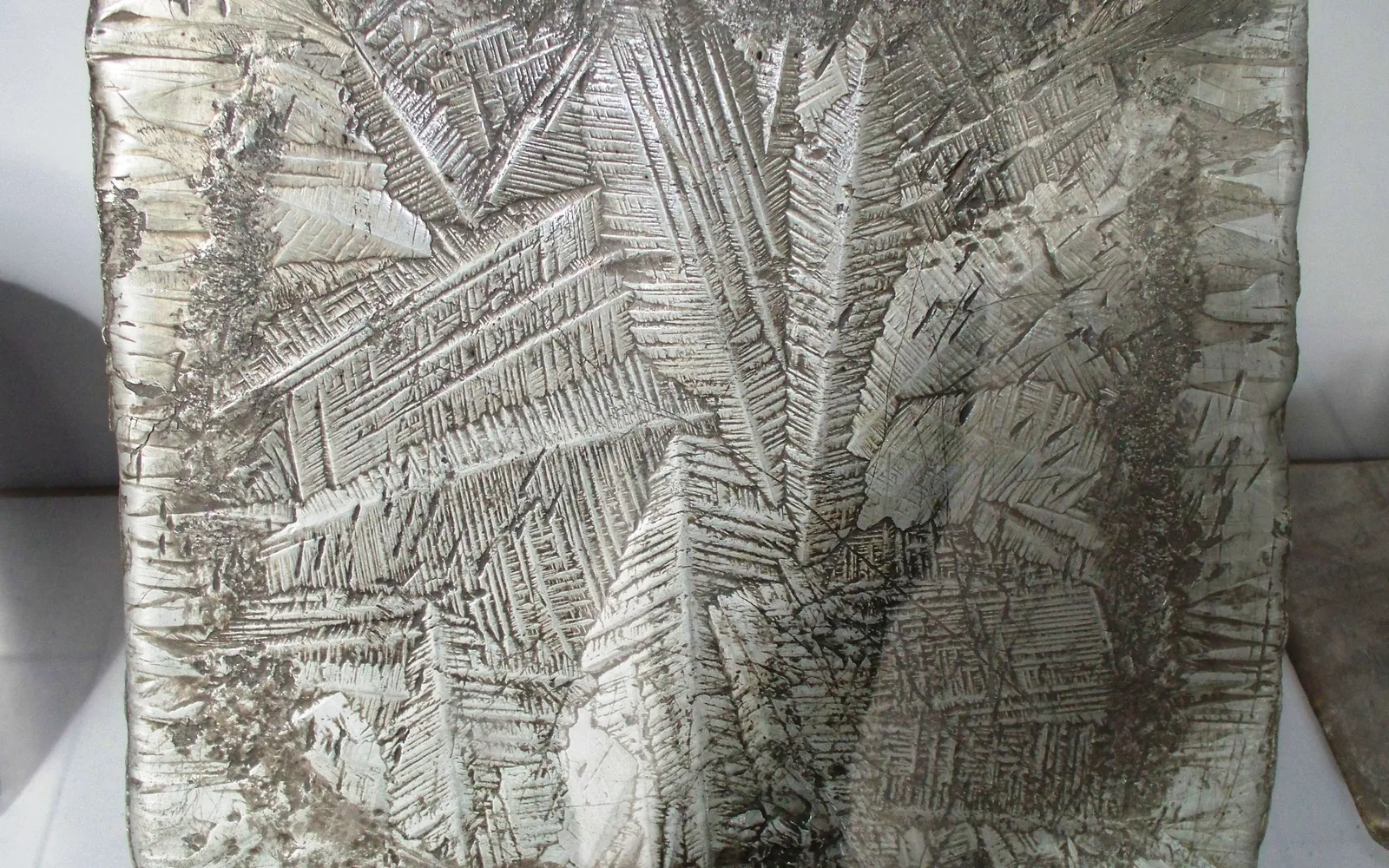
The company sells antimony metal ingots to the Defense Logistics Agency (DLA) under a five-year indefinite-delivery contract that carries no minimum purchase. Four delivery orders placed so far cover about 3.03 million pounds worth $57.3 million, of which about $8.7 million had been accepted and paid by the end of October.
In the third quarter the DLA took 162,327 pounds of ingots, worth about $5.1 million at a realised price of roughly $31.50 a pound. In August, management had expected $9 million to $10 million of DLA revenue in the quarter. Lots 5 to 7 were accepted on 14 October, while lots 8 to 14, about 249,000 pounds worth about $6.6 million, were still waiting for sampling or acceptance. The company said the time from sampling to payment had fallen to about 70 days, from as long as 124 days earlier in the programme.
Chairman and chief executive Gary C. Evans said: "we are moving to volume-based guidance beginning today."
Industrial prices have collapsed
Outside the defence contract, the picture is one of more volume at much lower prices. Industrial sales, mainly antimony trioxide, rose about 10% to 306,515 pounds, but the realised price fell to about $12.16 a pound from $28.72 a year earlier. The company noted that the Argus Rotterdam benchmark price dropped about 63% between late October 2025 and 5 November 2026, to about $8.16 a pound.
October brought a record month of about 310,000 pounds sold, including about 113,360 pounds of DLA ingots. The industrial price averaged $10.45 a pound that month.
Guidance in pounds, not dollars
Earnings Whispers noted that the company had cut its 2026 revenue target to $60 million to $75 million from $125 million about three months ago. That range has now been withdrawn and replaced with volume targets.
| Product | January to October 2026 | Full-year 2026 guidance |
|---|---|---|
| Industrial antimony | 1,210,543 lb | 1.40m to 1.45m lb |
| DLA metal ingots | 275,688 lb | 275,688 to 355,615 lb |
| Total antimony | 1,486,231 lb | 1.68m to 1.81m lb |
| Zeolite | 15,433 tons | 17,500 to 18,500 tons |
The low end of the DLA range assumes no further acceptances this year. The top end assumes lots TF-8 and TF-9, about 79,927 pounds, are accepted by 31 December. The company also warned that buyers of antimony trioxide traditionally slow their purchases in December.
Cash, buybacks and the risks
At 30 September the company held $51.0 million in cash, cash equivalents and Treasury bills, plus the Larvotto stake valued at $39.4 million and an undrawn $19.0 million margin credit line. In the first nine months it used $24.7 million in operations, a figure that included a $16.2 million build-up of inventory, and spent $28.4 million on capital projects, partly offset by $12.8 million of government grant money. It raised $49.1 million net by selling shares at the market.
It is also buying shares back under a $100 million programme approved in August: 368,640 shares for about $1.7 million in the third quarter and 404,397 more for about $1.4 million in October.
The risks are plain in the filing. The DLA can change, delay or end orders, and the timing of acceptance is outside the company's control. The expanded Thompson Falls smelter in Montana is ramping up more slowly than planned, the business relies on third-party feed including a Bolivian supplier, and continued losses have been funded partly by issuing new shares.