Newmont, the world's largest gold miner, reported record third-quarter adjusted earnings last week. Its shares fell 4.6% the following day. Over the same week a widely followed ETF of junior gold miners lost 9.6%, while gold itself fell 4.1% and briefly slipped below $4,000 an ounce. For anyone who owns miners as a way to gain exposure to gold, the gap is the point: mining shares amplify the metal's moves, in both directions. This explainer sets out why.
Last week in gold
- -4.1% gold over the week, dipping below $4,000 an ounce on Friday
- -9.6% GDXJ junior-miner ETF over the week
- -4.6% Newmont shares the day after record results
A Record Quarter That Disappointed
Newmont's numbers for July to September were strong by any historical measure. The company reported adjusted net income of $2.3bn, or $2.20 a share, and net income attributable to shareholders of $2.5bn. It sold gold at an average realised price of $4,317 an ounce, while its all-in sustaining costs (AISC) were $1,454 an ounce. That left a margin of roughly $2,860 on every ounce. Free cash flow was $1.9bn and the company ended the quarter with $3.2bn of net cash.
The market looked past the quarter to what comes next. Newmont expects fourth-quarter AISC of about $1,900 an ounce. The company said unit costs will rise mainly because of higher sustaining capital spending and lower volumes of co-products. It still improved its full-year cost guidance, to AISC of $1,520 an ounce, and kept its production target of 5.26 million attributable ounces.
So investors were looking at a quarter in which gold was falling and costs per ounce were set to jump by more than $400. That combination is exactly what operating leverage punishes.
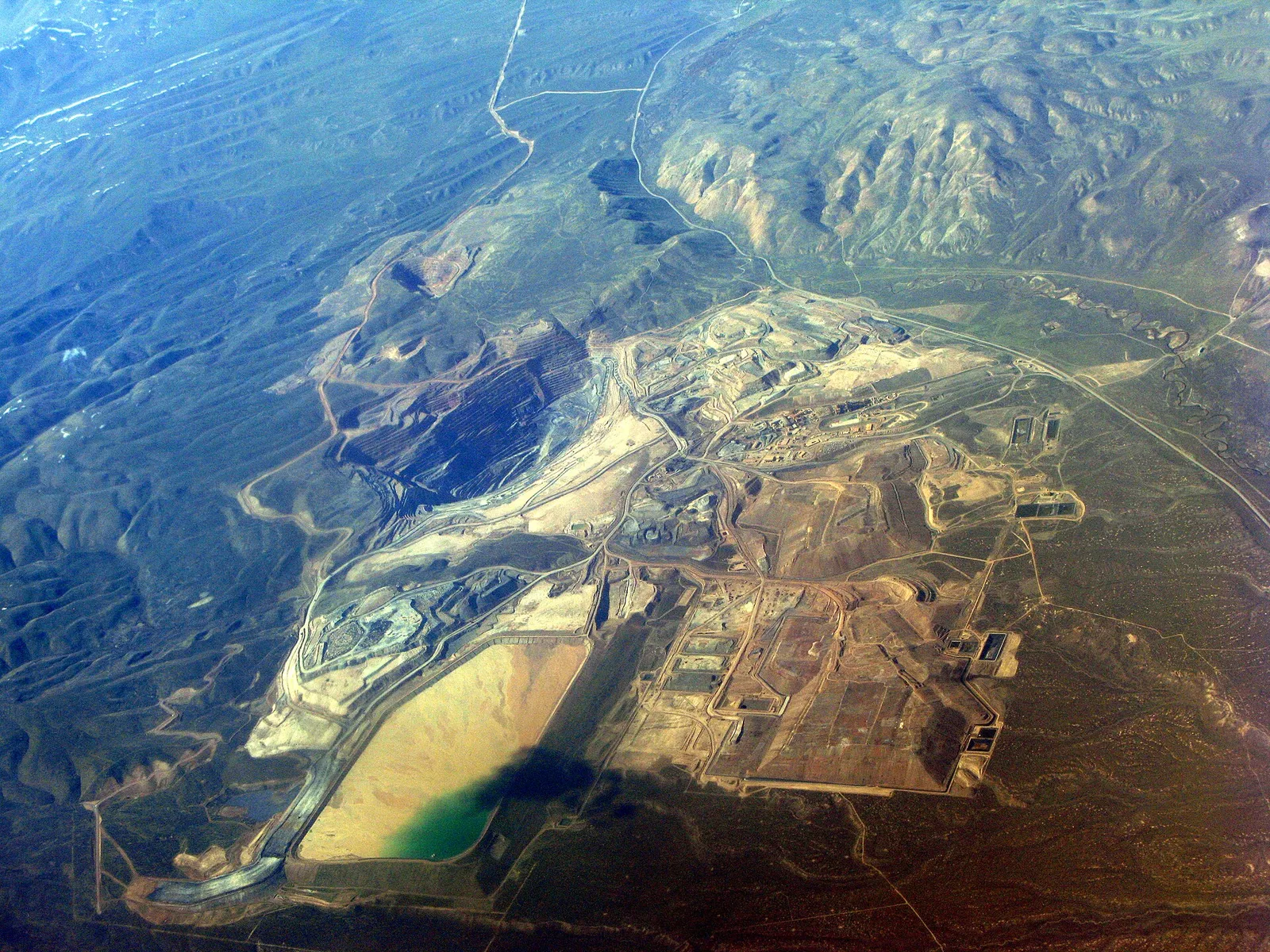
What Operating Leverage Means for a Miner
A gold miner's revenue moves with the gold price, but much of its cost base does not. Wages, fuel, equipment, maintenance and the capital needed to keep a mine running have to be paid whatever gold does. Profit is the gap between the two, and a gap changes faster than either side.
The standard yardstick is all-in sustaining costs. AISC adds the capital needed to keep existing mines producing, plus some overheads, to the direct cost of mining and processing the ore. In Newmont's third quarter, direct costs applicable to sales were $832 an ounce, so the remaining $600 or so of its $1,454 AISC was made up of sustaining capital, overheads and other items. AISC leaves out spending on new mines, so a company's total outlay per ounce can be higher still.
Take Newmont's third quarter as the starting point. With gold at $4,317 and costs at $1,454, the margin is about $2,860 an ounce. If gold drops to $4,000 and costs rise to the $1,900 Newmont expects for the fourth quarter, the margin falls to about $2,100. Gold would be only about 7% lower, but the margin per ounce would be about 27% smaller.
The effect grows as the price falls further, and it is harsher for higher-cost producers. The table below runs the same simple arithmetic for a few scenarios, using Newmont's reported figures and a hypothetical higher-cost producer.
| Scenario | Gold price | Cost per ounce | Margin per ounce | Gold change vs Q3 | Margin change vs Q3 |
|---|---|---|---|---|---|
| Newmont Q3 actual | $4,317 | $1,454 | ~$2,860 | ||
| Gold $4,000, Q4 costs | $4,000 | $1,900 | ~$2,100 | about -7% | about -27% |
| Gold $3,500, Q3 costs | $3,500 | $1,454 | ~$2,050 | about -19% | about -29% |
| Gold $3,500, Q4 costs | $3,500 | $1,900 | ~$1,600 | about -19% | about -44% |
| Higher-cost miner, $3,500 (vs its own ~$1,820 Q3 margin) | $3,500 | $2,500 | ~$1,000 | about -19% | about -45% |
The same arithmetic works upwards, which is why miners tend to outperform the metal during a rally. When gold rises and costs stay put, each extra dollar goes straight to the margin. Investors who buy miners are buying that amplified exposure, whether they intend to or not.
Why Juniors Move Most
The GDXJ ETF, which holds smaller and mid-sized producers and developers, fell 9.6% over the week, including 6.75% on Thursday and 1.83% on Friday, to close at $99.35. That was 12% below its 12 October close of $112.92. The larger-company GDX fund fell less on Friday than Newmont did.
Smaller miners tend to swing harder for several reasons:
- Higher costs. Many juniors run fewer, smaller or lower-grade mines, so their cost per ounce is higher and their margin thinner. As the table shows, a thin margin shrinks fastest in percentage terms.
- Funding needs. Developers that are still building mines rely on raising money. A falling gold price makes that harder and more costly, which hits share prices before it hits production.
- Less diversification. A company with one or two mines has nowhere to hide if a single operation runs into trouble.
- Liquidity. Smaller shares are traded less, so selling pressure can move prices further.
The core ideas
- A miner's profit is the gap between the gold price and its costs, and that gap moves faster than either
- Rising costs and falling prices together hit margins twice
- Higher-cost and smaller producers show the strongest swings
- The same leverage works upwards in a rally
- Owning miners is not the same as owning gold
Oil, Inflation and Interest Rates
Last week's sell-off also had causes outside the gold price itself. Brent crude rose to a six-month high of $116.72 a barrel on Friday, up more than 6% on the week. Diesel powers the trucks, shovels and generators at most large mines, so a higher oil price feeds directly into operating costs, adding pressure on the cost side of the margin just as revenue falls.
Inflation expectations are rising too. The final October University of Michigan survey put US households' year-ahead inflation expectations at 4.7%, with long-run expectations at 3.5%. The Federal Reserve already raised its target range by a quarter point in September, to 3.75% to 4%, and CME's FedWatch tool showed about an 84% chance of another rise by the end of the year as of early Friday. Higher interest rates raise the opportunity cost of holding gold, which pays no income, and they also make borrowing more expensive for miners funding new projects.
The result is a double squeeze. Inflation pushes up mining costs, while the higher rates used to fight it weigh on the gold price. Miners feel both.
What It Means for Investors Using Miners as a Gold Play
There are broadly two ways to gain exposure to gold through a stock market account. One is a product that tracks the metal, such as a physically backed exchange-traded commodity. The other is shares in mining companies, held individually or through a fund like GDX or GDXJ.
The first tracks the gold price, less fees. The second is a bet on gold plus a bet on the companies' costs, management, mine performance, financing and the countries they operate in. Miners can pay dividends, as Newmont does, which physical gold cannot. Newmont declared $0.26 a share for the third quarter and returned $1.9bn to shareholders through dividends and buybacks since its previous results. But miners also add risks that have nothing to do with the metal.
Last week showed the trade-off clearly. A company can post record profits and still see its shares fall harder than gold, because the market is pricing the next quarter's margin, not the last one. For investors, the useful questions are what a miner's costs are, whether they are rising, and how much of a fall in the gold price its margin could absorb.