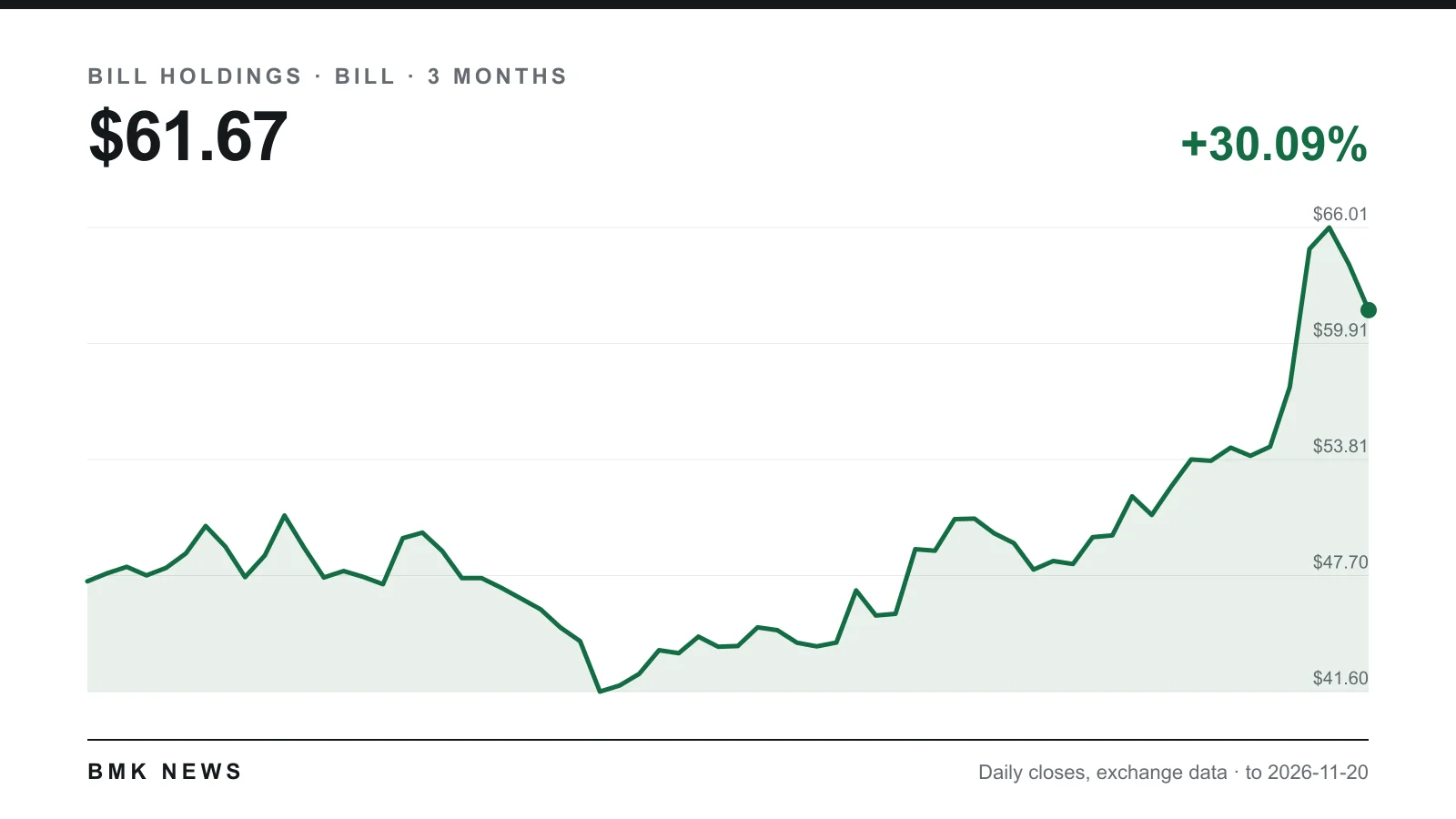
BILL Holdings, the US payments software company used by nearly 500,000 businesses, has agreed to be bought by TPG and Corpay for $63.25 a share in cash, about $6.0bn. That is below the $64.08 at which BILL shares closed on Thursday 19 November, and by late morning on Friday the stock was down about 4%. BILL still calls the price a 31% premium, because it measures from before news of the talks broke.
The BILL deal in numbers
- $63.25 cash per share from TPG and Corpay, about $6.0bn in all
- 31% premium BILL cites, against its 60-day average price to 16 November
- $61.53 BILL share price at 11:44am New York time on Friday, down 3.98%
What TPG and Corpay are paying for BILL
BILL announced the agreement on Thursday 19 November. TPG, an alternative asset manager with $346bn under management, will take a majority stake through TPG Capital, its US and European private equity arm. Corpay, an S&P 500 payments group whose businesses include corporate cards, cross-border payments and fuel and toll spending for vehicles, will take a minority stake. BILL said the price gives it a fully diluted equity value of about $6.0bn.
BILL sells software that lets businesses pay suppliers, collect on invoices and manage expenses, and says its platform processes more than 1% of US GDP each year. Its board approved the sale unanimously.
René Lacerte, who founded BILL and will stay on as chief executive, said the deal was "delivering significant, certain, and immediate value to our stockholders". Once it closes, BILL will become a private company and its shares will no longer trade on any exchange.
Why the BILL takeover price sits below the last close
This is the odd part. On Monday 16 November BILL shares closed at $57.63, according to StockAnalysis price data. On Tuesday, as media reported that BILL was in acquisition talks, they jumped 12.6% to $64.88 on 10.1 million shares, almost four times the 2.6 million traded the day before. By Thursday's close they still sat at $64.08.
So the agreed price of $63.25 came in 1.3% below where the market had already taken the stock. Anyone who bought above that level after the leak now holds shares worth less than the offer. By 11:44am New York time on Friday the shares had slipped to $61.53, down 3.98%.
That leaves the stock $1.72, or about 2.7%, below the cash offer. A gap like this is normal for a pending takeover: it reflects the months of waiting before payment and the small chance that the deal fails. Avio shares also stayed below ICEYE's €41 offer earlier this week.
How a takeover premium is measured
A takeover premium is the offer price compared with a reference share price, expressed as a percentage. The answer depends entirely on which reference price is chosen, and the BILL deal shows how wide the range can be.
| Reference price | BILL share price | Premium of the $63.25 offer |
|---|---|---|
| 60-day volume-weighted average to 16 November | about $48.28 (implied) | 31% |
| Close on Monday 16 November, before the leak | $57.63 | 9.8% |
| Close on Thursday 19 November, before the announcement | $64.08 | minus 1.3% |
The 31% figure uses a volume-weighted average price, or VWAP: the average over 60 trading days, with busy days counting for more than quiet ones. BILL said 16 November was the last full trading day before the media reports, so this measure strips out the jump the leak caused. The implied average of about $48 is worked out from BILL's own 31% figure.
Many deals quote the premium against the last close instead, as when Eagle Nuclear offered a 92% premium for Noble Plains this month. Both methods are common, so anyone comparing deals should check which price each one starts from.
Three ways to read the BILL premium
- Against the 60-day average before the leak: 31% above
- Against the last close before the leak: 9.8% above
- Against the last close before the announcement: 1.3% below
Starboard's backing and the road to closing the BILL deal
BILL said Starboard Value, its largest stockholder, and Mr Lacerte have both agreed to vote their shares in favour. That support matters because the deal still needs approval from BILL stockholders at a special meeting, as well as regulatory clearance. There is no financing condition, so the buyers' ability to raise the money is not a reason the deal could fall away. The companies expect to close in the first half of 2027.
The sale comes two weeks after BILL reported first-quarter results above its own outlook. Total revenue was $353.8m in the three months to 30 September and core revenue grew 14.3% from a year earlier, the company said.
BILL joins other listed companies that agreed to private equity buyouts this autumn, such as EQT's €10.8bn deal for Qiagen in October. More company news is on the business page.
How much is TPG paying for BILL Holdings?
TPG and Corpay agreed on Thursday 19 November to pay $63.25 a share in cash for BILL Holdings, a fully diluted equity value of about $6.0bn. TPG will hold the majority stake and Corpay a minority stake.
Why did BILL stock fall after the buyout news?
BILL shares were down about 4% at $61.53 on Friday morning, 20 November, because the agreed $63.25 price was below Thursday's $64.08 close. The stock had jumped earlier in the week after media reports of takeover talks.
When will the BILL takeover close?
BILL expects the deal to close in the first half of 2027, subject to a stockholder vote and regulatory approvals. Starboard Value, its largest stockholder, has agreed to vote in favour.