Capricor Therapeutics shares were quoted 78% lower in after-hours trading late on Friday 20 November, after the FDA rejected deramiocel, the company's cell therapy for Duchenne muscular dystrophy, for the second time. The agency said "serious clinical trial data integrity deficiencies" in the pivotal HOPE-3 trial make its data unreliable. The San Diego biotech stands by its data and now weighs its next move with about $198.5m of cash and securities.
Capricor after the FDA's letter
- 78% after-hours fall in the share price, from a $7.59 close to $1.64
- $198.5m cash, equivalents, restricted cash and marketable securities at 30 September
- 2 complete response letters for deramiocel, in July 2025 and November 2026
What the FDA said about deramiocel and the HOPE-3 trial
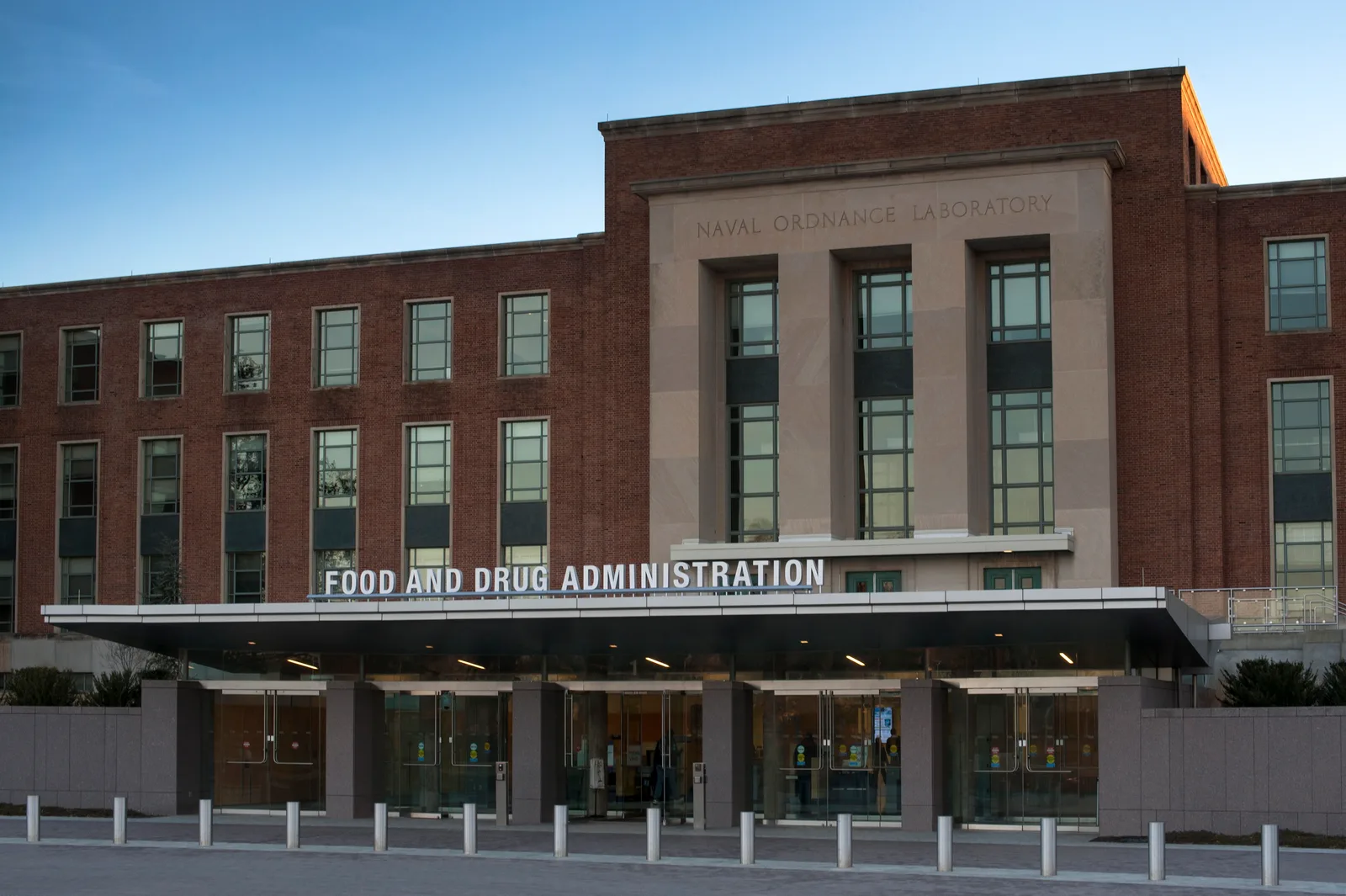
The decision landed two days before the FDA's target date of Sunday 22 November. The agency sent Capricor a complete response letter, the formal notice that an application cannot be approved as it stands, and published a statement explaining why.
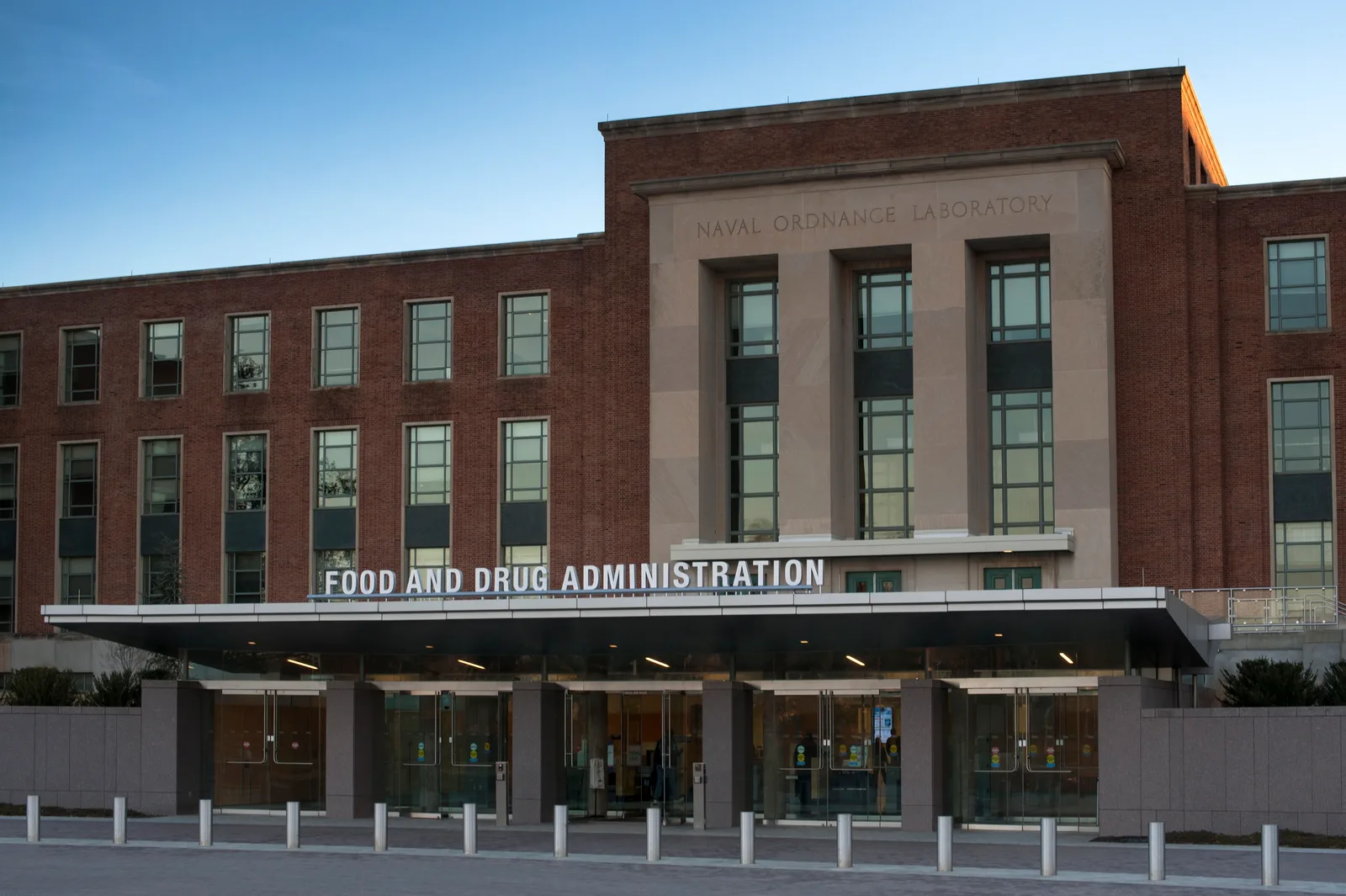
An inspection by the FDA's Bioresearch Monitoring programme, which checks how clinical trials are run, found serious deficiencies in HOPE-3. The agency listed three: changes to the statistical analysis plan made after the fact without authorisation, breaches of the blinding rules that keep doctors and families from knowing who received the real treatment, and further protocol violations that, in the FDA's words, "individually and collectively, compromise the reliability of the study data."
No reanalysis can repair that, the FDA said. The problems "amplified" its concerns that HOPE-3 had missed its pre-specified primary and secondary goals, and the agency "cannot approve a product on the basis of data whose reliability has been compromised." Capricor can respond to the inspection findings, which the FDA set out in a separate letter.
On Monday the agency also turned down Summit Therapeutics' lung cancer drug, for want of a clear gain in survival.
How Capricor answered the FDA
Capricor does not accept the verdict on its science. "We stand behind the rigor of our clinical program and the integrity of our data, and we believe the data support approval," said chief executive Linda Marbán. She pointed out that both of its double-blind, placebo-controlled trials, HOPE-2 and HOPE-3, met their primary endpoints.
In December 2025 Capricor reported that HOPE-3, which enrolled 106 patients, met its main goal on PUL v2.0, a scale that scores arm and hand function, slowing decline by 54% against placebo with a p-value of 0.029. The FDA's statement did not spell out which changes to the analysis plan it objected to.
One detail stands out. On 10 November, Capricor said the FDA's July inspection had ended with a Form 483, the agency's written list of inspection findings, containing a single observation. Ten days later the FDA called the trial's problems serious enough to make the data unreliable. Three days before that 10 November update, HOPE-3's heart results had won an American Heart Association research award.
| Date | What happened |
|---|---|
| July 2025 | First complete response letter for deramiocel |
| 3 December 2025 | Capricor reports HOPE-3 met its primary endpoint |
| 10 March 2026 | FDA resumes review; target date set for 22 August |
| 29 July 2026 | Advisers vote 9 to 3 that the evidence did not show it works for Duchenne heart disease |
| 24 August 2026 | Review extended to 22 November after a major amendment refocusing the request on upper limb function |
| 20 November 2026 | Second complete response letter |
What the rejection means for Duchenne families
Duchenne is a genetic muscle-wasting disease that mainly affects boys. Damage to the heart muscle leads to heart failure, the most common cause of death. Capricor says about 15,000 people in the US live with it. There is no cure.
Parent Project Muscular Dystrophy, the US patient group, called the decision "devastating" and "heartbreaking news for the Duchenne community", above all for families who gave years to the trials. It said the letter does not, on its own, decide whether trials or access programmes continue, and told families in deramiocel studies to contact their study team. The group said it would seek clarification for participants and work with both Capricor and the FDA, adding that the ruling "does not yet mark the end of the road."
The FDA said it shares families' hope for effective treatments, but that flexibility "cannot come at the cost" of reliable data. On Monday the same agency approved Roche's breast cancer pill Wilserdly.
What happens next for Capricor and its shares
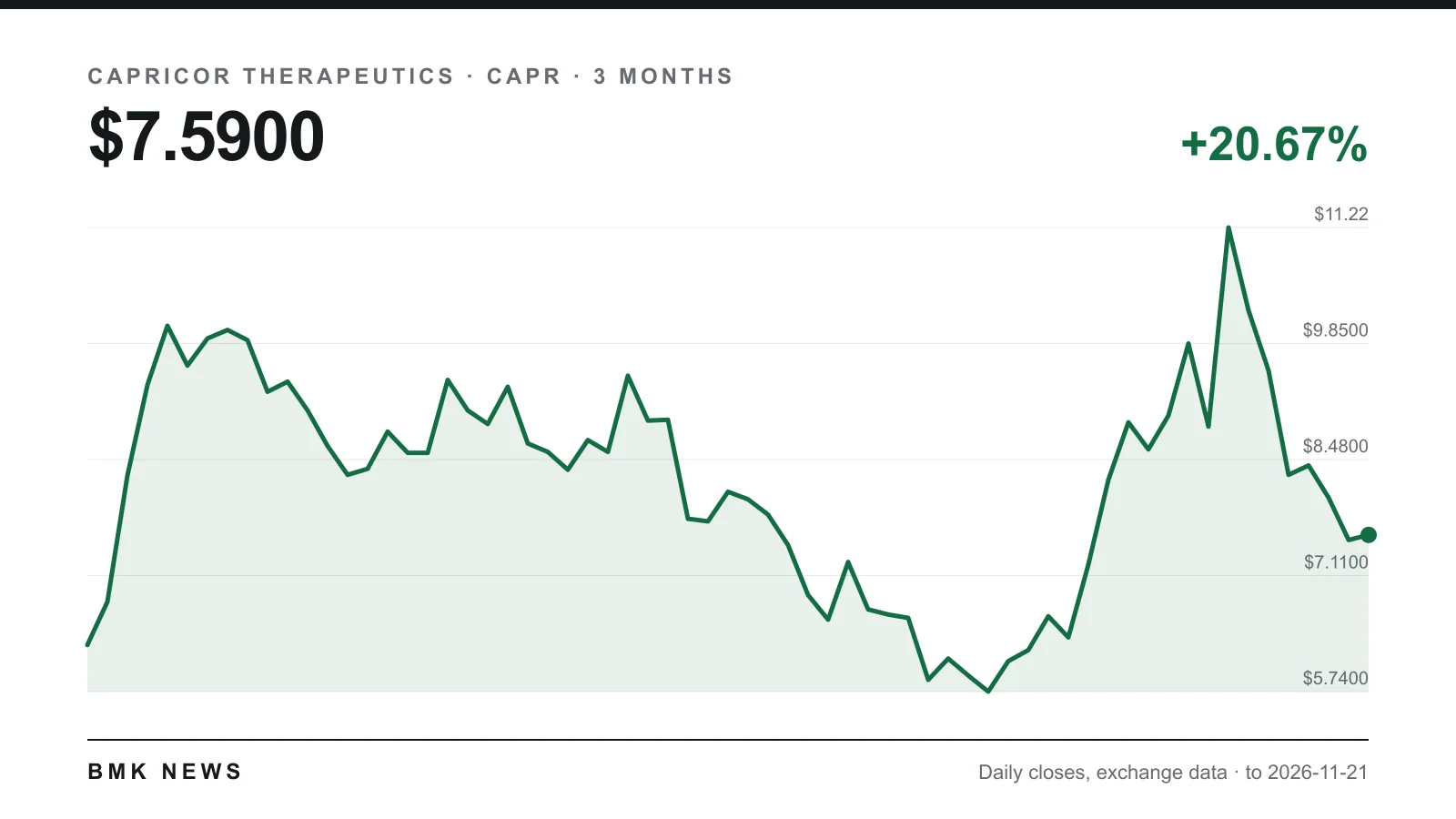
The shares closed Friday's regular session at $7.59, up 0.8%, giving Capricor a market value of about $441m, according to Google Finance data. The company's release went out at 7:55pm New York time, and by 7:59pm the stock was quoted at $1.64 in after-hours trading. Over the past year the shares have traded as high as $40.37 and as low as $2.96.
Capricor says its $198.5m will last at least 12 months, and it is reviewing costs to stretch it. That cushion has been shrinking: it held about $318.1m at the end of 2025, and operating expenses reached $44.7m in the third quarter alone, up from $26.3m a year earlier, mainly on launch preparations and manufacturing. It had already cut about 10% of its staff in that quarter.
Biotech shares can swing just as hard the other way on a single result, as when Kodiak Sciences nearly tripled on phase 3 wins in September. For Capricor, the next clue comes on Monday 23 November, when it hosts a conference call and webcast at 8:30am Eastern time (14:30 in Central Europe).
Why did the FDA reject Capricor's deramiocel?
The FDA rejected deramiocel on 20 November 2026 because it judged the evidence short of the approval standard. It cited serious data integrity problems in the HOPE-3 trial, including unauthorised changes to the statistical analysis plan and breaches of blinding.
Why did Capricor stock fall?
Capricor shares were quoted 78% lower after hours on Friday 20 November, at $1.64 against a $7.59 close, after the FDA rejected deramiocel a second time.
Can patients in deramiocel trials keep getting treatment?
That is not yet clear. Parent Project Muscular Dystrophy said on 21 November that the rejection does not by itself end trials or access programmes, and advised families to ask their study team or treating doctor.
Sources
- Capricor Therapeutics: Capricor Therapeutics Provides Regulatory Update on Deramiocel BLA for Duchenne Muscular Dystrophy
- U.S. Food and Drug Administration: Statement on Deramiocel BLA for Duchenne Muscular Dystrophy
- Parent Project Muscular Dystrophy: FDA Issues Complete Response Letter for Deramiocel
- Capricor Therapeutics: Capricor Therapeutics Reports Third Quarter 2026 Financial Results and Provides Corporate Update
- Capricor Therapeutics: Capricor Therapeutics Announces Extension of PDUFA Target Action Date as FDA Continues Review of Deramiocel BLA
- Capricor Therapeutics: Capricor Therapeutics Provides Update on FDA Advisory Committee Meeting for Deramiocel
- Capricor Therapeutics: Capricor Therapeutics Announces Establishment of New PDUFA Date for Deramiocel BLA
- Capricor Therapeutics: Capricor Therapeutics Announces Positive Topline Results from Pivotal Phase 3 HOPE-3 Study of Deramiocel in Duchenne Muscular Dystrophy
- Google Finance: Capricor Therapeutics Inc (CAPR) Stock Price & News