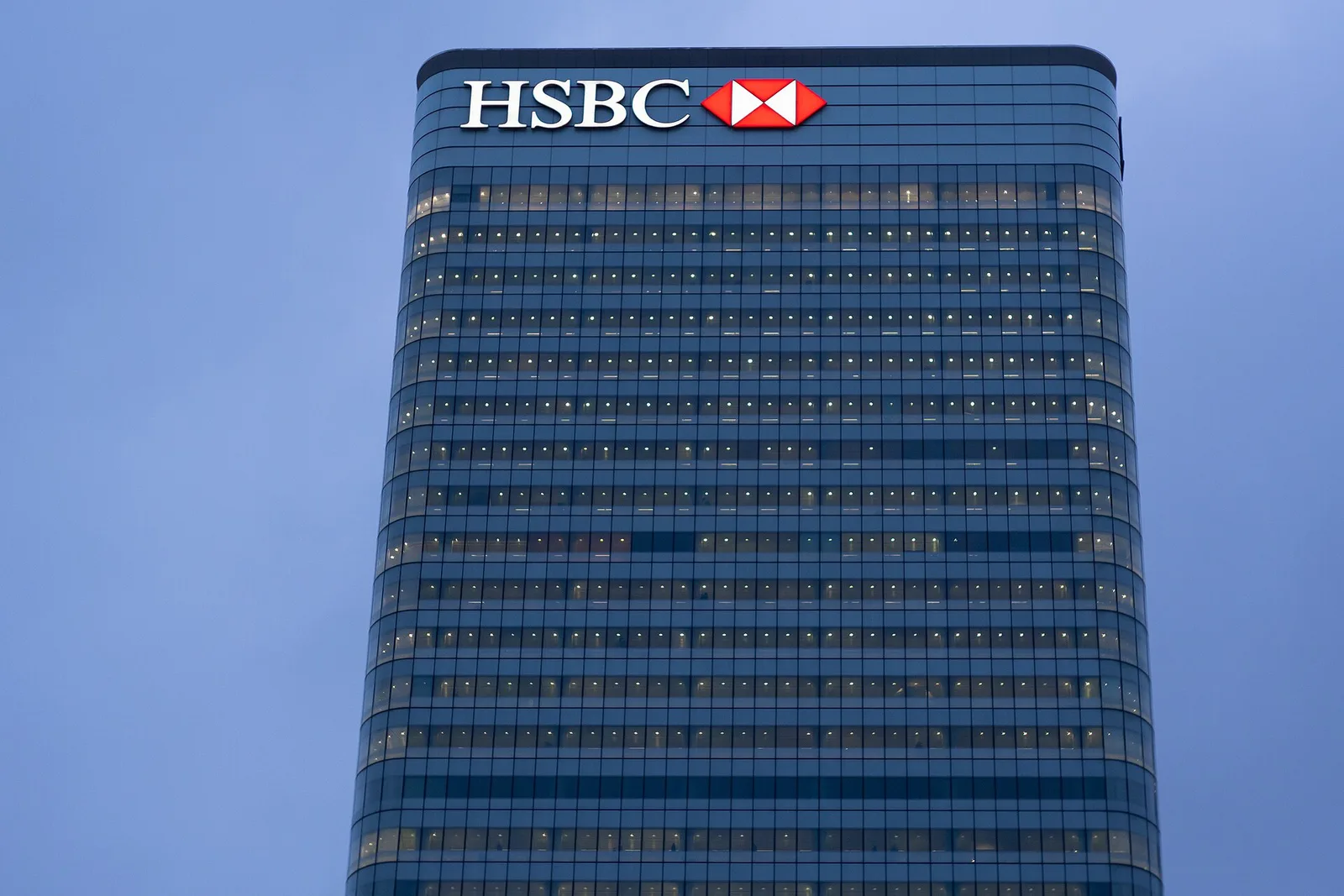
HSBC shares fell nearly 7% at the open in London on Tuesday after third-quarter revenue of $18.6bn came in below the roughly $19bn analysts expected and growth in its wealth business stalled. Pre-tax profit rose 32% to $9.6bn, in line with forecasts, but the bank left its targets unchanged rather than raising them.
Where the quarter fell short
The headline profit was not the problem. HSBC earned $9.6bn before tax in the three months to September, up from $7.3bn a year earlier and in line with estimates, according to Reuters. Profit attributable to shareholders rose 45% to $7.09bn, but that was still short of the $7.24bn the market had expected, interactive investor said.
The disappointment sat in revenue, and above all in wealth management, the business investors had been paying up for. Wealth revenue was flat at $2.7bn, Reuters reported, after year-on-year growth of 15% in the first quarter and 23% in the second. Pre-tax profit at International Wealth and Premier Banking, one of its four businesses, fell 14% to $1.1bn at constant exchange rates. Net interest income was also slightly below expectations.
The quarter in brief
- Pre-tax profit of $9.6bn, up 32% and in line with estimates
- Revenue of $18.6bn against a forecast of about $19bn
- Wealth revenue flat at $2.7bn after growth of 15% and 23% in the first two quarters
- Annualised return on tangible equity of 17.7%, up from 12.3%
- CET1 capital ratio of 13.9%, down from 14.1% in the previous quarter
Last year's comparison was also an easy one. The third quarter of 2025 carried $1.4bn of legal provisions that did not recur, which HSBC said was the main reason for the rise in profit. Expected credit losses fell 17% to $800m this time, helped partly by lower charges on Hong Kong commercial property.
No upgrade, and the same buyback
HSBC announced a new share buyback of up to $1bn, the same size as last quarter, and an interim dividend of $0.10 a share. Both were largely expected. The bank kept its guidance of a return on tangible equity of 17% or better and banking net interest income of at least $46bn this year, and said it had actioned about $1.9bn of annual cost savings against the $2bn goal it set at the half-year.
For a stock that had run hard, that was not enough. Chief financial officer Pam Kaur said: "There is sometimes a market expectation that we upgrade guidance or targets."
HSBC: share price, chart and news
Hong Kong deposits squeeze margins
Analysts at Jefferies pointed to a shift in Hong Kong, where time deposits rose 2 percentage points from the previous quarter to 38% of the portfolio. Customers moving cash into higher-paying deposits raises the bank's funding costs and is expected to erode margins. Competition for deposits in Hong Kong and the UK points the same way.
Kaur argued that HSBC is winning business: she said China's tighter rules on wealth flows had pushed clients from other Hong Kong banks to HSBC. Analysts quoted by Reuters said Asia-focused banks are bracing for slower wealth momentum after strong gains from Chinese money flowing into Hong Kong.
A second bad week in a row
Tuesday's fall comes on top of a 5.32% drop in the week to 23 October, which left the shares at £13.52, down 14.4% from £15.80 on 4 September. Interactive investor said the opening slide took losses since early August past 20%.
The reaction also reflects how high expectations had climbed. Before Tuesday the shares were up 36% over one year, against 11.5% for the FTSE 100, and had doubled over two years, interactive investor said. Even after the fall, Reuters put the stock still up about 9% for the year.
What investors watch now
The UK budget on Wednesday is the next test for the sector, after unions and campaign groups called for higher taxes on banks. Beyond that, investors will want to see whether wealth growth picks up again in the fourth quarter, how fast deposit costs rise in Hong Kong, and whether HSBC sticks to its targets for 2027 and 2028 when it reports full-year results.