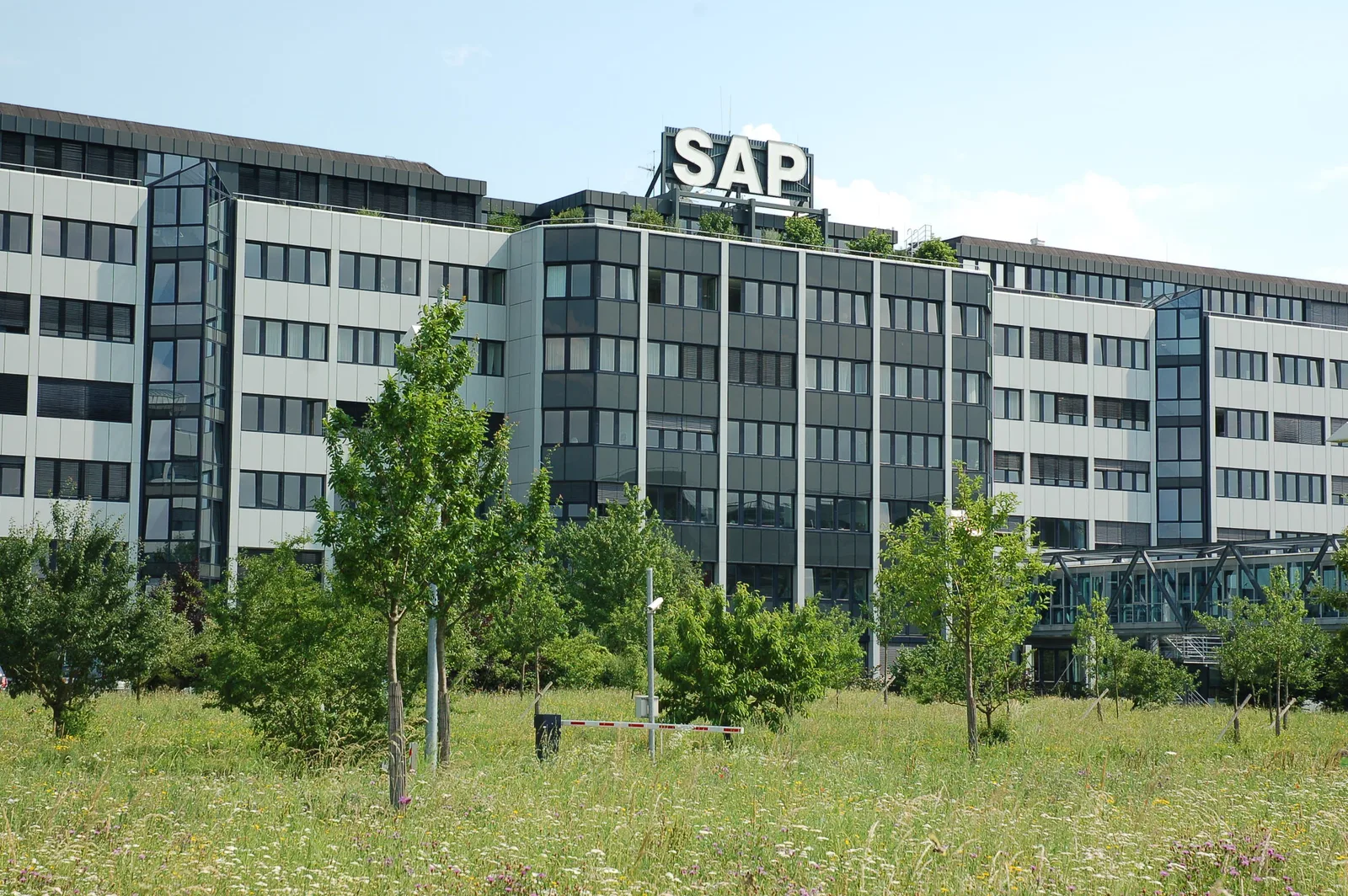
SAP's third-quarter revenue rose 13 percent to €10.27 billion as cloud sales grew 26 percent, and Europe's biggest software company said it now expects full-year cloud revenue at the upper end of its forecast range.
Cloud Now Carries the Group
The Walldorf-based group reported cloud revenue of €6.67 billion for the three months to September, up from €5.29 billion a year earlier, or 25 percent at constant currencies. Total revenue reached €10.27 billion against €9.08 billion in the third quarter of 2025, a rise of 12 percent once currency effects are stripped out. It was the first quarter in which SAP's revenue crossed €10 billion, finance chief Dominik Asam noted.
Cloud ERP Suite, the bundle of finance, supply chain, procurement and other core business software that SAP wants every large customer to run in its cloud, grew 29 percent to €5.92 billion. That is close to nine in every ten euros of cloud revenue, which shows how heavily the group now relies on moving its installed base of on-premise customers onto subscription contracts.
The number investors watch most closely, current cloud backlog, rose 28 percent to €24.14 billion, or 26 percent at constant currencies. The backlog counts contracted cloud revenue due over the next twelve months, which makes it the best single guide to growth in 2027.
SAP, third quarter 2026
- €10.27bn total revenue, up 13%
- €6.67bn cloud revenue, up 26%
- €24.14bn current cloud backlog, up 28%
Chief executive Christian Klein said in the results statement: "Q3 was an outstanding quarter, with current cloud backlog up 26% at constant currencies."
SAP: share price, chart and news
Profit Grows Faster Than Sales
Non-IFRS operating profit rose 18 percent to €3.03 billion from €2.57 billion a year earlier, passing €3 billion in a quarter for the first time, and operating profit under IFRS accounting also rose 18 percent, to €2.93 billion. Free cash flow increased 36 percent to €1.72 billion.
The weaker spot was the cloud business's own profitability. The non-IFRS cloud gross margin was 74.3 percent, 0.8 percentage points lower than a year earlier (0.7 points at constant currencies), while the IFRS cloud gross margin stood at 73.9 percent.
SAP also kept returning cash to shareholders. By 30 September it had bought back about 25.2 million shares at an average price of €164.79, roughly €4.2 billion of a programme of up to €10 billion announced in January and running until the end of 2027. The workforce grew to 113,076 full-time equivalents from 110,730 a year before.
AI Starts to Show Up in Contracts
On the call with analysts, management said nine of the quarter's 50 largest deals included artificial intelligence products or Business Data Cloud, SAP's platform for combining SAP and non-SAP data for analytics and AI. The company is making the case that AI gives customers a further reason to move core systems into its cloud, where the new tools run.
Klein also pointed to the cost side. SAP's Joule Work Desktop is live for more than 110,000 employees, he said, with productivity gains of 20 percent across central functions. The group expects up to €3 billion in efficiency gains over the next two years from AI used in engineering, sales, finance, human resources and cloud operations.
That combination, AI as a sales argument and as a lever on its own expenses, is how SAP intends to keep profit growing faster than revenue while it absorbs the cost of running more customer workloads.
Guidance Edged Up, With the Fourth Quarter Still to Come
SAP now expects 2026 cloud revenue toward the upper end of its range of €25.8 billion to €26.2 billion at constant currencies, growth of 23 to 25 percent. It gave the same steer for cloud and software revenue, toward the top of €36.3 billion to €36.8 billion.
Other targets were left unchanged. Non-IFRS operating profit is still forecast at €11.8 billion to €12.2 billion, up 13 to 17 percent, and free cash flow at about €10 billion, against €8.24 billion in 2025.
Chief financial officer Dominik Asam told analysts the company would put its full focus on fourth-quarter bookings, which typically make up about half of the year's total. He said growth in current cloud backlog would slow slightly over 2026, and cautioned that the size of the fourth-quarter order book, economic conditions and SAP's reliance on services to drive adoption of its cloud and AI products could make it harder to accelerate growth in 2027.
That leaves December as the month that decides the next leg of the story. A strong close to the year would support the backlog that underpins 2027 revenue; a softer one would test the assumption that SAP's cloud growth can keep speeding up.