United Launch Alliance's Vulcan rocket failed about 10 minutes after lift-off from Florida on Sunday 15 November, and all 40 Amazon Leo internet satellites on board were lost. It was the first outright mission loss for ULA, the Boeing and Lockheed Martin joint venture, since it was formed in 2006, and the first of 38 Vulcan launches Amazon has bought. Amazon shares fell 3.3% on Monday, and smaller space stocks fell harder.
Vulcan Leo 1 in numbers
- 40 Amazon Leo satellites lost when the rocket failed to reach orbit
- 38 Vulcan launches Amazon has booked, of which this was the first
- 3.3% fall in Amazon's share price on Monday 16 November
The rocket failed during the upper stage burn
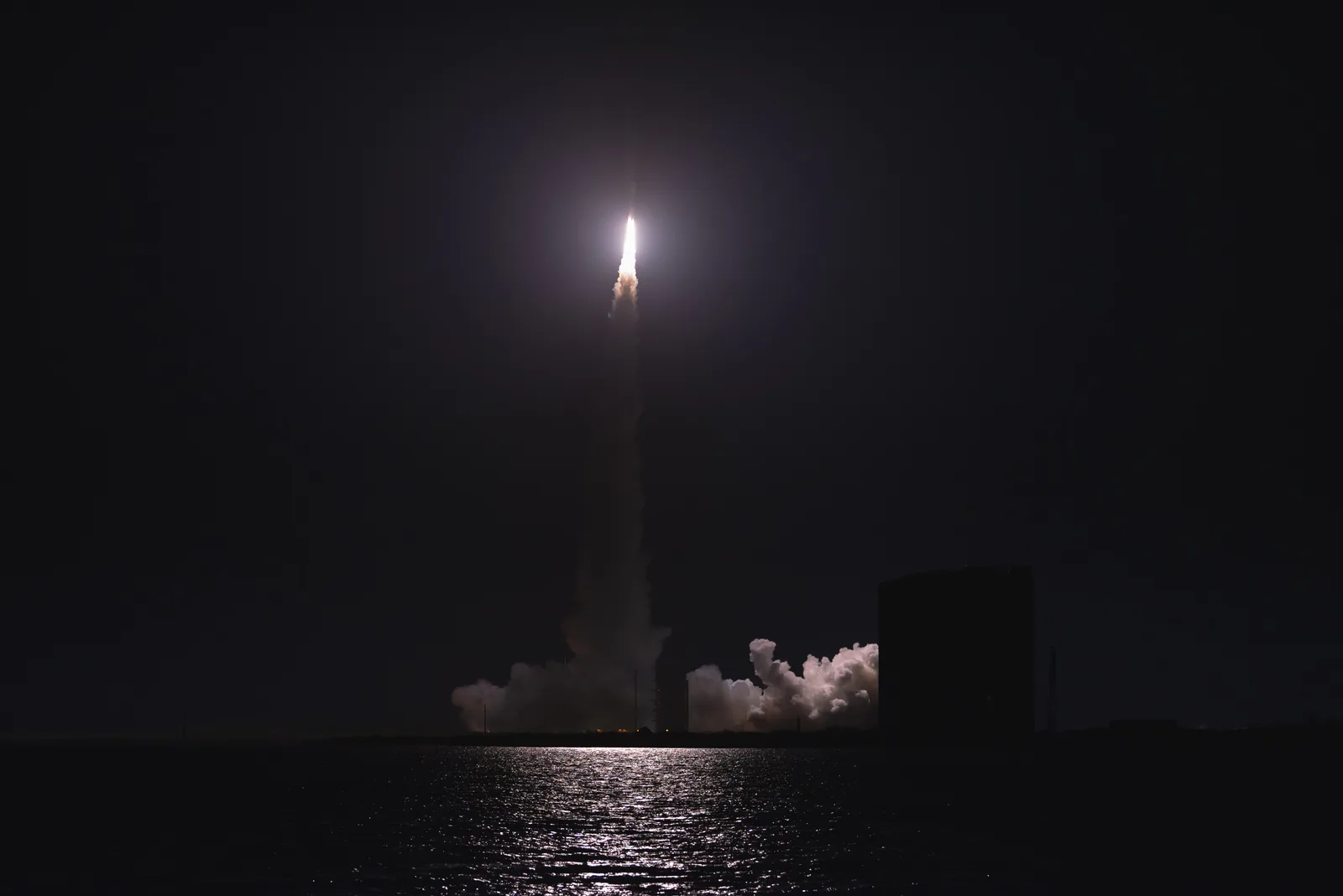
Vulcan lifted off at 12:40pm Eastern time (18:40 in Central Europe) from Space Launch Complex 41 at Cape Canaveral Space Force Station. A hold 20 seconds before launch pushed it to the last minute of its window, according to Spaceflight Now. It was the rocket's fifth flight and its first in nine months.
The six solid rocket boosters strapped to its sides, the source of trouble on earlier flights, burned out and fell away. The problem came later, during the firing of Centaur, the upper stage that carries satellites on the last stretch into orbit. Spaceflight Now reported that the first stage appeared to burn longer than planned, and that the Centaur made unusual changes in orientation early in a firing meant to last 12 minutes and 15 seconds.
About 50 minutes after launch, ULA confirmed the loss. The vehicle "suffered an anomaly 10 minutes into the flight and failed to deliver the Amazon mission to orbit," the company said. "Since the anomaly just occurred, we don't have any specific data yet to understand what occurred today." ULA said it would work with its customer to find the cause.
A comeback flight that went wrong
This flight was meant to put Vulcan's troubles behind it. On its second flight in October 2024 and the fourth in February 2026, a nozzle on one of the solid boosters burned through and fell off about 30 seconds after launch, Space.com reported. Both times the rocket still reached its planned orbit, but the US Space Force paused national security launches on Vulcan until ULA fixed the problem.
On Sunday the boosters, made by Northrop Grumman, appeared to do their job, and Space.com said a different and more serious problem struck instead. Vulcan's first stage runs on two BE-4 engines from Blue Origin, the same engine that powers Blue Origin's own New Glenn rocket. New Glenn has been sidelined since a launch pad explosion in May, which Spaceflight Now said was caused by an oxygen valve problem in one of its BE-4s. ULA has not said what caused Sunday's failure.
Amazon loses two of its main rockets at once
Amazon Leo, the satellite internet network formerly called Project Kuiper, is Amazon's answer to SpaceX's Starlink. ULA says its first phase will include more than 3,000 satellites. Sunday's launch would have taken the number Amazon has sent into space to 436, according to Spaceflight Now.
Rockets are the bottleneck. Amazon has booked 38 Vulcan flights, meant to carry more than 1,500 satellites, according to Stocktwits. It also holds 24 launches on New Glenn, 24 on Europe's Ariane 6 and 13 on SpaceX's Falcon 9. With Vulcan waiting on an investigation and New Glenn still sidelined, two of its three biggest launch suppliers are out of action at once. Arianespace plans to launch 36 Leo satellites on an Ariane 6 as early as Monday 23 November.
Amazon stood by its supplier. "ULA has been a trusted partner for Amazon," it said in a statement reported by Stocktwits.
Amazon: share price, chart and news
Space stocks fall with Amazon
Amazon closed down 3.3% at $257.75 on Monday, according to The Motley Fool, which also pointed to a new US rule tightening access to advanced AI chips in parts of Asia and Brazil. The S&P 500 fell 1.9% and the Nasdaq Composite 2.5%.
Smaller space companies fell harder. AST SpaceMobile, which is building a satellite network that connects directly to ordinary phones, lost 12.3%, even though "the rocket that failed wasn't carrying any of its satellites", as a Yahoo Finance analysis noted.
| Company | Ticker | Close on 16 November | Move on the day |
|---|---|---|---|
| Amazon | AMZN | $257.75 | down 3.3% |
| AST SpaceMobile | ASTS | $28.58 | down 12.3% |
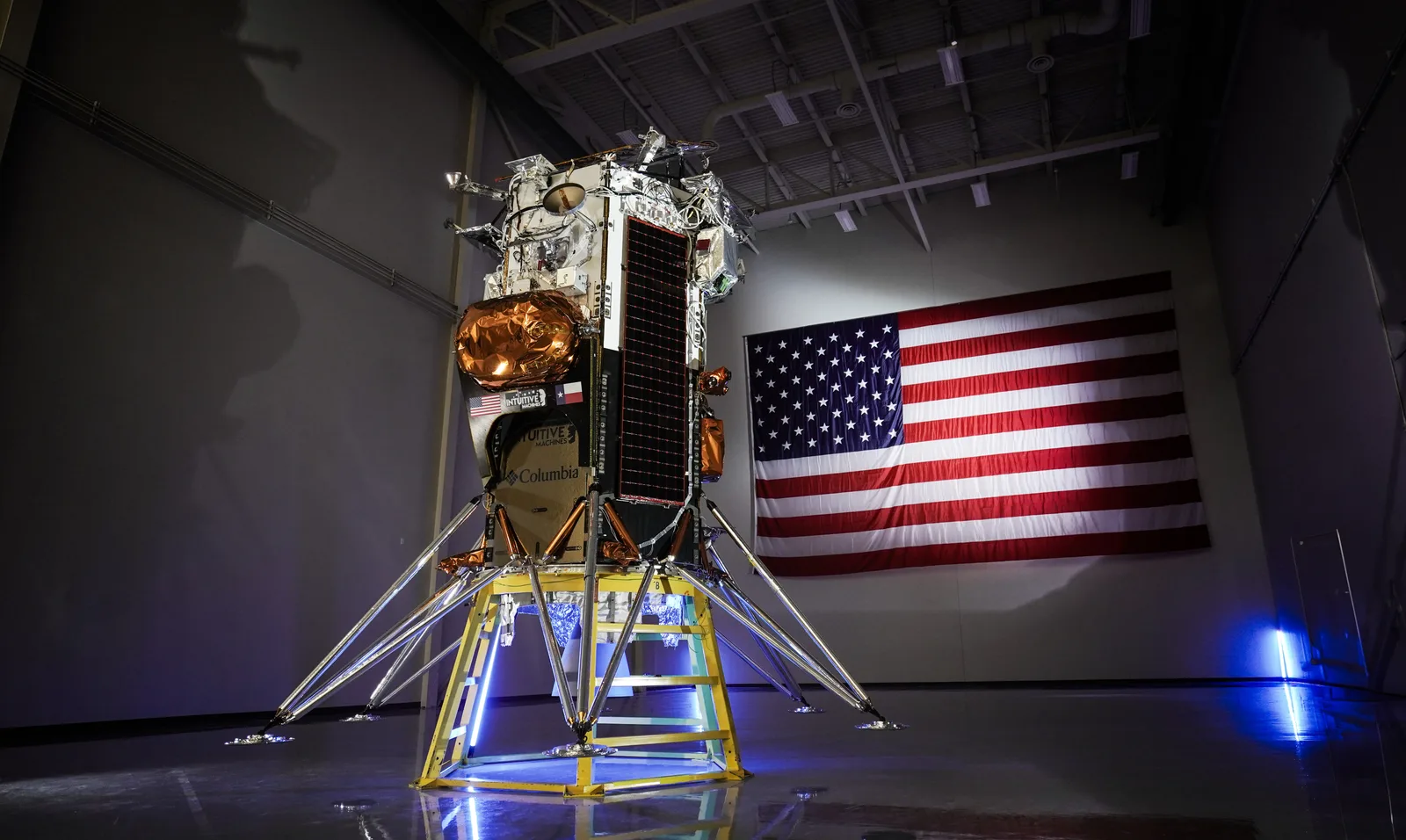
| Intuitive Machines | LUNR | $11.73 | down 9.8% |
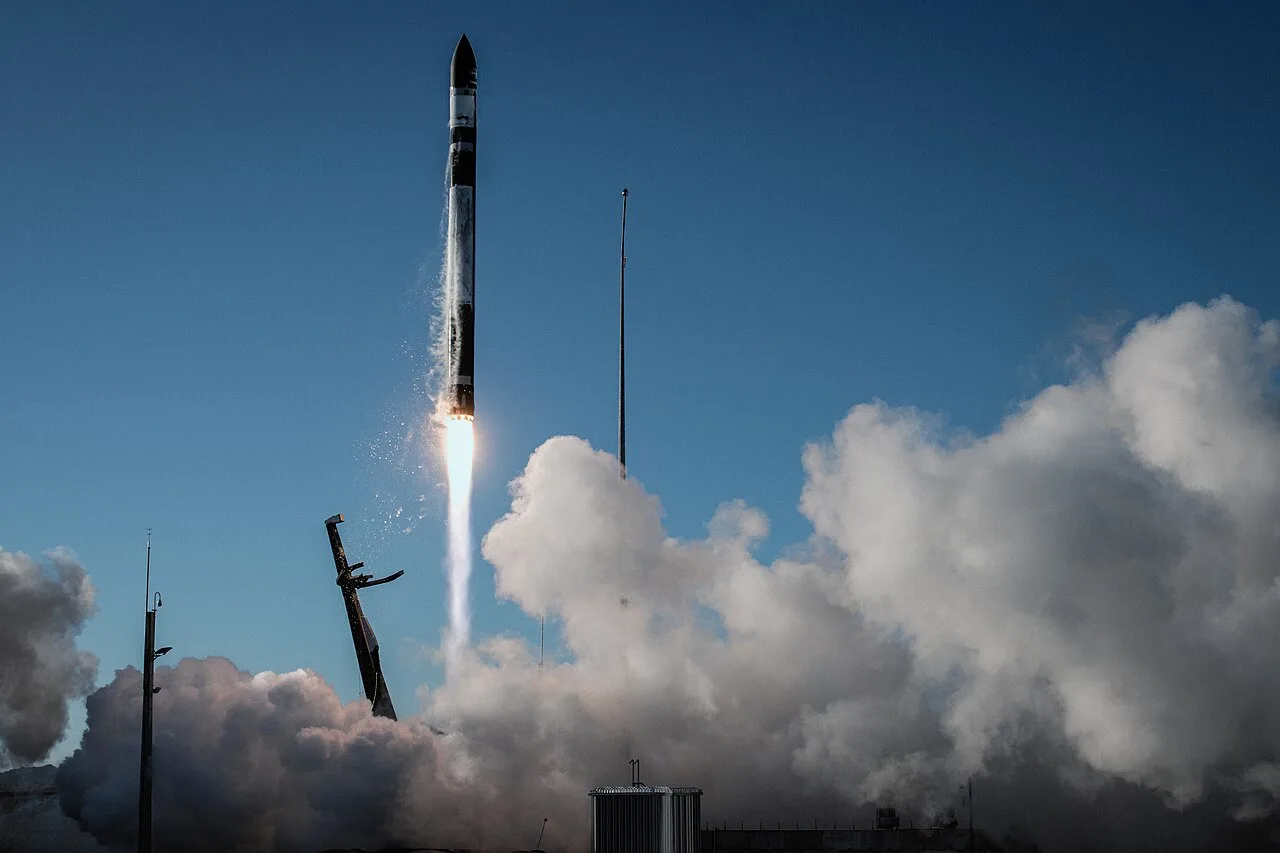
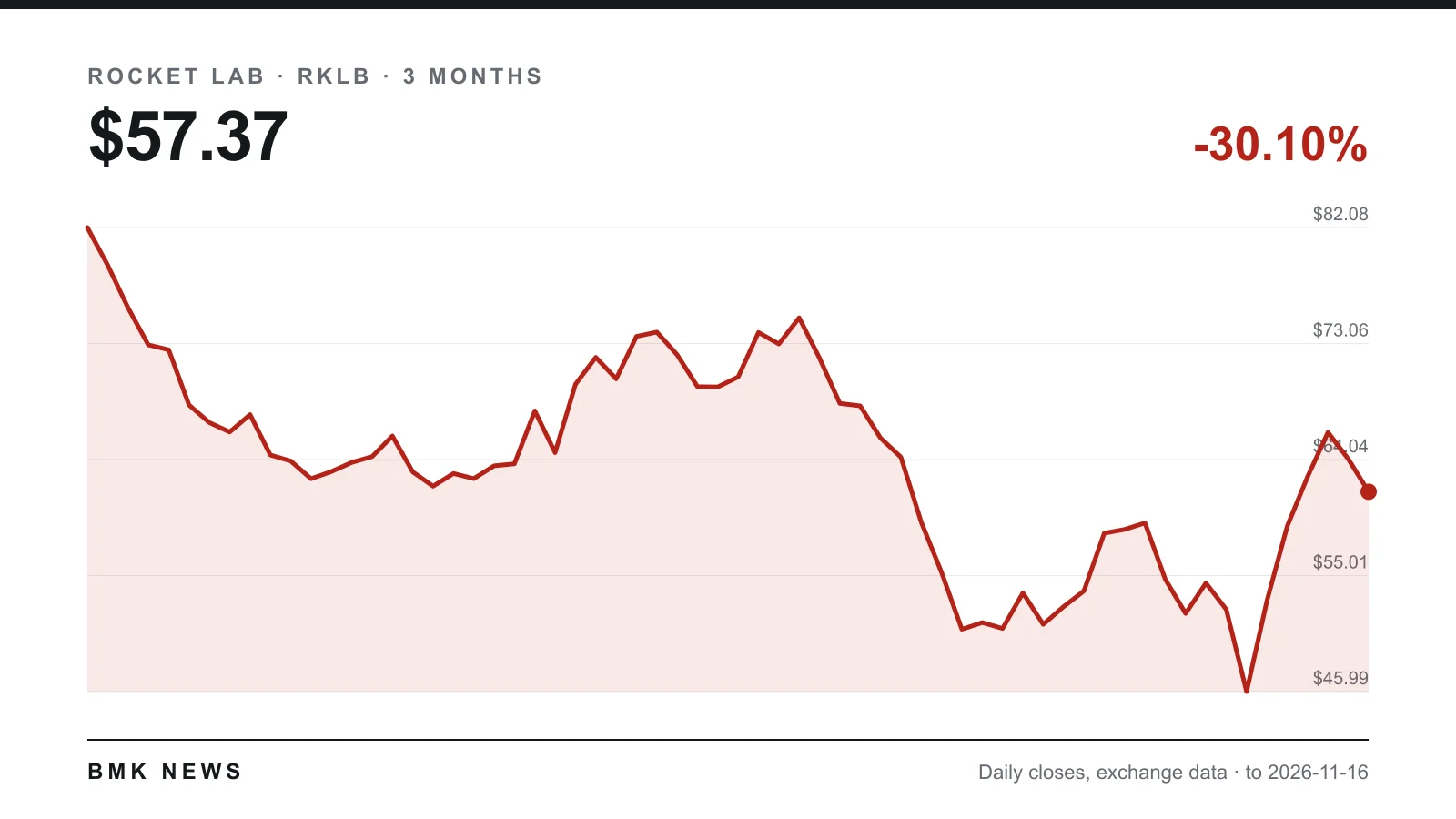
| Rocket Lab | RKLB | $57.37 | down 6.8% |
Intuitive Machines: share price, chart and news
The cause is still unknown
Amazon will have to wait for ULA's investigation to run its course before it flies on Vulcan again, Spaceflight Now noted. Neither company has given a timetable.
What to watch next
- The first findings from ULA's investigation into the Centaur stage
- The Ariane 6 launch of 36 Leo satellites, planned for as early as 23 November
- New Glenn's return to flight after its May explosion
Questions and answers
What happened to the Amazon Leo satellites on the Vulcan rocket?
All 40 were lost on Sunday 15 November 2026 when ULA's Vulcan rocket suffered an anomaly about 10 minutes into flight and failed to reach orbit.
What caused the Vulcan rocket failure?
The cause is not yet known. The anomaly struck about 10 minutes into the flight, during the Centaur upper stage burn, and ULA said it had no specific data yet.
Sources
- United Launch Alliance: Vulcan Leo 1 mission page
- Spaceflight Now: ULA suffers first outright failure with loss of Vulcan rocket carrying 40 Amazon Leo satellites
- Space.com: ULA's Vulcan Centaur rocket fails during return-to-flight launch, 40 Amazon satellites lost
- GuruFocus: Rocket failure wipes out dozens of Amazon Leo satellites
- Stocktwits: ASTS, RKLB, LUNR And FLY Fall After ULA Rocket Failure Strands 40 Amazon Satellites
- The Motley Fool: Stock Market Today, Nov. 16: Amazon Falls on New AI Chip Export Rule and Leo Satellite Launch Failure
- Yahoo Finance: AST SpaceMobile Sinks 8% as ULA's Vulcan Rocket Failure Rattles Space Stocks
- Yahoo Finance: AST SpaceMobile (ASTS) stock quote
- Yahoo Finance: Intuitive Machines (LUNR) stock quote
- Yahoo Finance: Rocket Lab (RKLB) stock quote