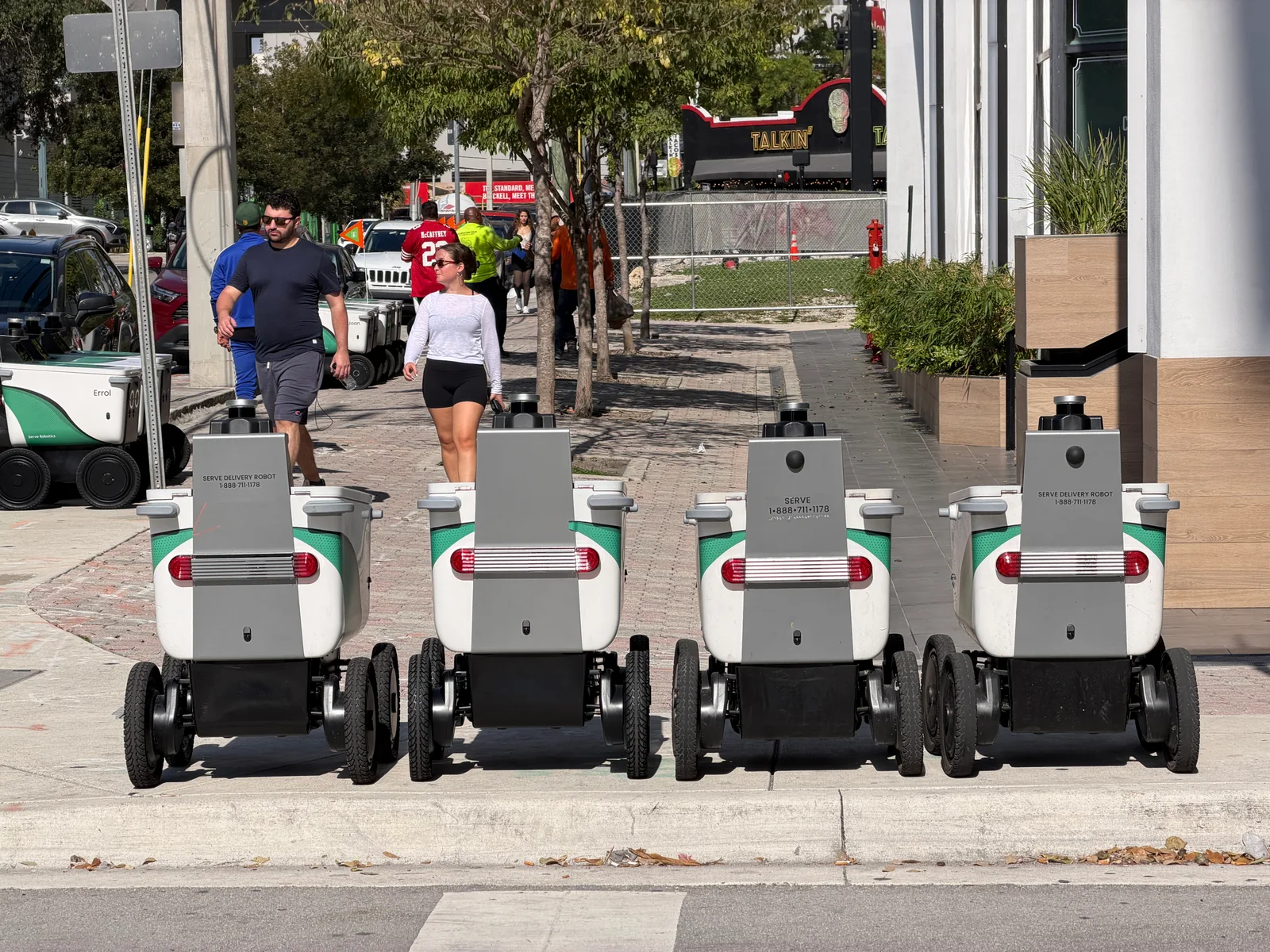
Serve Robotics is one of the few listed companies that ordinary investors can buy for direct exposure to robots working on public streets. It has grown revenue quickly from a very small base, but it loses far more than it earns and depends on the cash it has raised from shareholders.
What Serve Does
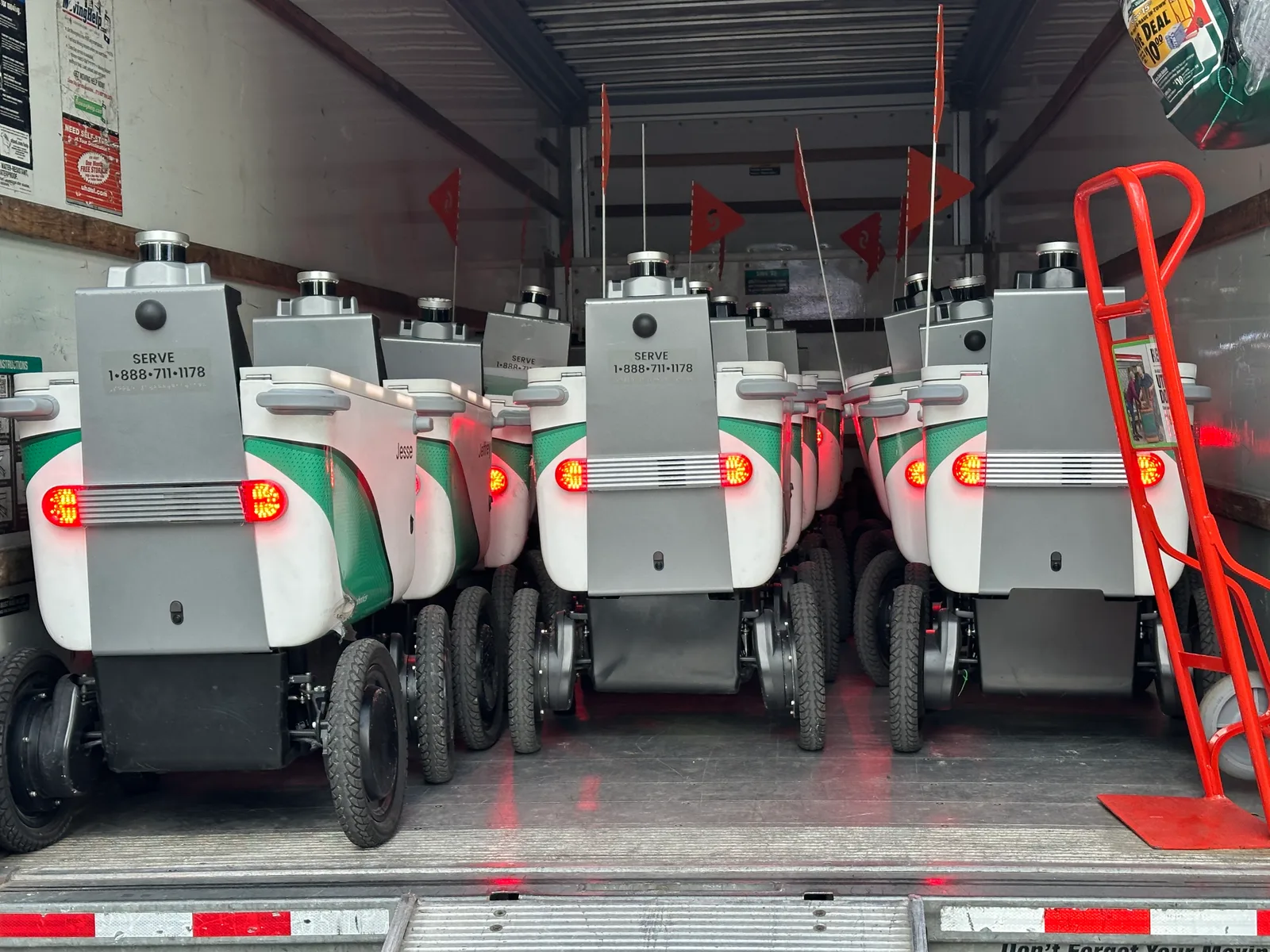
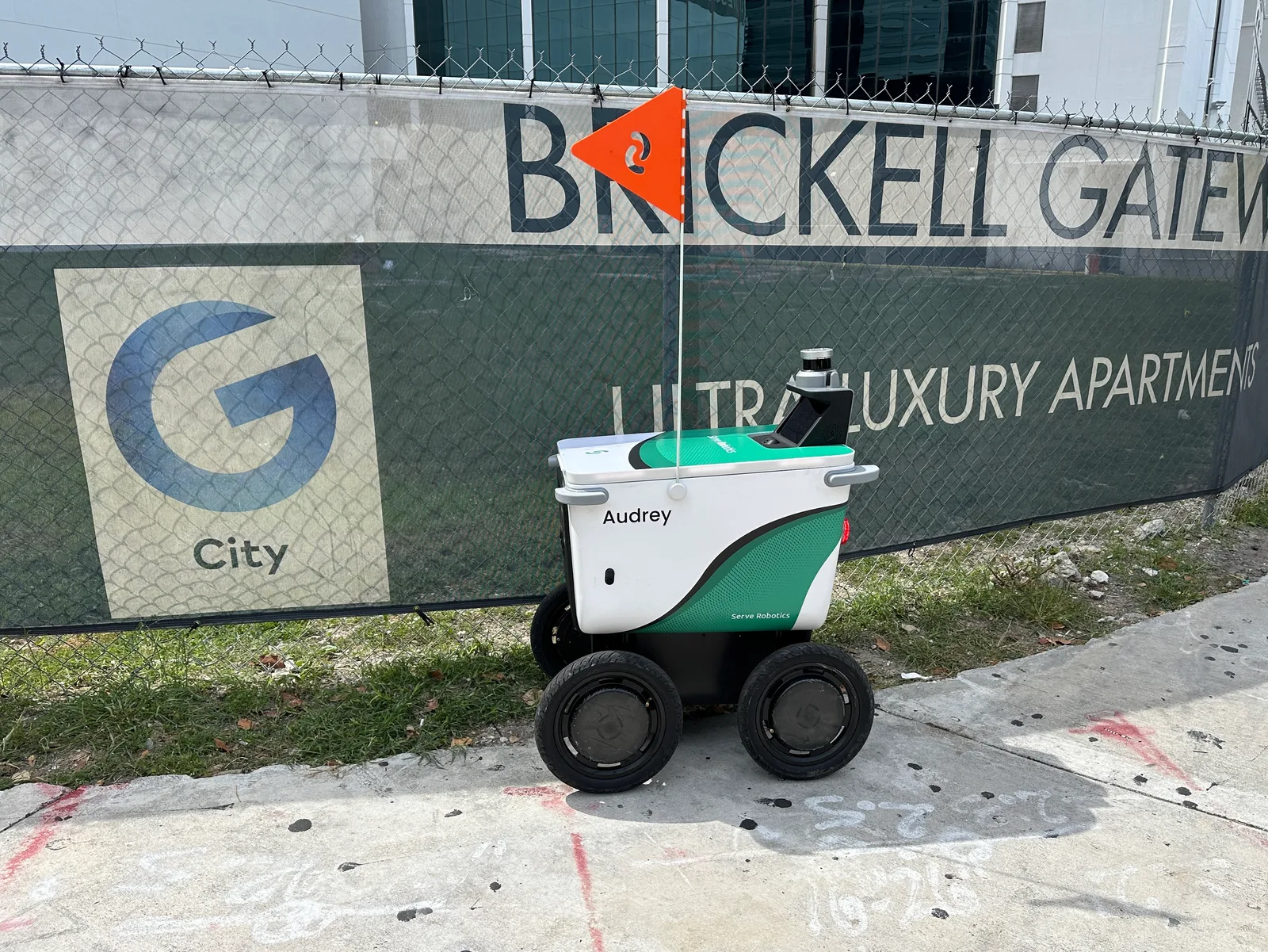
Serve designs, builds and operates autonomous robots. Its best-known product is a sidewalk delivery robot that carries restaurant orders over the last stretch to the customer. The company describes its platform as a mix of its own hardware, AI, computer vision and cloud software for managing fleets. Its operating company was incorporated in Delaware in January 2021, and the group is listed on Nasdaq under the ticker SERV.
It earns money in two ways. Fleet services cover the fees paid for deliveries and for branding, meaning advertising carried on the robots. Software services cover licensing and engineering projects. In its quarterly filing the company reports all revenue as coming from one segment and from US operations, although it began an Australian pilot in late October.
Serve says it has deployed more than 2,000 robots across the United States and supports delivery for more than 4,000 restaurants. It works with several delivery platforms and does not depend on one: its largest customer made up 10% of third-quarter revenue, down from 43% a year earlier.
Serve Robotics: share price, chart and news
From Sidewalks to Hospitals
Serve has used acquisitions to widen what its robots do. In January 2026 it completed the purchase of Diligent Robotics, which makes AI robot assistants for hospitals. The total consideration was $25.7 million, including $20.1 million in cash, 197,472 Serve shares and a contingent earnout, with up to 366,332 more shares payable if milestones are met. In February it bought Vebu, which develops food preparation and kitchen automation robots, for $3.7 million in cash, shares and an earnout.
In the hospital business the company said it signed 12 multi-year contract extensions and added four new hospitals in 2026 up to the end of September.
Two newer initiatives aim to earn more from the technology it has already built. Serve Physical AI Services, announced with the third-quarter results, makes the systems behind its fleets available to other robot makers. And in late October Serve and DoorDash started a pilot in the Gold Coast Health and Knowledge Precinct in Queensland, its first operation outside the US. Griffith University hosts the operations depot, and more restaurants were due to join in the weeks after launch.
The Latest Numbers, Cash and Shares
Serve's third-quarter report, published on 5 November, showed revenue of $2.835 million, up 313% from a year earlier but below the second quarter's $3.238 million, which had been lifted by software income. Fleet services revenue kept rising.
| Measure | Q3 2026 | Q2 2026 | Q3 2025 |
|---|---|---|---|
| Revenue | $2.835m | $3.238m | $0.687m |
| Fleet services revenue | $2.582m | $2.305m | $0.433m |
| Gross loss | $7.555m | $8.779m | $4.379m |
| Net loss | $59.230m | $64.127m | $33.020m |
| Adjusted EBITDA | -$42.182m | -$44.471m | -$24.950m |
| Daily active robots | 917 | 792 | 312 |
For the first nine months of 2026 revenue was $9.057 million and the net loss $172.361 million. Operating expenses in the third quarter were $53.633 million, of which research and development made up $22.636 million.
The company raised its 2026 revenue guidance to $12 million from $9 million to $10 million and cut its forecast for non-GAAP operating expenses to $150 million from $160 million to $170 million. Its GAAP operating expense forecast for the year is $208 million, including $50 million of stock-based compensation.
Balance sheet at 30 September 2026
- $198.0m cash and short-term marketable securities
- 87.9m shares outstanding on 3 November
- $84.9m net raised from share sales in the first half
Serve had $50.8 million of cash and $147.2 million of short-term marketable securities at the end of September. Management says it expects to be able to fund operations for at least the next twelve months.
That cash came largely from shareholders. In the first half of 2026 Serve sold about 9.8 million shares through its at-the-market programme for net proceeds of $84.9 million, and it signed a new sales agreement for the programme on 11 May 2026. It sold no shares this way in the third quarter. The share count rose from a weighted average of 61.3 million in the third quarter of 2025 to 86.9 million a year later, and stood at 87,884,752 on 3 November 2026.
The Main Risks
Risks Serve itself lists
- A short history, minimal revenue relative to costs and losses since inception
- A need for more capital, which may not be available on good terms
- The transition of its Uber Eats partnership
- Reliance on suppliers, including for semiconductors, and exposure to tariffs
- Product defects, safety incidents and liability claims
- Uncertain rules on AI, robots and data privacy, and FCC authorisation for foreign-produced robots
- A volatile share price and possible weaknesses in internal controls
The central question is cost. The robots still lose money on each dollar of revenue: cost of revenues was $10.39 million in the third quarter against sales of $2.835 million. Management points to a large sequential improvement in fleet margin, but the gap remains wide. If cash runs low before the fleet earns its keep, further share sales would dilute existing holders.
The Australian launch is a pilot, and the partners have said its results will shape any growth and changes to delivery zones. The hospital business adds a second market but also integration work after two acquisitions in two months.
What to Watch Next
| What | When | Why it matters |
|---|---|---|
| Fourth-quarter revenue | Next quarterly report, date not yet announced | Guidance of $12m for 2026 implies about $2.9m in the quarter |
| Operating costs | Same report | The new non-GAAP target is $150m for 2026 |
| Gold Coast pilot | Late 2026 onwards | More restaurants were due to join; growth depends on the pilot's results |
| Delivery partners | Ongoing | How the Uber Eats transition affects volumes |
| Share issuance | Ongoing | Any use of the at-the-market programme |
Serve has shown it can grow its fleet and its partner base quickly. The next stage is to show that the fleet can cover its own costs before the cash on hand runs down.