Serve Robotics, the Nasdaq-listed operator of sidewalk delivery robots, more than quadrupled its quarterly revenue from a year earlier and raised its full-year sales forecast while trimming its spending plans. The company still lost $59.2 million in the three months to September.
Revenue Ahead of the Company's Own Plan
Serve reported third-quarter revenue of $2.835 million on 5 November, up 313% from $0.687 million a year earlier. That was below the $3.238 million booked in the second quarter, when software services revenue was unusually high at $0.933 million. In the third quarter software revenue fell back to $0.253 million.
Fleet services, the delivery and branding fees earned by the robots themselves, rose to $2.582 million from $2.305 million in the second quarter and $0.433 million a year earlier. The company said recurring revenue made up 69% of the total and that branding revenue, from advertising carried on its robots, grew nearly 80% from the previous quarter. It did not give a dollar figure for branding.
Over nine months, revenue reached $9.057 million against $1.769 million in the same period of 2025.
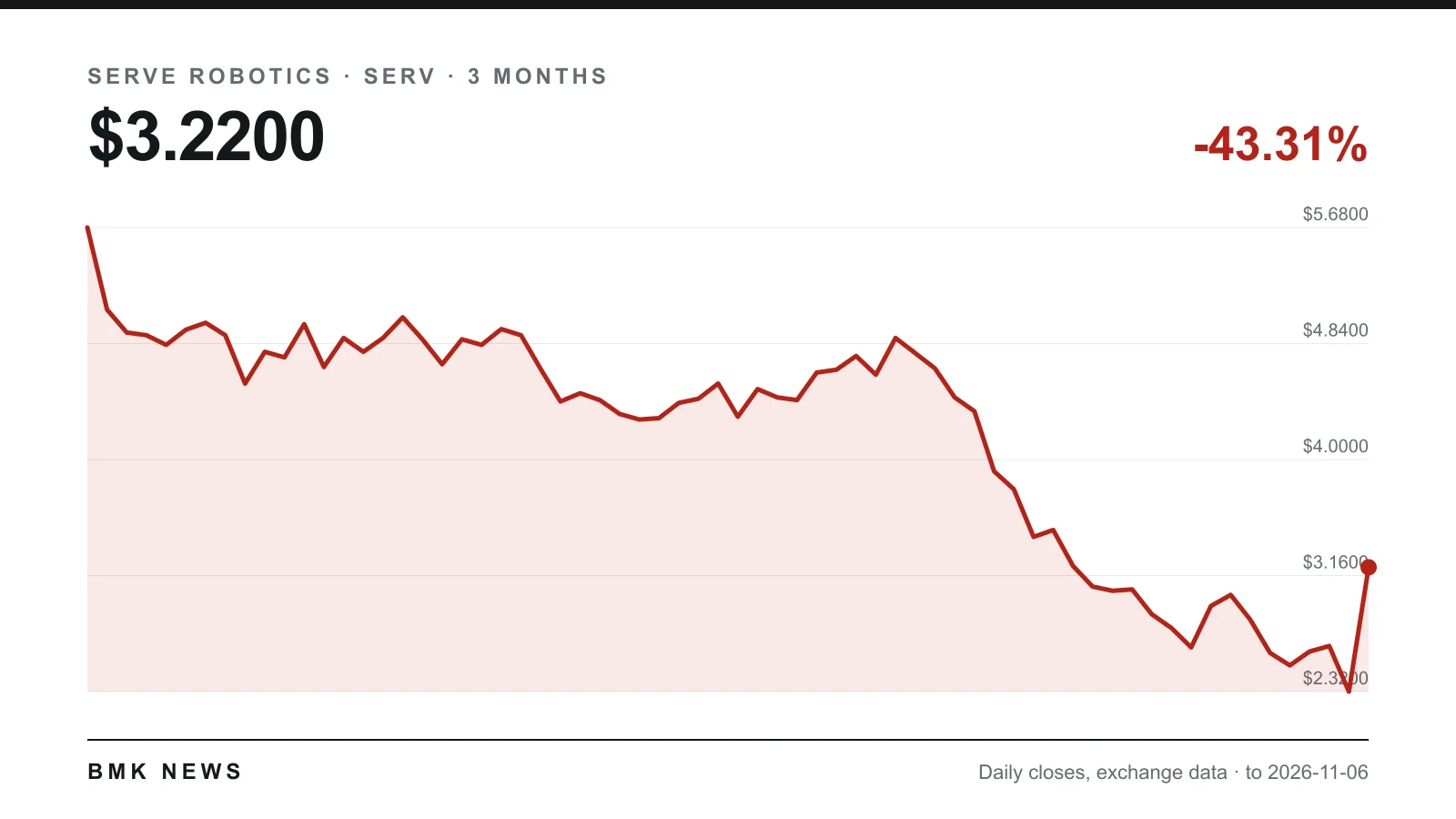
Serve Robotics: share price, chart and news
Guidance Raised, Spending Outlook Cut
Third quarter 2026
- $2.8m revenue, up 313% year on year
- $59.2m net loss for the quarter
- $198.0m cash and marketable securities at 30 September
Serve lifted its 2026 revenue guidance to $12 million from a previous range of $9 million to $10 million. With $9.057 million booked through September, the new figure implies fourth-quarter revenue of roughly $2.9 million.
It also lowered its forecast for non-GAAP operating expenses to $150 million, from $160 million to $170 million before. On a GAAP basis the company projects $208 million of operating expenses for the year, including $50 million of stock-based compensation and $8 million of amortisation of acquired intangible assets.
Chief financial officer Brian Read said "This quarter was about execution", pointing to lower operating costs and what the company described as more than 100 percentage points of sequential improvement in fleet margin.
Losses Narrow but Remain Large
The robots still cost more to run than they bring in. Cost of revenues was $10.39 million, leaving a gross loss of $7.555 million, narrower than the $8.779 million gross loss in the second quarter. Total operating expenses fell to $53.633 million from $57.286 million, including $22.636 million of research and development and $20.227 million of general and administrative costs.
The net loss was $59.230 million, or $0.68 a share, compared with $64.127 million in the second quarter and $33.020 million a year earlier. Adjusted EBITDA, which strips out items such as stock-based compensation, was a loss of $42.182 million. For the first nine months the net loss totalled $172.361 million.
Serve ended September with $198.0 million in cash and short-term marketable securities and said it expects to be able to fund operations for at least the next twelve months. It raised $84.9 million net through its at-the-market share sale programme in the first half of 2026, issuing about 9.8 million shares, and sold no shares under the programme in the third quarter. About 88 million shares were outstanding at the end of September.
Fleet, Partners and a First Step Abroad
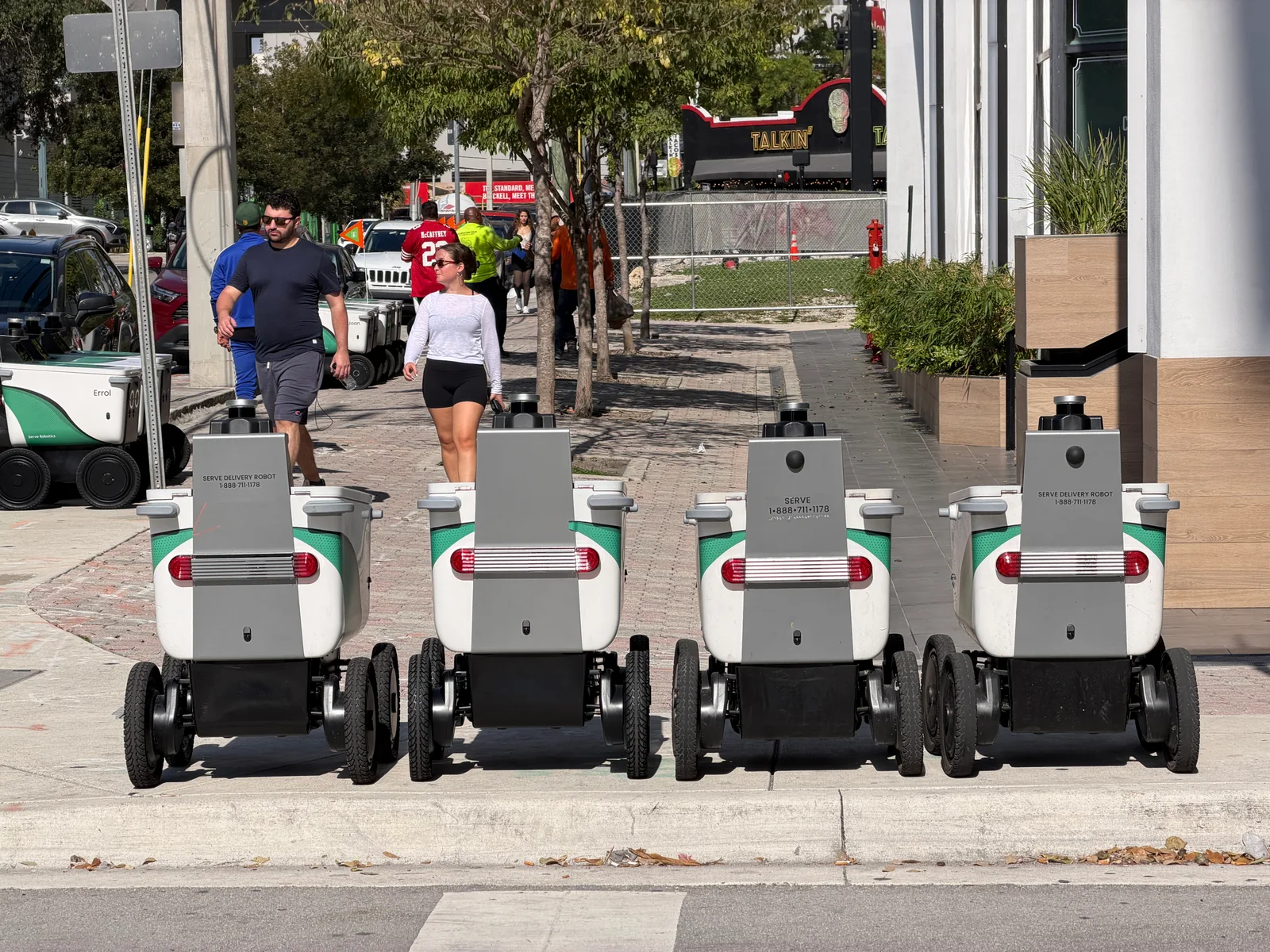
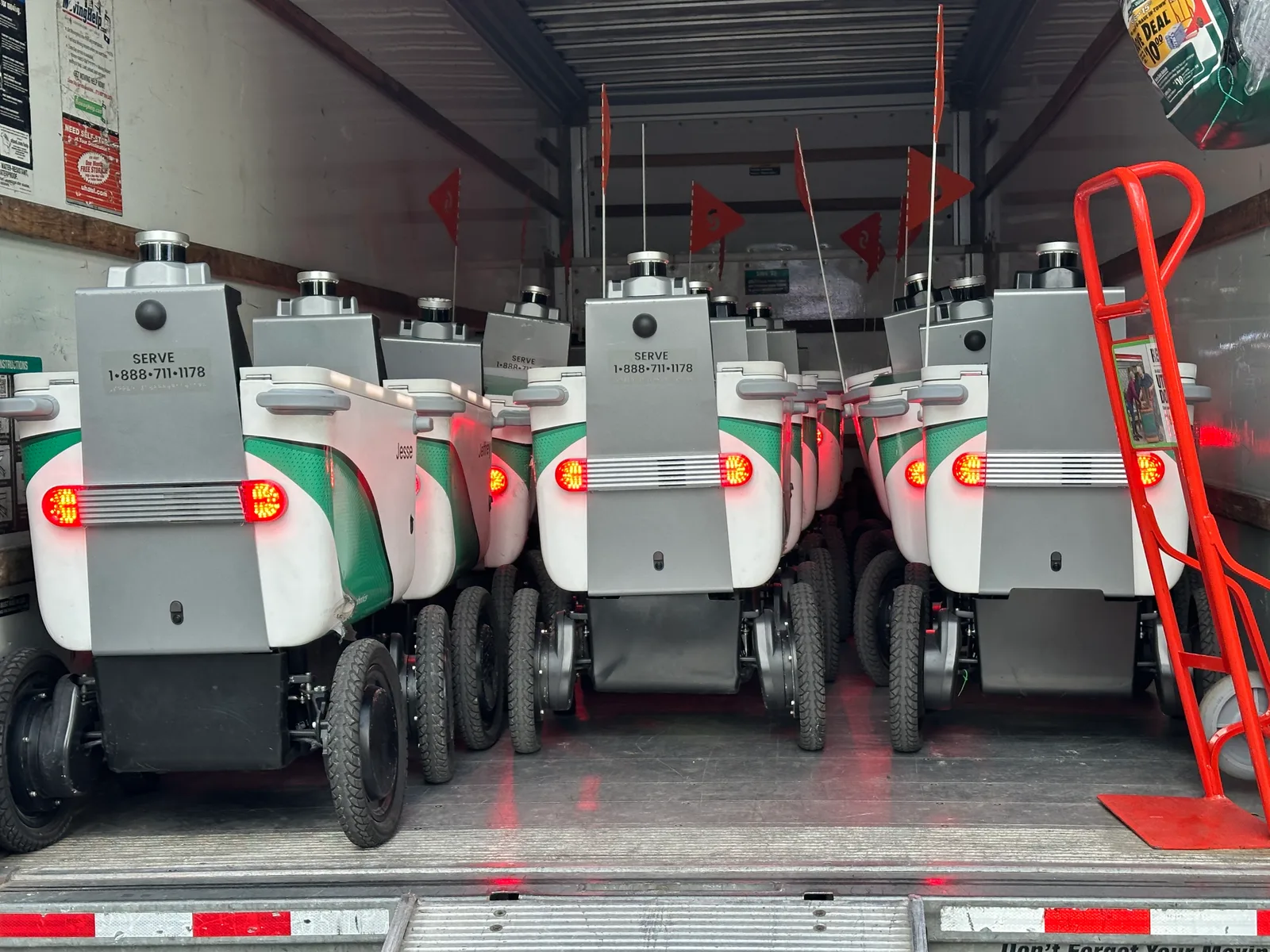
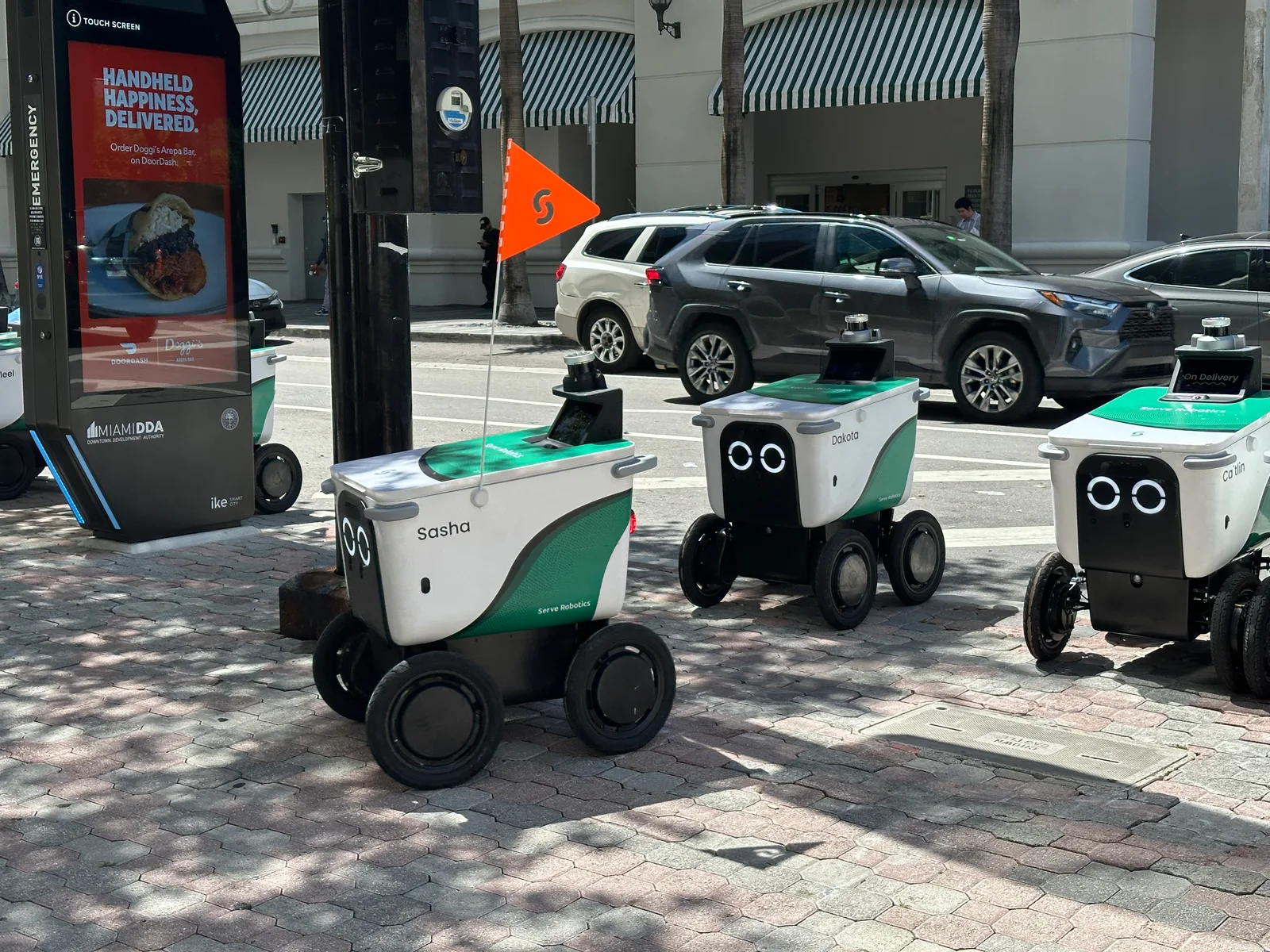
The average number of daily active robots rose to 917 from 792 in the second quarter and 312 a year earlier, and daily supply hours climbed to 11,214. Among new delivery platform partners, daily delivery volume tripled and the number of merchants grew 2.5 times during the quarter, the company said. It has deployed more than 2,000 robots across the United States.
Beyond sidewalk delivery, Serve now runs indoor hospital robots through Diligent Robotics, which it bought in January. It signed 12 multi-year contract extensions with hospital customers and added four new hospitals in the year to date. It also launched Serve Physical AI Services, which offers the technology behind its fleets to other robot makers.
In late October it began its first operation outside the US, a pilot with DoorDash in the Gold Coast Health and Knowledge Precinct in Queensland, Australia.
The Risks Behind the Growth
Serve remains an early-stage business with a loss many times larger than its revenue. Its forward-looking statements flag the transition of its Uber Eats partnership, without giving further detail. Customer concentration has eased: the largest customer accounted for 10% of third-quarter revenue, against 43% a year earlier, according to the quarterly filing.
Other risks the company lists include its need for further capital, reliance on suppliers such as semiconductor makers, product defects and safety incidents, and regulation of robots and AI. Any further share sales would dilute existing holders.