Snowline Gold will join the S&P/TSX Composite Index and the FTSE Canada All Cap Index after the close on 18 September. The Yukon explorer also reported its deepest hole yet at the Valley gold deposit, which cut 3.4 metres of 5.86 g/t gold more than 200 metres below the planned pit.
Two index additions from 18 September
Snowline (TSX: SGD) said on 9 September that both index changes take effect after the market close on Friday 18 September. The S&P/TSX Composite covers the largest and most actively traded stocks on the Toronto Stock Exchange. Funds that track it have to own its members, so a company joining it usually gains a new group of holders.
Chief executive Scott Berdahl said the additions should widen the company's shareholder base, especially as generalist investors pay more attention to gold. "Our inclusion into multiple equity indices reflects the momentum underway at Snowline," he said.
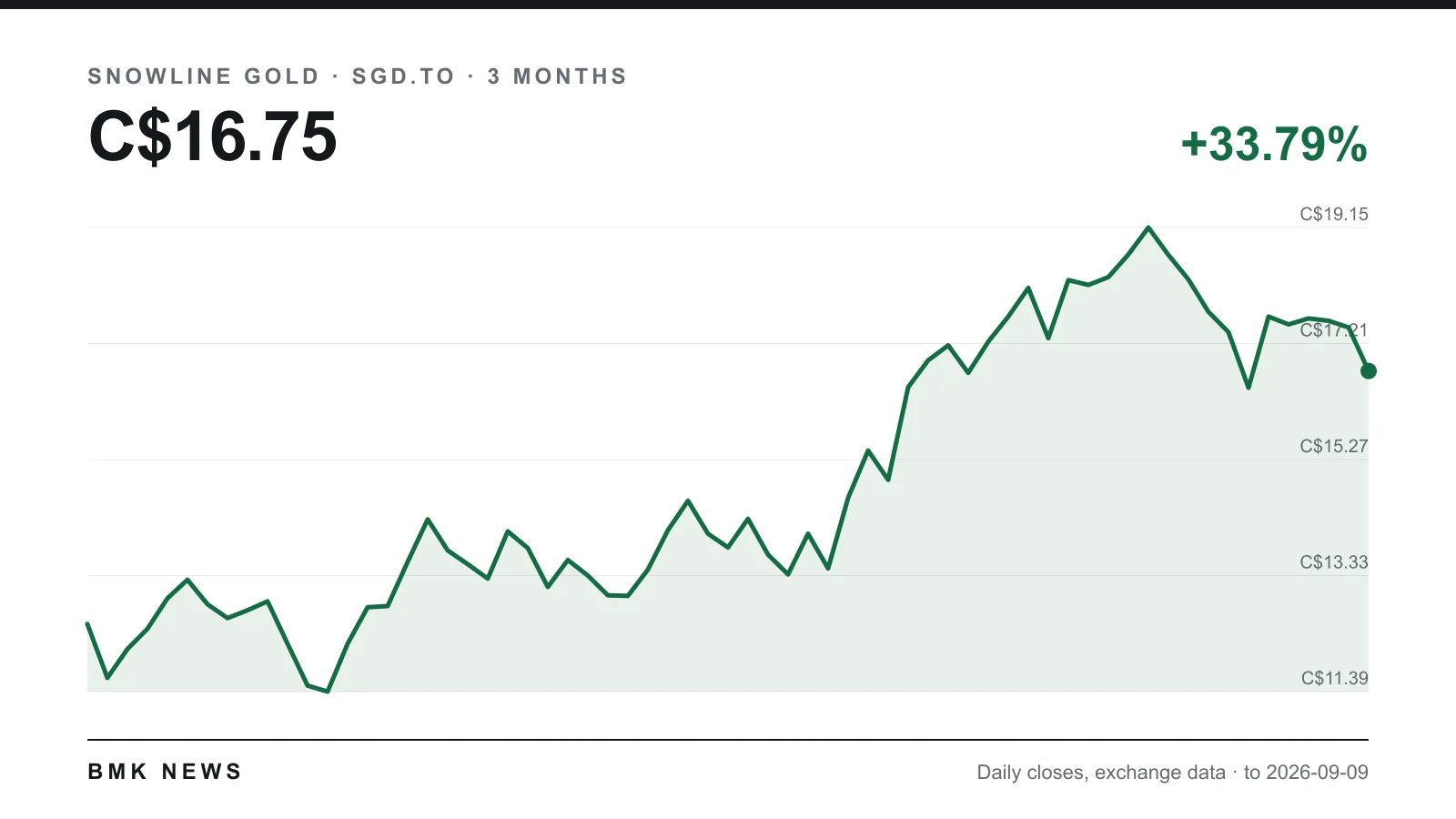
The shares closed at C$17.59 on 8 September, valuing the company at about C$3.3bn, according to Stockwatch data. In August, Snowline sold 11.9 million new shares at C$14.50 each in a bought deal led by BMO Capital Markets and CIBC World Markets. B2Gold took part to keep its 9.9% stake. The deal raised C$172.6m before costs, including the full over-allotment option. Its management report dated 12 August put cash at about C$236.3m after the offering, with about 188.4 million shares in issue.
Snowline Gold: share price, chart and news
Deep holes test the edges of Valley
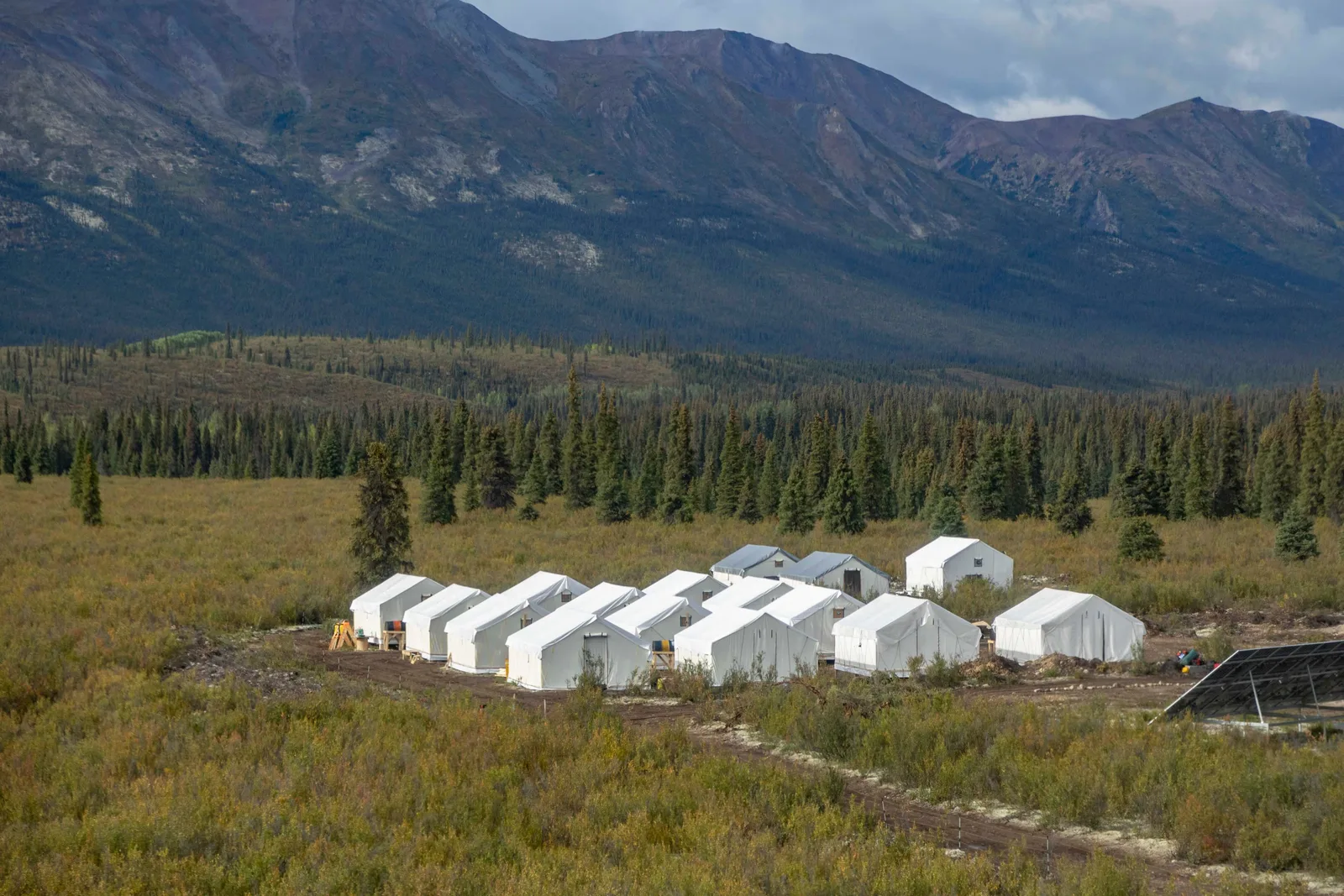
Valley is the main deposit on Snowline's wholly owned Rogue project in central Yukon. Its current resource stands at 7.94 million ounces of gold in the Measured and Indicated categories, at an average grade of 1.21 g/t, plus 0.89 million Inferred ounces at 0.62 g/t.
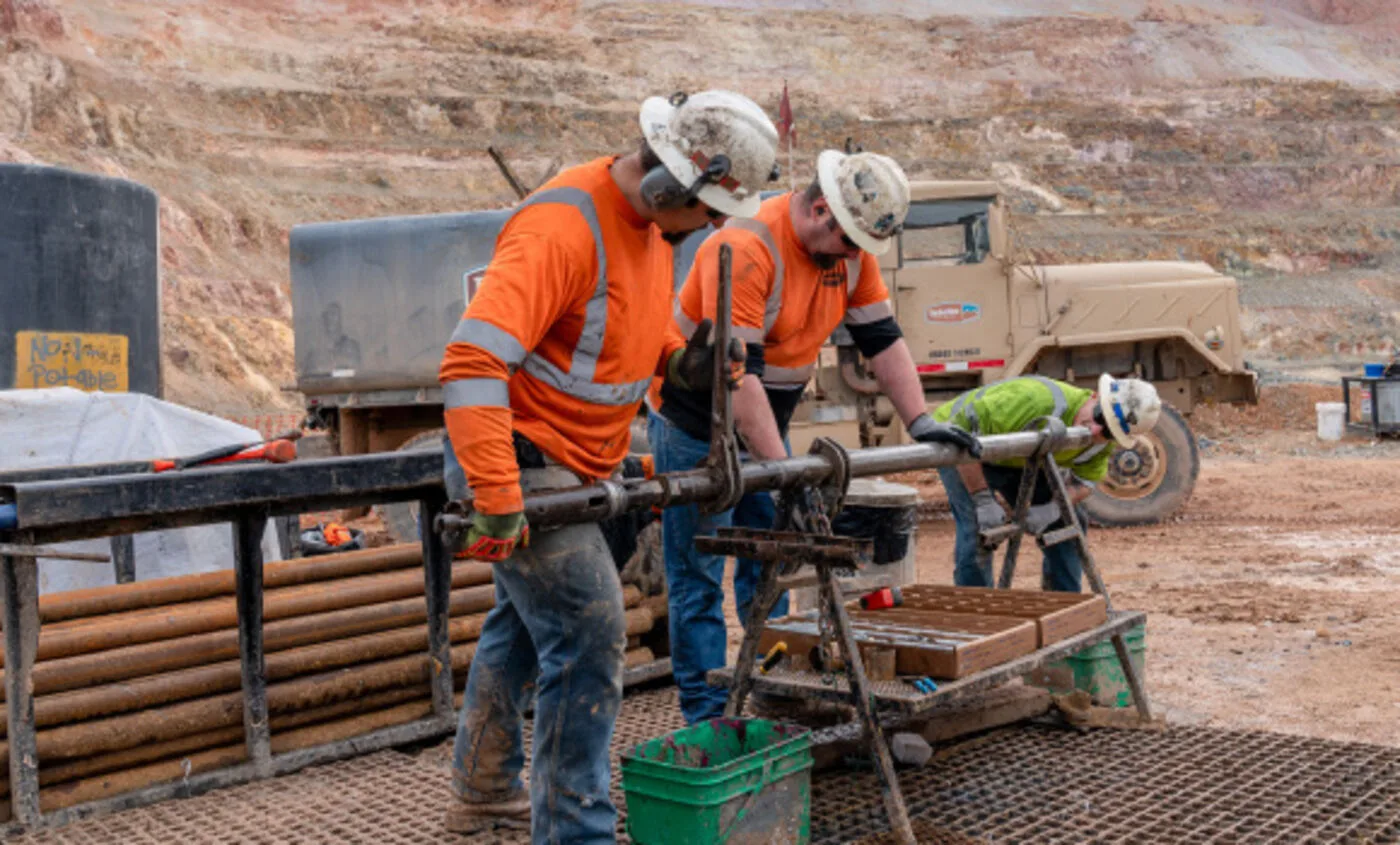
This season's programme included about 4,200 metres of exploration drilling at Valley and a further 2,300 metres for geotechnical, infrastructure and borrow-source work. The exploration holes went after untested ground in and around the intrusion and at depth.
| Hole | Best interval | Where it sits |
|---|---|---|
| V-26-159 | 3.4 m at 5.86 g/t gold from 515 m | Deepest Valley hole so far, more than 200 m below the PEA pit |
| V-26-161 | 4.0 m at 2.68 g/t gold from 624 m | About 300 m below the pit shell |
| V-26-164 | 450.5 m at 0.4 g/t gold | Outside the pit shell |
| V-26-163 | 6.3 m at 1.03 g/t gold | Ended in mineralisation on the northeast margin |
The company noted visible gold in core below the V-26-159 interval. Not every hole hit: V-26-162 returned low grades and V-26-160 gave a long, mostly low-grade section. These results sit outside the current resource and mine plan. Narrow intervals hundreds of metres down would need much more drilling, and possibly a different mining method, before they could add to the resource.
Three regional targets were also drilled: about 2,300 metres at Gracie, 4 km east of Valley; about 1,600 metres at Duke, 11 km southeast; and about 435 metres at Crossroad on the Cynthia project, 27 km south. Assays from all three are still pending.
Prefeasibility study due by early 2027
Snowline expects to deliver a prefeasibility study (PFS) by the first quarter of 2027. The study should support Valley's first Proven and Probable reserves and replace the 2025 preliminary economic assessment (PEA).
Engineers are weighing several changes against the PEA design:
- a mill bigger than the PEA's 25,000 tonnes a day, trading more output for higher upfront cost;
- liquefied natural gas instead of diesel generators for power, the biggest operating cost;
- tailings and waste rock stored closer to the pit than the 18 km pipeline in the PEA.
Alongside the PFS, Snowline plans to file a Project Description, which starts pre-submission engagement with the Yukon Environmental and Socio-economic Assessment Board. It then intends to file a Project Proposal, which would begin formal screening and assessment in early 2028.
What investors should weigh
Key points
- Index inclusion takes effect after the close on 18 September 2026.
- Deep step-outs found gold well below the current pit, but outside the resource.
- PFS and first reserves are targeted by the first quarter of 2027.
- Formal environmental assessment is not expected to start before early 2028.
Snowline has no reserves and no revenue. The PEA is preliminary and includes Inferred material, so its numbers may not hold. A mine of Valley's size would need a large construction budget, put at C$1.7bn in the PEA, and that would mean new equity, debt or other funding, with dilution for current holders. Permitting in Yukon involves several years of assessment and First Nations engagement, and the site's remoteness raises power and access costs. The company reported a net loss of C$30.6m for the first half of 2026 as spending on studies rose.
Sources
- Snowline Gold: Snowline Gold Announces Inclusion into Multiple Equity Indices and Provides Project Updates, 2026-09-09
- Snowline Gold: Snowline Completes C$172.6 Million Bought Deal Public Offering of Common Shares Including Full Exercise of Over-Allotment Option, 2026-08-12
- Snowline Gold: Management's Discussion and Analysis for the three and six months ended June 30, 2026, 2026-08-12
- Stockwatch: Snowline included in S&P/TSX, FTSE Canada indexes, 2026-09-09
- Snowline Gold: Investor Presentation, Q3 2026 (capital data as at 12 August 2026), 2026-08-12