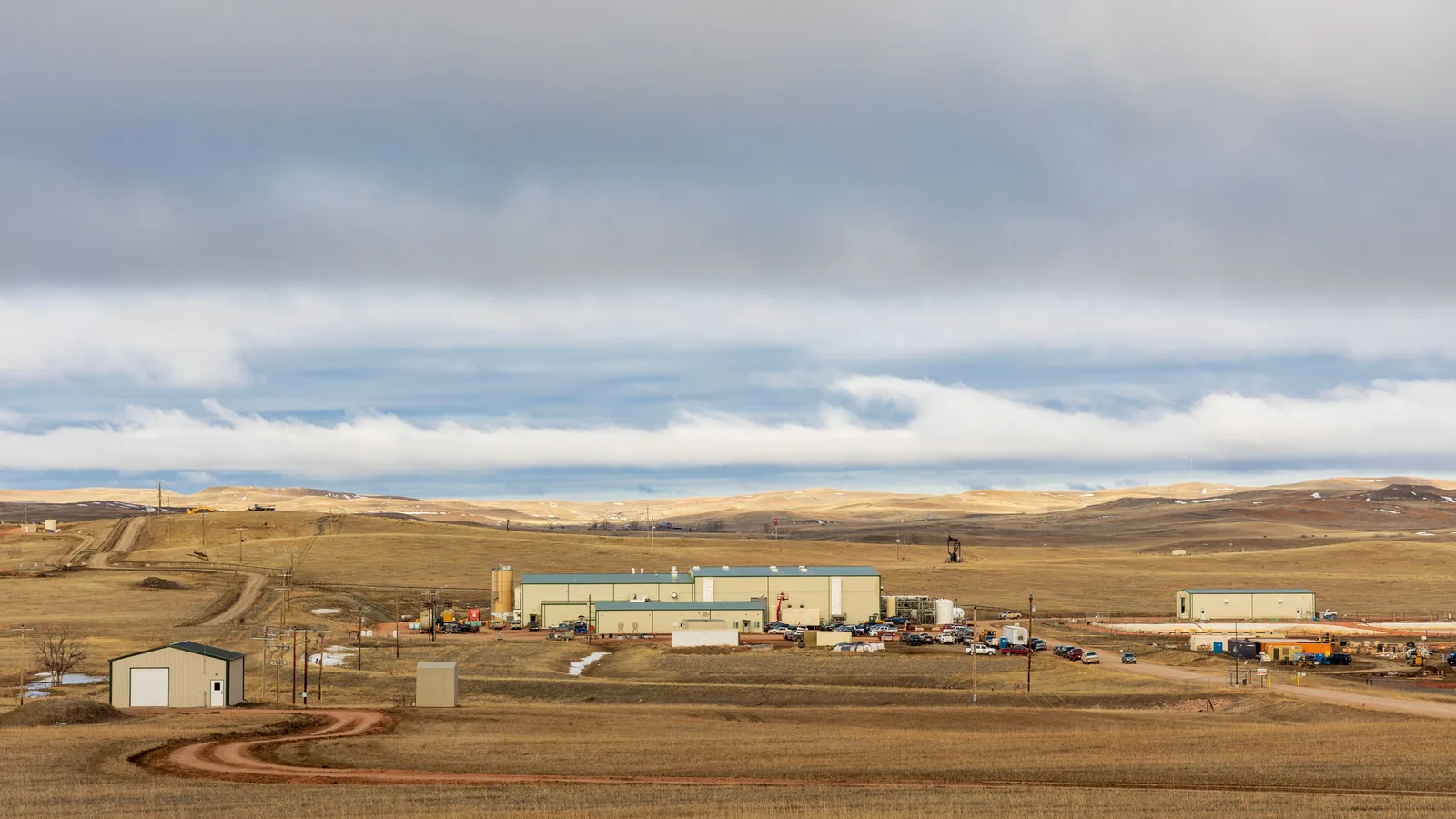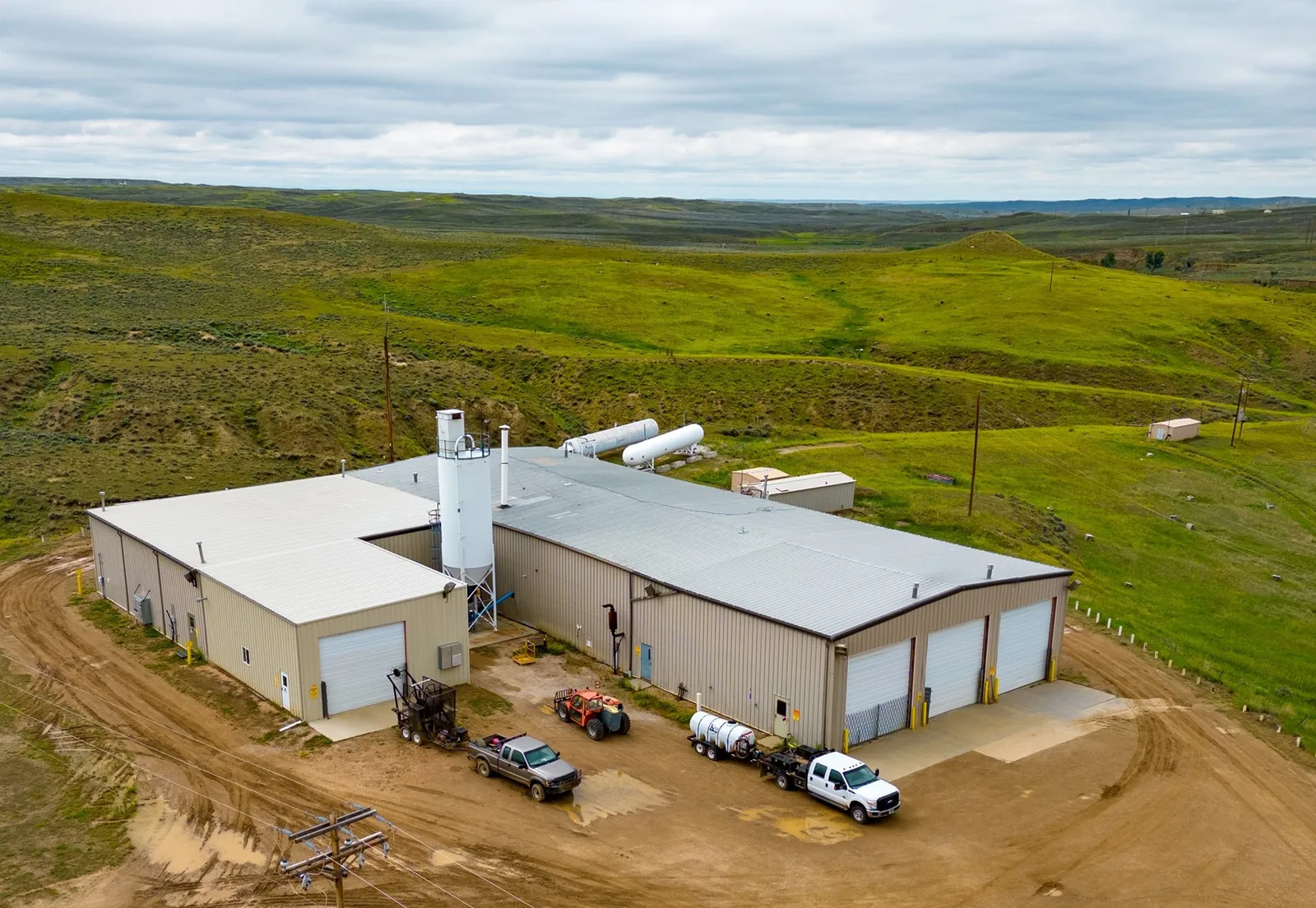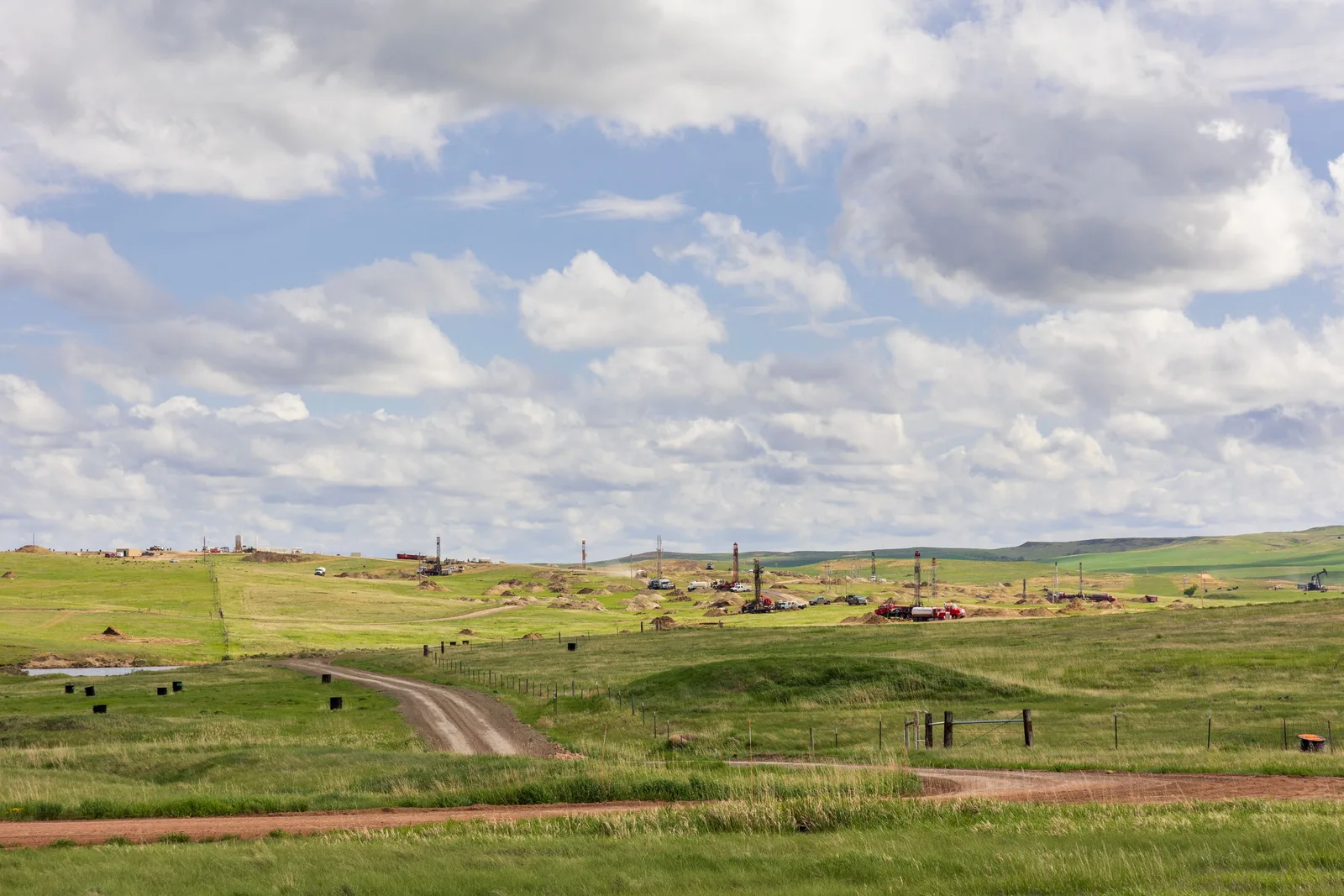
Peninsula Energy says changes to how it runs its Lance uranium wellfields in Wyoming have restored flow rates in several areas, and it has kept its target of 500,000 to 600,000 pounds for 2027. Output is still small: the September quarter produced 17,968 pounds on resin, and the company has no guidance for 2026.
A Small Quarter, Better Flows
Peninsula, which is listed on the ASX as PEN and trades in the US on the OTCQB as PENMF, released its September quarter report on 30 October, Sydney time. Lance is an in-situ recovery (ISR) operation: an acid solution is pumped through underground sandstone to dissolve uranium, and the uranium is then recovered from the solution on resin at a central processing plant.
In the three months to 30 September, Lance captured 17,968 pounds of uranium oxide (U3O8) on resin and drummed 15,588 pounds. Over the whole year to June 2026 it captured 25,331 pounds. The company said resin capture was lower than expected.
The main problem since start-up has been the flow of solution through the wellfields, which was hit by gas build-up and wellfield design issues. Peninsula withdrew its 2026 guidance of 400,000 to 500,000 pounds in July. Managing director George Bauk acknowledged that "the production ramp-up is taking longer than anticipated", but said there was now positive evidence that the changes could improve wellfield performance.
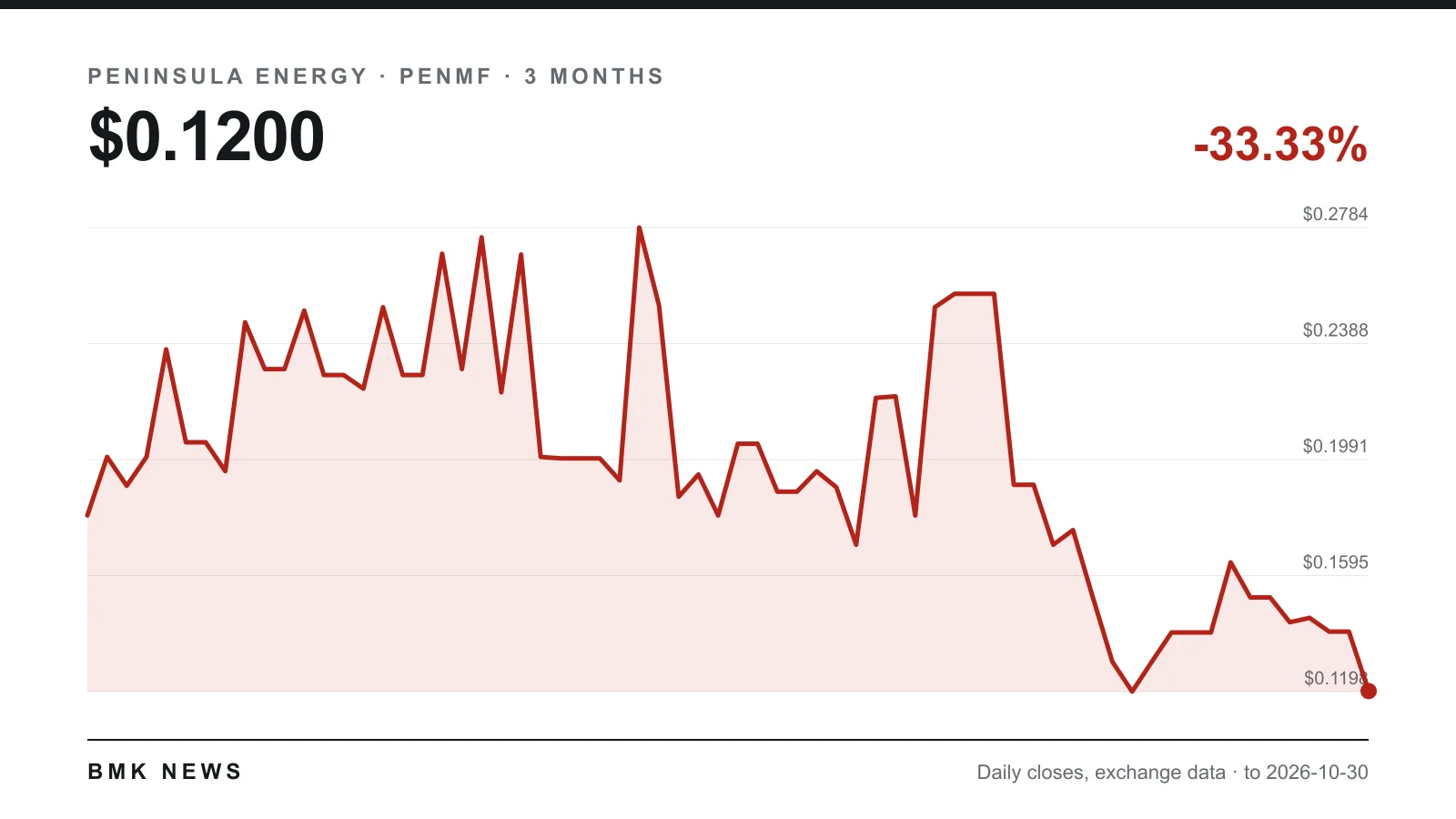
Peninsula Energy: share price, chart and news
What Changed in the Wellfields
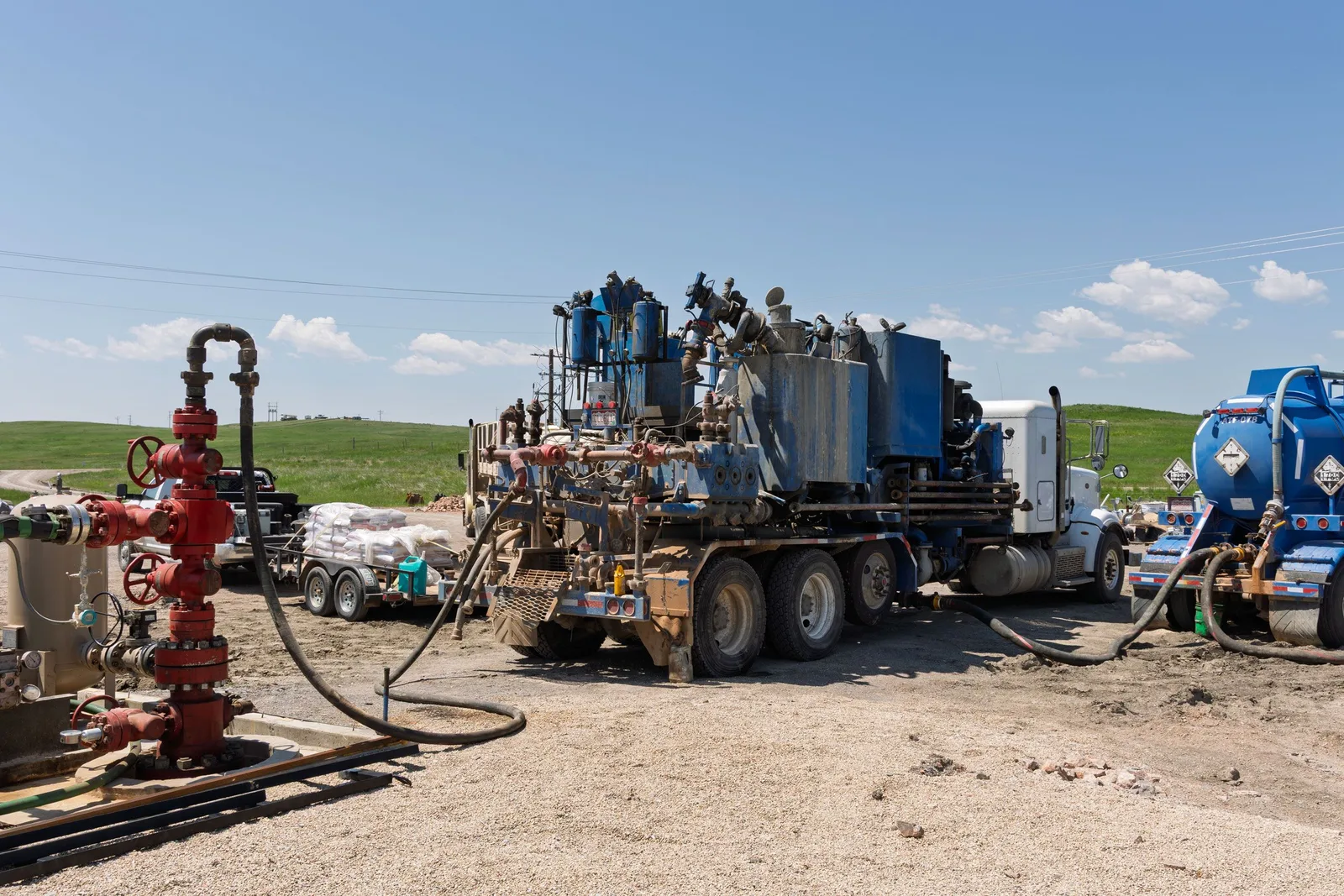
The report gives flow rates, in gallons per minute (GPM), for the header houses that feed the plant in Mine Unit 4, the company's current priority.
| Header house | Latest flow | Target |
|---|---|---|
| HH14 | about 400 GPM in October | 375 GPM |
| HH15 | about 370 to 380 GPM | 400 GPM |
| HH16 | about 280 GPM, five wells off | 330 GPM |
| HH17 | about 500 GPM, limited by flotation unit capacity | 450 GPM |
HH15 started sending solution to the plant on 2 September. HH17 began acidification in September using a slower, gentler start meant to limit acid use. HH14 has overcome the gas build-up that had cut its flow, and in October its flow returned to target, two months later than the company expected in July.
Flow is only half the task. Uranium grades in the solution from HH14 and HH16 were below forecast because the wellfields were not acidic enough, and Peninsula is adding more acid to bring the pH down towards about 1.8. New recovery wells in older areas also performed well: four wells in HH12 each flowed about 12 GPM, the best seen in Mine Unit 3.
To save costs, wells in Mine Unit 1 producing less than 30 milligrams of uranium per litre were taken offline, given current sulphuric acid prices.
New Technical Team and a Bigger Resource
Peninsula has added outside expertise. Gary Birch, previously chief operations officer at Heathgate Resources, which runs the Beverley and Four Mile low-pH ISR operations in South Australia, joined as chief technical officer on 28 September. Director Keith Bowes chairs a new technical committee, and the company has hired the South Australian ISR consultancy Rendement to review wellfield and ion exchange performance.
In September the company raised the Lance mineral resource by 1.7% to 59.0 million pounds of U3O8 (53.9 million tonnes at 0.050%), of which 17.2 million pounds are in the measured and indicated categories. The Ross area resource rose 15.6% to 7.4 million pounds.
Cash, Impairment and Risks
September quarter
- US$33.6m cash at 30 September
- US$11.5m net cash used in operations
- US$50.1m non-cash impairment booked for the year to June
Cash rose from US$22.1m to US$33.6m after Peninsula fully drew a US$30m convertible debt facility from Washington H. Soul Pattinson. Receipts from customers were only US$0.65m in the quarter, while operations used a net US$11.5m and wellfield development another US$6.5m. On the ASX's standard measure, the cash covers about 2.9 quarters of operating outflows. Peninsula expects uranium sales from Lance to start in the coming months but warned that timing and amounts may vary.
The annual accounts also carry a US$50.1m impairment, mainly on older wellfield assets in Mine Units 1 to 3, which Peninsula says does not affect cash. Separately, the provider of its surety bonds, which guarantee site clean-up, has asked for more cash collateral, and Peninsula is talking to it and to other providers.
There was one lost-time injury in the quarter.
Risks to keep in mind
- Production is still far below the rate needed to cover costs
- Grades have yet to respond to the extra acid
- More funding may be needed if sales start late, which could dilute shareholders
- Extra surety bond collateral would tie up cash
- The 2027 target depends on wellfields that have repeatedly underperformed
The next update is the annual general meeting in Perth on 23 November, with the December quarter report due early next year.