BlackSky Technology more than doubled its third-quarter revenue to a record $42.8m and raised its 2026 guidance for the second time this year, as defence customers moved onto paid subscriptions for imagery from its new Gen-3 satellites. The Virginia-based company also reported positive operating cash flow for the quarter.
Revenue up 118%
Revenue in the three months to 30 September rose 118% from $19.6m a year earlier and about 30% from the second quarter. All three parts of the business grew:
| Segment | Q3 2026 | Q3 2025 |
|---|---|---|
| Space-based intelligence and AI services | $32.7m | $15.8m |
| Mission solutions | $4.7m | $0.9m |
| Advanced technology programmes | $5.4m | $3.0m |
| Total | $42.8m | $19.6m |
The biggest driver was the subscription business, in which customers pay for priority access to BlackSky's satellites and analytics. It included a two-month, seven-figure pilot of the company's Gen-3 "Assured" service with a US government customer, which Earnings Whispers noted means part of the quarter's margin is not a recurring run rate. An international defence customer also expanded a small Gen-2 trial into a seven-figure Gen-3 subscription in under six months.
Chief executive Brian O'Toole said in the release: "Real-time intelligence is more mission-critical than ever."
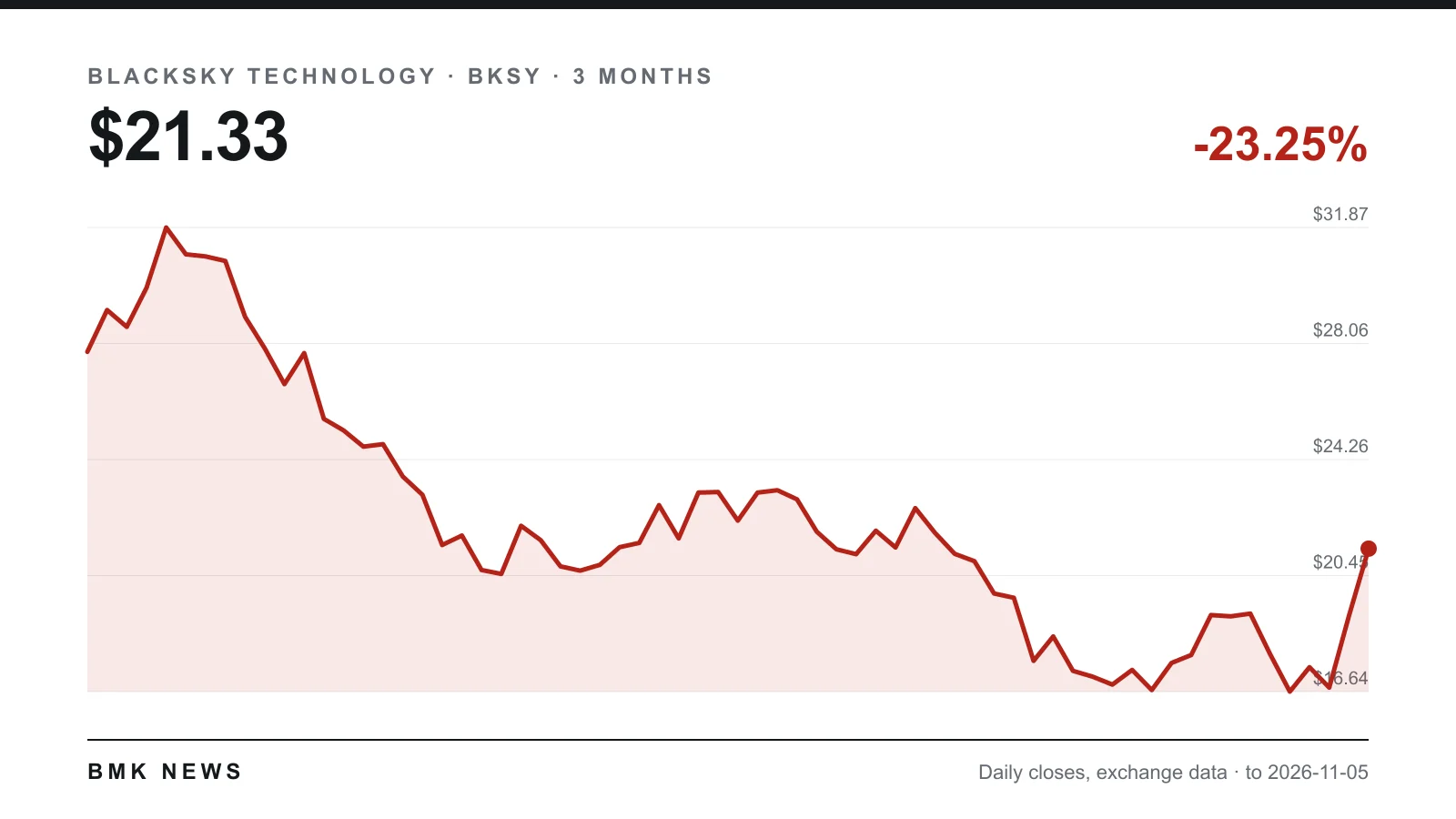
BlackSky Technology: share price, chart and news
Margins and a profit helped by derivatives
Q3 2026 at a glance
- $42.8m record revenue, up 118%
- $12.8m adjusted EBITDA, a 29.9% margin
- $231.1m cash, restricted cash and short-term investments
Cost of sales fell to 21% of revenue from 35%. Chief financial officer Henry Dubois said services revenue grew by $17m from a year earlier while the related costs stayed almost flat. Adjusted EBITDA swung to a $12.8m profit from a $4.5m loss.
BlackSky reported net income of $18.5m against a loss of $15.3m a year earlier, but the figure was flattered by a $19.7m non-cash gain on derivatives. Over nine months the company still lost $32.0m. It also generated positive operating cash flow in the quarter, which Dubois said did not rely on customer prepayments.
Dubois said that more than 90% of each extra dollar of services revenue now contributes to the bottom line, as new subscriptions largely use capacity on satellites already in orbit. Cash operating expenses rose to $21.4m from $18.3m, far more slowly than sales, and fell to about half of revenue.
Guidance raised again
BlackSky now expects 2026 revenue of $140m to $150m and adjusted EBITDA of $18m to $24m. According to Earnings Whispers, the previous ranges were $130m to $150m and $12m to $24m. Capital spending guidance stayed at $50m to $60m, of which $46.5m had been spent by the end of September.
Backlog was $355m, of which about $45m is expected to turn into revenue in the fourth quarter. Earnings Whispers noted that backlog was roughly flat and that the implied fourth quarter ranges from flat to about $10m higher than the third.
Satellites and the risks
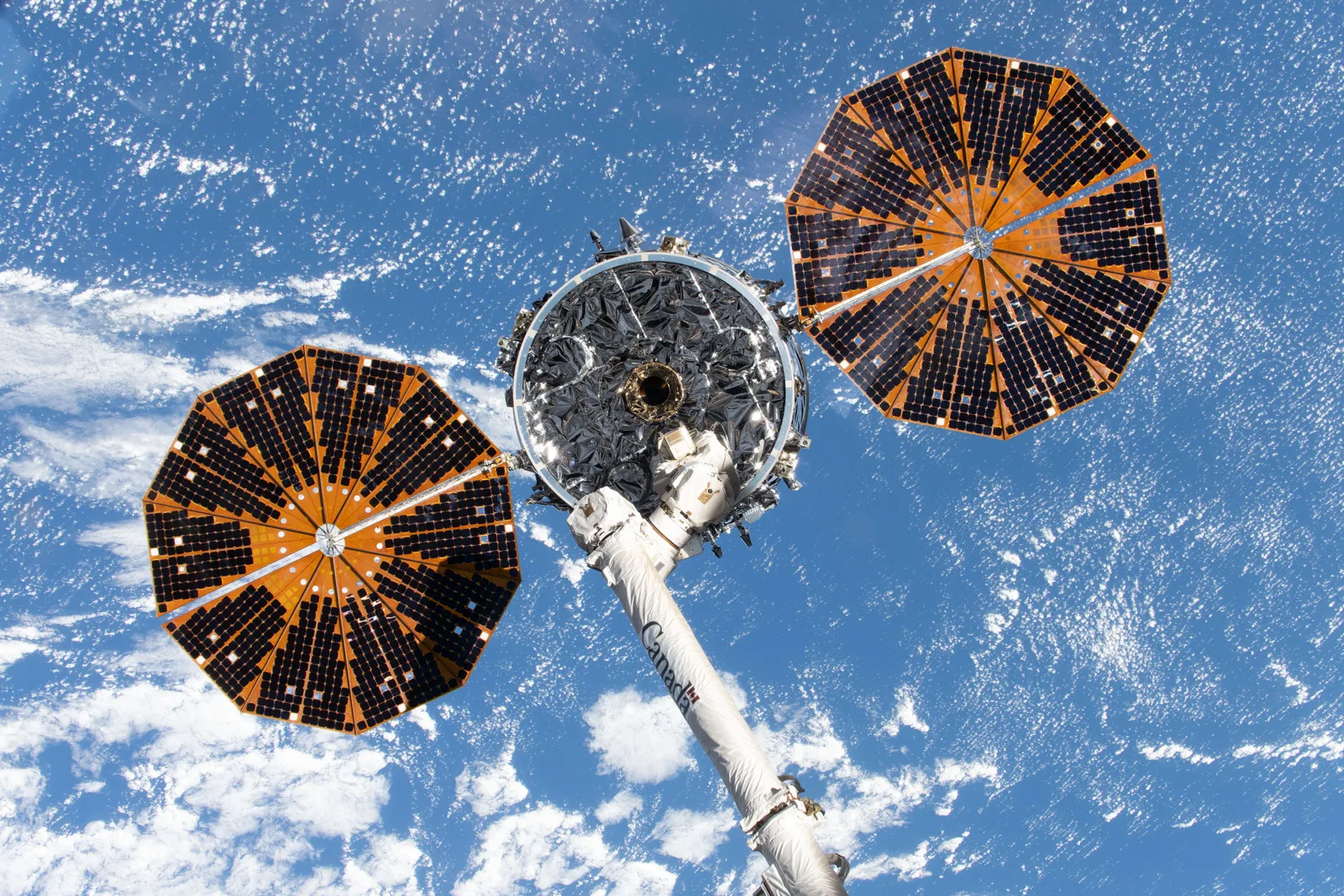
The fifth Gen-3 satellite launched in September and began earning revenue within 24 hours. BlackSky plans two more Gen-3 launches this year, with the eighth now expected in early 2027. It is also building Gen-3 satellites for foreign governments, with several deliveries scheduled for the fourth quarter.
The company is the exclusive supplier of high-resolution optical satellites for a $1bn, 50-satellite constellation planned by a consortium led by Marlan Space, Loft Orbital and Mistral AI, with partners in France and the UAE, announced in September. So far it has only a contract for initial development work, and O'Toole said details would follow in the coming months.
The risks are significant for a company of BlackSky's size. Revenue depends heavily on government defence budgets, a large part of the quarter's profit came from non-cash gains, and satellite launch delays could hold back revenue. BlackSky carries about $220m of debt, and building out the constellation requires heavy capital spending.