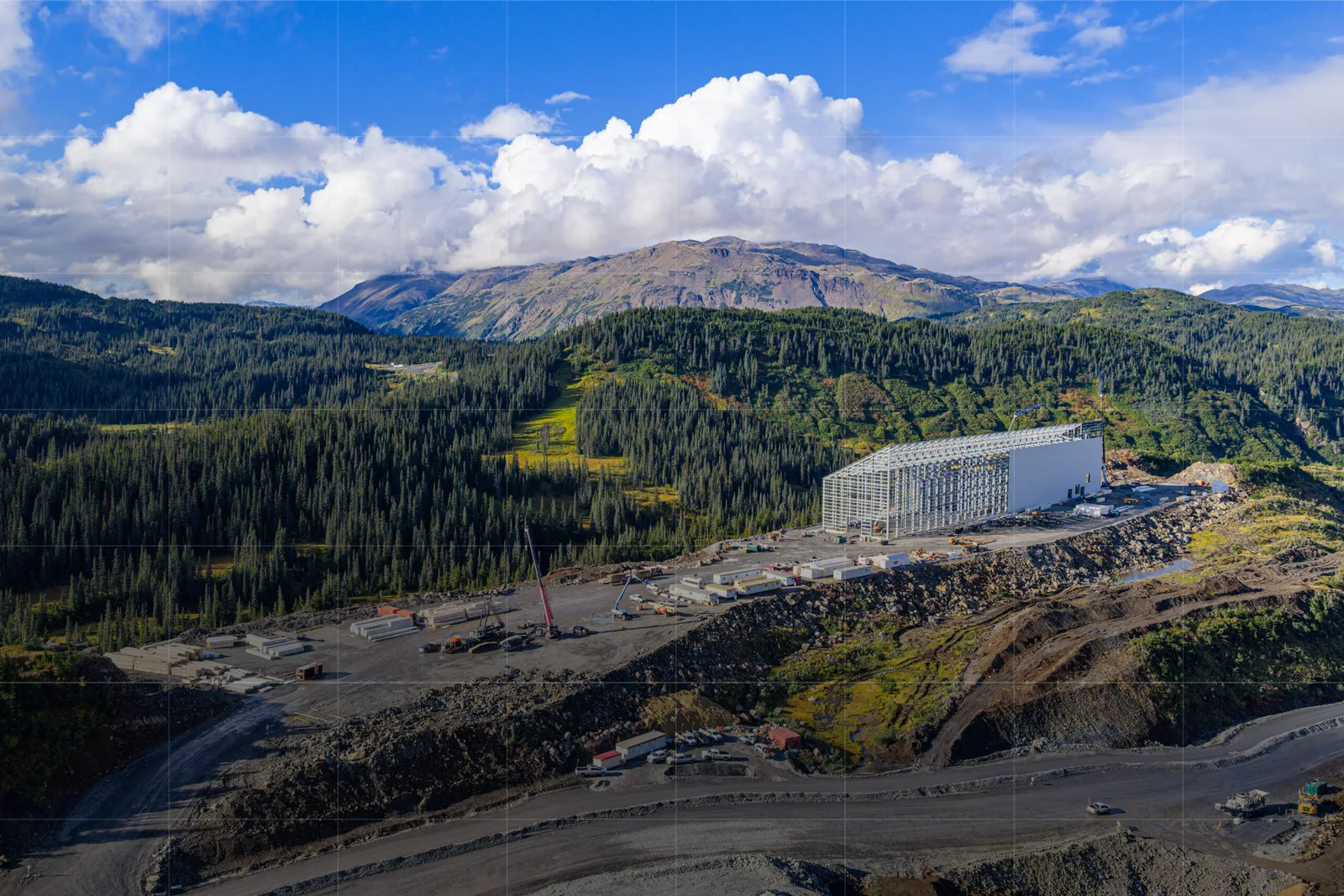
Skeena Resources, which now presents itself as Skeena Gold & Silver, is bringing the former Eskay Creek mine in northwest British Columbia back into production as an open pit. The company says construction passed 80% in October and targets initial production and cash flow in the second quarter of 2027. Until then it has no revenue and carries a large debt load.
What Skeena does and where
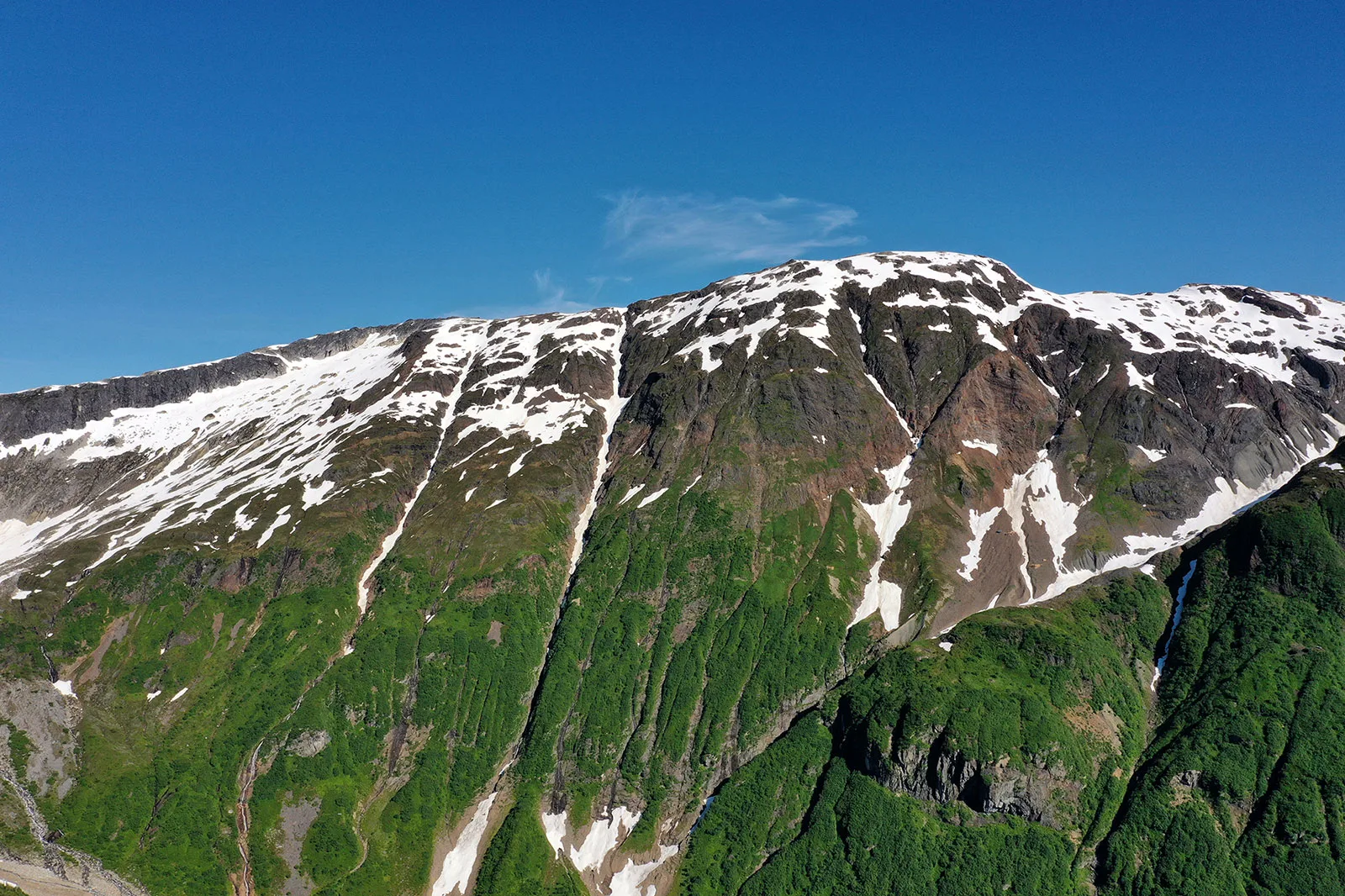
Skeena is listed in Toronto and New York under the ticker SKE. Its main asset is Eskay Creek, which it owns outright and is developing with the Tahltan Nation. The site lies in the Golden Triangle region of northwest British Columbia, connected by all-weather roads to Highway 37 and about 250 kilometres from the port of Stewart.
Eskay Creek has a long history. Underground mining between 1994 and 2008 produced about 3.3 million ounces of gold and 160 million ounces of silver before low gold prices closed it. Skeena optioned the project from Barrick Gold in 2017 and took full ownership in 2020. Skeena has an impact benefit agreement with the Tahltan Nation, and it received the last of its major provincial and federal permits in early 2026.
Skeena Resources: share price, chart and news
The company also owns the nearby Snip project. An updated technical report covering both Eskay Creek and Snip is expected in late 2026.
The mine plan and construction progress
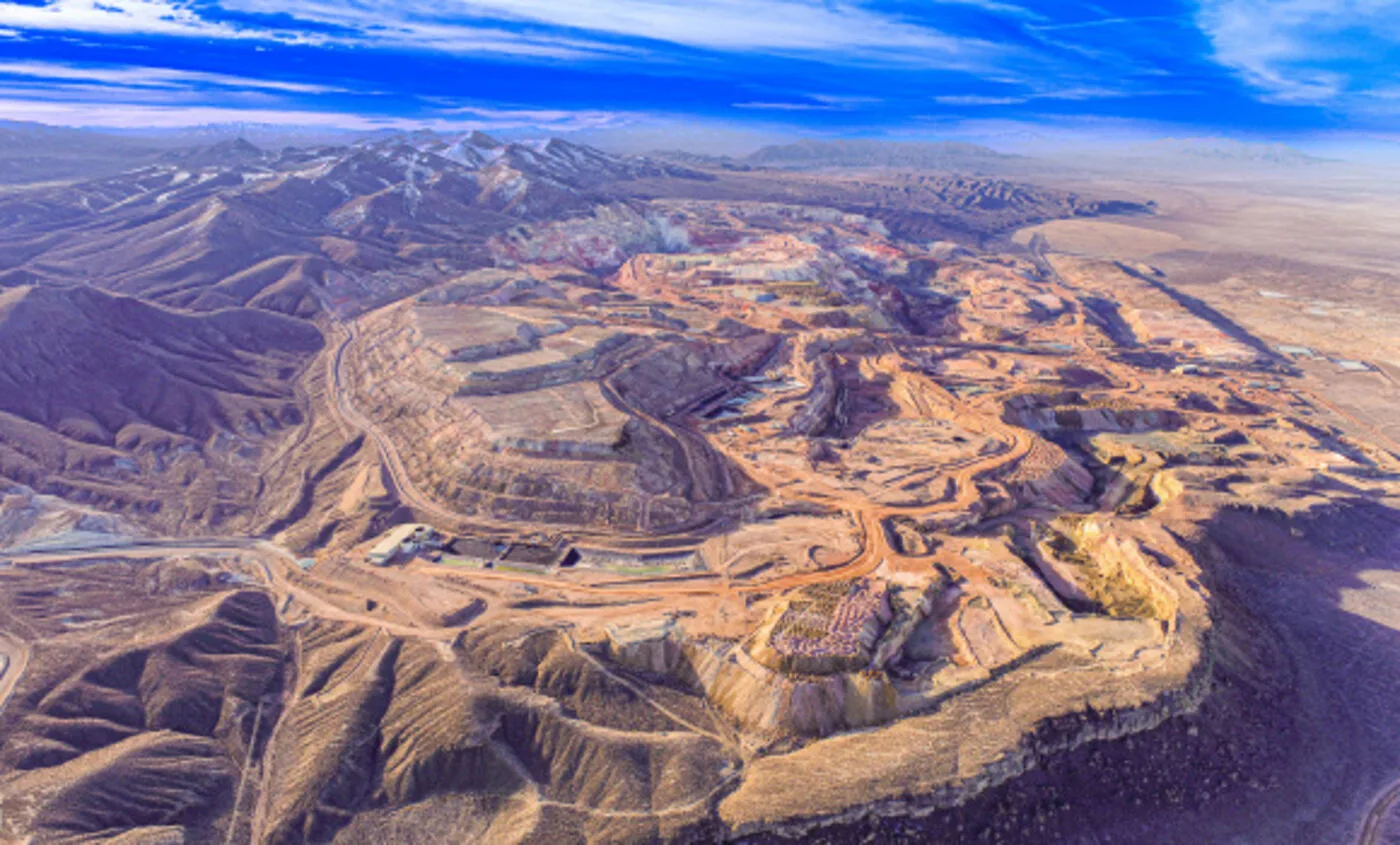
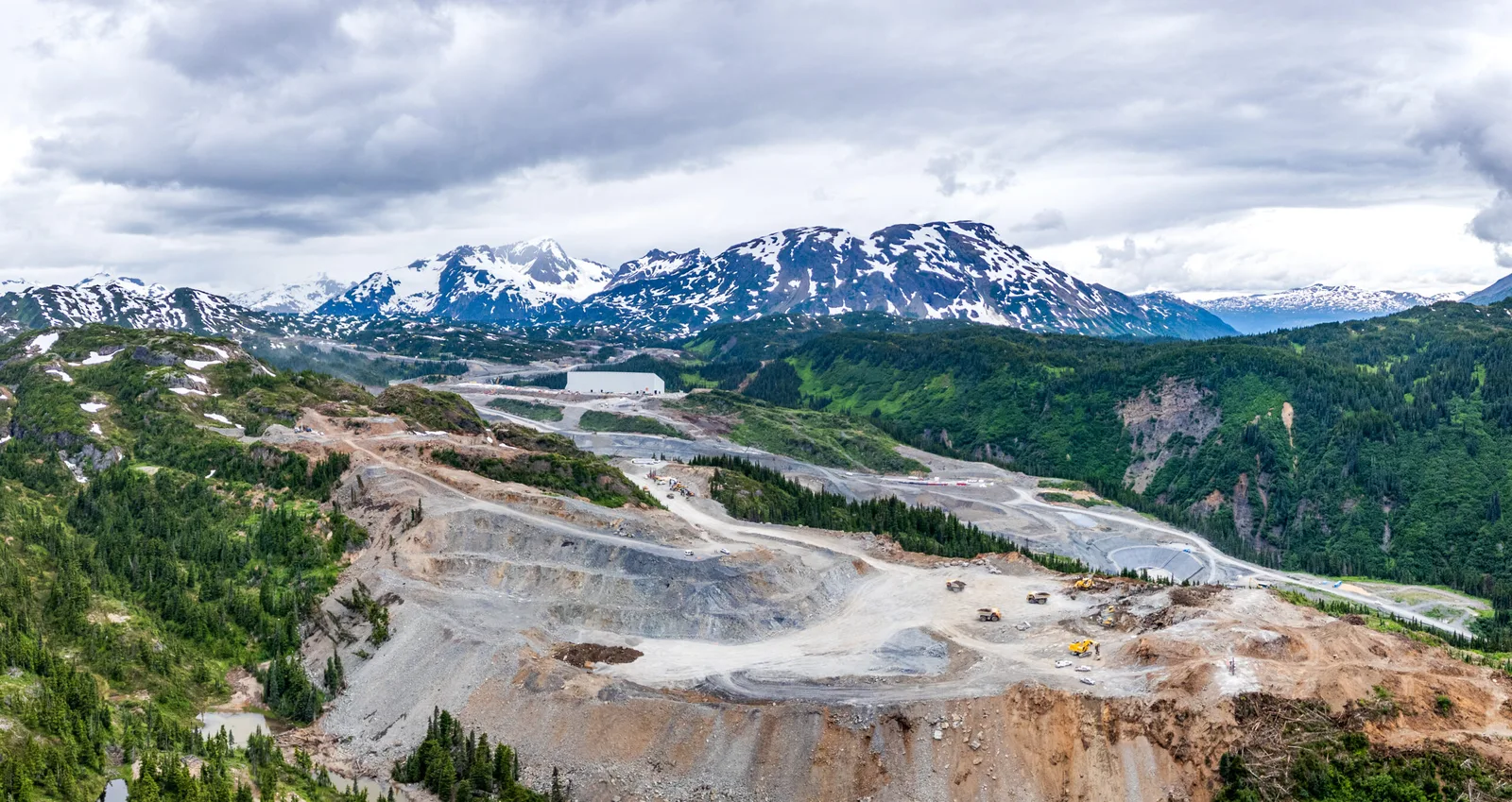
The plan is an open pit producing a concentrate, with a projected mine life of 12 years. Skeena's 2023 definitive feasibility study, using a gold price of US$1,800 an ounce and silver at US$23, set out the following.
| Measure | Figure |
|---|---|
| Proven and probable reserves | 3.3m oz gold and 88m oz silver (4.6m oz gold equivalent) |
| Reserve grade | 2.6 g/t gold, 69 g/t silver |
| Average output, years 1 to 10 | 260,000 oz gold and 7.65m oz silver a year (about 370,000 oz gold equivalent) |
| All-in sustaining cost | US$687 per gold-equivalent ounce (co-product basis) |
| Mine life | about 12 years |
About 80% of reserves are in the proven category. The updated technical report due in late 2026 may change the production profile and mine life, so these figures could be revised.
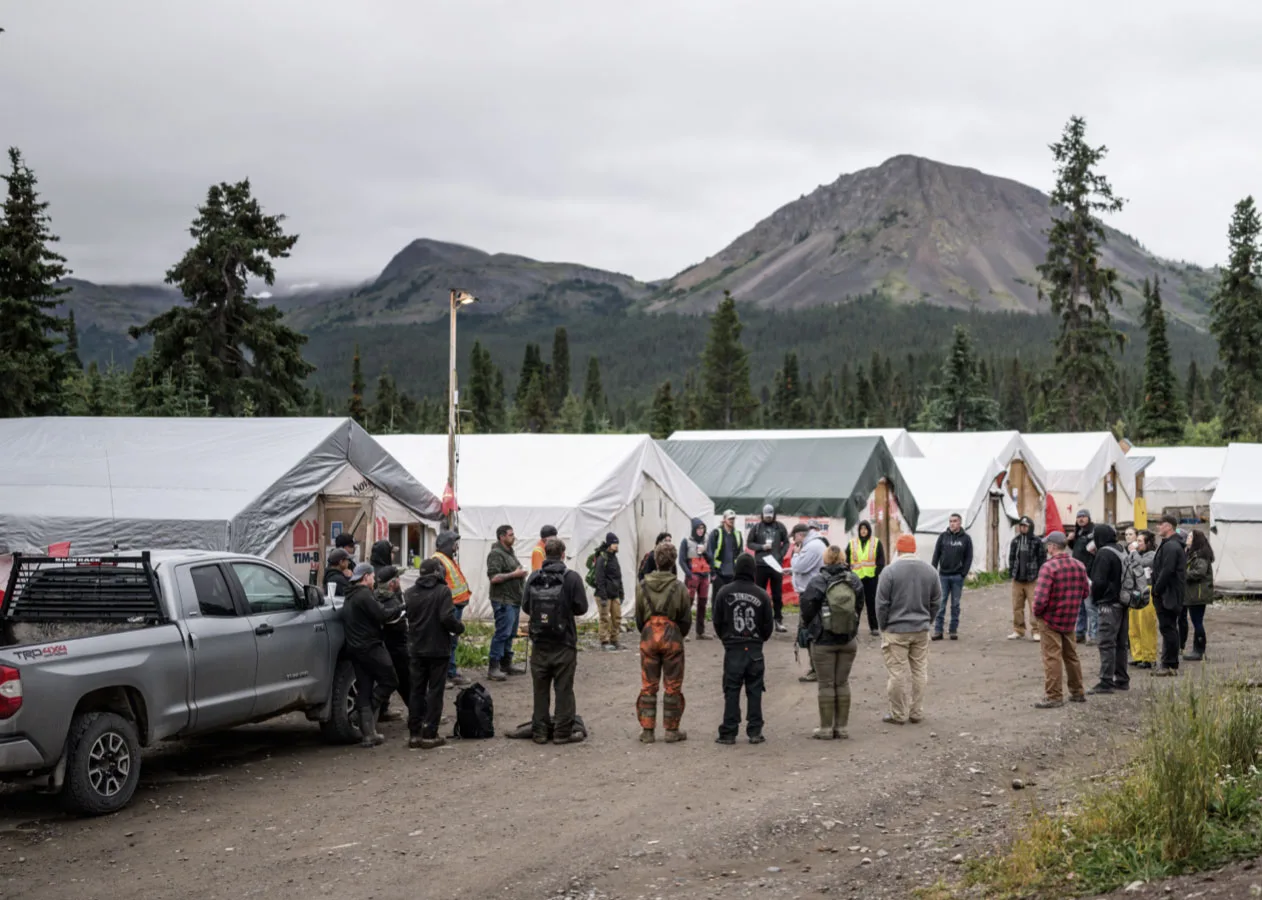
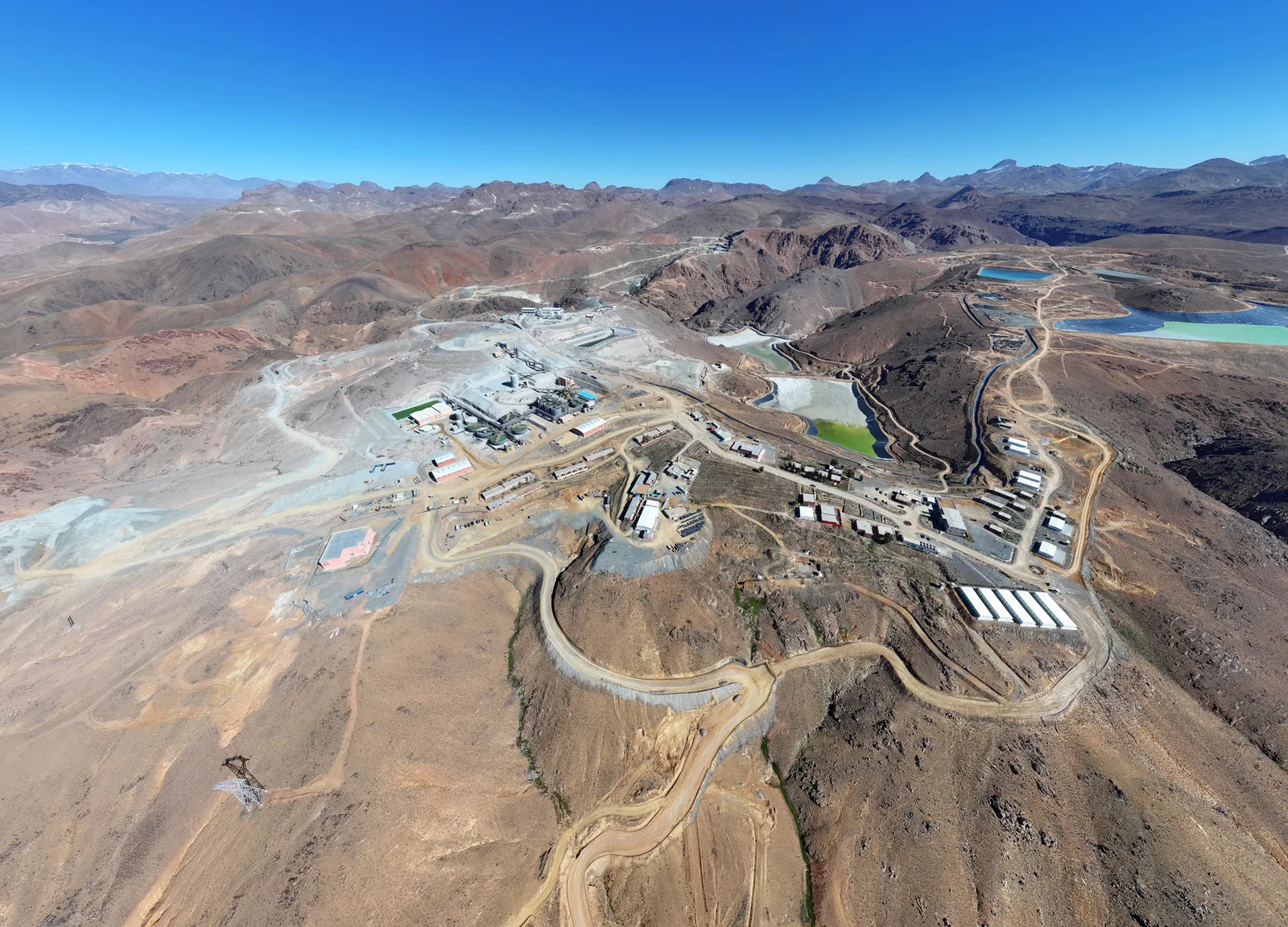
On its construction page, Skeena reported the project at 49% complete in February 2026, more than 60% in June, more than 70% at 31 August and more than 80% in October. Mining in the pit is under way, and recent work has included the primary crusher, conveyors, the coarse ore stockpile dome, the concentrate filter press, the tailings starter dam and a new employee camp.
Work left for 2026, according to Skeena's latest quarterly report, includes starting ore mining and stockpiling, finishing the initial tailings dam, starting mechanical completion testing, finishing the substations and power line, and energising key facilities with grid power. Commercial production is expected in 2027.
Latest reported numbers
Skeena's most recent quarterly accounts cover the three months to 30 June 2026 and were published on 13 August. It had not released third-quarter results by 13 November.
Skeena at 30 June 2026
- C$134.8m cash and equivalents, plus C$500.9m of restricted cash
- US$750m of 8.50% senior secured notes due 2031
- C$139.7m net loss for the first half of 2026
The second-quarter net loss was C$35.2 million, or C$0.28 a share. Additions to mineral property, plant and equipment totalled C$203.6 million in the first half, of which C$131.4 million came in the second quarter.
The financing changed shape in April 2026. Skeena issued US$750 million (C$1,036.8 million) of senior secured notes paying 8.50% and maturing on 1 April 2031, and terminated an undrawn US$350 million term loan. Proceeds went to repurchasing 66.67% of an existing gold stream (C$254.4 million), an interest reserve (C$130.2 million) and a construction account (C$552.9 million). Part of future gold output remains subject to the rest of the stream and to royalty agreements. Management says the notes should fund capital needs through to commercial production.
Skeena had 125,462,705 shares outstanding on 13 August 2026, with about 4.9 million options and smaller numbers of share units.
The main risks
What could go wrong
- Start-up. Delays to commissioning, grid energisation or the tailings dam would push back first cash flow, and new plants often take time to reach design rates.
- Debt. The notes carry an 8.50% coupon and covenants, and access to the restricted construction funds depends on meeting their terms.
- Cost. Construction could still cost more than planned, and any overrun would have to be met from remaining funds or new money.
- Prices and currency. Revenue will depend on gold and silver prices, and the debt is in US dollars while the company reports in Canadian dollars.
- Operations in a remote mountain region, where weather, wildfire, labour and supply chains can disrupt work.
- Dilution, if more money is needed or royalty holders elect to take shares under a royalty option.
What to watch
| Timing | Milestone |
|---|---|
| Date not yet announced | Third-quarter results, with an updated completion figure and cash balance |
| Late 2026 | Updated technical report for Eskay Creek and Snip |
| Rest of 2026 | Ore stockpiling, tailings dam completion, grid power to key facilities |
| Second quarter 2027 | Targeted initial production and cash flow |
| 2027 | Expected commercial production |
| From 1 April 2028 | Notes become redeemable at set prices |
The test for investors over the next six months is whether Skeena moves from construction to steady production on time and within the money it has already raised.