Australia's Telix Pharmaceuticals agreed to buy ITM Isotope Technologies Munich for $1.65 billion upfront and up to $700 million more in milestone payments, bringing the privately held German maker of cancer-treatment isotopes into a larger listed radiopharmaceutical group.
Most of the upfront price is paid in stock. Telix will issue 105.8 million new shares worth $1.25 billion, priced at $11.841 each, the 30-day volume-weighted average at signing. It will also assume $302 million of ITM's net debt at closing. Once the deal completes, ITM's shareholders will own 23.7 percent of the combined company and Telix's existing investors 76.3 percent.
| Deal component | Amount | Terms |
|---|---|---|
| Upfront consideration | $1.65bn | Cash-free, debt-free basis; includes $1.25bn in Telix shares |
| FDA approval milestones | Up to $250m | Approvals in three indications, within set deadlines |
| Sales milestone | Up to $450m | If ITM-11 global net sales top $150m in financial year 2030 |
| Net debt assumed | $302m | Taken on at closing |
The milestones can be paid in cash or shares, at Telix's option. A further $96 million of management equity rollover and seller transaction costs is subject to closing adjustments.
What Telix Is Buying
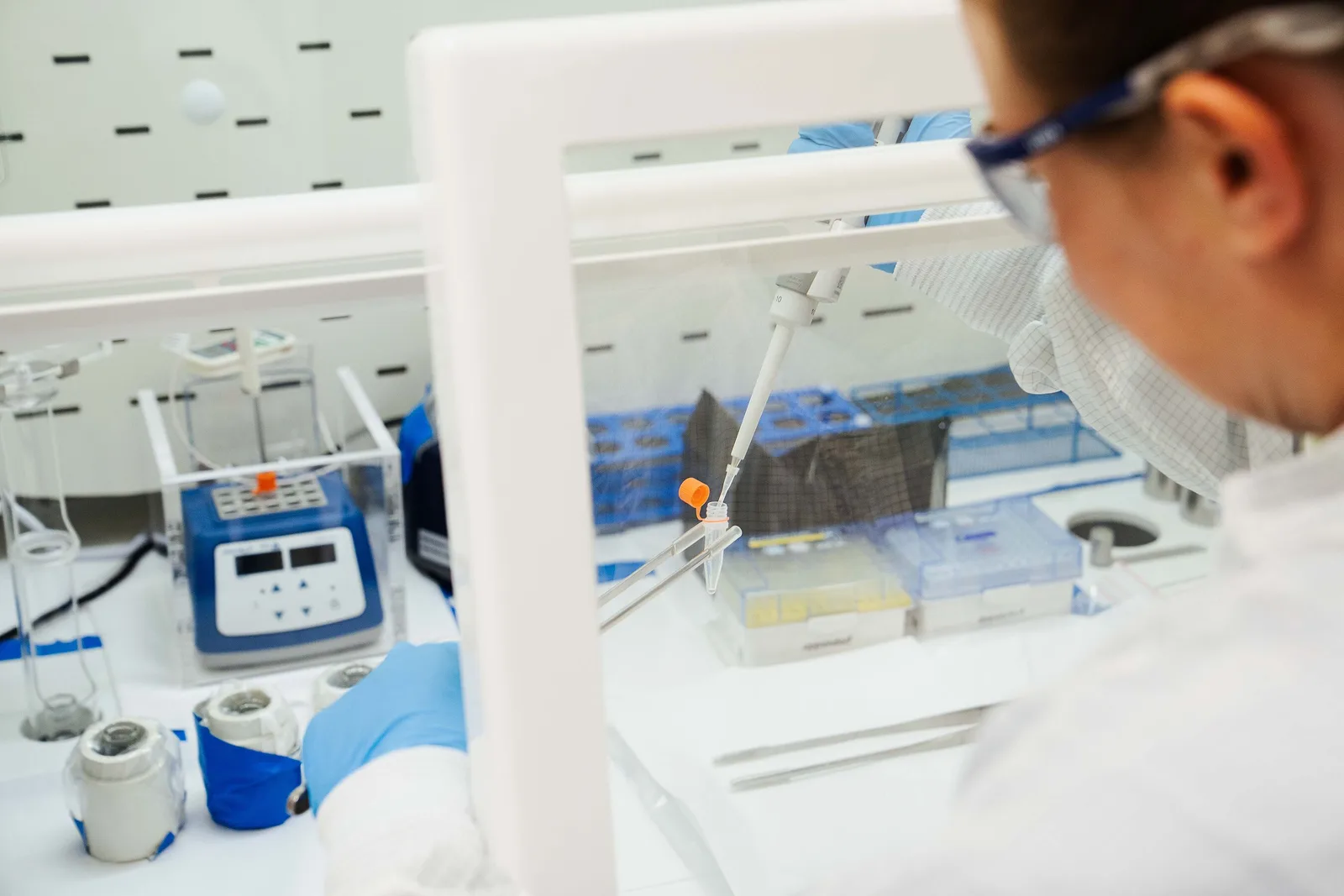
ITM, founded in 2004, produces radioisotopes used in targeted cancer treatment, including lutetium-177, actinium-225 and terbium-161, and distributes them in more than 65 countries. It runs two GMP manufacturing sites and produces lutetium-177 at commercial scale, covering the chain from raw materials and irradiation to quality control, logistics and delivery.
The business has grown quickly. Revenue reached $273 million in 2025, a compound annual growth rate of 40 percent since 2021, and $156 million in the first half of 2026, most of it from manufacturing. Telix said it expects the manufacturing division to keep growing revenue at double-digit rates and to contribute positively to group earnings from 2027.
The ITM-11 Question
The contingent payments hinge on ITM-11, or lutetium-177 edotreotide, a treatment for gastroenteropancreatic neuroendocrine tumours. It has completed its main Phase III programme, including the COMPETE and COMPOSE trials, but it does not yet have marketing approval.
The drug has hit a hurdle in the US. Telix disclosed that the Food and Drug Administration issued a Complete Response Letter in August 2026 over chemistry, manufacturing and controls, and over the inspection of a third-party facility. The letter identified no clinical or nonclinical deficiencies, and ITM intends to resubmit, though no date was given.
That setback helps explain the shape of the deal. By making $700 million of the price depend on approvals and sales, Telix leaves a large part of the regulatory and commercial risk with ITM's sellers, who are paid in full only if the drug reaches the market and sells well.
A Bet on Consolidation in Radiopharma
Telix chief executive Christian Behrenbruch said the merger "positions Telix at the forefront of the consolidation" taking place as the industry matures.
Radiopharmaceuticals pair a radioactive isotope with a molecule that seeks out tumour cells, delivering radiation directly to the cancer. Large drugmakers have bought into the field in recent years, and a secure supply of medical isotopes, which are hard to make at scale, has become a competitive asset in its own right.
For Telix, which opened a radiopharmaceutical research, manufacturing and treatment facility in Melbourne in July, ITM adds an established European production base, an international distribution network and a late-stage therapy. For Germany's biotech sector, it means one of its fastest-growing private companies will end up inside a group listed in Australia and, through American depositary receipts, on Nasdaq.
What Happens Next
Telix's board has approved the transaction, and holders of more than 90 percent of ITM's shares backed it at signing. Completion still needs approval from Telix shareholders, who are expected to vote at an extraordinary general meeting in November, along with regulatory clearances. Telix expects to close by the end of 2026.
The new shares will be issued as Nasdaq-listed American depositary receipts after escrow periods. Telix listed the main risks as a delay or failure to complete, integration costs, supply-chain constraints, disruption to manufacturing, and the chance that expected synergies and financial benefits do not materialise. Investors will also watch for the timing of ITM-11's resubmission to the FDA, which drives the first $250 million of milestones.