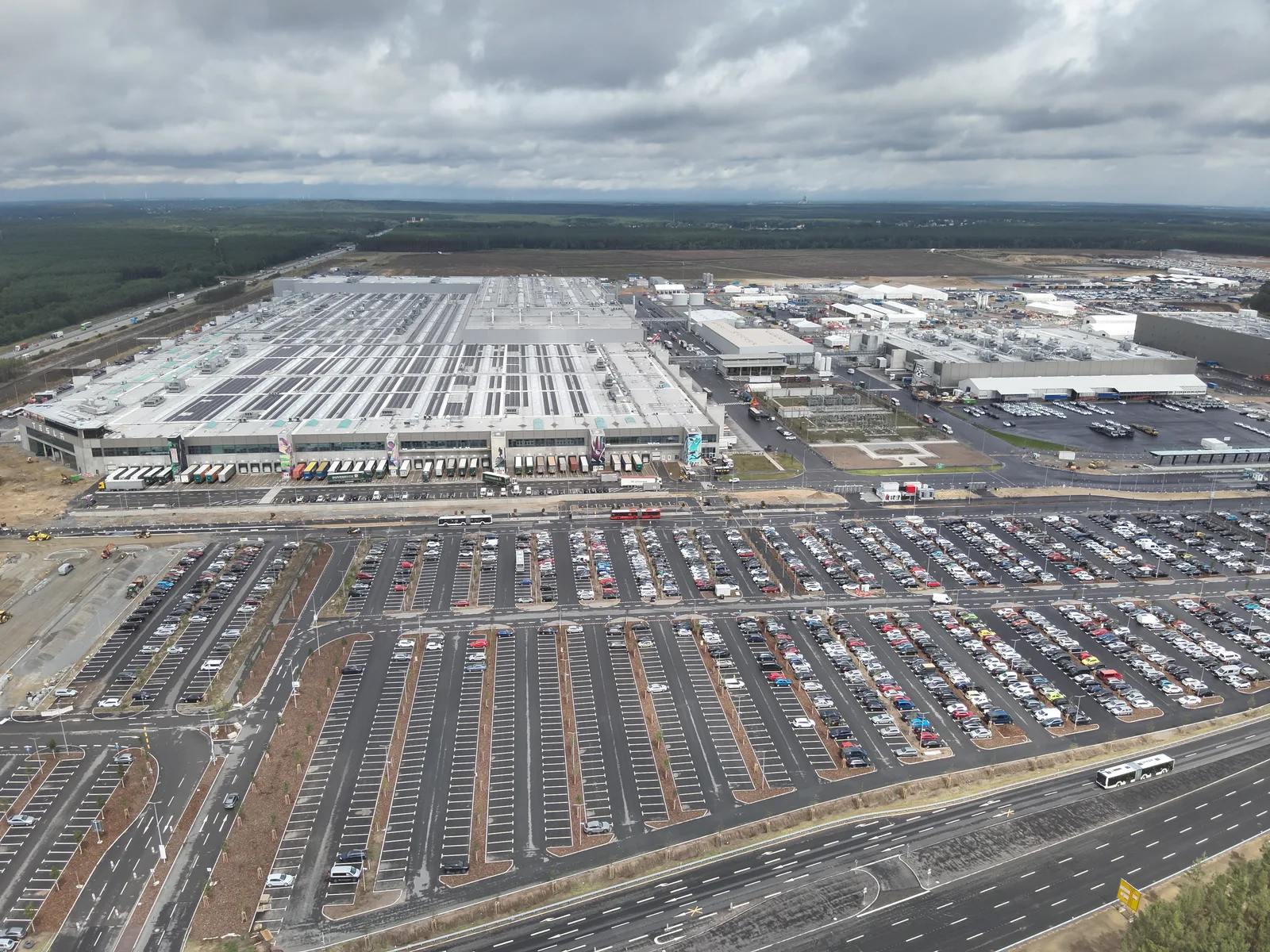
Tesla plans to spend €3bn on a new production hall at Grünheide outside Berlin, its only car plant in Europe, built to turn out up to one million Cybercabs a year. The driverless two-seater has no steering wheel or pedals and no approval for European roads. Tesla has yet to file for the building permit, and wants the first cars off the line in 2029.
Tesla's Grünheide expansion
- €3bn planned investment in a new production hall, smaller buildings and an extra wastewater plant
- 1m Cybercabs a year, the most the new hall is meant to build
- 2029 planned start of production, after building work begins in the first half of 2027
A new hall for a car without a steering wheel
Tesla announced the plan on Monday 16 November. The money pays for the hall, smaller buildings around it and another wastewater treatment plant, the company said, according to rbb24, the Berlin and Brandenburg public broadcaster. Tesla also plans to hire several hundred more people.
The hall is designed around the Cybercab from the start. "In other words, production will already begin with Cybercabs in 2029," plant manager André Thierig said, as quoted in German by rbb24.
The timetable is long: a permit application before the end of this year, construction from the first half of 2027, production in 2029. Reports in October, summarised by teslamag.de, put the new hall north of the existing one, at 536,000 square metres, more than twice its size.
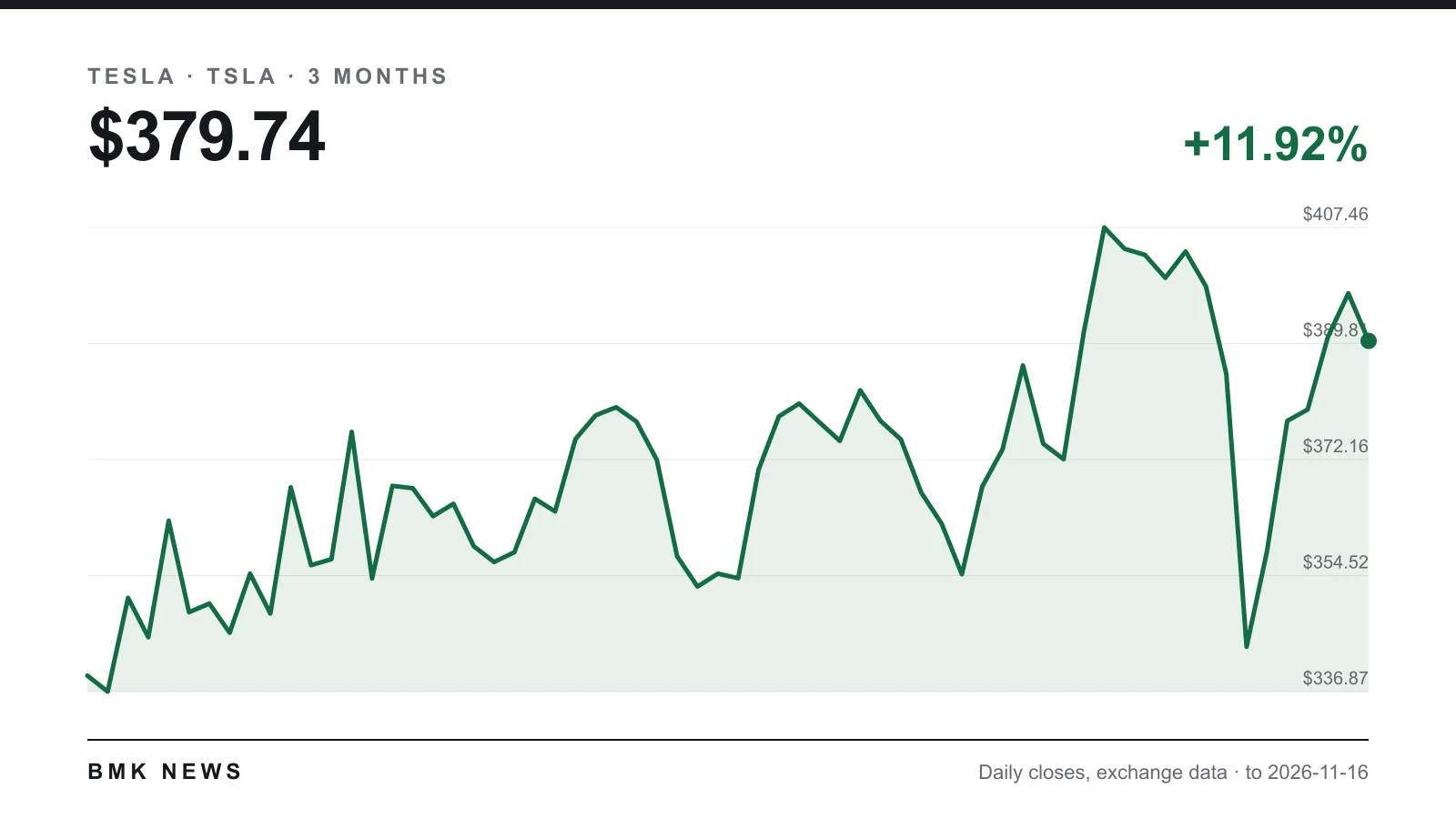
Tesla: share price, chart and news
The existing plant is close to full
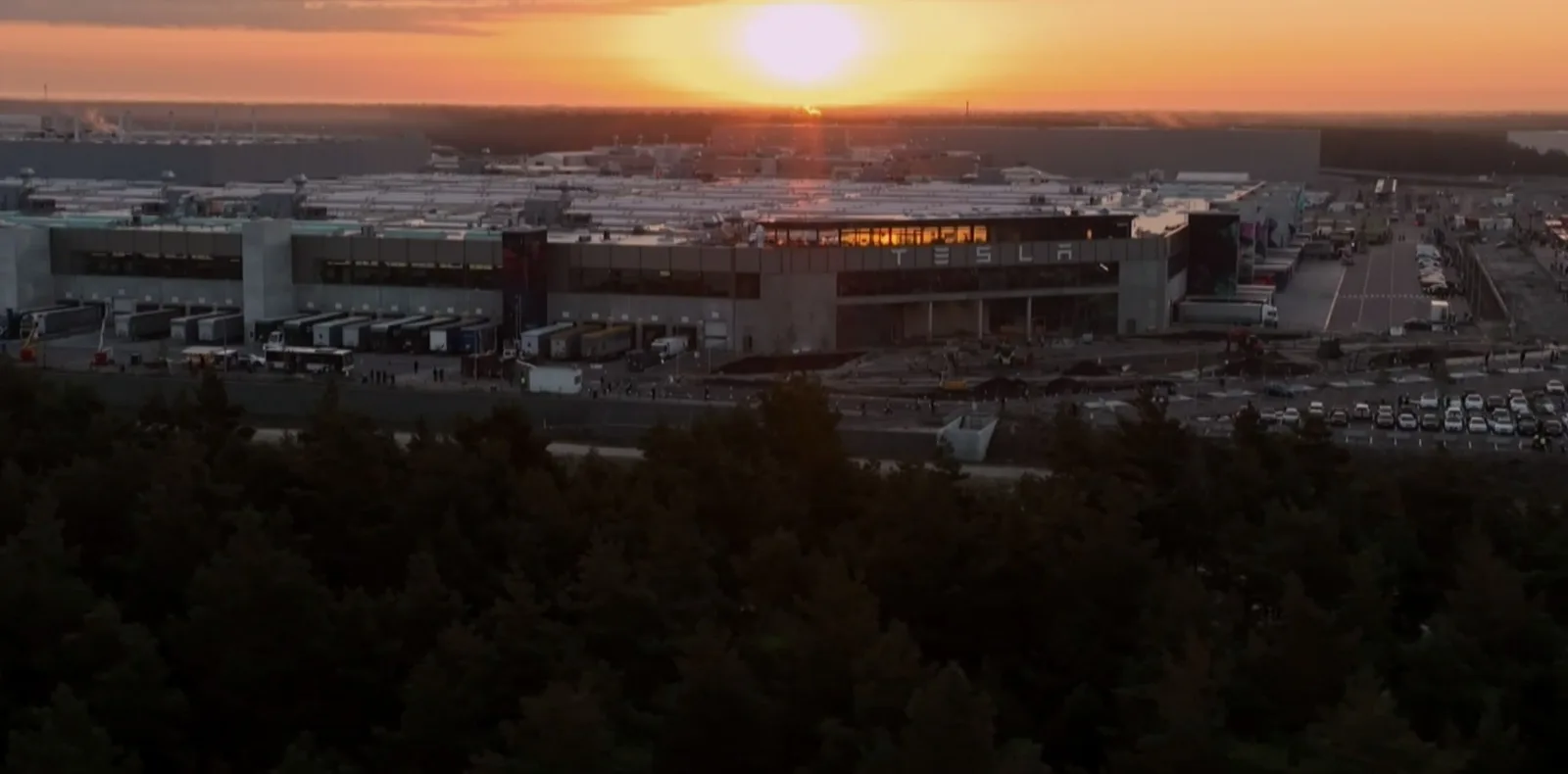
Grünheide opened in March 2022 and builds one car, the Model Y. A slump in sales put the expansion on ice and the workforce fell below 11,000 at one point. By October it was back at 12,600, according to Tesla, with 2,000 hired in recent months.
| Grünheide in numbers | Figure |
|---|---|
| Capacity approved by Brandenburg | 500,000 cars a year |
| Capacity installed, according to Tesla | 375,000 cars a year |
| Weekly output in June 2026 | about 5,000 Model Y |
| Weekly output target | 7,500 cars |
| Planned Cybercab hall | up to 1,000,000 a year |
The installed equipment covers 75% of what the state allows. Tesla aimed to lift output from about 5,000 cars a week in June to 7,500, roughly 375,000 a year, using that equipment fully for the first time. Last week the plant was nearing that rate, teslamag.de reported, citing the trade magazine Automobilwoche.
At an Automobilwoche congress, Thierig hinted at what was coming. "If we build another factory there, we will not build another Model Y factory," he said, as quoted by teslamag.de. He also said battery cell production at the site would start in mid-2027, in a hall that is already standing.
Politicians cheer, campaigners worry about water
Brandenburg's state premier, Dietmar Woidke, called the investment "a decision of enormous economic significance", rbb24 reported. Germany's economy minister, Katherina Reiche, told the German Press Agency it was "a sign of confidence in the technological and industrial competence of our country."
The IG Metall union said the hiring gives staff new leverage at a plant that still has no collective pay agreement.
Environmental groups and residents have objected for years because part of the site lies in a water protection zone. Tesla rejects their concerns; Thierig said the bigger plant would stay within its contractually agreed water volumes.
The permit is still a step away
The new application builds on one Tesla filed in 2023 to double the site's capacity to one million cars a year. Tesla says the authorities found that project approvable in principle in October 2024. According to the October reports, the new partial application would allow the building to go up, while installing the production equipment inside it would need a third and final approval.
What still has to happen
- Tesla files its partial permit application for the new hall, planned before the end of 2026
- Brandenburg approves the building, then its equipment
- Construction starts, planned for the first half of 2027
- Regulators clear a car with no steering wheel or pedals for European roads
Approval for driverless cars is still missing
The Cybercab has no approval in Germany or the rest of the EU. Asked when it might reach German roads, Thierig said Tesla was not responsible for approving fully autonomous driving. "But we want to make sure that we have the right product at that time, which we can then put on the road," he said, according to rbb24.
In the US the car is already in service. Tesla added Cybercabs to its Robotaxi fleet in Austin, Texas, in September, and last week offered the car to selected private buyers at $29,990, plus a compulsory $299 a month for the autonomy feature. Under purchase terms one invited buyer posted on X, it only works inside Tesla's Robotaxi service areas, currently parts of five cities in Texas and three in Florida, teslamag.de reported.
Europe is further behind. Tesla's supervised driver assistance system, called Tesla Assisted Driving there, had national exemptions in 10 of 27 member states by late October, with an EU-wide vote possible in early December, teslamag.de reported. The EU's 2022 rules for fully automated vehicles cover narrow uses: a predefined area, fixed hub-to-hub routes or automated valet parking.
Questions and answers
How much is Tesla investing in Grünheide?
Tesla plans to invest €3bn in a new production hall and support buildings at its factory near Berlin. The hall is meant to build up to one million Cybercabs a year.
When will Tesla build the Cybercab in Germany?
Tesla plans to start Cybercab production at Grünheide in 2029. Construction is due to begin in the first half of 2027.
Is the Tesla Cybercab approved in Europe?
No. The Cybercab has no approval in Germany or the EU, and plant manager André Thierig said approving fully autonomous driving was not Tesla's responsibility.
Sources
- rbb24: Tesla kündigt Milliarden-Investition in Werk in Grünheide an
- teslamag.de: Neue Tesla-Halle in Grünheide offenbar für weiteres E-Auto, Batterien ab Mitte 2027
- teslamag.de: Verdoppelung deutscher Tesla-Kapazität wird konkret
- teslamag.de: Tesla bietet autonomes Cybercab zum Kauf für 29.990 $ an, ohne Abo fährt es nicht
- teslamag.de: Tesla-System TAD in Lettland erlaubt, Musk sieht Freigabe in ganzer EU in Q1 2027
- EUR-Lex: Commission Implementing Regulation (EU) 2022/1426