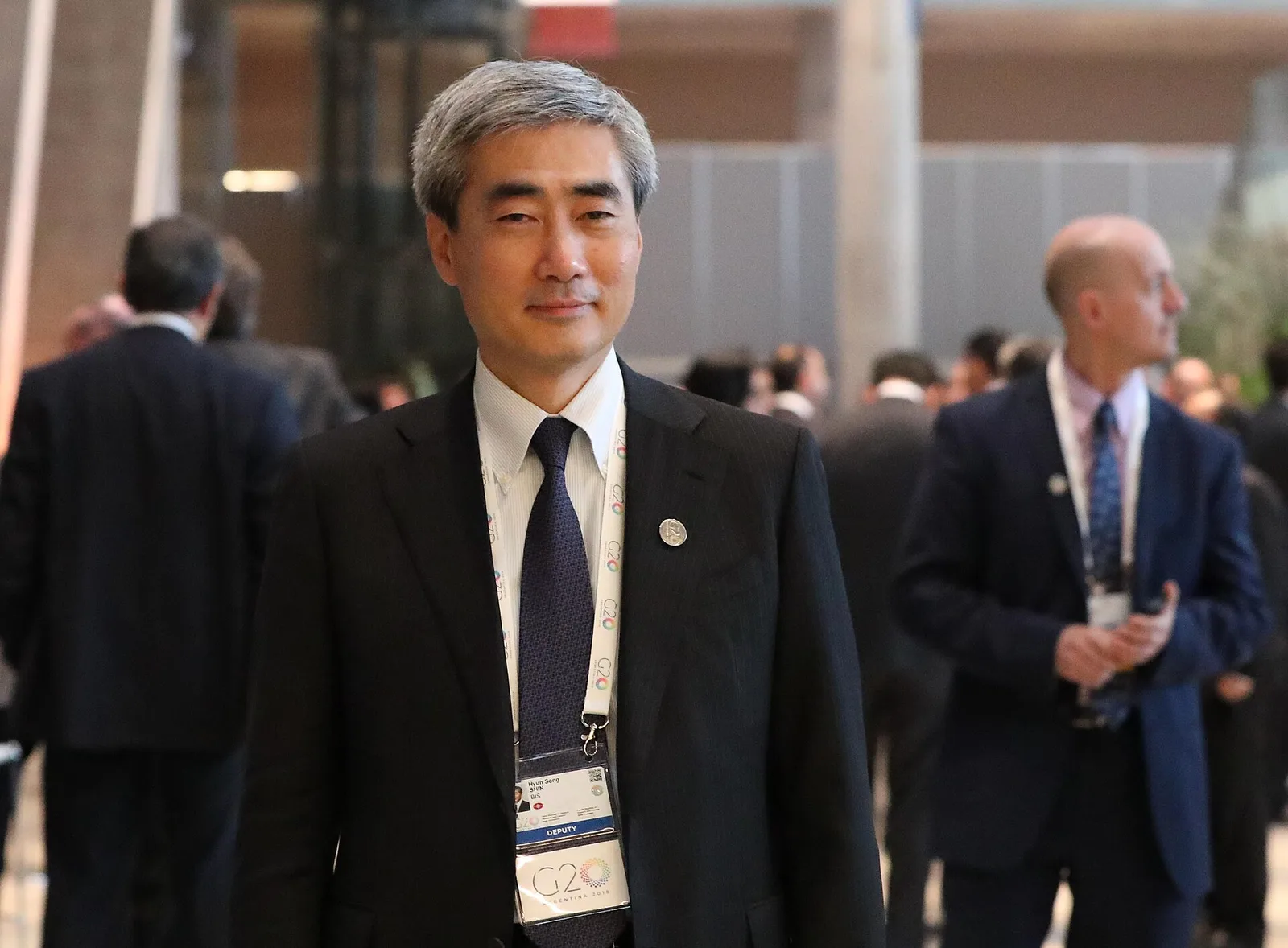
The Bank of Korea raised its key interest rate to 3.25% on Thursday 26 November, its third hike of 2026. It did so with the Kospi, Seoul's main share index, about 48% below its June record, a crash Governor Shin Hyun-song called hard to explain. The reason is a chip export boom: the bank now expects 4.1% growth in 2027, the fastest since 2021.
Bank of Korea decision, Thursday 26 November
- 3.25% base rate after a 0.25-point rise; five of seven board members voted for it
- 4.1% growth forecast for 2027, up from 2.9% in August
- 4,697.51 Kospi close on Wednesday 25 November, against a record close of 9,114.55 on 22 June
What you need to know
- The Bank of Korea lifted its base rate to 3.25% on Thursday, its third rise this year.
- Korean mortgage rates averaged 4.98% in October, the highest since March 2012.
- Board members' projections point to one more rise, to 3.5%, in the first half of 2027.
Why the Bank of Korea raised rates to 3.25% on Thursday
The Bank of Korea raised its base rate to 3.25% on Thursday 26 November because growth and inflation both beat its forecasts. The base rate is what the central bank charges banks, and it steers what people pay on loans and earn on savings.
Chips are the engine. The economy grew 1% in the third quarter, more than three times the 0.3% the bank forecast in August, The Korea Herald reported.
Real gross domestic income, a gauge of the country's buying power, jumped 18.8% from a year earlier, SBS News reported. That is the biggest rise since late 1977.
Prices are the worry. Consumer inflation was 2.8% in October, still above the 2% target. Expensive oil, tied to the war in the Middle East, is the biggest pressure, according to SBS News.
After October's pause, Governor Shin Hyun-song had promised to "continue to respond until inflation converges sustainably toward the target", The Korea Herald reported.
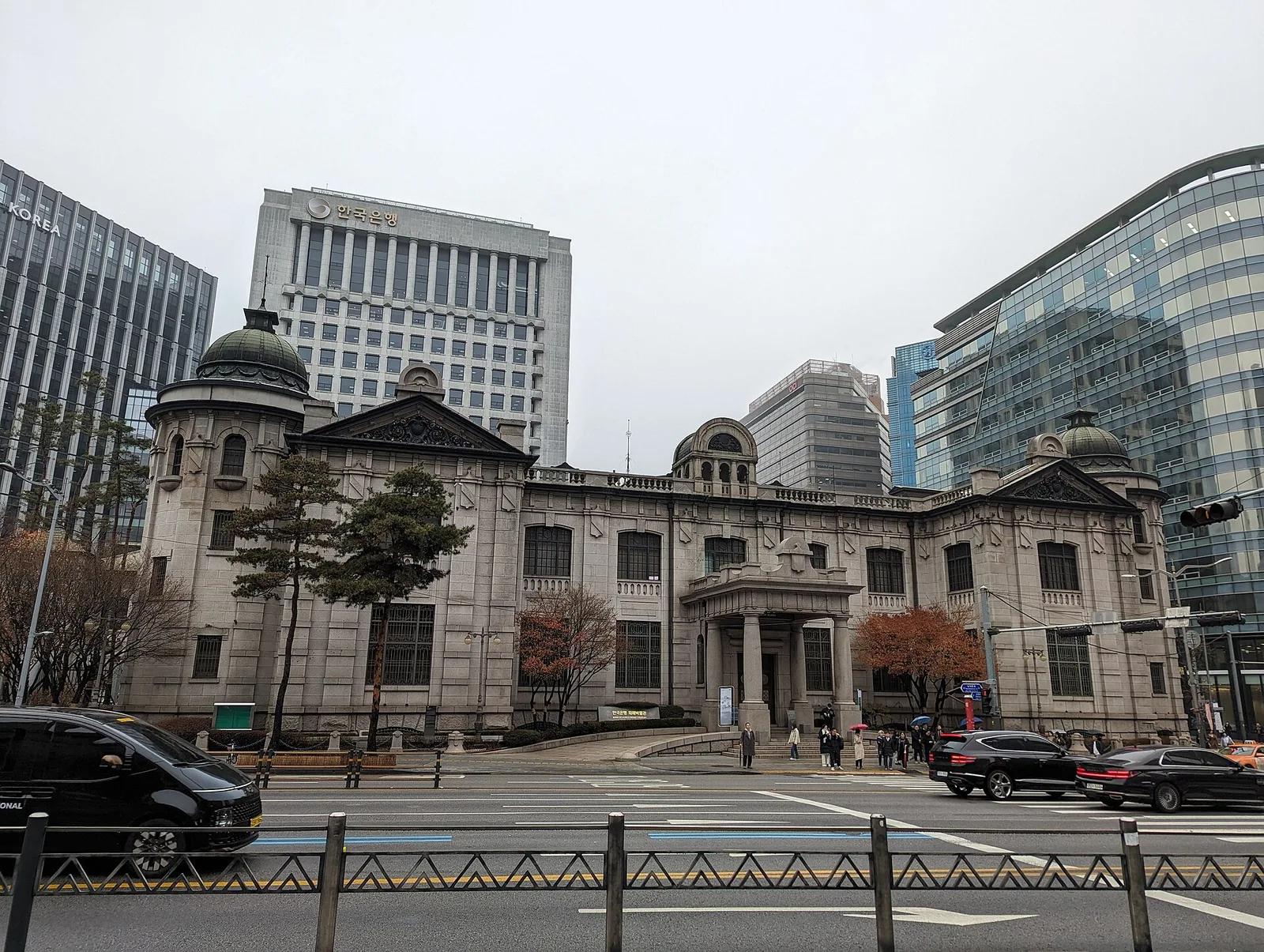
Two of seven Bank of Korea board members voted to hold at 3%
Five of the Bank of Korea's seven board members, including Governor Shin, voted for Thursday's hike, Herald Business reported. Board members Hwang Kun-il and Lee Soo-hyung wanted to keep the rate at 3%.
Board members' own projections for six months ahead show a median rate of 3.5%. That points to one more rise in the first half of 2027.
| Bank of Korea forecast | 2026 | 2027 | 2028 |
|---|---|---|---|
| Economic growth | 3.9% (was 3.3%) | 4.1% (was 2.9%) | 3.0% (first forecast) |
| Consumer inflation | 2.7% (unchanged) | 2.4% (was 2.3%) | 2.1% (first forecast) |
Why a 48% Kospi fall did not stop the Bank of Korea
The Kospi closed at 4,697.51 on Wednesday 25 November, about 48% below its record close of 9,114.55 on 22 June, The Korea Herald reported.
Wednesday's 6.16% slide back below 5,000 erased Tuesday's 6.32% rebound in a single session.
By Friday, Kospi shares cost just over three times their expected profit for the next 12 months, The Korea Herald reported. That is about half the low of the 2008 crisis.
Governor Shin told reporters the crash is hard to explain, Herald Business reported. Korean chip companies are worth about 2,000 trillion won on the stock market, he said, against about 700 trillion won of profit this year.
In other words, three years of profit at this pace would add up to more than the sector's whole market value. To judge the economy, Shin said, watch chip prices, not chip share prices.
The fall still hurts. Shin said weak shares have held back household spending in the second half of this year.
Seoul had already readied a market rescue fund unused since 2008, BMK News reported on Monday. On Thursday the market steadied: by 11:20 in Seoul the Kospi was up 1.28% at 4,757.75, Yonhap reported.
What this means for you: Korean mortgages already cost the most since 2012
Korean borrowers were paying the most since 2012 even before Thursday's hike. New bank mortgages averaged 4.98% in October, according to Bank of Korea figures released on Wednesday and reported by Herald Business.
The average rate on new household loans passed 5% for the first time since November 2023. Variable-rate mortgages, which track short-term market rates, rose fastest: up 0.14 points in a month to 4.9%.
Savers are gaining a little. New time deposits paid an average 3.56% in October, up 0.17 points in a month.
For investors abroad, a higher Korean rate makes won savings pay more, which can support the currency.
How the Bank of Korea hike affects the won and the yen
The won traded at about 1,340 per US dollar at 11:20 in Seoul on Thursday, slightly firmer than on Wednesday, Yonhap reported.
Futures markets put a 98.1% chance on a quarter-point Fed hike next month, SBS News reported. Korea's rate is now 0.75 points below the Fed's, and a wider gap tends to weaken the won, according to the Bank of Korea.
Central banks in the US, Europe and Japan are all in hiking cycles too, SBS News noted. Our guide shows where the Fed, ECB and Bank of England stand.
In Japan on Thursday, Bank of Japan board member Naoki Tamura called for a faster move. The bank "needs to bring the policy interest rate to the neutral level soon", he said. That is the level that neither speeds up nor slows the economy.
Tamura repeated that he sees it "most likely around 2 percent". The BoJ's rate is 1.25%, set when it lifted rates in September.
He said the bank should "make haste slowly" and speed up if prices overshoot. The yen traded near 159 per dollar, FinScans reported, close to the 160 level it neared earlier this week.
Next to watch: the Fed's decision on Wednesday 9 December.
Why did the Bank of Korea raise interest rates in November 2026?
The Bank of Korea raised its rate to 3.25% on 26 November 2026 because growth and inflation both beat its forecasts. It now expects 4.1% growth in 2027.
What is the Bank of Korea base rate now?
The Bank of Korea base rate is 3.25% after a quarter-point rise on Thursday 26 November 2026.
Will the Bank of Korea raise rates again?
Probably once more: board members' projections published on 26 November 2026 show a median rate of 3.5% in six months. That implies one more hike in the first half of 2027.
Sources
- The Korea Herald: BOK raises rate to 3.25% in final hike of year
- SBS News: BOK Raises Base Rate to 3.25% Amid Semiconductor Boom and Inflation Pressures
- Herald Business: 한국은행, 기준금리 3.25%로 인상…내년 성장률 전망 4.1%로 높여
- Herald Business: 신현송 총재 "반도체 성장은 굳건한데 주식시장은 충격…설명하기 힘든 면 있어"
- Herald Business: 가계대출 금리 5% 넘었다…주담대는 14년 7개월 만에 '최고'
- The Korea Times: BOK raises key rate by quarter point to 3.25% as inflation concerns mount
- The Korea Times (Yonhap): Seoul shares up late Thursday morning on tech gains
- The Korea Herald: Fragile Kospi faces fresh test
- The Korea Herald: AI trust crisis exposes cracks in Korea's stock market
- Bank of Japan: Speech by Board Member Tamura in Yamanashi: Economic Activity, Prices, and Monetary Policy in Japan
- FinScans: BoJ's Tamura Signals Faster Rate Hikes to Prevent Inflation Overshoot
- Federal Reserve: Meeting calendars, statements, and minutes