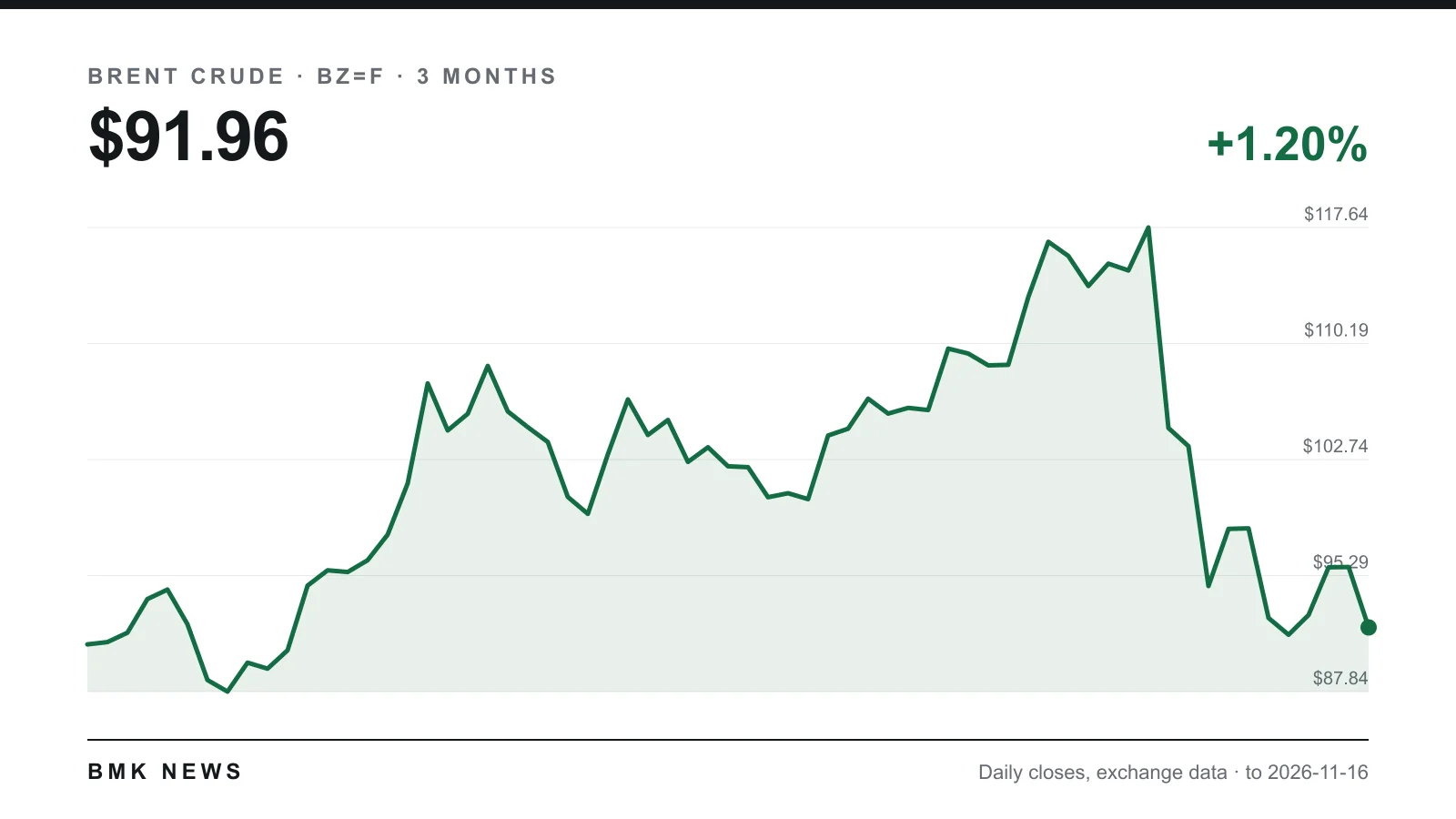
Oil fell hard on Monday 16 November, even as Iran's Revolutionary Guards said tankers had struck mines in the Strait of Hormuz. Brent crude settled 3.6% lower at $92.44 a barrel and West Texas Intermediate (WTI), the US benchmark, lost 3.2% to $85.72, according to Bloomberg. Traders looked past claims that Reuters could not verify and fixed on an International Energy Agency forecast that the world will pump more oil than it uses this quarter.
Oil on Monday 16 November
- $92.44 Brent settlement for January delivery, down 3.6%
- $85.72 WTI settlement for December delivery, down 3.2%
- 105m b/d IEA forecast for world oil supply in the fourth quarter
Mine claims failed to lift prices
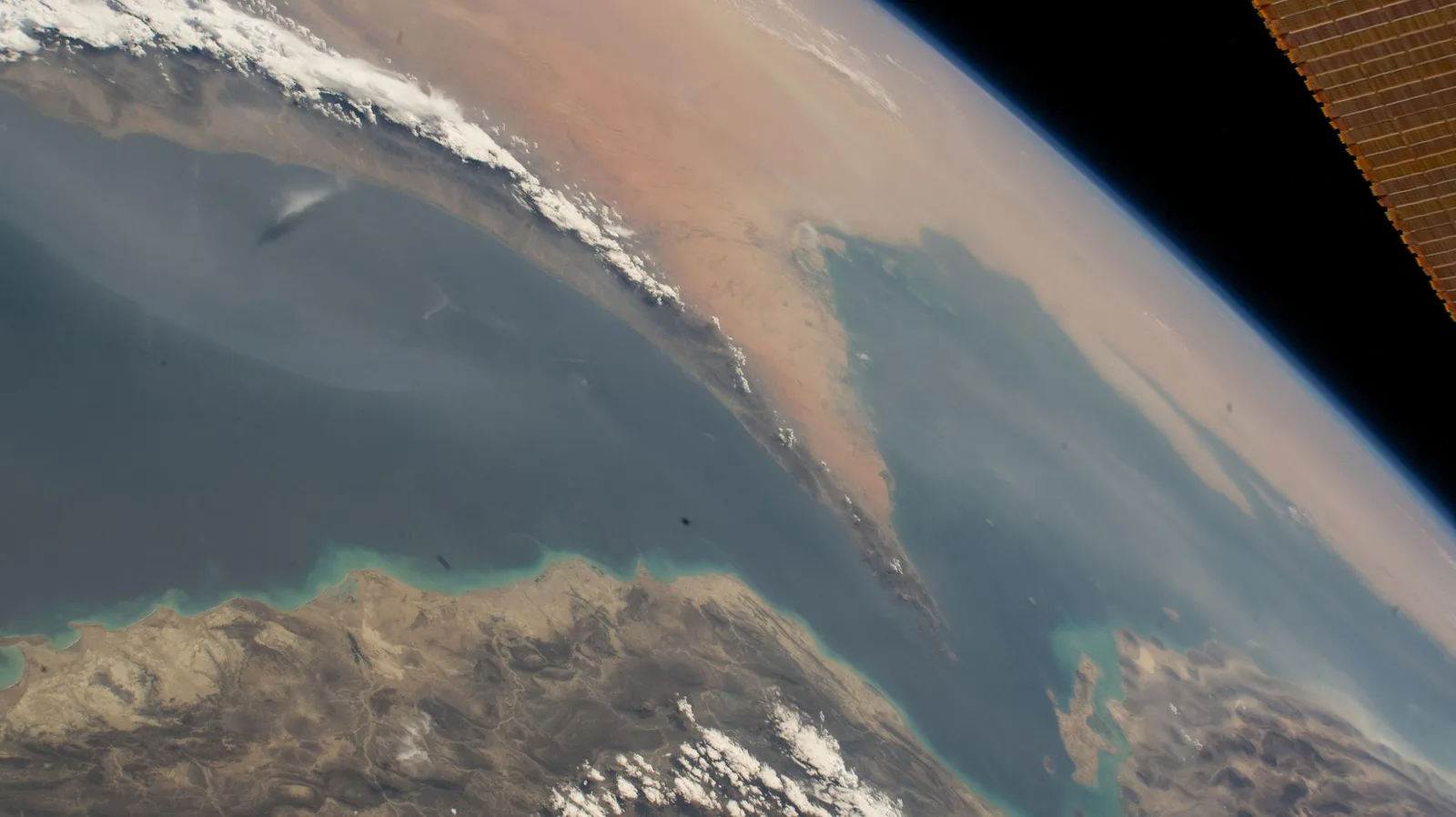
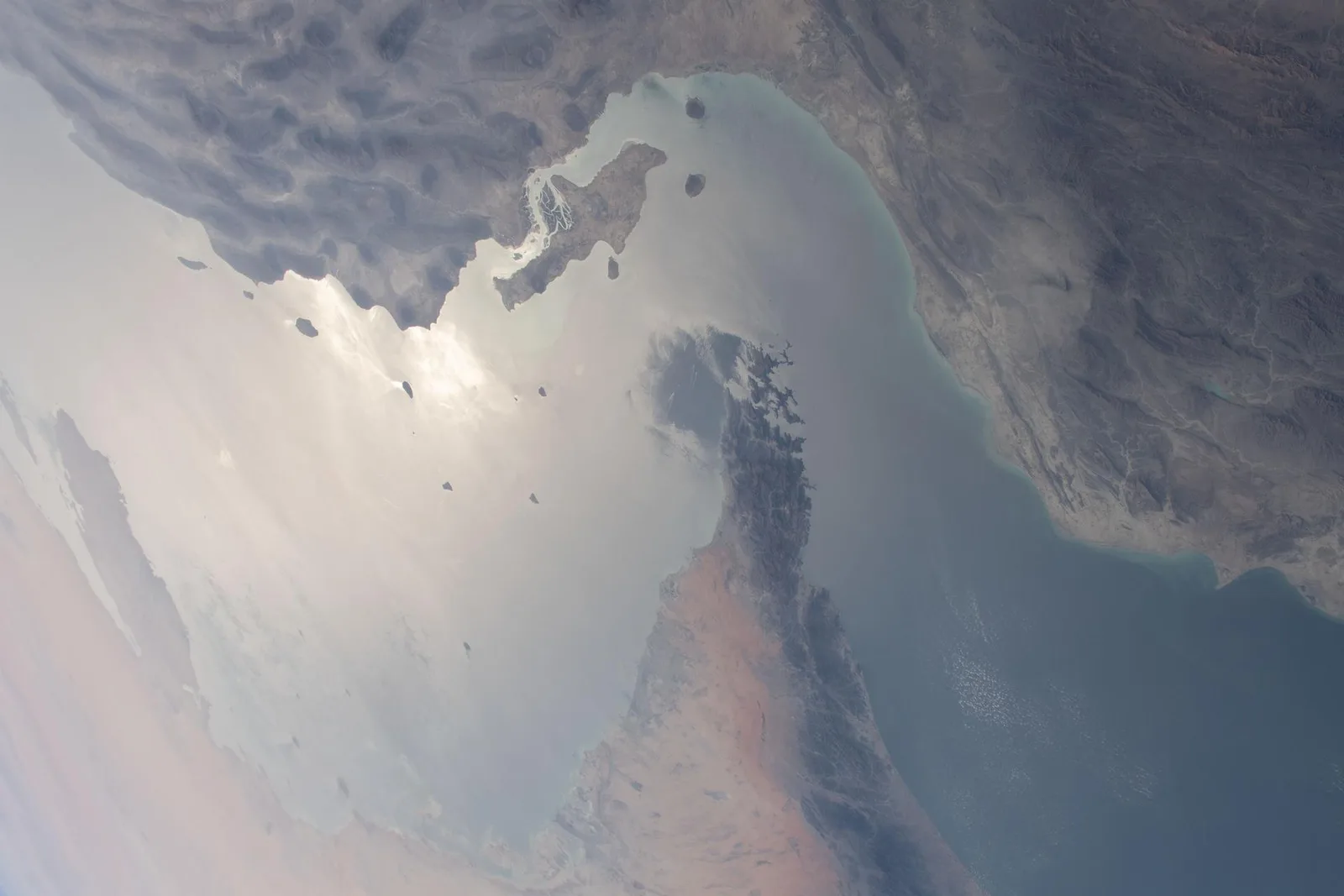
Iran's Revolutionary Guards said on Monday that two oil tankers had struck mines in the Strait of Hormuz. Reuters said it could not independently verify the report. Iranian media reported that at least four tankers had hit naval mines since Sunday, according to Bloomberg, although groups that monitor attacks have blamed most strikes on projectiles rather than mines.
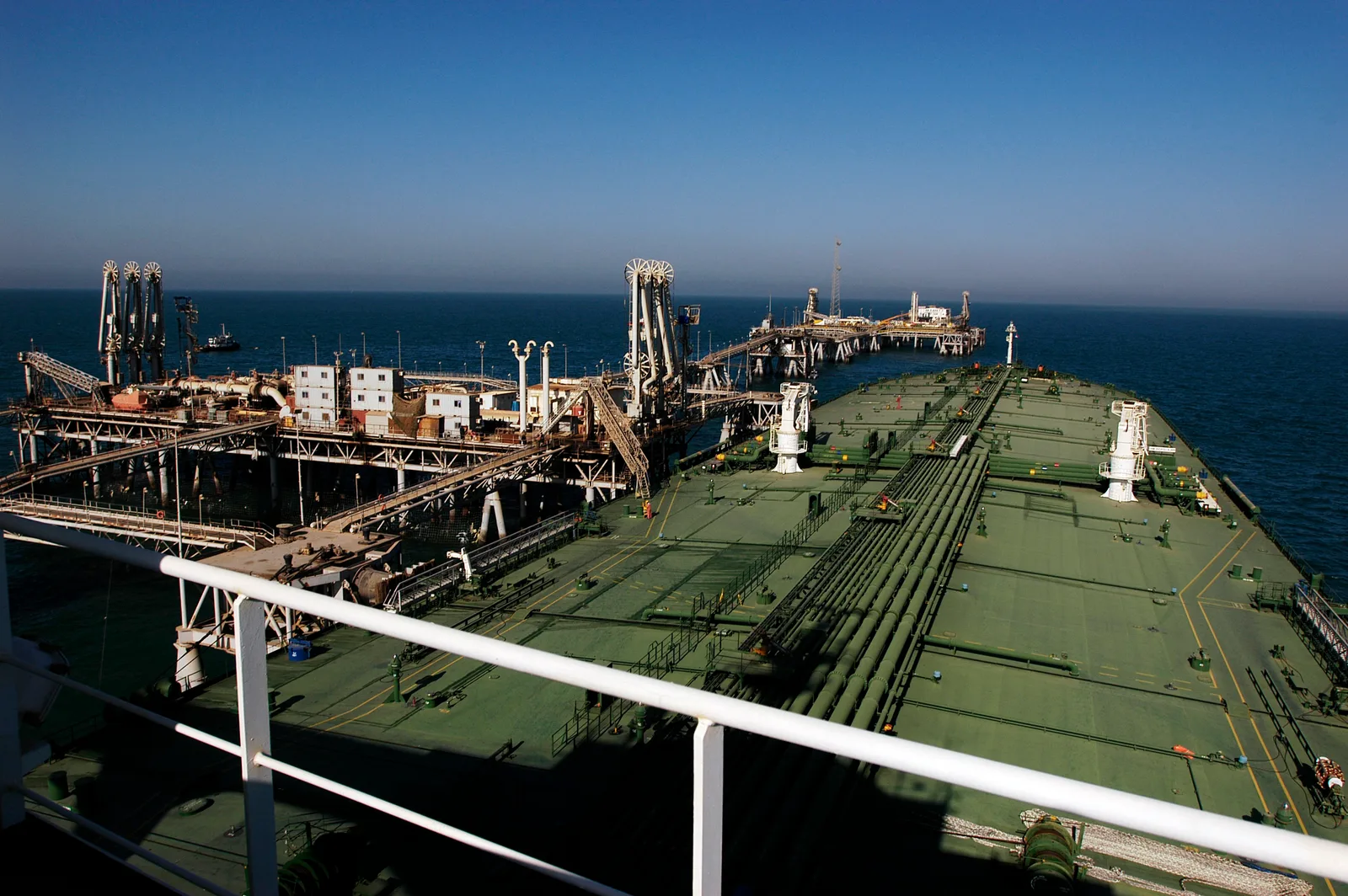
The stakes are large: about 15 million barrels of crude a day moved through Hormuz in 2025, according to IEA data cited by Reuters. Yet the market shrugged, and Monday's slide was oil's biggest drop in about a week, Bloomberg said. Ole Sloth Hansen, head of commodity strategy at Saxo Bank, told Bloomberg that "The prospect of a growing supply surplus appears to carry more weight than the risk of another disruption".

The IEA sees more oil than the world needs
The Paris-based International Energy Agency published its monthly Oil Market Report on Friday 13 November. It said global oil supplies were surpassing demand "for the first time since the outbreak of the war in Iran" and that the market would return to a surplus in the fourth quarter. The agency had previously forecast a deficit for the quarter, Reuters reported.
Gulf exports have recovered much faster than demand, the agency said, and observed global stocks rose by 52 million barrels in October, the first increase since June. According to Reuters, the IEA expects supply to average 105 million barrels a day in the fourth quarter, 1.7 million more than demand.
| Measure | Figure | Source |
|---|---|---|
| Brent settlement, 16 November | $92.44, down 3.6% | Rigzone |
| WTI settlement, 16 November | $85.72, down 3.2% | Rigzone |
| World oil supply, October | 105.4m barrels a day | IEA |
| Gulf exports excluding Oman, October | 18.4m barrels a day, 26% below pre-war | IEA |
| Saudi crude output, October | 9.99m barrels a day, up from 8.93m in September | IEA |
Saudi Arabia is pumping hard and cutting prices
Saudi Arabia said its oil output surged in October to one of the highest levels in years, Bloomberg reported. The IEA's own table puts Saudi production at 9.99 million barrels a day in October, up from 8.93 million in September. The kingdom and other big Gulf producers, including the United Arab Emirates, have also cut their official selling prices, the monthly list prices they charge refiners, to win back market share.
Money managers cut their bullish bets on Brent to a four-month low, according to Bloomberg. The IEA said North Sea Dated crude, the physical cargo price that underpins Brent, tumbled by 32% from a high of $136 a barrel in early October to $93 at the time it wrote its report.
For readers who follow Europe's oil majors, our company pages carry live prices and news.
Shell: share price, chart and news
TotalEnergies: share price, chart and news
Cheaper crude has not yet reached European fuel bills
For households, the catch is that refined fuels have not followed crude down at the same speed. The IEA said European diesel, at close to $180 a barrel, remained 77% above pre-war levels. "Diesel continues to be the key oil watch point as we head into the winter for heating demand," June Goh, senior oil market analyst at Sparta Commodities, told Bloomberg.
Russia is adding to the squeeze. Ukraine said it had struck the Ilsky refinery in Russia's Krasnodar region, and President Volodymyr Zelenskyy said more than 55% of Russia's refining capacity had been disabled, Bloomberg reported.
Germany shows how this reaches the shops. Inflation there was 2.8% in October, according to Destatis, the federal statistics office, with energy prices 12.2% higher than a year earlier. Motor fuels fell 5.5% from September, after a new fuel discount took effect on 1 October. Heating oil was 84.5% dearer than a year earlier and 4.6% up on the month. "The persistently high rate of inflation continued to be primarily driven by the development of energy prices," said Ruth Brand, president of Destatis.
A lasting fall in crude would ease that pressure, but only once it works through refineries to the pump and the heating oil tank.
Supply now sets the price
What to watch
- Whether independent monitoring groups confirm any mine strikes in the Strait of Hormuz
- Diesel and heating oil prices as European winter demand builds
- Further cuts to official selling prices by Saudi Arabia and other Gulf producers
- The IEA's next monthly Oil Market Report and whether the fourth-quarter surplus holds
For now, traders are betting that the barrels already flowing count for more than the ones that might be lost. A confirmed mine strike in Hormuz would put that bet to the test.
Questions and answers
Why did oil prices fall on 16 November 2026?
Brent fell 3.6% to $92.44 a barrel as traders focused on rising supply. An IEA surplus forecast, higher Saudi output and Gulf price cuts outweighed Iranian claims of mine strikes in Hormuz.
Did tankers hit mines in the Strait of Hormuz?
Iran's Revolutionary Guards said two tankers struck mines on Monday 16 November, but Reuters could not independently verify the claim.
Will cheaper oil lower fuel bills in Europe?
Not straight away. The IEA said European diesel was still 77% above pre-war levels, and Destatis said German heating oil cost 84.5% more in October than a year earlier.