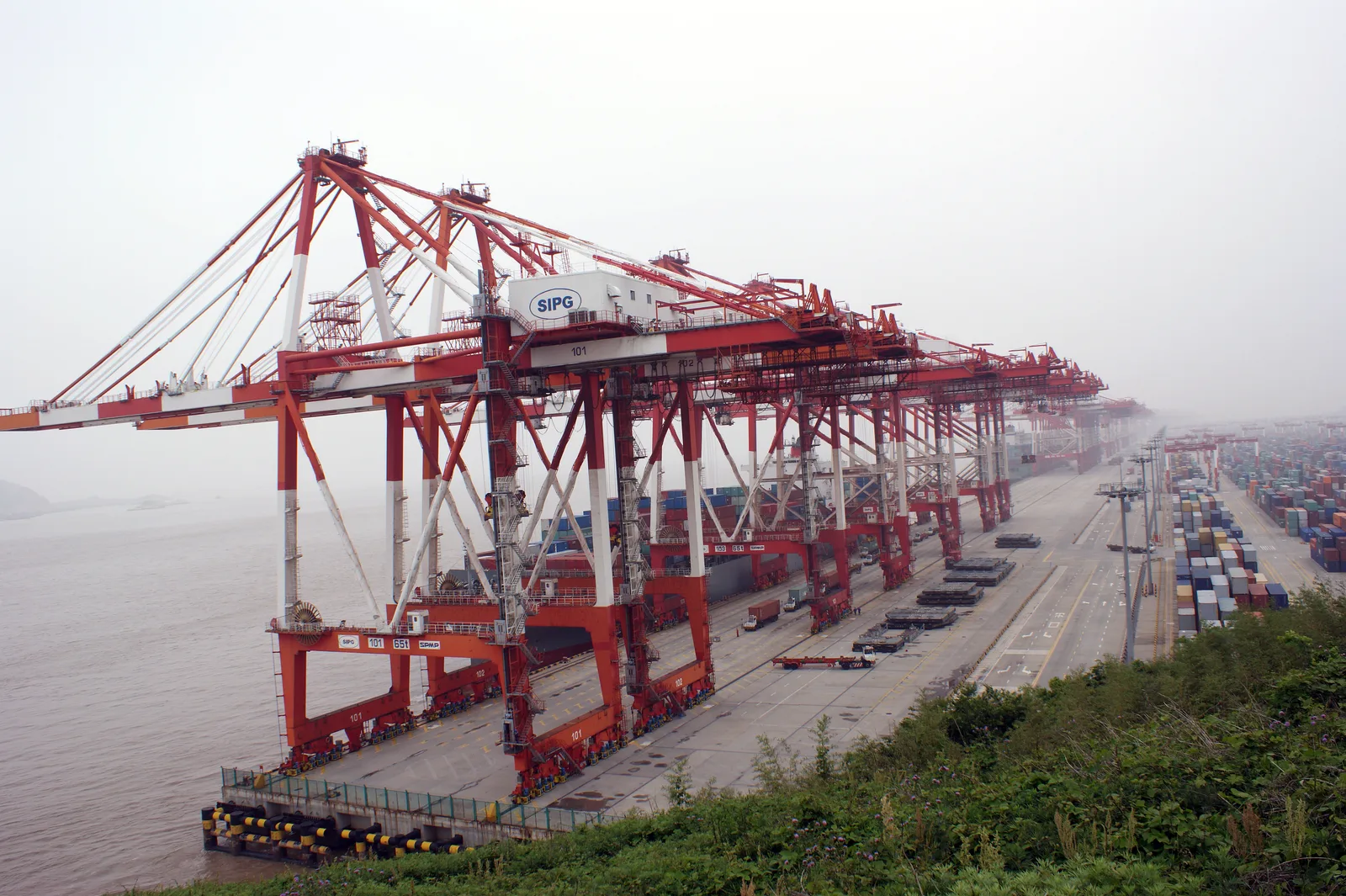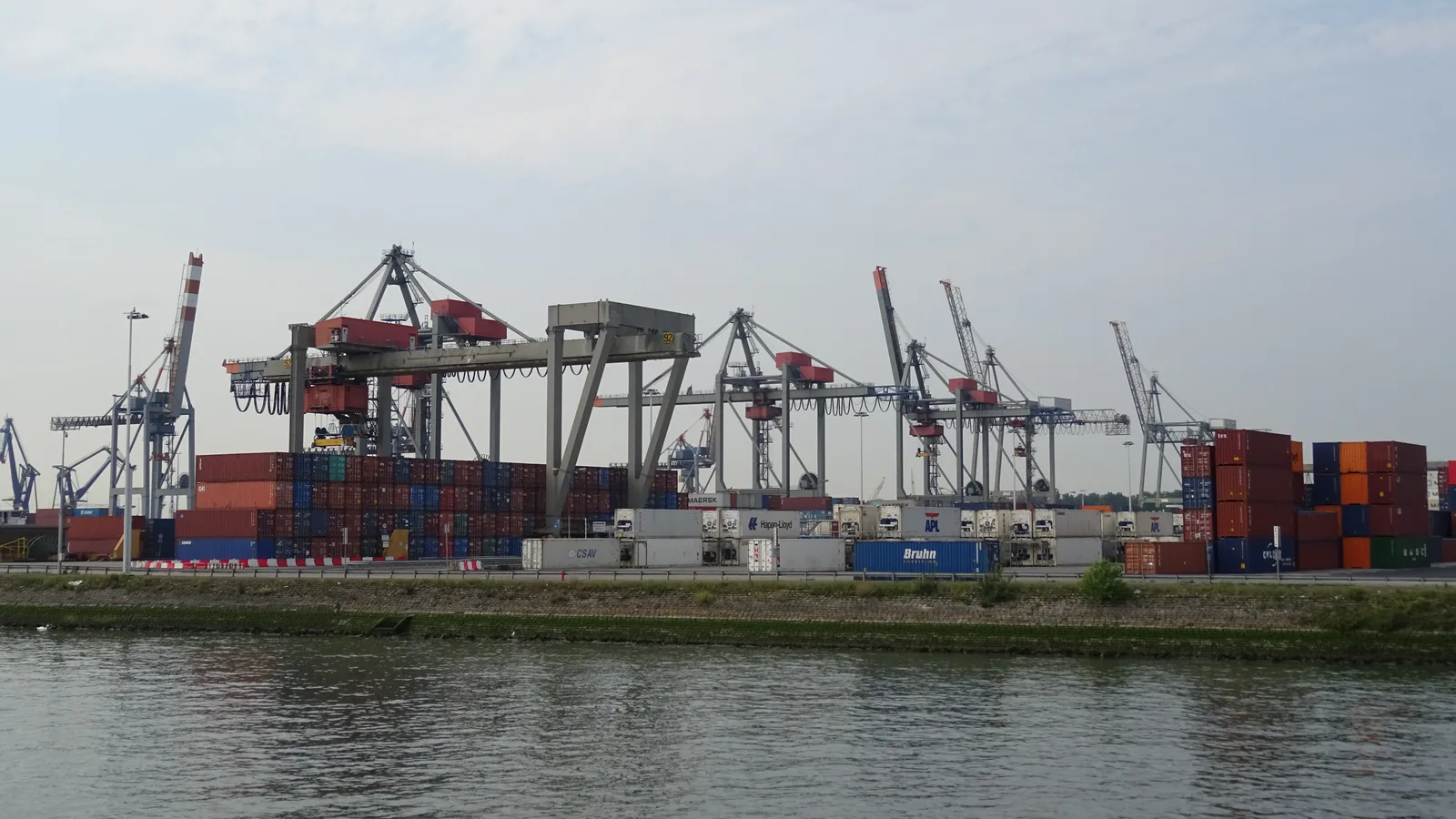
China's exports grew by more than a third in October from a year earlier, taking its trade surplus for 2026 past $1 trillion with two months still to run. Hardware for data centres and cars that Chinese buyers are no longer taking at home are doing much of the work, and Europe is absorbing a growing share of the imbalance.
A trillion dollars, a month early
Customs data released on Tuesday showed exports rose 35.2% year on year in dollar terms in October, to $412.3bn. That beat the 33.5% forecast in a Reuters poll and was only slightly slower than September's 36.3%. Imports rose even faster, up 41.6% to $307.1bn, against expectations of 32%.
The jump in imports trimmed the monthly surplus to $105.3bn, from $133.5bn in September. Even so, the surplus for January to October reached $1.04 trillion. It is the second year in a row above $1 trillion, and the mark was passed a month earlier than in 2025, when the full-year surplus set a record of nearly $1.2 trillion.
China's trade, October 2026
- 35.2% rise in exports from a year earlier, to $412.3bn
- $105.3bn monthly surplus, down from $133.5bn in September
- $1.04tn surplus for January to October

Chips for data centres lead the way
Much of this year's export strength has come from data-centre hardware, from memory chips to printed circuit boards and optical transceivers. Semiconductor exports rose 111.1% in dollar terms in the first ten months from a year earlier, and shipments of high-tech products as a whole were up 47.9%, Reuters reported from the customs figures.
That concentration cuts both ways. Macquarie expects export growth to pick up again in the fourth quarter before slowing in early 2027, and says the outlook depends on how long the AI boom lasts. Moody's Analytics economist Dave Chia expects exports to stay strong for the rest of the year, led by electronics and cars, but warned that a slowdown in AI spending would hit them hard.
On the import side, crude oil buying reached its highest volume since March, as buyers adjusted to supply disruptions in the Middle East.
Cars go abroad as home sales slump
The car industry shows the other side of the story. Passenger vehicle exports rose 68.2% in October from a year earlier, while sales at home fell 27.3%, according to industry figures released alongside the customs data. Domestic car sales have now dropped for 12 months in a row.
Weak consumption and a long property downturn are holding back demand inside China, which pushes producers to look abroad. Alicia García-Herrero, chief economist for Asia Pacific at Natixis, has argued that overcapacity, a high savings rate and soft household spending keep steering China towards export-led growth, a model she sees as unsustainable over the long run. Zhiwei Zhang of Pinpoint Asset Management said exporters had been the main engine of China's economy this year and expects them to keep performing well.
For Europe's carmakers, the pressure comes from both directions. BMK News has reported on profit warnings at Mercedes-Benz and BMW tied to falling sales in China, the same domestic weakness that is now sending more Chinese-built cars overseas.
Europe's deficit keeps widening
China's surplus with the European Union reached $310.7bn in the first ten months of the year, up from $241.6bn a year earlier, a rise of about 29%. With the United States, the October surplus was $32.71bn, slightly down from $34.01bn in September, even though exports to the US rose 32.9% from a year earlier.
Beijing and Brussels have agreed to limit Chinese exports of hybrid vehicles to the EU, a deal BMK News covered in October, but the measures have not yet taken effect.
The broader political risk is unlikely to fade. "The risk of additional tariffs and other trade barriers will remain elevated in 2027," said Joe Peissel, lead macroeconomist at Trivium China.
Talks with Washington continue
The figures arrive during a busy week for trade diplomacy. On 9 November, a day before it was due to expire, Beijing announced a two-month extension of its trade truce with Washington. China says further purchases of US farm goods depend on the reciprocal tariff-reduction agreement being put into practice. Xi Jinping and Donald Trump are expected to meet at the APEC summit in Shenzhen next week.
Chinese shares have had a difficult autumn. The CSI 300 index had its worst month in more than a decade in October. The trade data drew a muted response: the CSI 300 was up 0.1% at the lunch break on Tuesday, while regional technology stocks rallied more strongly.
Sources
- Hurriyet Daily News: China says 2026 trade surplus surpassed $1 tn in October (10 November 2026)
- investingLive: China trade recap, surplus tops $1 trillion as AI boom powers exports (10 November 2026)
- Kuwait Times: China's 2026 trade surplus tops $1 trillion by October (10 November 2026)
- Reuters via Graphic Online: China's trade surplus soars past $1 trillion as AI boom powers exports (10 November 2026)
- Associated Press via Siasat: China's trade surplus surpasses USD 1 trillion for 2nd straight year (10 November 2026)