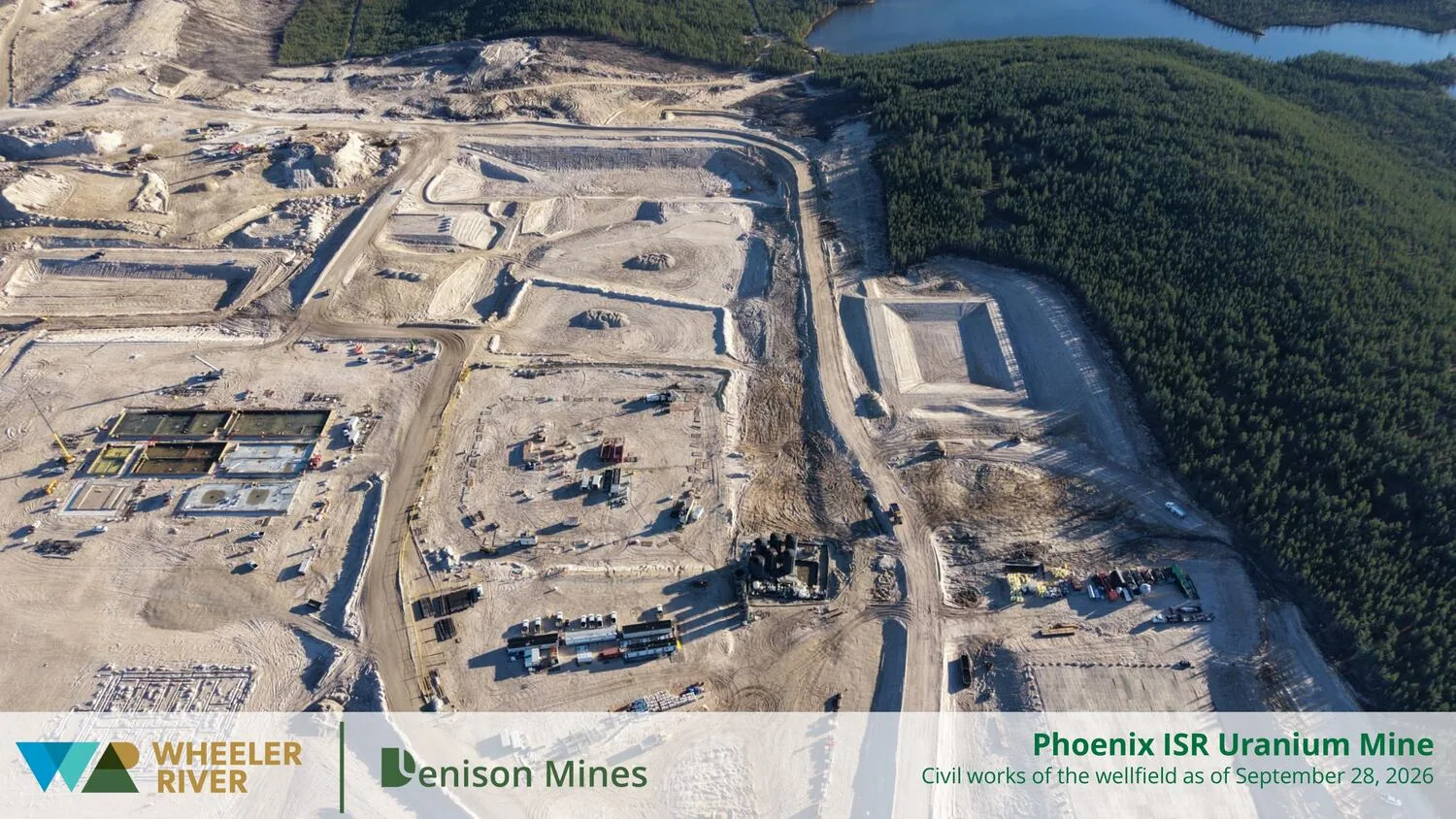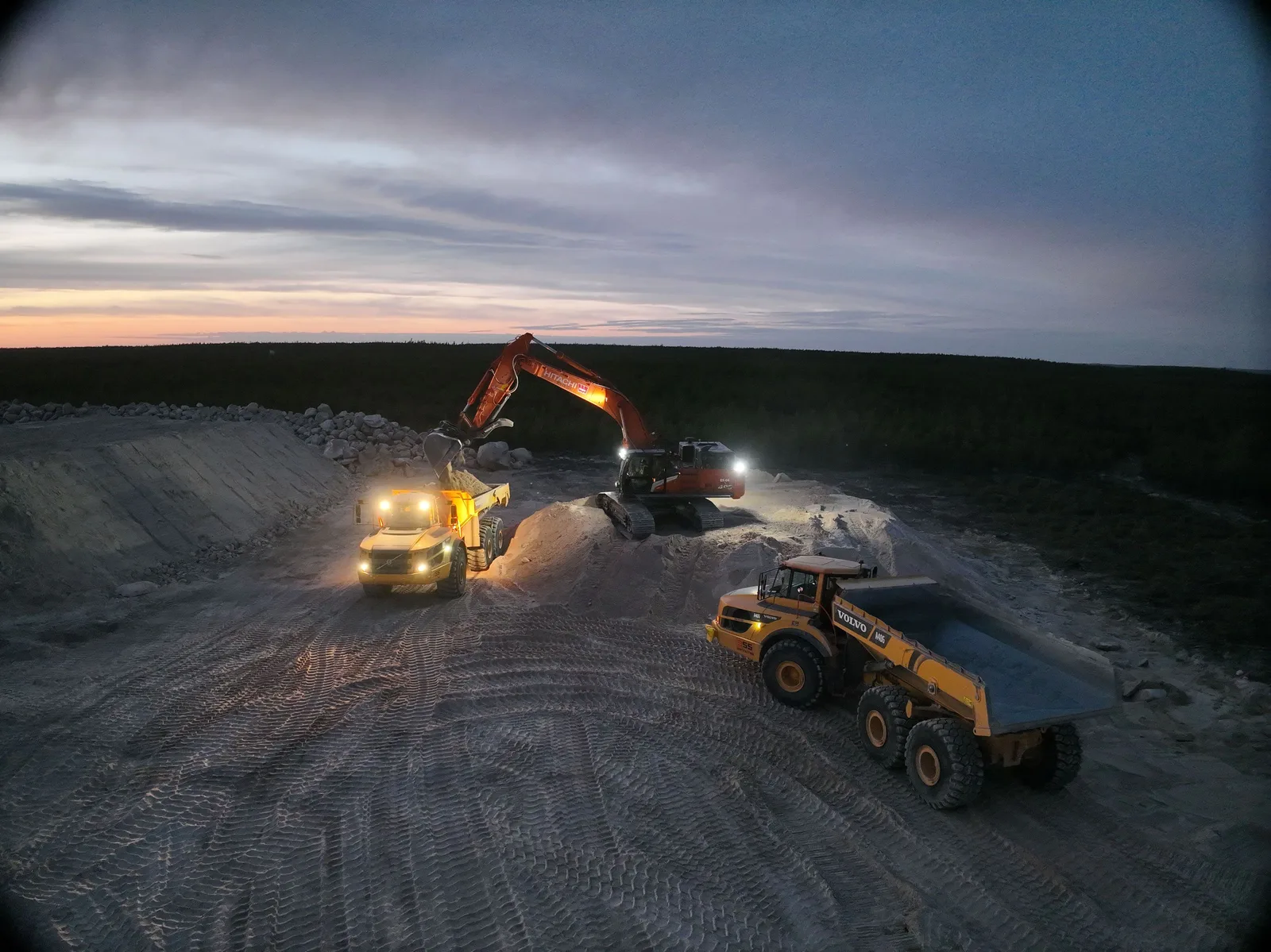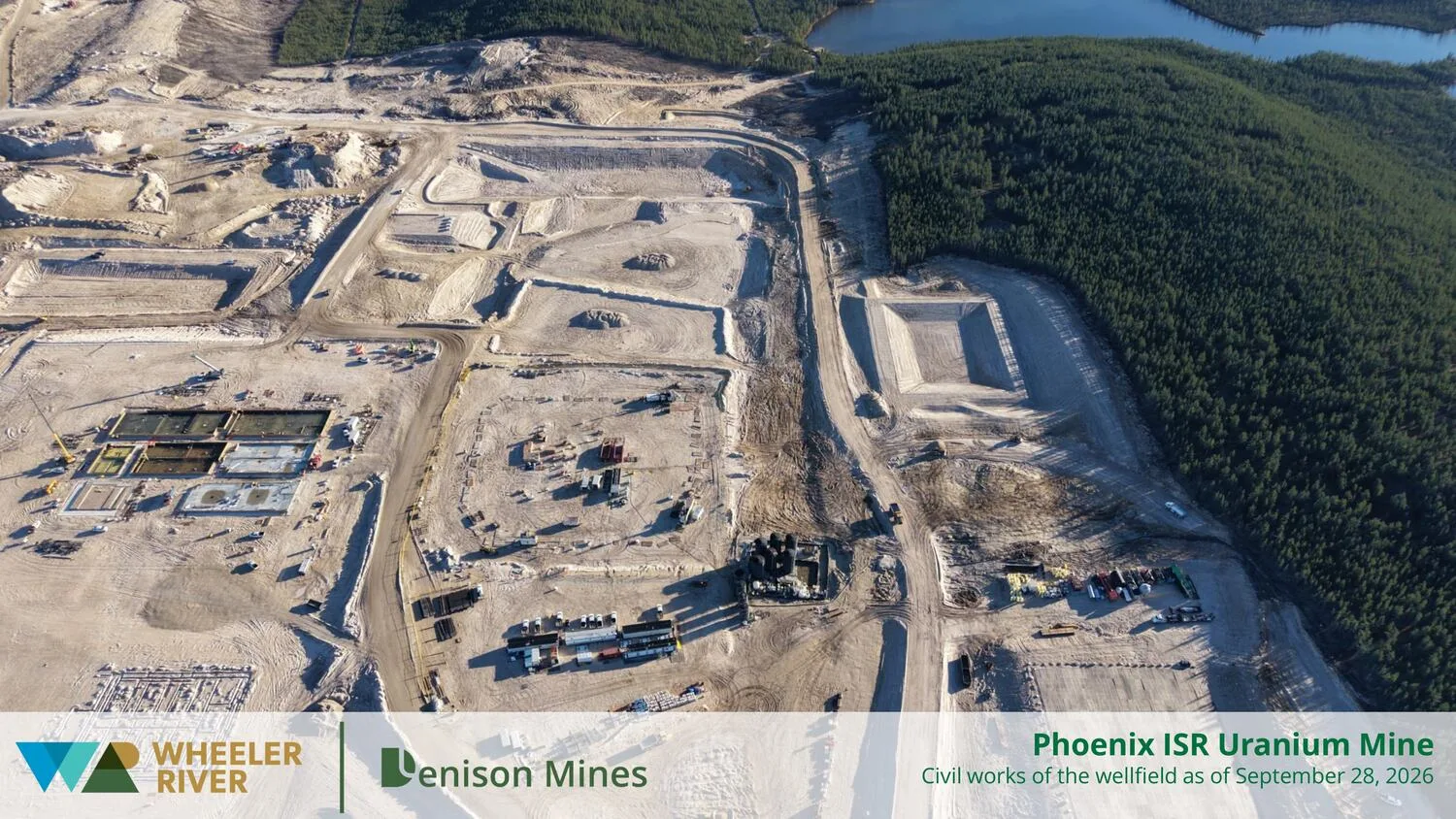
Denison Mines is a Canadian uranium developer whose value rests mainly on one project: Phoenix, a high-grade deposit in northern Saskatchewan that it is building as an in-situ recovery mine. Construction started in earnest in July 2026 and first production is targeted for the second half of 2028. Until then the company earns very little revenue and depends on its cash, uranium holdings and debt markets.
What Denison does and where
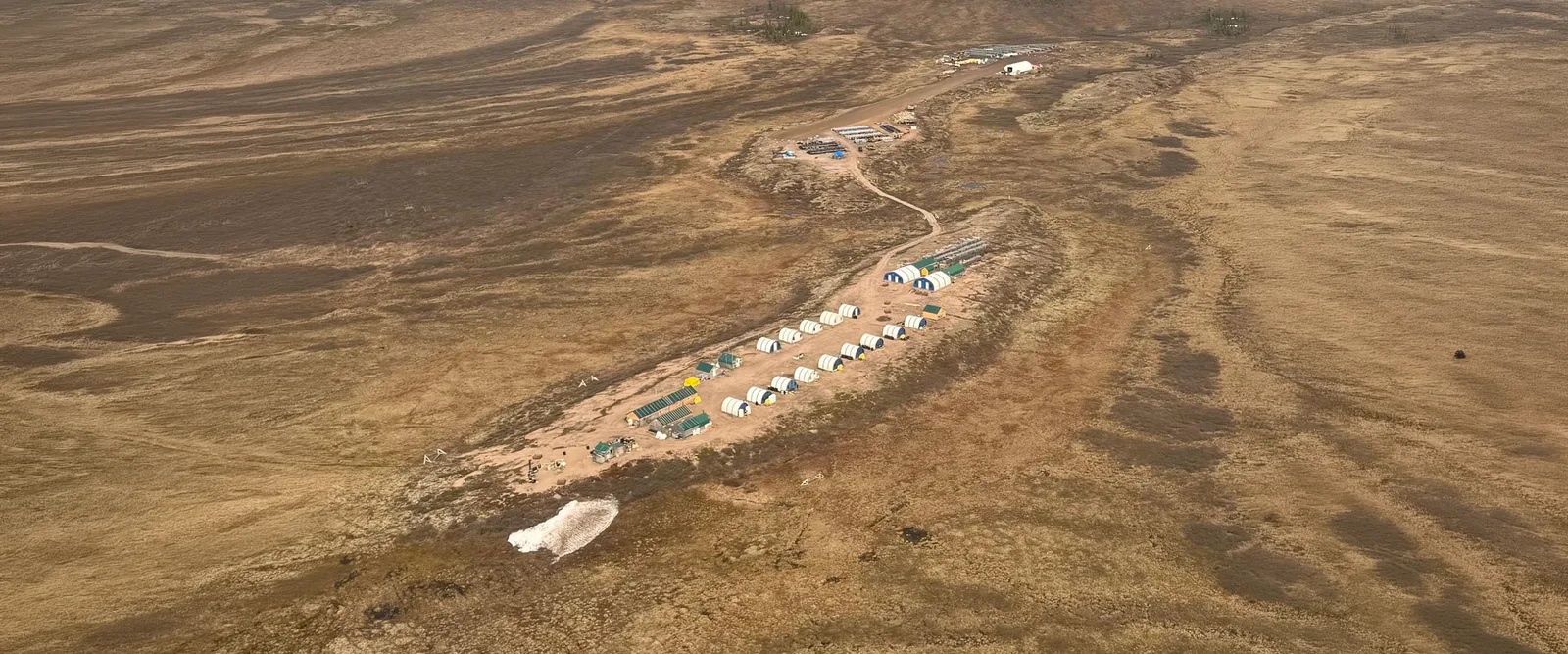
Denison is listed in Toronto (DML) and on NYSE American (DNN). Its interests are concentrated in the Athabasca Basin of northern Saskatchewan, where it holds direct ownership in properties covering about 459,000 hectares.
The flagship is the Wheeler River project, in which Denison has an effective 95% interest. Wheeler River contains two main deposits. Phoenix is being developed with in-situ recovery, which pumps a mining solution through the ore body underground rather than digging it out. Gryphon, the second deposit, is planned as a conventional underground mine based on a 2018 pre-feasibility study updated in 2023, and is not yet in development.
Denison Mines: share price, chart and news
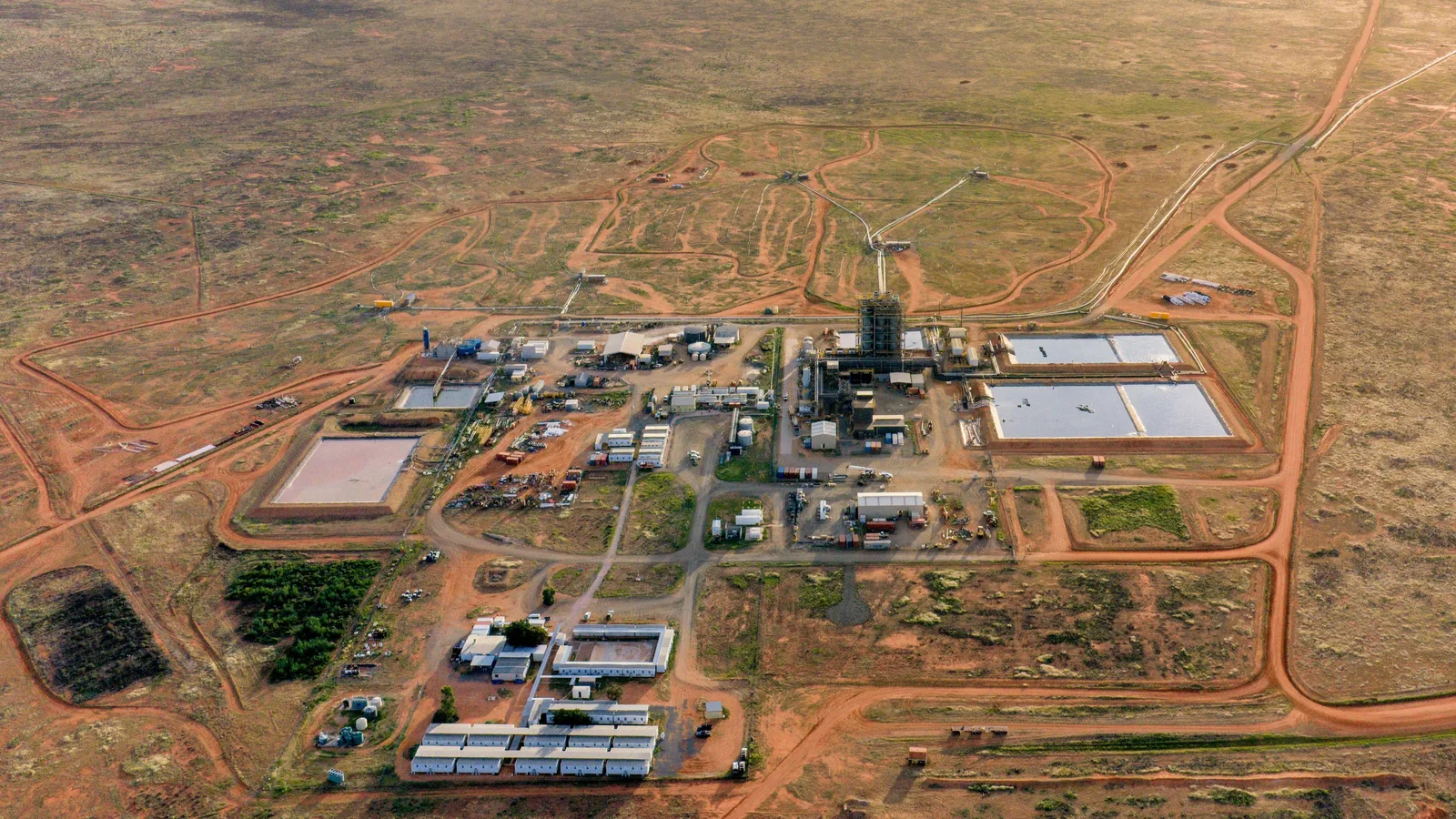
Denison also has a portfolio of minority stakes around the McClean Lake mill, one of the largest uranium processing plants in the world.
| Asset | Denison interest | Status |
|---|---|---|
| Wheeler River (Phoenix, Gryphon) | 95% effective | Phoenix under construction |
| McClean Lake joint venture and mill | 22.5% | Mill toll-processes Cigar Lake ore; McClean North mining since July 2025 |
| Midwest Main and Midwest A | 25.17% | Engineering studies |
| Waterbury Lake (THT, Huskie) | 70.55% | Exploration and evaluation |
| JCU (Millennium, Kiggavik, Christie Lake) | 50% of JCU | Exploration and evaluation |
Orano Canada operates McClean Lake with the remaining 77.5%. Denison's revenue today is toll-milling income from that mill, C$1.0 million in the third quarter of 2026.
Phoenix: the numbers behind the build
The 2023 feasibility study, with a capital cost update in January 2026, describes a 10-year mine with proven and probable reserves of 56.7 million pounds of U3O8 in 219,000 tonnes grading 11.7%. Output is front-loaded: an average of 8.4 million pounds a year over the first five years, then about 3.0 million pounds a year.
Phoenix study figures (100% basis)
- C$600m initial capital after the investment decision, plus an estimated C$100m before it
- US$6.28/lb average cash operating cost
- US$18.41/lb all-in cost, pre-tax
Using a uranium price range of US$68.89 to US$78.36 a pound from consultant UxC, the updated estimate gives a post-tax net present value of C$1.57 billion at an 8% discount rate and an internal rate of return of 73%. The January update raised initial capital from C$419.4 million in the 2023 study, which cut the expected return from 90%.
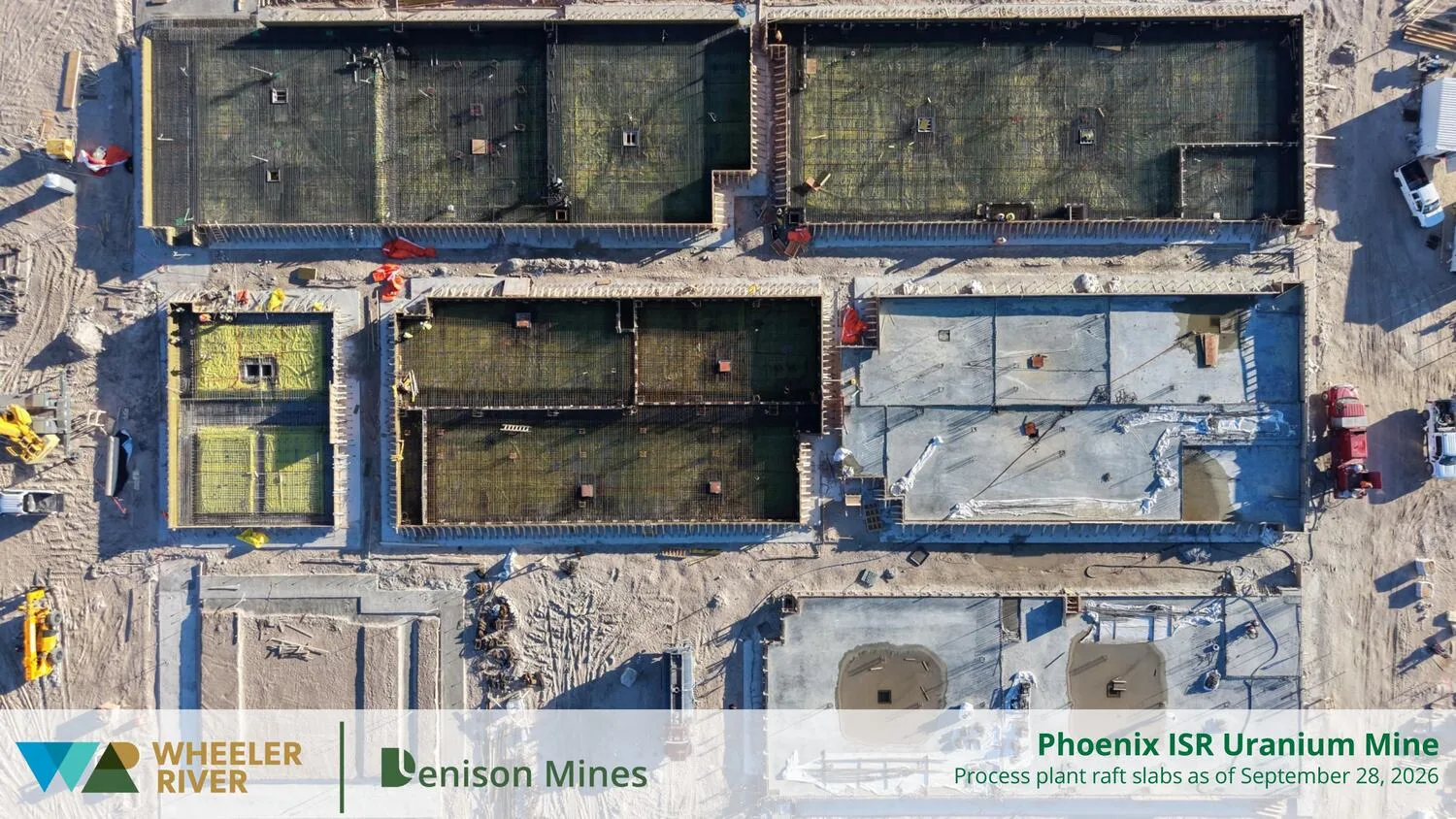
Construction was about 24% complete at 30 September 2026. Denison spent C$161.1 million on Phoenix in the first nine months of 2026 and expects about C$278.6 million for the full year, after trimming the construction forecast by C$26.6 million because a flooding-affected start delayed some work.
Latest reported numbers
In the third quarter Denison reported net income of C$81.8 million, almost all of it a non-cash gain on the revaluation of the conversion features in its convertible notes. Over nine months it posted a net loss of C$7.5 million.
Balance sheet at 30 September 2026
- Cash and equivalents of C$362.7 million, down from C$465.9 million at the end of 2025.
- 950,000 pounds of physical uranium valued at C$121.0 million, plus 182,004 pounds of concentrate inventory.
- US$345 million of 4.25% convertible senior notes due 15 September 2031, convertible at US$2.92 a share, with capped calls that lift the effective conversion price to US$4.32.
- A Bank of Nova Scotia facility for up to C$28.5 million of letters of credit, extended to 31 January 2027.
- 905,445,408 shares in issue at 4 November 2026, or 920,333,611 fully diluted.
Selling physical uranium is part of the funding plan for Phoenix. Denison sold 750,000 pounds in the second quarter at an average of US$89.17 a pound and has 600,000 pounds committed for delivery from the fourth quarter of 2026 to the second quarter of 2027. It reports firm sales commitments of more than 8 million pounds in total, mostly for delivery after 2028, with talks advanced on more than 5 million pounds more. Customers include North American utilities that run about 50 reactors.
The main risks
- Construction and schedule. Phoenix relies on a frozen ground barrier, and freeze drilling ran behind over the summer. Weather in northern Saskatchewan limits the working season for many tasks.
- Cost. The initial capital estimate has already risen once, to C$600 million. Denison's completion figures are estimates and could change.
- Funding and dilution. The company has no meaningful revenue until Phoenix produces. A shortfall would need new debt, more uranium sales or equity, which would dilute holders of more than 905 million shares.
- Uranium price. Most future sales are priced on a market-related basis, so revenue will move with the uranium price, in both directions.
- Earnings noise. Changes in the fair value of the convertible notes, driven by Denison's own share price, can swing reported profit by more than C$100 million a quarter.
What to watch
| Timing | Milestone |
|---|---|
| Q4 2026 | Phoenix North drilling continues; process plant building contractor on site |
| Q4 2026 to Q2 2027 | Delivery of 600,000 pounds of committed uranium sales |
| By end of 2026 | Phoenix airstrip targeted to open, weather permitting |
| 31 January 2027 | Maturity of the letters of credit facility |
| Q1 2027 | Freeze-hole drilling complete; substation energised |
| Second half of 2028 | Targeted first production at Phoenix |
The next quarterly test is whether construction spending and progress catch up after the slow summer, and whether Denison adds to its contracted sales book.