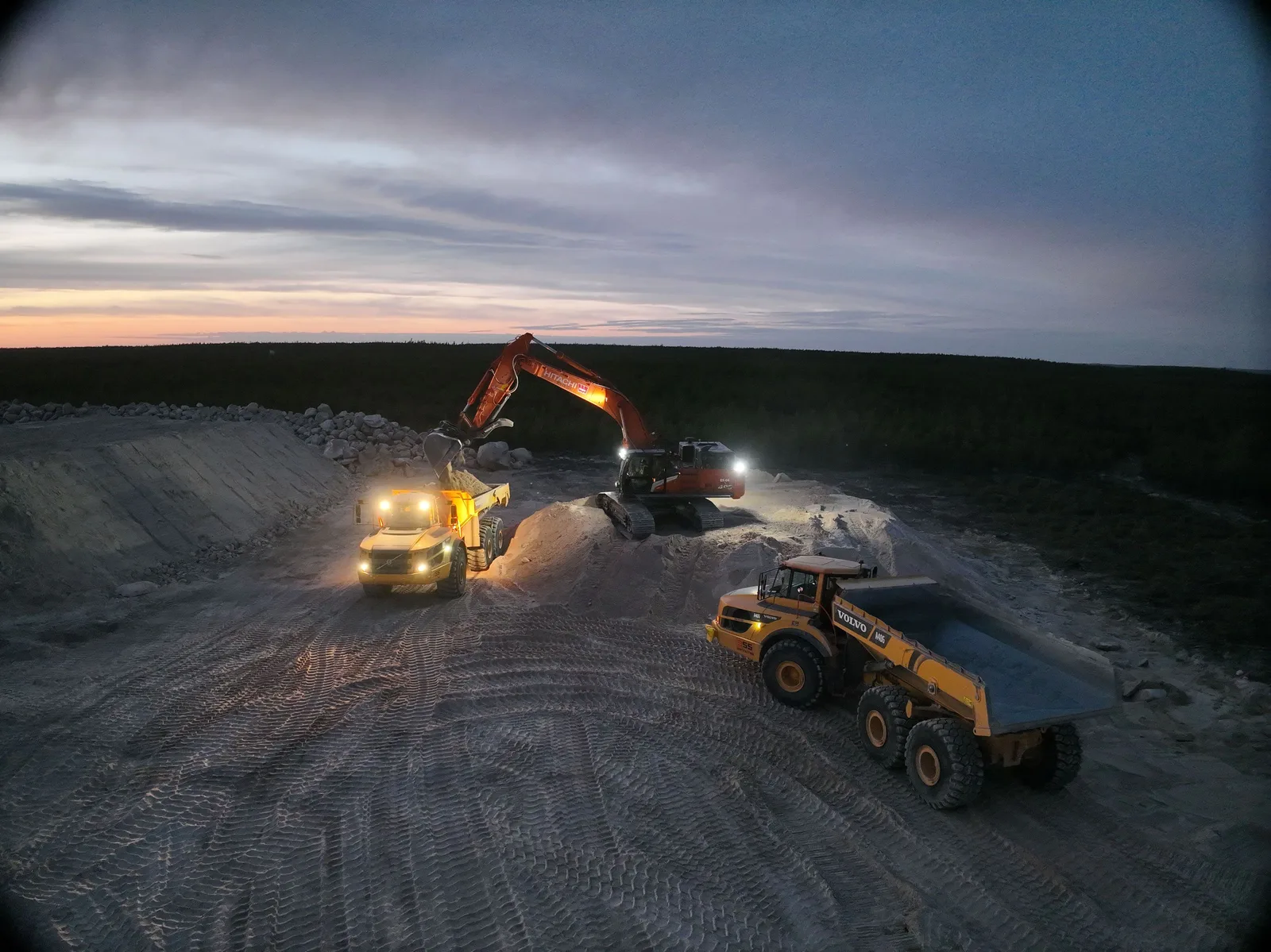
NexGen Energy is building Rook I, an underground uranium mine in northern Saskatchewan centred on the Arrow deposit. Licensed construction began in June 2026. The company holds more than C$800 million of cash and investments, but it has no revenue and expects to need more financing before the mine is finished.
What NexGen owns
NexGen is a British Columbia company listed in Toronto and New York under NXE and on the ASX under NXG. Its head office is in Vancouver.
The Rook I property, which NexGen owns outright, covers 35,065 hectares across 32 claims in the southwestern Athabasca Basin. Arrow was discovered there in February 2014. Measured and indicated resources total 3.75 million tonnes grading 3.10% U3O8, or 257 million pounds of contained uranium. Probable reserves are 240 million pounds in 4.6 million tonnes grading 2.37%.
NexGen Energy: share price, chart and news
Beyond Arrow, NexGen is drilling Patterson Corridor East, about 3.5 kilometres east of Arrow, where it has expanded a high-grade zone. That discovery is not part of the Arrow feasibility study and has no resource estimate yet. The company also owns about 27.8% of IsoEnergy, a uranium explorer listed in Toronto and New York.
What the mine is expected to cost
The 2021 feasibility study set out a mine life of 10.7 years and pre-production capital of about C$1.3 billion. An internal trend update in August 2024 raised that to about C$2.2 billion: roughly C$310 million for inflation since 2020 and C$590 million of extra costs found through engineering and procurement. It also lifted expected life-of-mine cash operating costs to about C$13.86 a pound (US$9.98) and sustaining capital, including closure, to about C$785 million.
| Measure | Figure |
|---|---|
| Probable reserves | 240m lb U3O8 at 2.37% |
| Measured and indicated resources | 257m lb U3O8 at 3.10% |
| Pre-production capital (2024 update) | about C$2.2bn |
| Cash operating cost (2024 update) | about C$13.86/lb (US$9.98/lb) |
| Cash and short-term investments, 30 Sep 2026 | C$821.6m |
| Shares outstanding, 9 Nov 2026 | 688,034,761 |
NexGen also publishes illustrative sensitivities. Using the 2024 cost assumptions, a uranium price of US$100 a pound gives an after-tax net present value of C$6.79 billion and an internal rate of return of 46.9%; at US$50 the figures fall to C$2.10 billion and 25.2%. The company stresses these are not forecasts of the prices it will receive.
Latest reported numbers
NexGen's third-quarter filing, released on 9 November, showed a net loss of C$22.3 million for the quarter and C$103.8 million for the first nine months of 2026. Results swing with non-cash revaluations of its convertible debentures, which move with the share price; the third quarter included a C$25.6 million gain on that line.
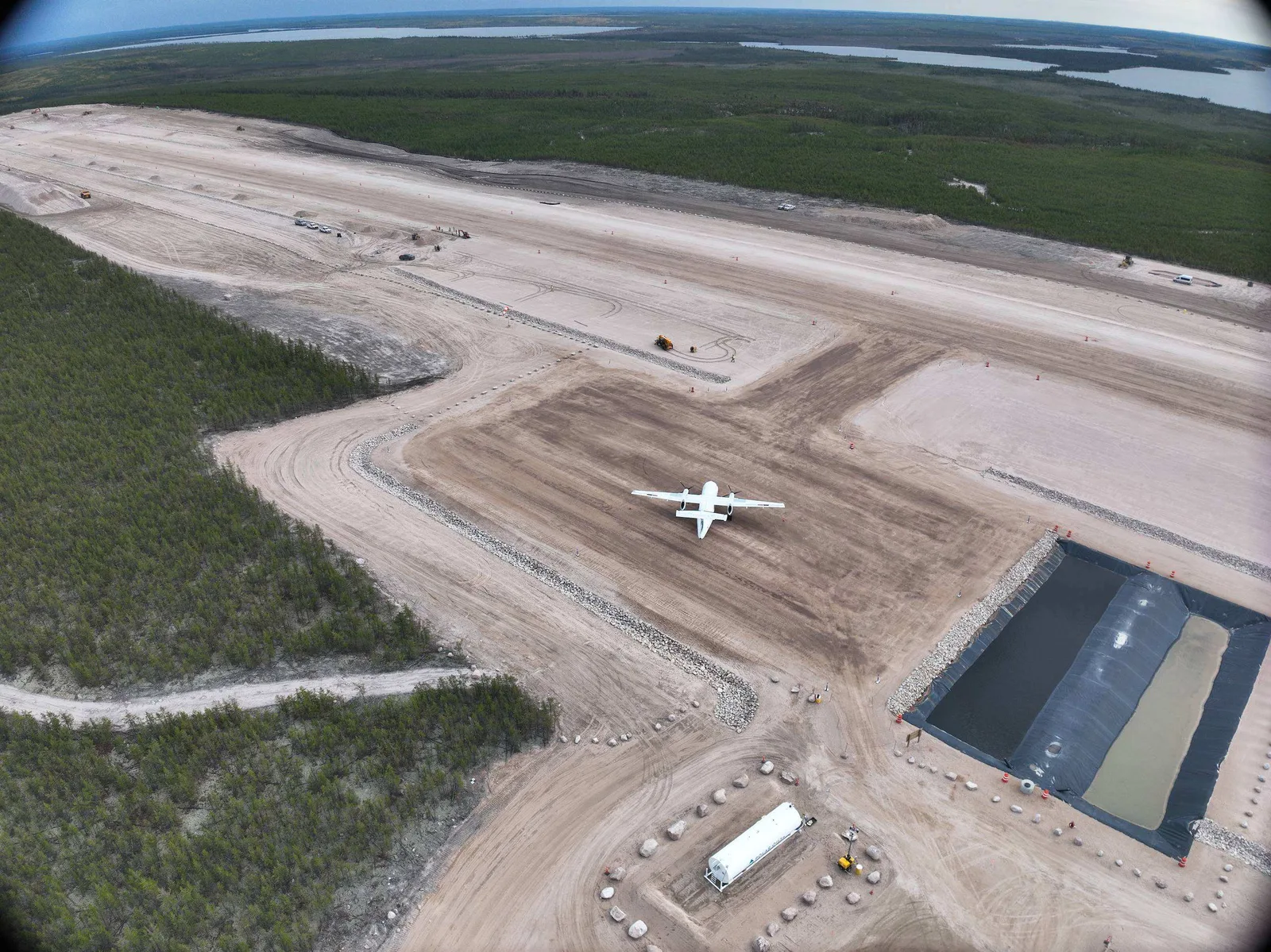
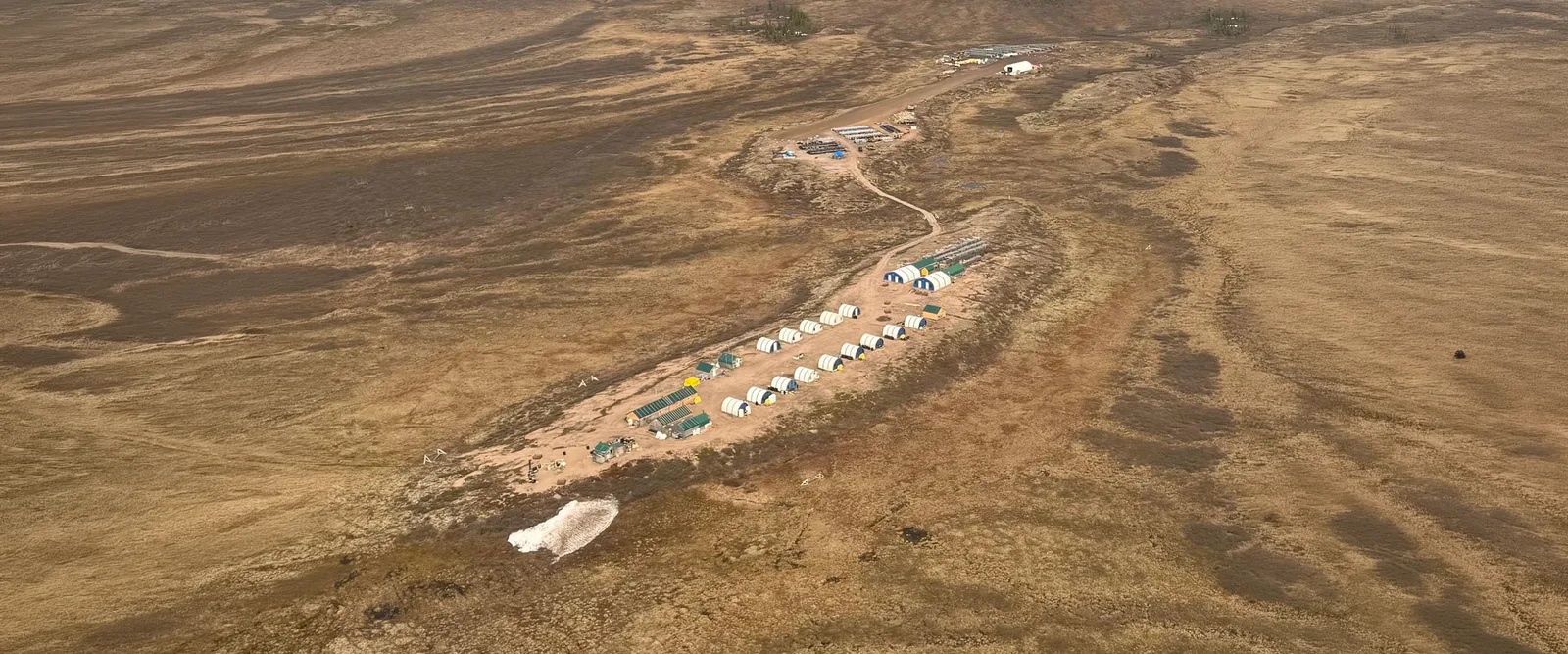
On the ground, the quarter's main step was the award of the shaft-sinking contract on 11 September, followed by the start of shaft preparation work on 28 September. The expanded site camp, commissioned in May, now has 573 beds, and a 3,000-foot exploration airstrip opened in August.
Balance sheet, 30 September 2026
- C$567.2m cash, plus C$254.4m of short-term investments
- 2.7m lb of uranium held at a cost of C$341.2m
- US$250m of 2024 convertible debentures outstanding
Most of the cash came from a global share offering of about A$1 billion that closed in October 2025. The 2.7 million pounds of uranium were acquired in 2024 in exchange for the US$250 million of 9% debentures issued to MMCap. The US$110 million of 2023 debentures were converted into shares in September and October 2026.
On 9 November NexGen had 688,034,761 shares outstanding and 45,985,100 options. The 2024 debentures can convert into up to 23,299,161 further shares at US$10.73 each.
The main risks
- Funding. NexGen says it will continue to require additional financing to complete Rook I. On the 10 November call, chief executive Leigh Curyer said cash and short-term investments fund the company to the end of the third quarter of 2027 and that a mix of strategic financing, prepayments and project finance is likely.
- Dilution. New equity, option exercises and conversion of the 2024 debentures would all add shares.
- Construction. Rook I is a shaft-access underground mine that requires ground freezing before sinking. The capital estimate has not been formally revised since August 2024, and the company lists inflation and the availability of contractors among its risks.
- Uranium price. NexGen favours contracts priced at the market at delivery, which keeps exposure to price falls as well as rises.
- Accounting volatility. Debenture revaluations can produce large paper gains or losses from quarter to quarter.
The project has regulatory approvals from Saskatchewan and the federal nuclear regulator, and NexGen has benefit agreements with four Indigenous Nations that confirm their support for the project over its life.
What to watch
| Timing | Milestone |
|---|---|
| Early December 2026 | Completion of the 42,000-metre Patterson Corridor East drill programme |
| Fourth quarter 2026 | Airstrip runway extended to 5,840 feet; civil works, concrete and power generation contracts |
| First quarter 2027 | Temporary freezing and pre-sinking at the production and exhaust shafts |
| Around the start of Q3 2027 | Targeted first resource estimate for Patterson Corridor East, subject to assays |
| 2027 | Expected peak year of construction spending |
| Before the end of Q3 2027 | New financing, given management's stated cash runway |
The central question for investors is how NexGen funds the rest of a C$2.2 billion build, and at what cost to existing shareholders.