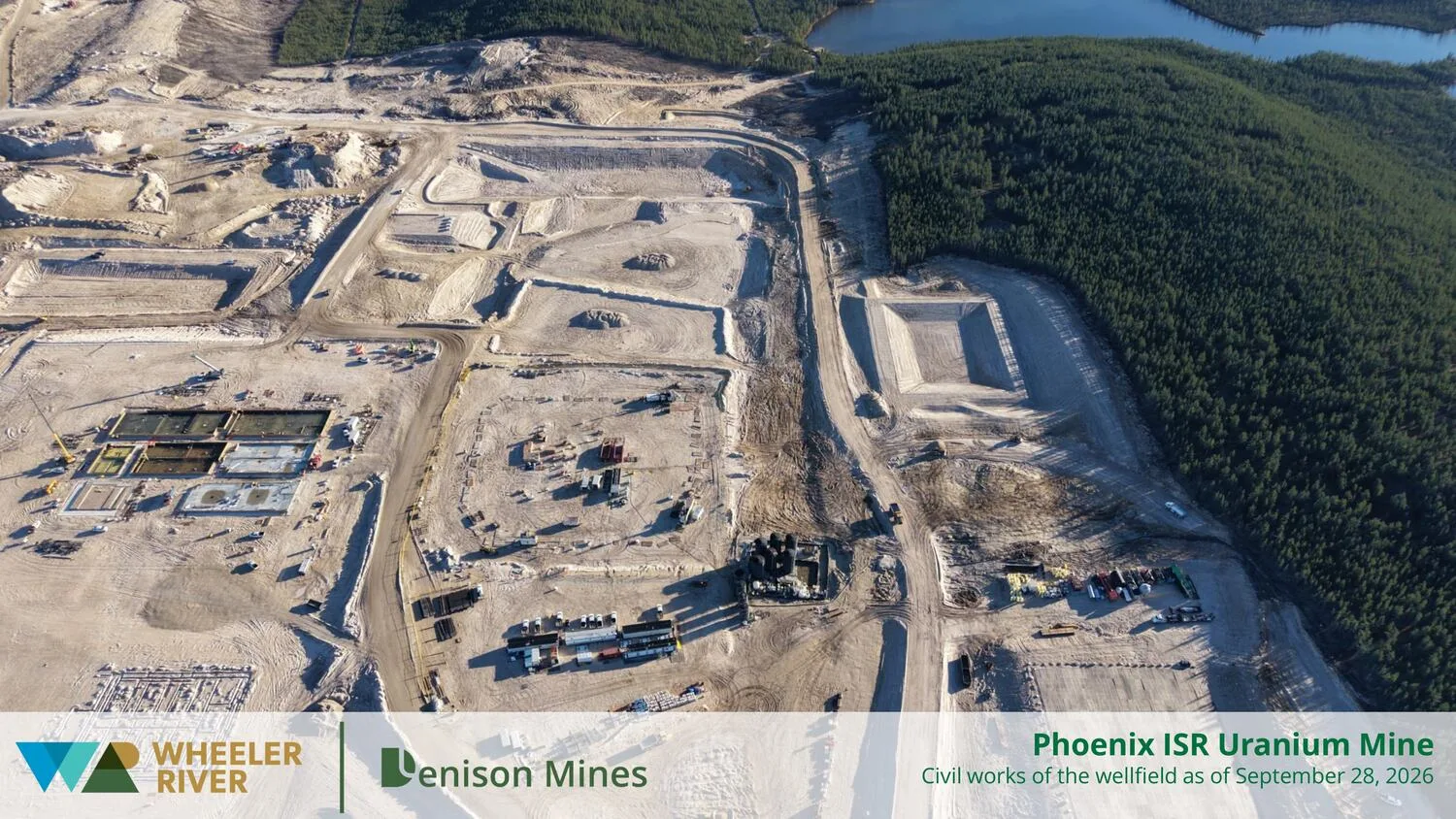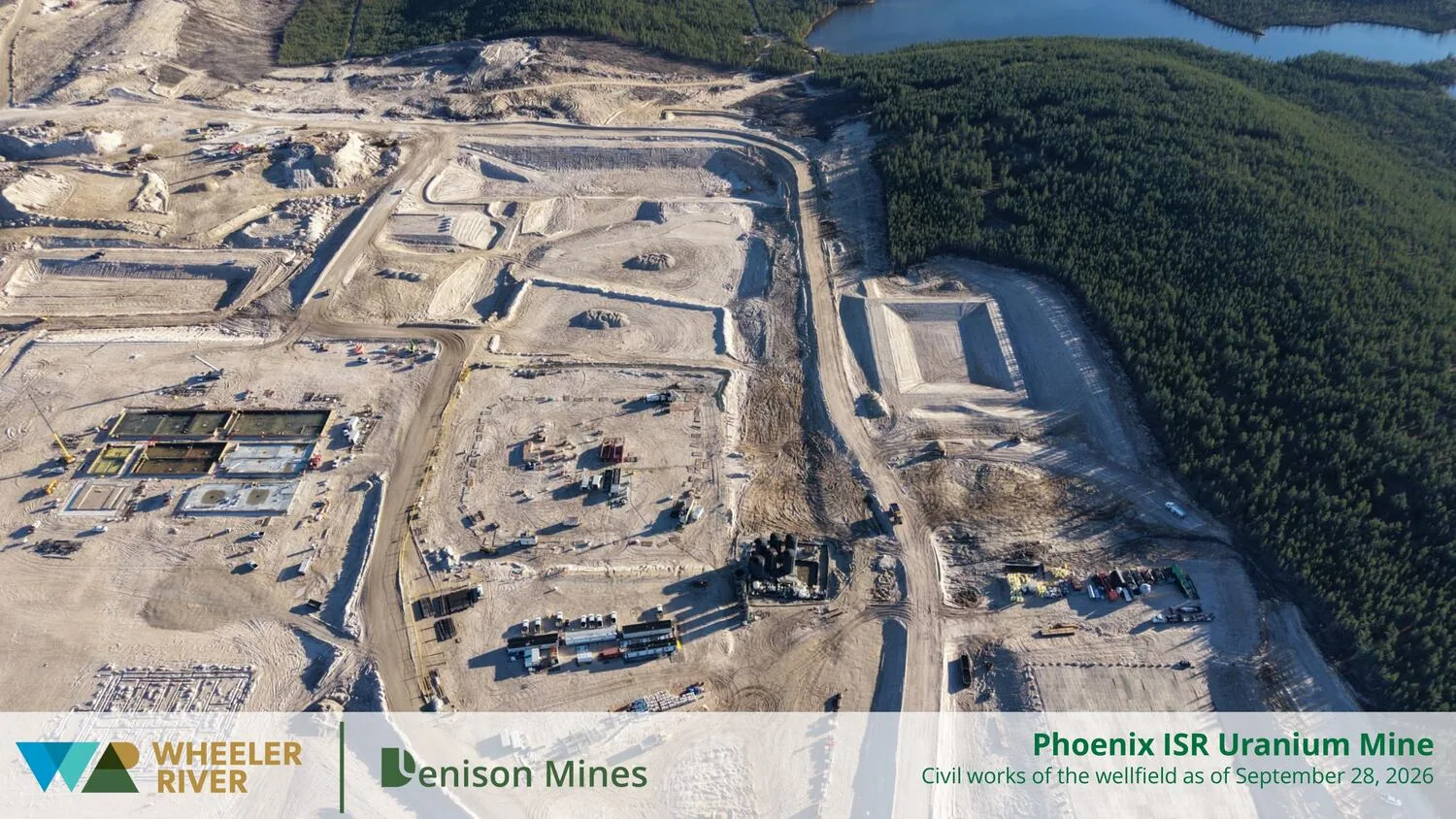
Denison Mines said its Phoenix in-situ recovery uranium mine in northern Saskatchewan was about 24% complete at the end of September, after its first quarter of full-scale construction. The company still targets first production in the second half of 2028, but it cut its 2026 construction spending forecast by C$26.6 million after a slower than planned start on site.
A first quarter of full-scale building
Denison, listed in Toronto and on NYSE American, filed its third-quarter accounts on 4 November. Phoenix is part of the Wheeler River project, in which Denison holds an effective 95% interest. Federal approval of the environmental assessment and a construction licence came in February 2026, early site works began in March and full-scale construction started in July.
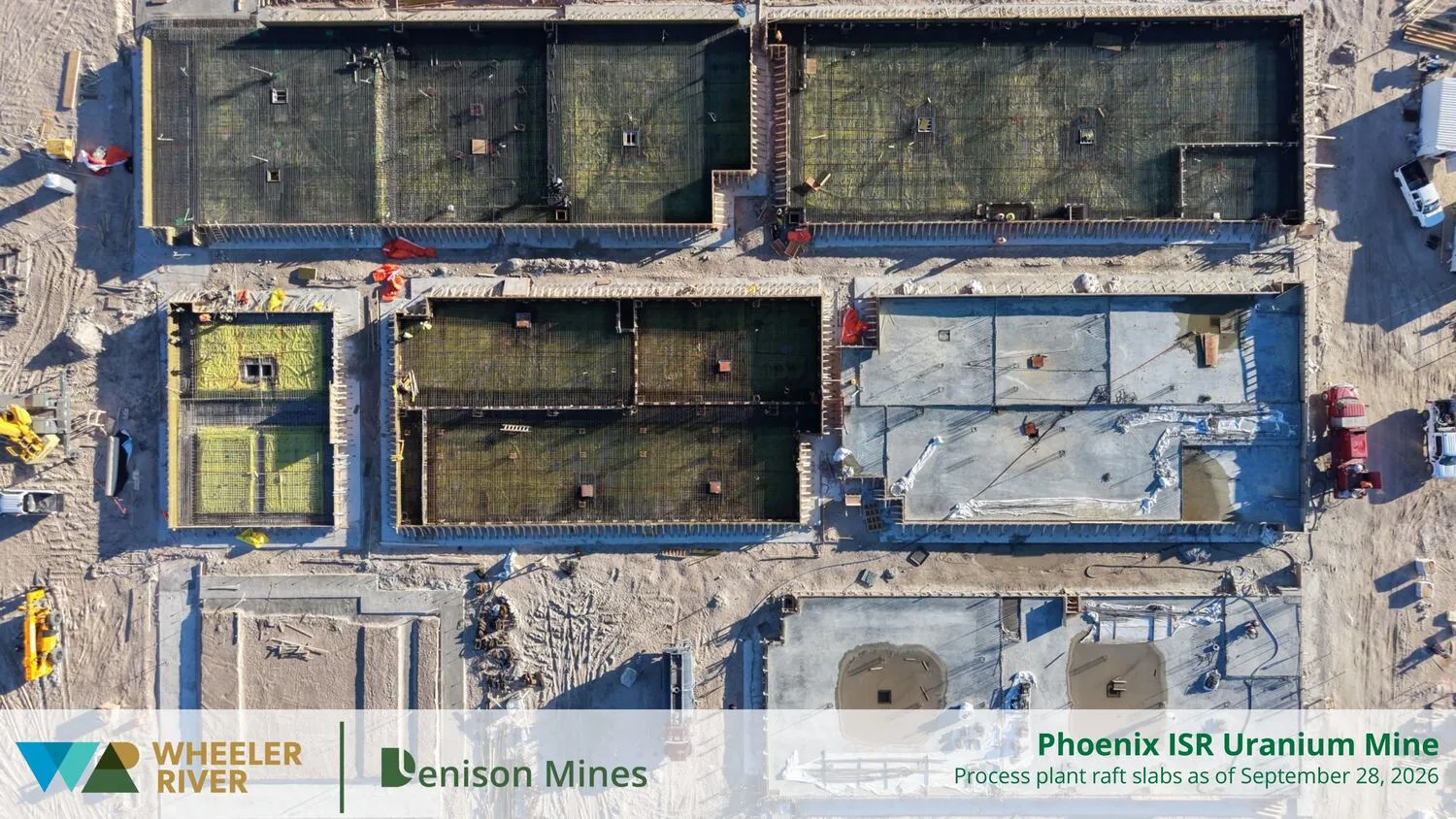
The company estimated total project completion at roughly 24% on 30 September. Engineering, procurement, construction management and owner's costs were 32% complete, equipment fabrication and delivery 32%, and construction itself 20%.
Spending is running ahead of the work visible on site because Denison buys key components directly and has much of the plant fabricated off site in modules. Phoenix spending in the first nine months of 2026 reached C$161.1 million, including C$105.0 million on construction and indirect costs and C$39.0 million on equipment and materials.
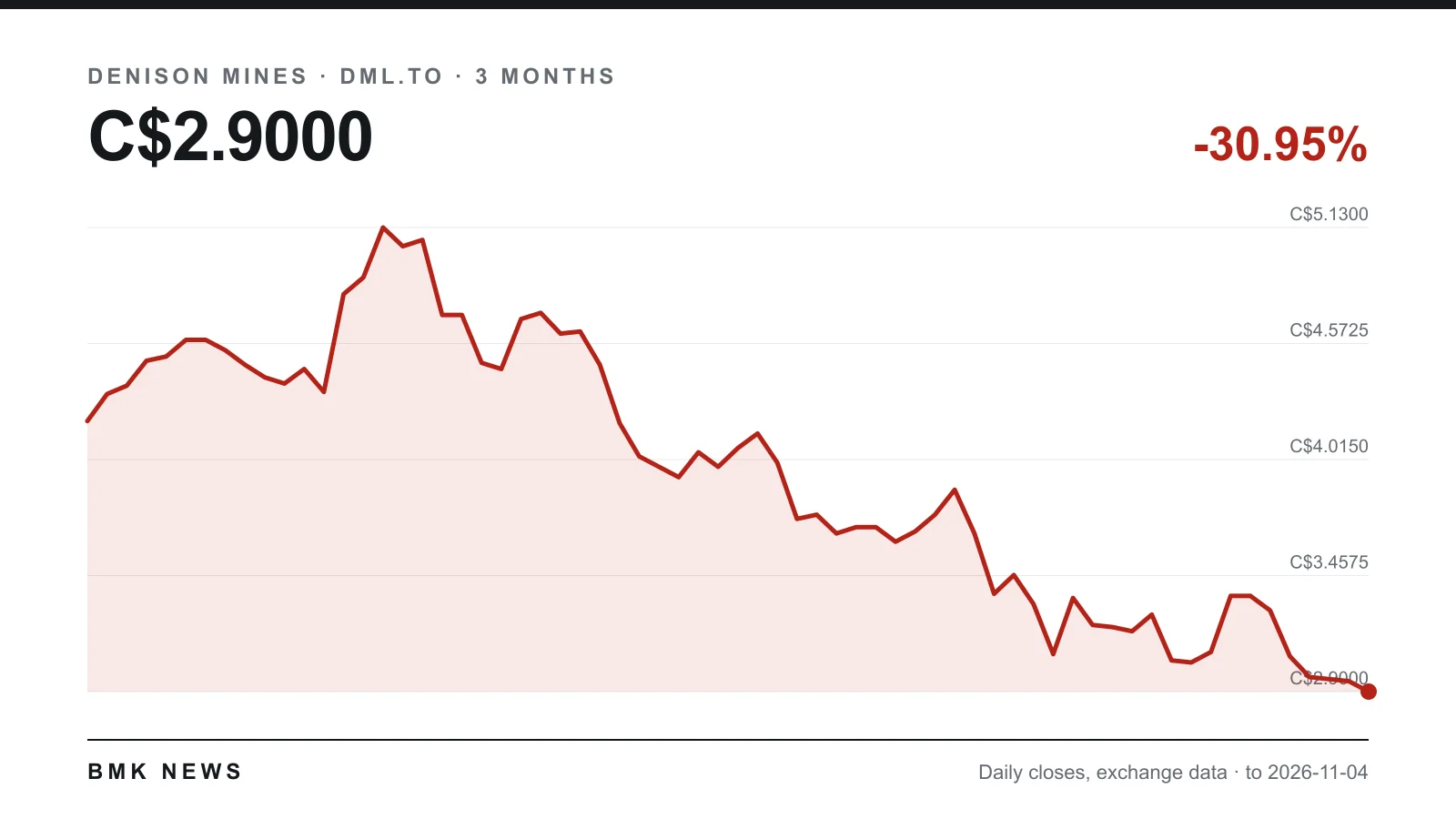
Denison Mines: share price, chart and news
Phoenix at 30 September 2026
- 24% estimated total project completion
- C$161.1m spent on Phoenix in the first nine months
- H2 2028 targeted first production
Why the 2026 budget came down
Denison lowered its 2026 forecast for Phoenix construction spending by C$26.6 million. It blamed a later than expected start to site clearing, a slower ramp-up to full-scale work because of regional flooding and restrictions on site access, and weather delays once building was under way. The full-year Phoenix forecast now stands at C$278.6 million, with about C$117.5 million expected in the fourth quarter.
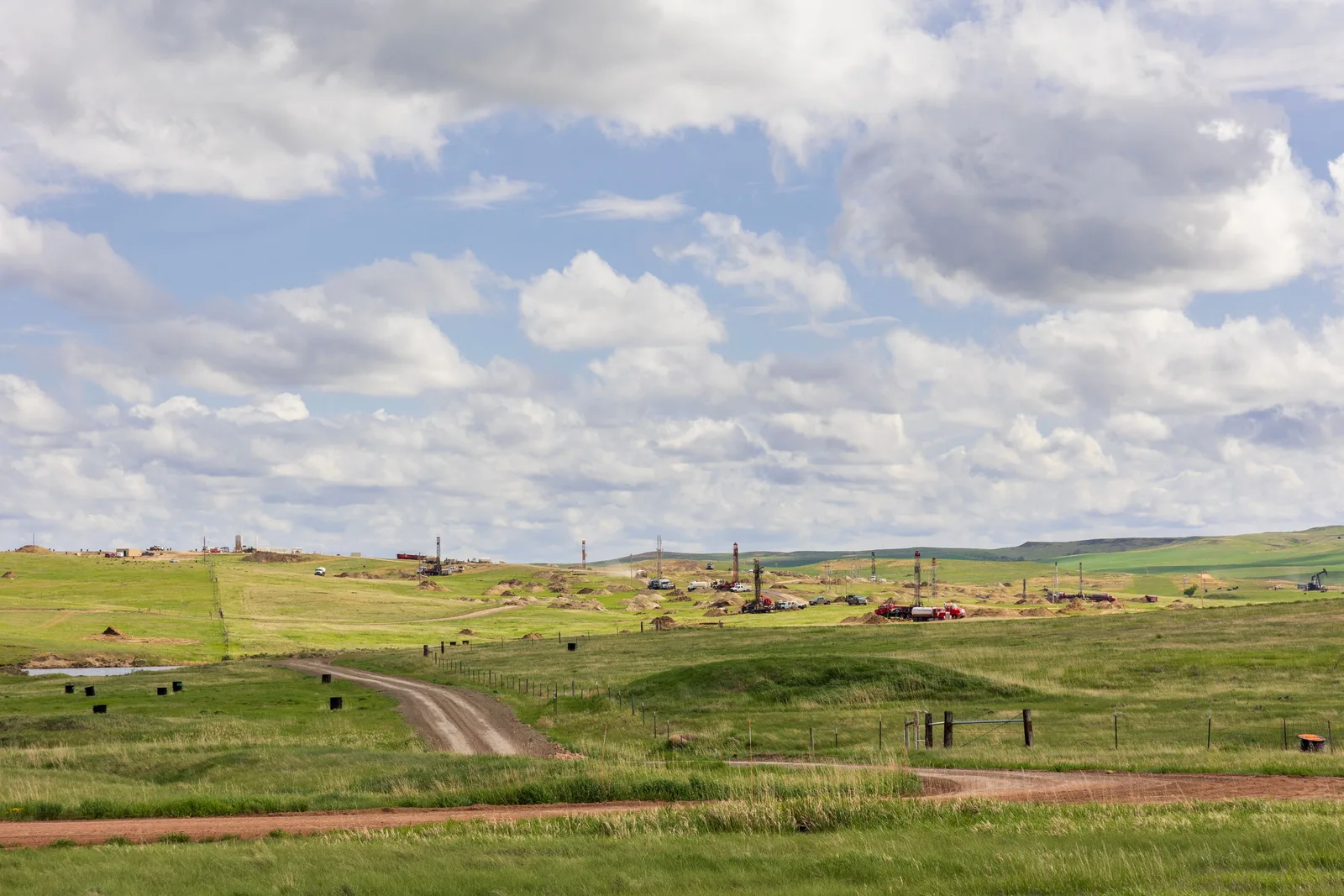
Freeze drilling, which builds the frozen ground barrier that the in-situ method relies on, fell behind over the summer. By the end of October casing was in place for all 66 freeze holes planned for the first wellfield area, but only 15 had been drilled to full depth. The rig count has risen from one to four, and Denison expects freeze drilling to finish by the end of the first quarter of 2027.
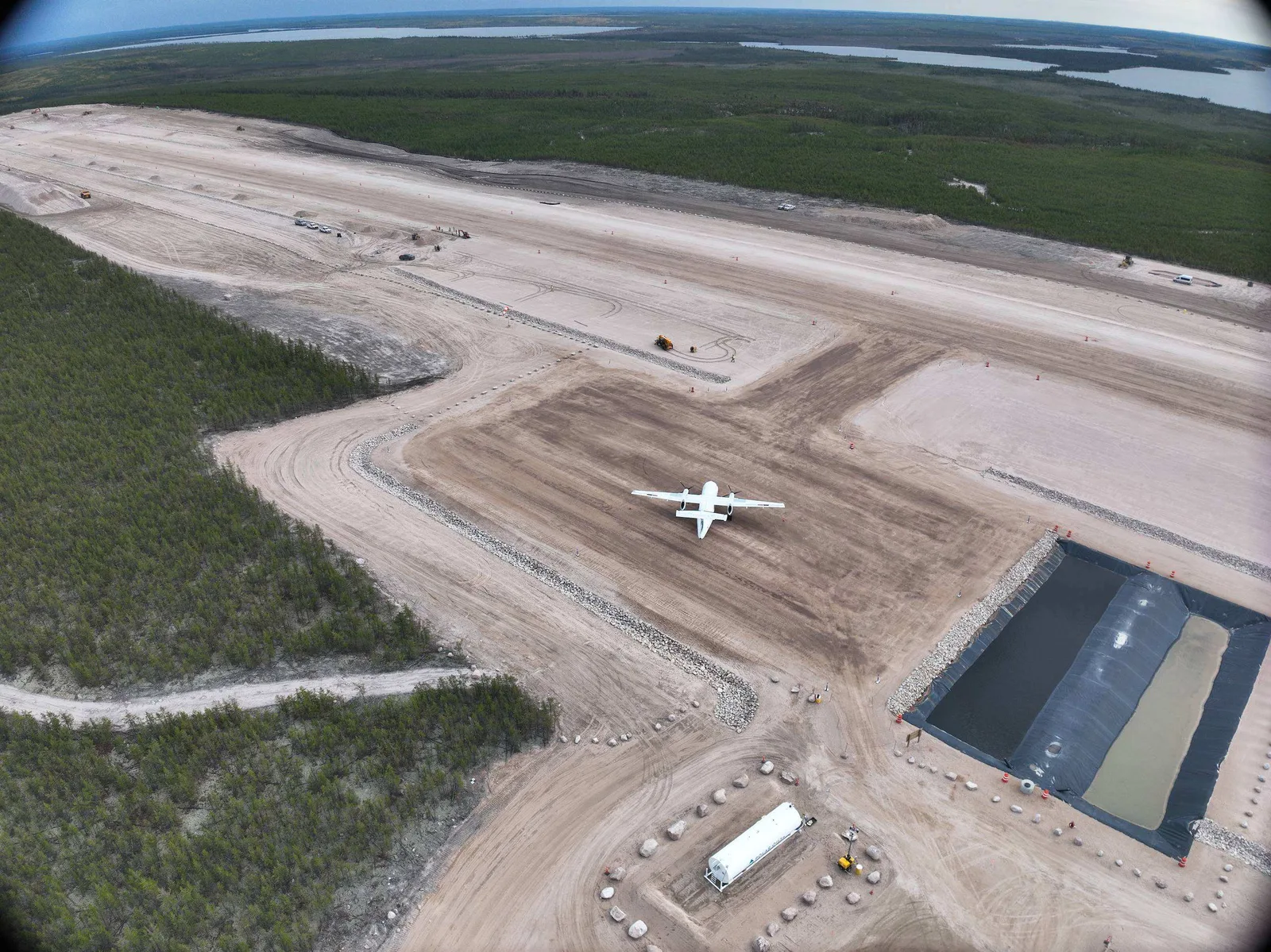
Other work is further along. Site civil work was about 47% complete at the end of October, the main access road from Highway 914 is in use, and the airstrip is targeted to open before the end of 2026, weather permitting. Energisation of the substation is forecast for the first quarter of 2027. Of 129 procurement and construction packages, 99 had been awarded by 30 September.
A profit on paper and a smaller cash pile
Denison reported third-quarter net income of C$81.8 million, or C$0.09 a share, against a net loss of C$135.0 million a year earlier. The swing came mostly from a non-cash gain of C$110.8 million as the value of the conversion features on its US$345 million convertible notes fell; that value moves with Denison's share price. Over nine months the company recorded a net loss of C$7.5 million. Revenue, which comes from toll milling of Cigar Lake ore at the McClean Lake mill, was C$1.0 million in the quarter.
Cash and equivalents fell to C$362.7 million at 30 September from C$465.9 million at the end of 2025. Denison also held 950,000 pounds of physical uranium valued at C$121.0 million, plus 182,004 pounds of concentrate inventory. It sold 750,000 pounds in the second quarter at an average of US$89.17 a pound, and has committed 600,000 pounds for delivery between the fourth quarter of 2026 and the second quarter of 2027. Prices are fixed on 350,000 of those pounds, for expected proceeds of US$33.3 million.
Contracts and exploration
Including near-term deliveries, Denison has firm sales commitments for more than 8 million pounds of uranium and is in advanced talks on more than 5 million pounds more. Most of that volume is due after 2028 from Phoenix output, and most is priced on a market-related basis.
At Phoenix North, drilling in October returned 0.67% eU3O8 over 2.5 metres in hole WR-868, and mineralisation now spans more than 100 metres of strike. Drilling continues into the fourth quarter.
The risks
Until Phoenix produces, Denison earns only small toll-milling revenue, so the build is funded from cash, uranium sales and the convertible notes. The company itself notes that its completion estimates can shift with contractor and labour availability and weather, and the slow start to freeze drilling shows how one critical task can move a schedule. Further cost increases or a weaker uranium price would put pressure on that funding mix, and with 905.4 million shares in issue, any new equity raise would dilute existing holders.