France's government presented its 2027 budget on Thursday, asking for about €54 billion of savings to bring the public deficit down from an expected 5.4 percent of GDP this year to 5 percent next year. It does so with public debt at a record 119 percent of output and no majority in parliament to pass the plan.
The government's presentation of Prime Minister Sébastien Lecornu's draft finance bill cites €43 billion of new corrective measures, alongside roughly €12 billion from 2026 measures that ramp up in 2027. Lecornu had flagged the size of the effort in a 17 September interview with Le Figaro, warning that without cuts next year's deficit could reach about 6.5 percent of GDP.
The arithmetic is tight. Lecornu has said the country must find around €10 billion more next year just to cover the cost of its debt, pointing to the geopolitical context and rising interest rates, which means a large share of the savings is absorbed before it reaches the deficit.
France's 2027 budget in three numbers
- €54bn total savings effort for 2027
- 5% deficit target, down from 5.4% in 2026
- 119% public debt as a share of GDP
Public pay, housing aid and pensioners carry the load
The bill freezes the index point that sets civil-service pay, and it freezes the personal housing benefit known as APL, which supports tenants on lower incomes. Retirees will pay about €5.5 billion more, according to Euronews' reading of the plan. Options aired before the launch included limiting pension indexation and trimming the 10 percent tax allowance that pensioners can claim.
Income tax rates are left alone. David Amiel, the minister for public accounts, said the government was not touching income tax, and the bill instead targets the unearned income of the wealthiest households. Taxes on motorway and airport operators rise, bringing in an extra €800 million for the state, and some student support is restricted for families on higher incomes.
For households, the freezes matter more than the headline figure. With Insee expecting consumer prices to be 3 percent higher in September than a year earlier, a pay or benefit freeze is a real-terms cut for public employees and tenants who rely on housing aid.

A growth forecast the fiscal watchdog calls optimistic
The plan assumes the economy grows 1 percent in 2027, up from 0.5 percent this year. That is above the Banque de France's 0.9 percent and the OFCE think tank's 0.7 percent. The High Council of Public Finances, France's fiscal watchdog, described the growth assumption as optimistic and the text as full of uncertainties.
The government itself acknowledged major uncertainties, notably those linked to the situation in the Middle East, where the war with Iran has pushed up energy prices across Europe. It hopes inflation will fall below 2 percent in 2027.
Economists also doubt the debt ratio will turn. François Facchini, an economics professor at Paris 1 Panthéon-Sorbonne University, expects it to climb above 120 percent of GDP next year. France last balanced its budget in 1973, and its debt has stayed above 90 percent of GDP since 2008.
Bond investors are watching every line
The budget arrives in a nervous market. France's 10-year borrowing cost rose to 4.94 percent on Thursday morning, its highest level since 2002, as a global sell-off in government bonds met renewed doubts about Paris' public finances.
That matters well beyond France. A wider gap between French and German yields raises borrowing costs for French banks, companies and mortgage holders, and it tests how much fiscal slippage investors will tolerate in the euro area's second-largest economy.
Jérôme Mathis, an economics professor at Paris-Dauphine University, set out three tests for credibility: whether the €54 billion of savings can last, whether the deficit before interest payments improves, and whether the economic assumptions hold.
No majority, and a fight ahead in parliament
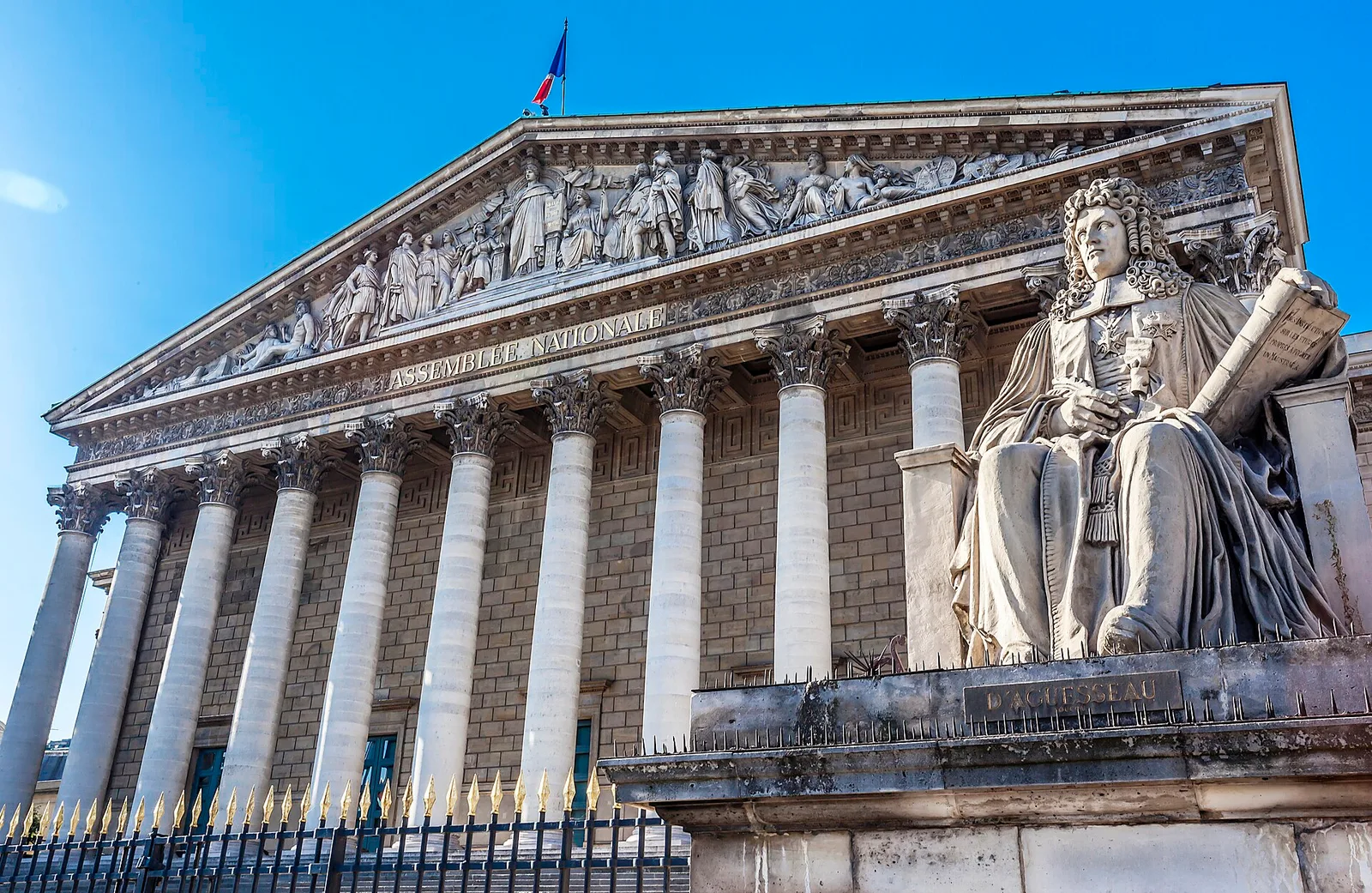
The bill has to be tabled at the National Assembly by 6 October, and its passage is far from assured. The government lacks a clear majority, and left-wing parties and trade unions accuse it of imposing austerity. Unions had called strike action before the presentation in protest at the public-sector pay freeze, and the Greens have promised to try to censure the text.
Arthur Delaporte, spokesperson for the Socialist Party, called the budget a "bitter austerity potion" and said it contradicted Lecornu's promise of compromise. Jérémie Peloso, chief strategist for Europe at BCA Research, expects long negotiations between the government, the Assembly and the Senate that could run into the first half of 2027.
The politics will only get harder. Debt rose to records during President Emmanuel Macron's two terms, and the public finances are set to be a central issue in next spring's presidential election.