The German government more than doubled its growth forecast for 2026 on Thursday, to 1.3 percent from 0.5 percent in April, saying exports and demand linked to AI data centres had helped Europe's largest economy withstand the energy shock from the Iran war.
Economy Minister Katherina Reiche also raised the 2027 forecast to 1.1 percent from 0.9 percent, and pencilled in slower growth of 0.6 percent for 2028. The new 2026 figure brings the government into line with recent estimates from Germany's leading economic research institutes.
"The German economy proved more robust than projected in the spring," Reiche said.
What changed in Berlin's forecast
- 2026 growth raised to 1.3 percent, from 0.5 percent in April
- 2027 growth raised to 1.1 percent, from 0.9 percent; 2028 seen at 0.6 percent
- Exports now expected to grow 3.7 percent in 2026, after a 0.9 percent fall in 2025
- Inflation forecast at 2.7 percent on average in 2026 and 3.0 percent in 2027
Exports Do the Heavy Lifting
The upgrade rests mainly on foreign demand. After the war in the Middle East broke out, importers rushed to stockpile German-made steel, fertiliser and aluminium, fearing shortages. At the same time, the global boom in data-centre construction has lifted orders for German lasers, semiconductor-making machinery and cooling systems.
Higher public spending on defence and infrastructure is expected to support activity over the coming years. Reiche said the economy had been able to recover despite the closure of the Strait of Hormuz and despite tariffs, and pointed to the global wave of investment in artificial intelligence.
That is a notable shift for an economy that had stagnated for years under weak export demand, high energy costs, American tariffs and competition from China.

Factories Rebound in August
Fresh data from the statistics office Destatis, published on Wednesday, supported the more upbeat view. Production in industry rose 2.0 percent in August from July, after adjustment for seasonal and calendar effects, and was 2.3 percent higher than a year earlier. July's fall was revised slightly deeper, to 1.2 percent.
Construction did most of the work, with output up 9.3 percent on the month, and specialised building and finishing work up 13.1 percent. Machinery and equipment production climbed 5.3 percent. The car industry was the main drag, with output down 5.4 percent, which the industry association VDA partly put down to factory holidays concentrated in August.
Excluding energy and construction, industrial output rose a more modest 0.6 percent on the month and was 0.4 percent lower than a year earlier. Energy-intensive industries, such as chemicals and metals, remain under strain: their output fell 0.5 percent in August and was 2.1 percent below its level a year ago.
Orders Point to a Bumpier Road
The forward-looking picture is less clear. Figures released on Tuesday showed factory orders fell 10.6 percent in August, after a revised 3.2 percent rise in July. The slump came as large contracts for aircraft, ships, trains and military vehicles dropped out of the data. Stripping out those big-ticket orders, demand was almost flat, down 0.1 percent.
Large orders tend to swing the headline number from month to month, so economists look more closely at the underlying figure. A flat reading suggests demand is holding up rather than accelerating.
Prices Squeeze Households
The weak point is the consumer. German inflation reached 3.3 percent in September, its highest level in nearly three years, as higher energy costs pushed up prices across the economy. The ministry expects inflation to average 2.7 percent this year and rise to 3.0 percent in 2027.
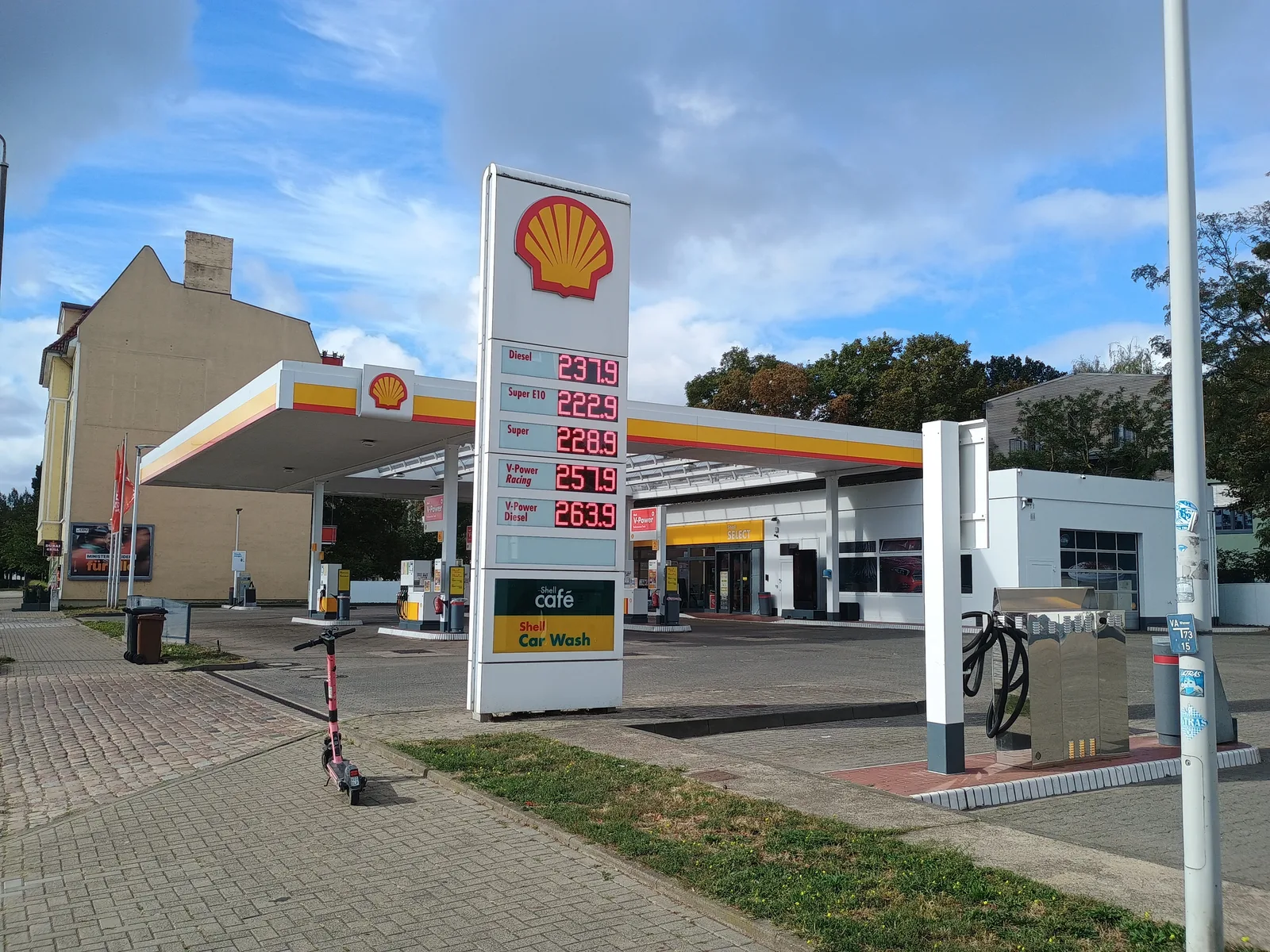
As a result, household spending is forecast to grow only 0.3 percent in real terms in 2026 and 0.5 percent in 2027. The government announced a temporary cut in fuel tax last week to relieve drivers facing higher pump prices.
The forecast assumes the energy shock does not deepen. With the Strait of Hormuz still disrupted and oil near $100 a barrel, the outlook for German growth depends as much on events in the Gulf as on decisions in Berlin. Chancellor Friedrich Merz's government also faces continued criticism that it has not done enough to revive the economy.