Christine Lagarde will leave the European Central Bank on 7 February 2027, about nine months early, starting a race to lead the institution that sets interest rates for 21 countries. Two other top posts open within months, so the ECB's leadership will be rebuilt almost in one go.
The ECB leadership change in numbers
- 7 Feb 2027 Lagarde's last day as president
- 3 of 6 Executive Board seats changing within five months
- 21 euro-area countries deciding the succession
Lagarde told the Governing Council and European Council President António Costa of her decision on Thursday, the same day the bank held its deposit rate at 2.50 percent. She has led the ECB since November 2019, and her eight-year term was due to run until the end of October 2027.
What follows is a political process, run by governments rather than by the bank. Here is how it works, who is in the frame and why it matters for anyone with a mortgage, savings or a bond portfolio in the euro area.
Why Lagarde Is Leaving Early
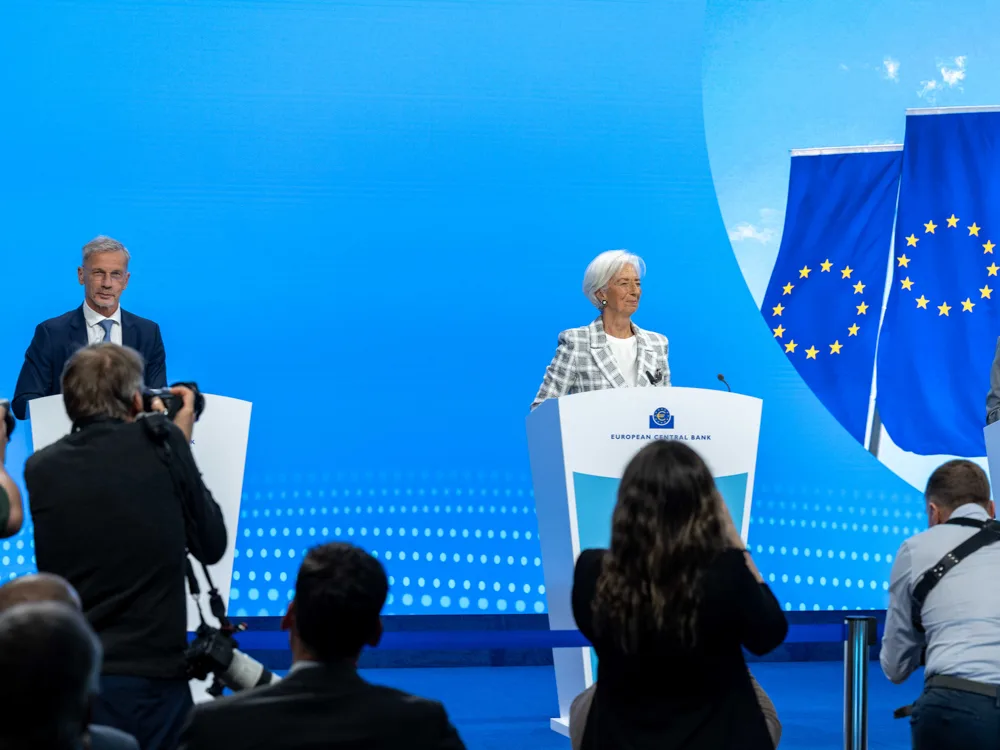
The ECB gave no formal reason. At her press conference, Lagarde said she wanted greater freedom to express her views and to engage in matters beyond monetary policy, and that she could not stay neutral about developments in France and the world.
The timing points to Paris. France holds a presidential election in April 2027. Emmanuel Macron cannot run for a third term, and the far-right Rassemblement National is polling strongly. Speculation that Lagarde wanted Macron and German Chancellor Friedrich Merz to oversee the choice of her successor before that vote had circulated since February, according to Euronews. A eurosceptic government in Paris could make the appointment far harder.
There is a precedent. François Villeroy de Galhau, governor of the Bank of France, announced his own early exit in February, reportedly for similar reasons.
Tributes followed quickly. Commission President Ursula von der Leyen thanked her for keeping the economy stable from the pandemic to Russia's war against Ukraine, Macron expressed his gratitude, and Eurogroup president Kyriakos Pierrakakis said her tenure had strengthened confidence in the euro.
Lagarde did not set out her next role. In February she called the chairmanship of the World Economic Forum one of several options, and in July she said she was not a candidate for anything.
How the Next President Is Chosen
The ECB president is not elected by central bankers. Under the EU treaties the post goes to a person of recognised standing and professional experience in monetary or banking matters, for a single eight-year term that cannot be renewed.
The appointment, step by step
- Euro-area finance ministers agree a recommendation for the post
- The European Parliament and the ECB's Governing Council are consulted
- The European Parliament's economic affairs committee hears the nominee
- EU leaders in the European Council make the appointment by qualified majority
- Only the 21 euro-area countries take part in the decision
The opinions of the Parliament and the Governing Council are not binding, so in practice the deal is struck between governments. Costa said the process "will be initiated today and will proceed without delay."
Speed is not guaranteed. When Lagarde was chosen in 2019, leaders nominated her in early July as part of a wider package of EU top jobs, and the formal appointment came in October. This time there is a fixed deadline: the new president needs to be in place by early February.
The Names in the Frame
Three names come up most often.
| Candidate | Role | Country | What is said about the bid |
|---|---|---|---|
| Pablo Hernández de Cos | General Manager of the Bank for International Settlements since 2025; former Bank of Spain governor | Spain | Madrid put him forward in July, Spain's first bid for the post |
| Klaas Knot | President of De Nederlandsche Bank, 2011 to 2025 | Netherlands | Seen as an inflation hawk turned consensus-builder |
| Joachim Nagel | President of the Deutsche Bundesbank | Germany | Germany has never held the ECB presidency |
Hernández de Cos has cross-party support at home. Alberto Núñez Feijóo, leader of Spain's main opposition party, backs him, and Feijóo's party leads most polls ahead of Spain's snap election next month.
Knot's case rests on experience and his reputation for building agreement inside the Governing Council. Lagarde herself has praised his ability to make people feel included. A Knot presidency would probably mean Frank Elderson, the Dutch member of the Executive Board, stepping aside, because countries usually hold no more than one seat.
Nagel would give Germany the top job for the first time. But Berlin is also expected to push to keep the market operations portfolio on the board, so its priorities across the whole package will shape his chances.
A Board Rebuilt in One Package
The presidency is only one of three vacancies. Isabel Schnabel, the German board member in charge of market operations, leaves on 3 January 2027 to join the International Monetary Fund. Chief economist Philip Lane's term ends on 31 May 2027. That means half of the six-member Executive Board changes within five months.
Today the board consists of Lagarde as president, Boris Vujčić of Croatia as vice-president, and Piero Cipollone, Frank Elderson, Philip Lane and Isabel Schnabel. By the end of May 2027, three of those six chairs will have new occupants.
The three posts are expected to be negotiated as a package, which makes the contest less about any single candidate and more about the balance between countries.
- Germany is expected to push to keep the market operations portfolio held by Schnabel.
- France is widely expected to aim for the chief economist role rather than a third French president.
- Spain wants a seat back after losing one when the vice-presidency held by Luis de Guindos passed to Croatia's Boris Vujčić this year.
- Italy, like France and Germany, has long held a board seat, currently filled by Piero Cipollone.
The French calculation is the most closely watched. Carsten Brzeski, global head of macro at ING, told Euronews in February that Paris was unlikely to try for a third French president, given that Jean-Claude Trichet and Lagarde have both held the job. Aiming for the chief economist post would give France a strong voice on policy without a fight over the top seat.
The deadline for candidates for Schnabel's seat has already been pushed back to 27 November, a Eurogroup spokesperson confirmed to media.

What a New President Means for Rates
Interest-rate decisions are collective. They are taken by the Governing Council, made up of the six Executive Board members and the governors of the national central banks. But the president chairs those meetings, shapes the debate and speaks for the bank, and markets read a great deal into who holds the job.
The successor will take over in a difficult spot. The ECB has raised its deposit rate twice this year, to 2.50 percent, and held it there on Thursday. Euro-area inflation reached 3.8 percent in September, driven by energy prices that were almost 19 percent higher than a year earlier, and the bank warned that a larger and longer energy shock is likely to push inflation up and growth down.
A president seen as hawkish, more focused on bringing inflation down quickly, would tend to support the euro and push up short-term bond yields. A more dovish choice, more worried about growth and debt, would point the other way. With French government borrowing costs already under pressure, the new president's stance on bond-market stress will be watched as closely as their view on rates.
The timetable matters too. If leaders agree a package quickly, markets get clarity well before February. If the talks drag into the French election campaign, the uncertainty Lagarde's early exit was meant to avoid could return.