Carrefour cut its 2026 profit, cash flow and investment targets on Tuesday after riots and looting hit dozens of its French stores. The grocer put the total cost to operating income at between €80 million and €200 million, depending on how long the unrest lasts.
The French grocer now expects adjusted earnings per share to be stable or only slightly higher this year. Before the weekend's violence it had guided for growth in the high single digits. It also expects free cash flow to decline slightly compared with 2025.
The warning makes Carrefour one of the first large companies to put a figure on the unrest that followed nationwide protests on Saturday 17 October.
From High Single-Digit Growth to Flat
The revisions touch almost every line of the outlook. Carrefour still expects recurring operating income to grow, but by less, and it is trimming investment in France.
| 2026 target | Previous guidance | New guidance |
|---|---|---|
| Adjusted EPS | High single-digit growth | Stable to slight growth |
| Net free cash flow | Modest growth | Slight decline vs 2025 |
| Operating margin | Up about 25 basis points | Up 0 to 15 basis points |
| Capital spending | €1.7 billion | €1.6 billion |
Finance chief Matthieu Malige said the direct costs, covering stolen or destroyed goods, damaged stores and equipment and closed sites, would run to several tens of millions of euros. Extra security, including external guards, adds to the bill.
Malige said the impact would continue in the coming weeks, because some stores have to close earlier under local curfews, and described a new situation of deep uncertainty for customers. The width of the range for the total hit, from €80 million to €200 million, reflects that uncertainty, with disruption landing at the start of the most important trading stretch of the year.
Around 50 Stores Hit on the First Day
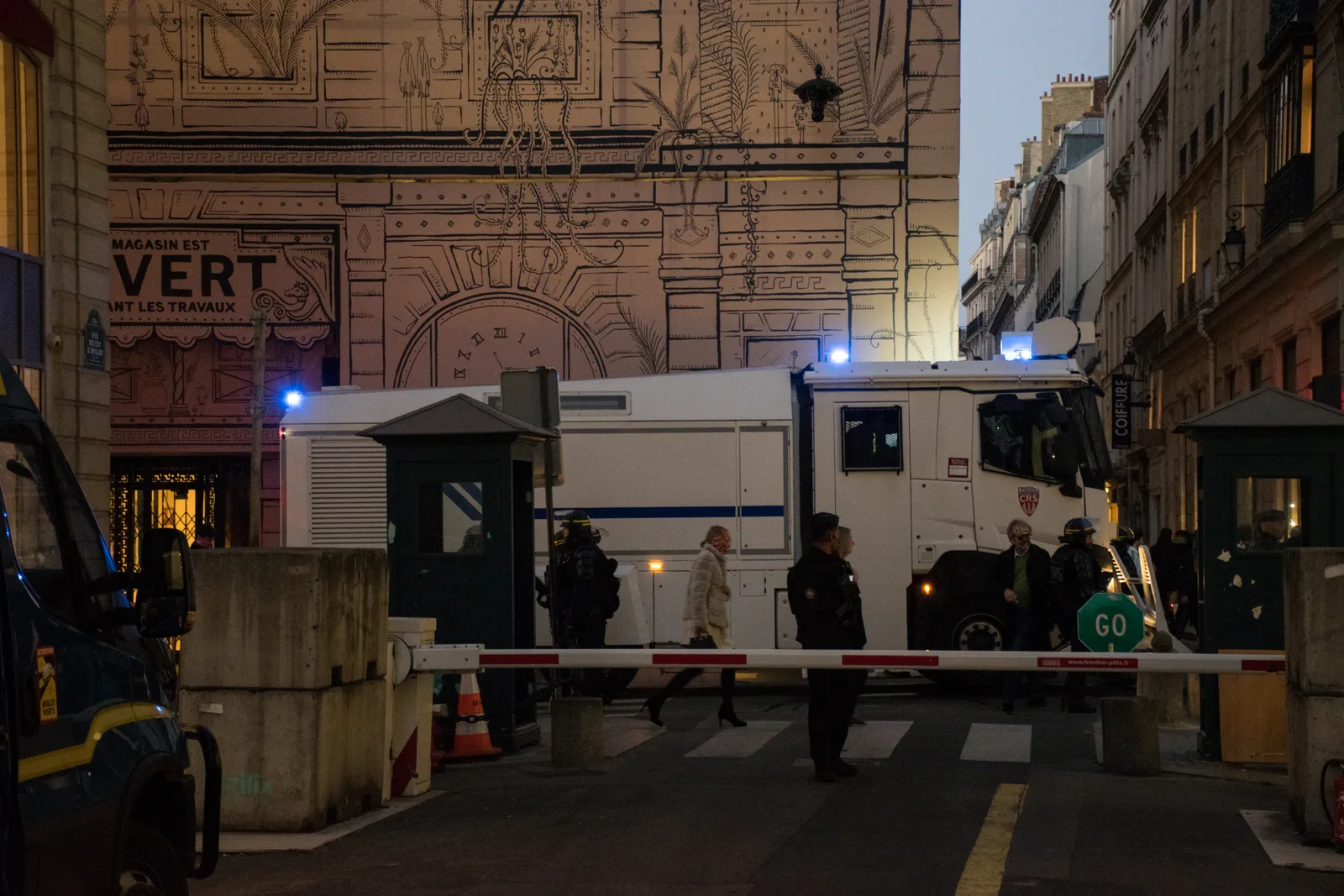
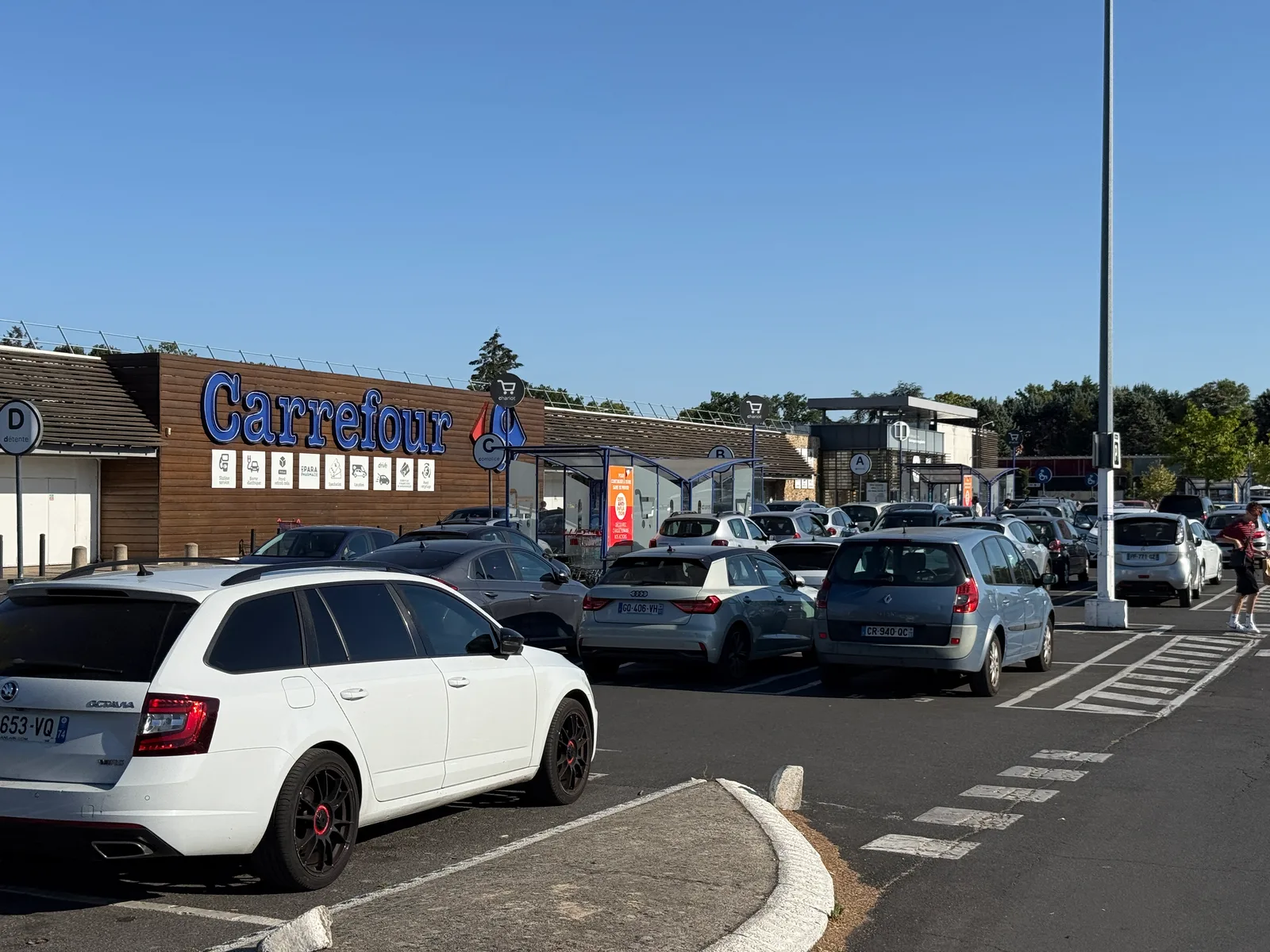
Chief executive Alexandre Bompard said Carrefour had been directly and strongly affected. About 50 of its stores were hit on the first day of the riots, and many of them were looted. "The damage is considerable," he said.
Many more stores closed in anticipation of trouble, including on Sunday and Monday, and some are now shutting early because of local curfews. The company said it is helping staff reopen sites once it is safe to do so.
The damage goes well beyond one retailer. Riots, looting and curfews spread across France over the weekend. In Paris alone, shared-mobility operator Dott said about 300 of its electric bikes were destroyed and 120 badly damaged during Saturday's protests.
A Solid Quarter Overshadowed
The outlook cut buried an otherwise respectable trading update. Like-for-like sales rose 2.3 percent in the third quarter, ahead of the 2.1 percent consensus compiled by the company and an improvement on 1.9 percent in the second quarter. Group sales reached €22.7 billion.
In France, like-for-like sales grew 1.2 percent, helped by price cuts and the continued integration of Cora stores. Brazil also contributed to the stronger quarter.
The problem is timing. The unrest arrived just as the fourth quarter began, the period that includes Black Friday and Christmas, which Carrefour had been preparing for. French consumer confidence was already weak because of high fuel prices, and curfews and closures now cut footfall further.
The backdrop for French shoppers is difficult. Consumer prices in France rose 3.4 percent in the year to September, the highest rate since January 2024, driven mainly by energy and food.
Protests on 24 October Are the Next Test
Bompard said he hoped security would be better for the next round of protests, planned for Saturday 24 October, but expected a hit to business regardless.
That date now matters for the guidance. A second weekend of looting, or a longer run of curfews into November, would add to the bill and put pressure on the recurring operating income growth Carrefour has kept in its targets.
For investors, the update shows how a domestic social crisis can hit a company whose core market is France. Carrefour's strategy rests on France, Brazil and Spain, but France remains its largest market and the place where the damage is concentrated.
How quickly curfews are lifted, and whether the next weekend passes peacefully, will decide where in the €80 million to €200 million range the final cost lands.