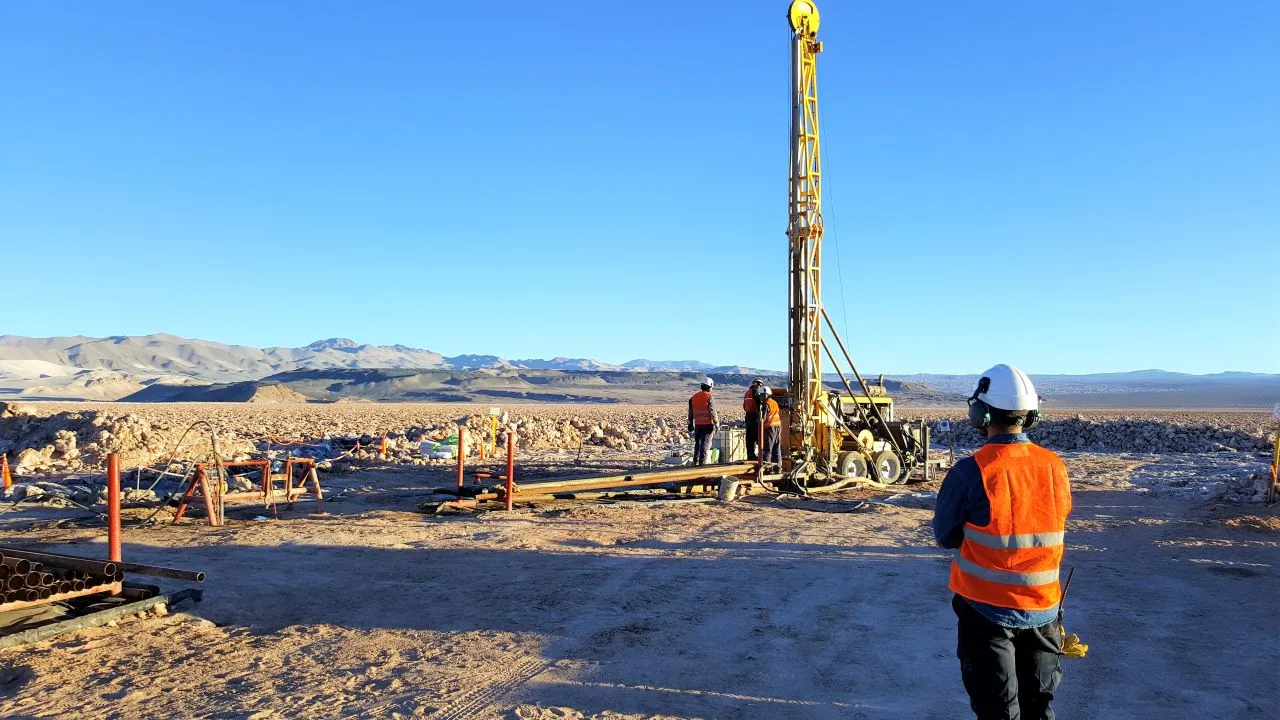
Lake Resources has received the main provincial environmental permit for its Kachi lithium brine project in Argentina. The approval lets the company start front-end engineering and apply for the country's incentive regime for large investments, but the money to build the project is still to be found.
Catamarca issues the Kachi declaration
Lake Resources, the Australian lithium developer whose shares also trade in the US on the OTCQX market, said on 29 September that the Catamarca Ministry of Mining had formally issued the Environmental Impact Declaration, known in Spanish as the DIA, for its Kachi project.
The declaration concludes the exploitation-stage environmental and social impact assessment for Kachi. Lake describes it as the primary environmental permit granted by the provincial authorities.
Kachi is a lithium brine project in Catamarca province in northwest Argentina. Its first phase is designed as a commercial plant with capacity for 25,000 tonnes a year of lithium carbonate equivalent (LCE), the standard measure for lithium output.
Chief executive David Dickson called the permit "the most important milestone in Lake Resources' and Kachi's history".
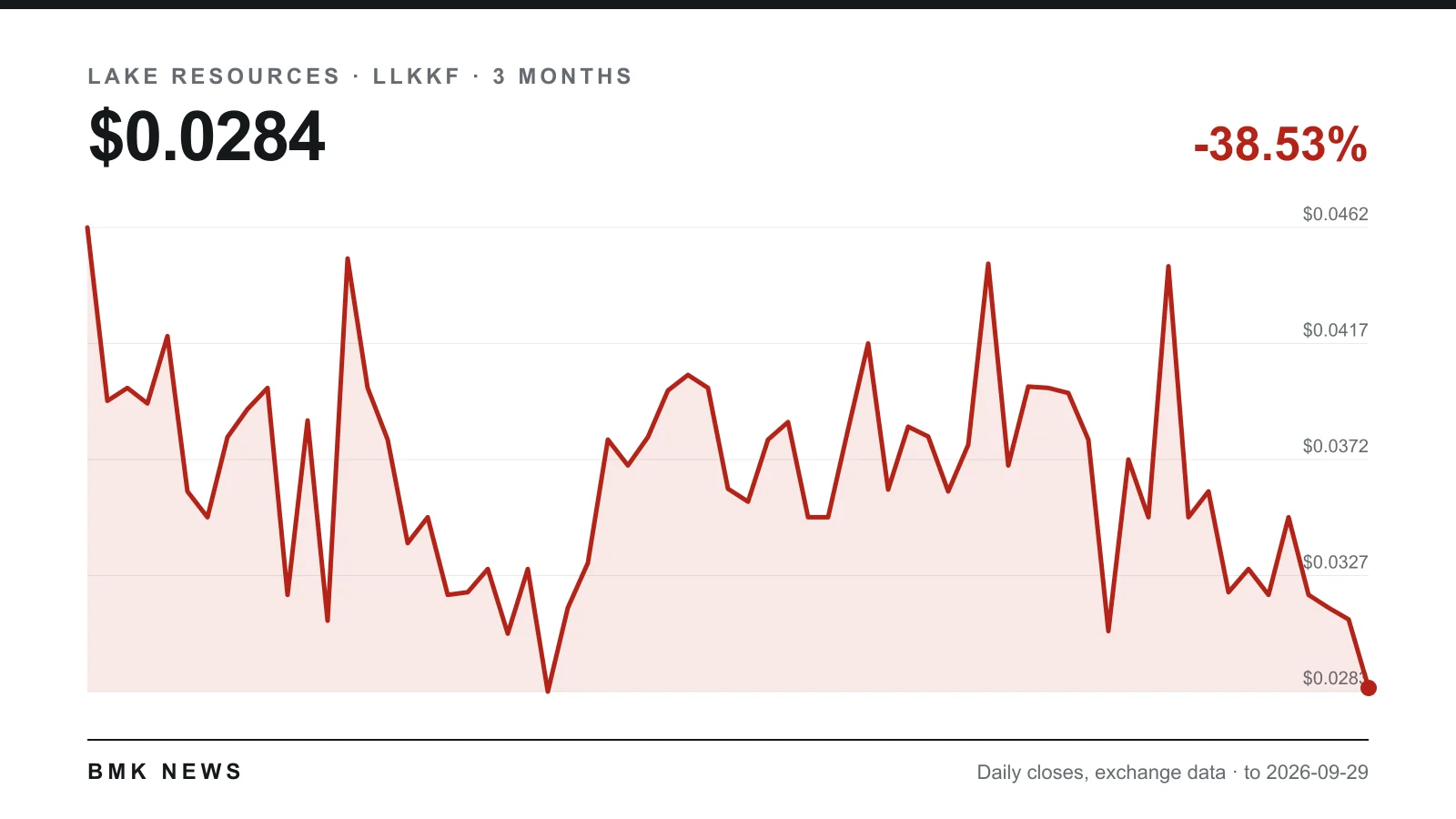
Lake Resources: share price, chart and news
What the permit requires
The Kachi permit in numbers
- 25,000 t a year of lithium carbonate equivalent planned for phase one
- US$1m committed to Catamarca's Mining Royalty Trust Fund
- 200 m surface exclusion zone around the lagoon shoreline
The DIA comes with obligations that Lake expects to meet before commercial operations begin.
The company has committed US$1m to the Mining Royalty Trust Fund of Catamarca, payable in instalments from October 2026 to June 2027. Lake expects the money to support provincial infrastructure that benefits local communities.
The provincial environment and mining ministries also wrote a 200-metre surface exclusion zone around the lagoon shoreline into the declaration. The zone marks the boundary between project activities and the lagoon ecosystem.
Lake said it is preparing an updated mineral resource estimate to reflect the zone. Based on current estimates, it does not expect the change to affect the existing ore reserve or the wellfield plan behind the planned production profile. The company had already flagged the exclusion zone in its annual report, lodged on 23 September.
Next steps: engineering and the RIGI application
With the permit in hand, Lake is moving Kachi into front-end engineering design, or FEED. The company calls this the final engineering step before a final investment decision.
The FEED work will refine the civil, structural, mechanical and electrical engineering packages for phase one. It will also cover securing long-lead equipment, agreeing commercial terms with critical suppliers, planning early works and construction logistics, and preparing technical documents for lenders and offtakers. It builds on the project's definitive feasibility study, a later addendum, and work with engineering group Hatch and technology partner Lilac Solutions.
The declaration also allows Lake to finish and submit its application for Argentina's Régimen de Incentivo para Grandes Inversiones (RIGI), Argentina's incentive regime for large investments. Lake said the application is well advanced but gave no filing date.
What Lake says comes next
- Front-end engineering design for the 25,000-tonne first phase
- Submission of the RIGI application, with no date given
- Talks with export credit agencies, offtakers and strategic equity partners
Financing is the open question
The permit removes a major approval risk, but it does not pay for the plant. Lake has not announced a final investment decision, binding offtake contracts or project debt.
Citi and J.P. Morgan are the company's lead financial advisers. Lake said it is preparing materials for export credit agencies, prospective offtakers and strategic project equity partners, and that the permit strengthens its hand in commercial talks already under way.
The company has been funding itself by selling new shares. On 24 September, five days before the permit news, it announced a A$3.0m raise through its at-the-market share facility. Each such sale adds to the share count and dilutes existing holders, and a project of Kachi's size will need far more capital than a facility of that kind can supply.
Other risks remain. The RIGI application has not been filed or approved, the updated resource estimate is still being prepared, and the project's economics depend on lithium prices and on Argentina's economic and regulatory conditions. Lake said it will update the market as engineering, RIGI approval and financing milestones are reached.