US consumer prices rose 0.4 percent in August and annual inflation held at 3.4 percent, as a jump in petrol prices linked to the war with Iran kept pressure on the Federal Reserve. Traders moved to price a near-certain rate rise at next week's Fed meeting.
Petrol did the heavy lifting
The Bureau of Labor Statistics said on Friday that its consumer price index rose 0.4 percent from July, the largest monthly gain in three months, and 3.4 percent from a year earlier. Both readings matched forecasts, and the annual rate was unchanged from July.
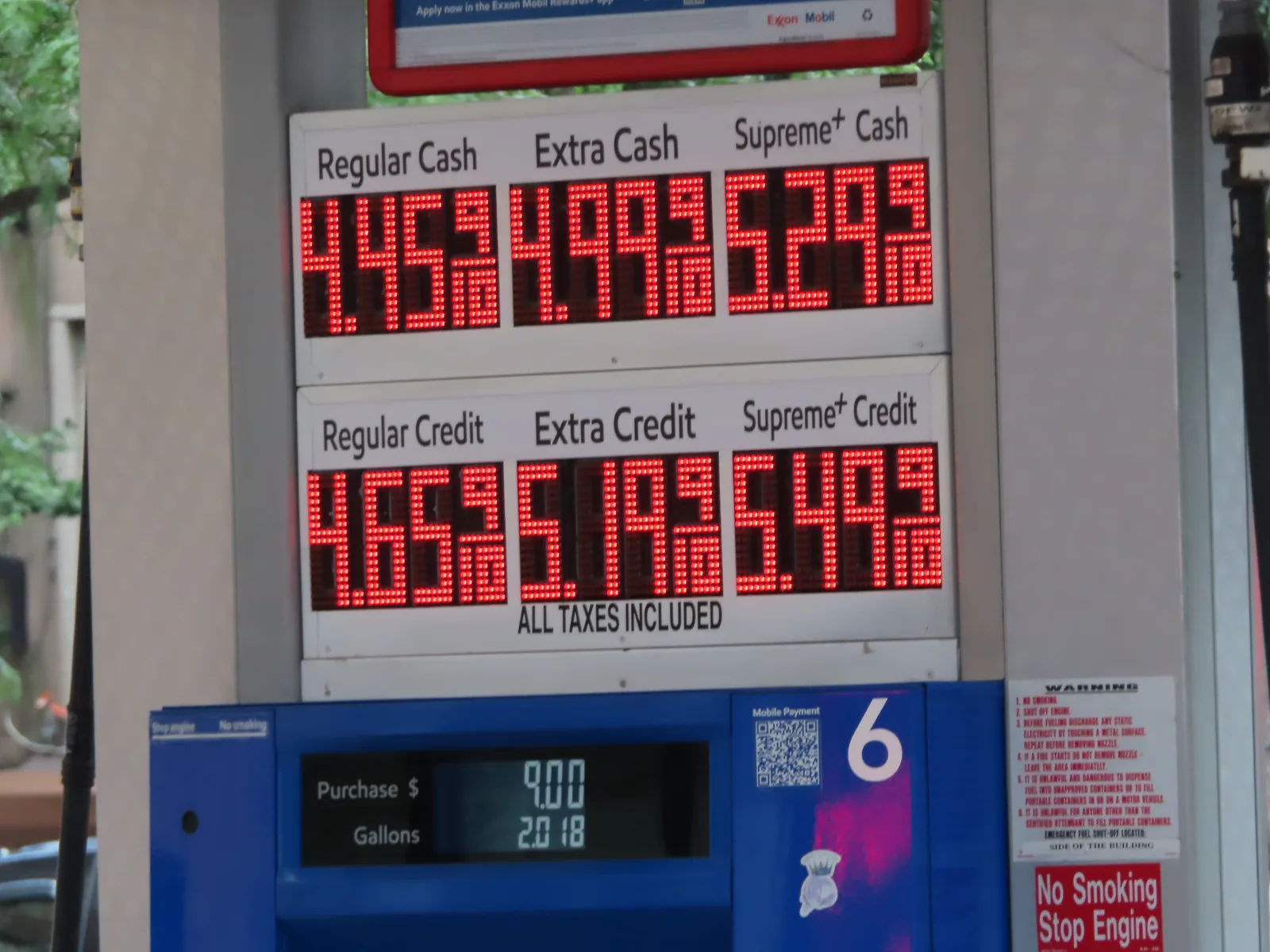
Gasoline was the main driver. Petrol prices rose 3.9 percent in the month and were 27.4 percent higher than a year earlier, up from an annual rate of 24.6 percent in July. That single item accounted for more than a third of the monthly increase. Fuel oil was 52 percent dearer than a year ago, against 39.1 percent in July.
Not every energy price rose. Electricity slipped 0.2 percent in August and natural gas 1.1 percent, which took some of the edge off the energy contribution.
US consumer prices, August
- 3.4% headline inflation, unchanged from July
- 2.4% core inflation, lowest since March 2021
- 27.4% annual rise in petrol prices
A hotter core than the annual rate suggests
Core inflation, which strips out food and energy, rose 0.3 percent on the month, above the 0.2 percent economists expected and up from 0.2 percent in July. The annual core rate eased to 2.4 percent from 2.5 percent, the lowest since March 2021.
The monthly figure is the one that worried investors. Airline fares jumped 2.7 percent in August, a category closely tied to jet fuel costs, while communication rose 2.3 percent, education 0.8 percent and used cars and trucks 0.4 percent.
Some of the stickiest components did cool. Shelter inflation, the largest single weight in the index, eased to 3.0 percent from 3.2 percent, and food inflation slowed to 2.7 percent from 3.0 percent.
Producer prices point to more pressure in the pipeline
A day earlier, figures for producer prices showed costs further up the supply chain rising faster. The producer price index for final demand rose 0.4 percent in August and 5.4 percent on the year. Energy prices at the producer level were up 4.2 percent on the month and 24.4 percent on the year.
Producer prices excluding food, energy and trade services rose 0.3 percent on the month, after 0.4 percent in July, and 4.7 percent on the year. Costs that businesses pay today tend to reach shoppers with a lag, which is why economists watch the gap between producer and consumer inflation.
| Measure, August | Monthly | Annual |
|---|---|---|
| Consumer prices, headline | 0.4% | 3.4% |
| Consumer prices, core | 0.3% | 2.4% |
| Producer prices, final demand | 0.4% | 5.4% |
| Producer prices, energy | 4.2% | 24.4% |
Markets lock in a September hike
After the report, the CME FedWatch tool implied odds of nearly 90 percent that the Fed will raise rates at its meeting on 15 and 16 September, up from 72 percent on Thursday, according to Reuters. Semafor reported that the probability of a quarter-point hike rose by more than 13 points on Friday morning alone. A stronger-than-expected jobs report earlier in the month had already pushed the market in that direction.
The Fed, chaired by Kevin Warsh, will also publish new economic projections at next week's meeting. At the Jackson Hole symposium in late August, Warsh offered no guidance on rates but said inflation remained above the 2 percent target and flagged rising commodity prices.
Bond markets had moved ahead of the data. The 10-year Treasury yield touched 4.95 percent on Thursday, according to the Associated Press, after reaching its highest level since 2023 a day earlier. Brent crude, which had climbed above $108 a barrel on Thursday, touched almost $110 in early trading on Friday, a four-month high.
Why it matters on this side of the Atlantic
The European Central Bank raised its own rates by a quarter point on Thursday, lifting the deposit rate to 2.50 percent from 16 September, its second increase this year. A Fed hike a week later would mean both central banks tightening into the same oil shock.
Higher US yields tend to support the dollar and lift borrowing costs well beyond the United States. For European companies that sell into America, and for investors who hold dollar assets, the Fed's next steps matter almost as much as the ECB's. The next big test is the Fed's statement and projections on Wednesday, and the September inflation report next month.
Sources
- Trading Economics: US CPI Report Comes Broadly in Line with Forecasts
- Semafor: US inflation stayed hot in August, boosting odds of a rate hike
- If You Spent: Week in markets, Sept. 8 to 11, 2026
- Drawpie: Gold Price September 2026, Chart, Key Drivers and Investor Outlook
- European Central Bank: Key ECB interest rates