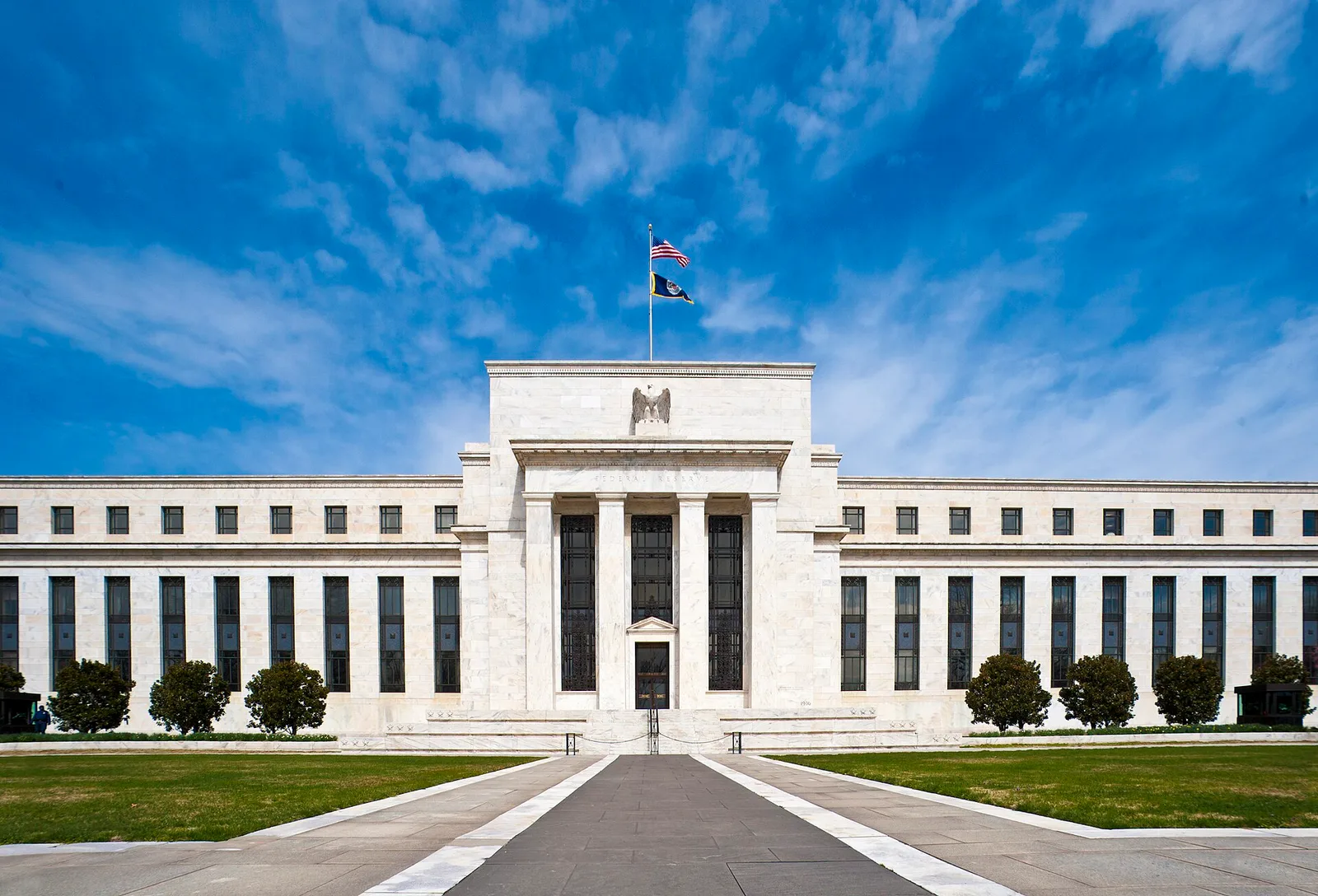
Fed rate hikes at each of the next three meetings are now the forecast at JPMorgan, BofA Global Research and Deutsche Bank. JPMorgan expects quarter-point rises in December, January and March, which would take the Federal Reserve's benchmark range from 3.75% to 4% today to 4.5% to 4.75% by spring and, if the current three-point gap holds, lift the prime rate behind most US credit cards to 7.75%. On Thursday, Fed Vice Chair Philip Jefferson added that the AI build-out is pushing up demand and inflation.
Three more quarter-point hikes, in numbers
- 4.5% to 4.75% Fed range after three quarter-point rises from 3.75% to 4%
- 22.36% average card rate on accounts charged interest, third quarter
- 7.46% average 30-year fixed mortgage rate on 18 November
Why JPMorgan, BofA and Deutsche Bank expect three more Fed hikes
JPMorgan said on Thursday 19 November that it now expects quarter-point increases in January and March 2027, on top of the December rise it had already pencilled in. Its strategists, led by Michael Feroli, framed the moves as a question of credibility. "These hikes aren't to deliver a bad labor market, but to preserve credibility when they have no compelling narrative for a pause," they said, according to Reuters. BofA Global Research and Deutsche Bank also expect a hike at each of the next three meetings.
The calls came a day after the minutes of the October meeting showed that almost all policymakers judged a higher rate "would likely be appropriate, in order to ensure a timely return of inflation to the 2 percent objective".
Traders agree on December. The CME FedWatch tool shows a near-certain quarter-point increase and an 8% chance of a half-point move, Reuters reported.
The Fed raised rates in September, then held at 3.75% to 4% on 28 October in a 10-2 vote, with Lisa Cook and Beth Hammack dissenting in favour of a quarter-point rise. The next meetings fall on 8 and 9 December, 26 and 27 January and 16 and 17 March, according to the Fed's calendar, which treats each date as tentative until the meeting before confirms it.
What Fed Vice Chair Jefferson said about AI and inflation
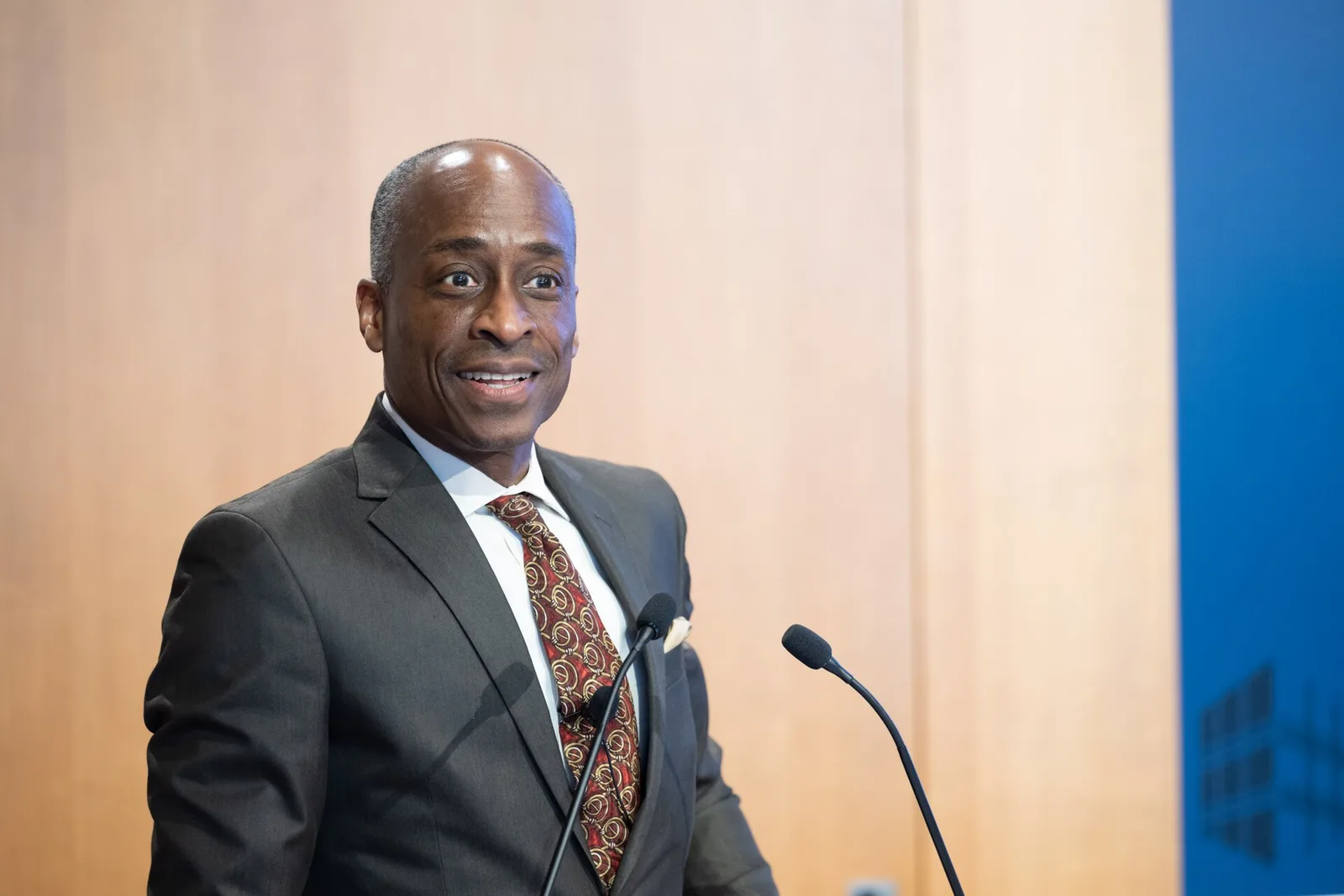
Speaking in Brasília on Thursday at a conference hosted by the International Monetary Fund and the Central Bank of Brazil, Jefferson described artificial intelligence as a shock that hits the economy on two different clocks. Spending on data centres and computing equipment is lifting demand now; any productivity payoff comes later. "Currently, the AI buildout is exerting upward pressure on demand and inflation," he said, adding that productivity gains "could exert downward pressure on inflation" in the future.
He also reminded his audience that US inflation was already above the 2% target when the recent energy price shock struck. "If inflation expectations risk becoming unanchored, a stronger reaction to inflation is warranted," he said, stressing that the views were his own. Fed Chair Kevin Warsh set out three scenarios for AI earlier this week, and the October minutes record that "many participants viewed the AI buildout as a material source of inflation risk".
How Fed rate hikes change US credit card rates
Floating-rate debt feels a hike first. The prime rate, which the Consumer Financial Protection Bureau describes as the benchmark most commercial banks use to set cardholders' annual percentage rate, stood at 7.00% on Tuesday 17 November, exactly three points above the top of the Fed's range, according to Fed data. If that gap holds, three quarter-point hikes take prime to 7.75%.
| Rate | Latest | After three quarter-point hikes |
|---|---|---|
| Fed funds target range | 3.75% to 4% | 4.5% to 4.75% |
| Bank prime loan rate | 7.00% | 7.75%, if the three-point gap holds |
| Card rate, accounts charged interest | 22.36% | about 23.11%, if passed on in full |
| 30-year fixed mortgage | 7.46% | no direct link to the Fed's rate |
At the Fed's third-quarter average of 22.36%, a $5,000 balance carried for a year costs about $1,118 in interest. Three-quarters of a point more adds roughly $37.50 a year.
Why US mortgage rates near 7.5% are not set by the Fed
Homeowners with a fixed-rate loan will not see their payment change at all. New buyers are a different story. Mortgage News Daily's index put the average 30-year fixed rate at 7.46% on Wednesday 18 November, 1.08 points higher than a year earlier. On a $400,000 loan, that works out to about $2,786 a month, against roughly $2,497 at the year-earlier level of about 6.38%: some $289 more.
The Fed does not set those rates directly. They track longer-term borrowing costs, and the 10-year Treasury yield was 5.10% on 17 November. Fed staff noted in the minutes that mortgage activity had fallen further with "the sharp rise in mortgage rates".
What higher Fed rates mean for US savings accounts
Savers could gain, but only if their bank passes the rises on. The FDIC's national averages, updated on Monday 16 November, show 0.39% on savings accounts, 0.64% on money market accounts and 1.81% on a 12-month certificate of deposit (CD). On $10,000, the average savings account earns about $39 a year.
Market rates already sit far higher. The effective federal funds rate was 3.88% and the three-month Treasury bill 4.15% on 17 November, according to Fed data. Banks set their own deposit rates, so a higher Fed range does not automatically reach a savings account. Readers in Europe and the UK can compare where the Fed, ECB and Bank of England stand before their December decisions.
Will the Fed raise interest rates in December 2026?
JPMorgan, BofA Global Research and Deutsche Bank all expect a rise at the meeting on 8 and 9 December 2026, and the CME FedWatch tool shows a quarter-point move as near certain, according to Reuters.
How much would three Fed rate hikes add to credit card interest?
About $37.50 a year on a $5,000 balance, if three quarter-point hikes pass in full to a card charging the Fed's third-quarter average of 22.36%.
Do Fed hikes raise fixed mortgage payments?
No, an existing fixed-rate mortgage keeps the same rate and payment. New 30-year fixed rates, about 7.46% on 18 November according to Mortgage News Daily, follow longer-term bond yields rather than the Fed's rate directly.
Sources
- Federal Reserve Board: Monetary Policy amid Frequent and Complex Shocks, speech by Vice Chair Philip N. Jefferson
- Federal Reserve Board: Minutes of the Federal Open Market Committee, October 27-28, 2026
- Federal Reserve Board: Federal Reserve issues FOMC statement, 28 October 2026
- Federal Reserve Board: Meeting calendars and information
- Federal Reserve Board: H.15 Selected Interest Rates
- Federal Reserve Board: G.19 Consumer Credit
- FDIC: National Rates and Rate Caps
- Mortgage News Daily: Mortgage Rates
- CFPB: Examining the factors driving high credit card interest rates
- The Standard (Reuters): JP Morgan sees Fed rate hikes at next three meetings as inflation persists