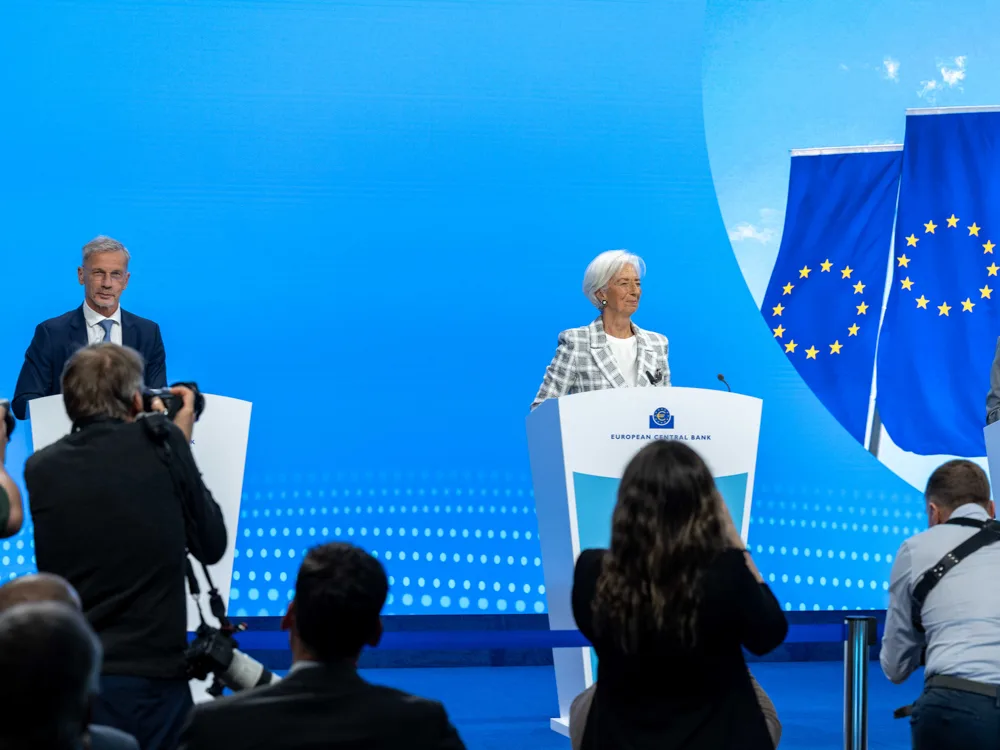
The European Central Bank raised interest rates for the second time this year on Thursday, lifting its deposit rate by a quarter point to 2.50 percent as the war in the Middle East keeps pushing up prices. It also raised its inflation forecasts for 2027 and 2028.
The Governing Council increased all three of its key rates by 25 basis points, with effect from 16 September. The main refinancing rate rises to 2.65 percent and the marginal lending rate to 2.90 percent. The move was widely expected by markets.
It is the second increase since the conflict between the United States and Iran began. The ECB first raised rates in June, taking the deposit rate to 2.25 percent from the 2.00 percent level it had held for a year. Thursday's move returns the deposit rate to where it stood in the spring of 2025, before the last steps of the previous cutting cycle.
ECB key rates from 16 September
- 2.50% deposit facility rate, up from 2.25%
- 2.65% main refinancing operations rate
- 2.90% marginal lending facility rate
Inflation seen well above target for longer
The decision rests on a new set of staff projections that show inflation staying above the ECB's 2 percent target for longer than the bank expected in June. "The conflict in the Middle East continues to generate inflation pressures," the Governing Council said in its statement, adding that inflation is set to stay well above target for an extended period.
Headline inflation is now projected to average 3.0 percent this year, unchanged from June, before slowing to 2.5 percent in 2027 and 2.1 percent in 2028. Both of the later figures were revised up. Core inflation, which strips out energy and food, is seen at 2.5 percent this year, 2.6 percent next year and 2.3 percent in 2028.
The rise in core inflation next year is the detail that matters most for policy. Energy prices feed directly into headline inflation, but central banks worry most when higher fuel and transport costs spread into wages and the price of services, which is what a core rate of 2.6 percent in 2027 implies.
| ECB staff projections, September 2026 | 2026 | 2027 | 2028 |
|---|---|---|---|
| Headline inflation | 3.0% | 2.5% | 2.1% |
| Core inflation (ex energy and food) | 2.5% | 2.6% | 2.3% |
| GDP growth | 0.9% | 1.4% | 1.5% |

Growth holds up better than feared
The ECB's staff also raised their growth forecasts. The euro area economy is now expected to grow 0.9 percent this year and 1.4 percent in 2027, both revised up, and 1.5 percent in 2028. The bank put the upgrade down mainly to the economy proving more resilient than it had expected.
That resilience is part of why the ECB felt able to tighten again. A central bank facing an energy shock usually has to weigh the risk of letting inflation become entrenched against the damage higher borrowing costs do to growth. With output holding up, the balance tilted towards acting on prices.
The outlook is still highly uncertain. The ECB said the risks to inflation are tilted to the upside and the risks to growth to the downside, and its staff prepared updated scenarios on the energy shock with different intensities and durations, including the risk of second-round effects on wages and prices.
No promise of more, but the door stays open
The bank repeated that it will decide meeting by meeting, based on the incoming data, and is not pre-committing to a particular rate path. That leaves markets to judge from the data whether a third increase follows at the next meeting on 29 October.
The ECB also said its Transmission Protection Instrument remains available to counter disorderly moves in bond markets that threaten the transmission of policy across the euro area. That is a signal aimed at the more indebted member states, whose borrowing costs tend to rise fastest when rates go up. Its bond portfolios under the APP and PEPP programmes continue to shrink as maturing securities are not replaced.
What higher rates mean for borrowers and savers
For households, the effect comes through quickly in countries where many mortgages track Euribor, the interbank rate that moves with ECB policy expectations, such as Spain, Portugal and Italy. Borrowers on variable rates there face higher monthly payments at their next reset, while fixed-rate offers across the euro area tend to follow longer-term bond yields.
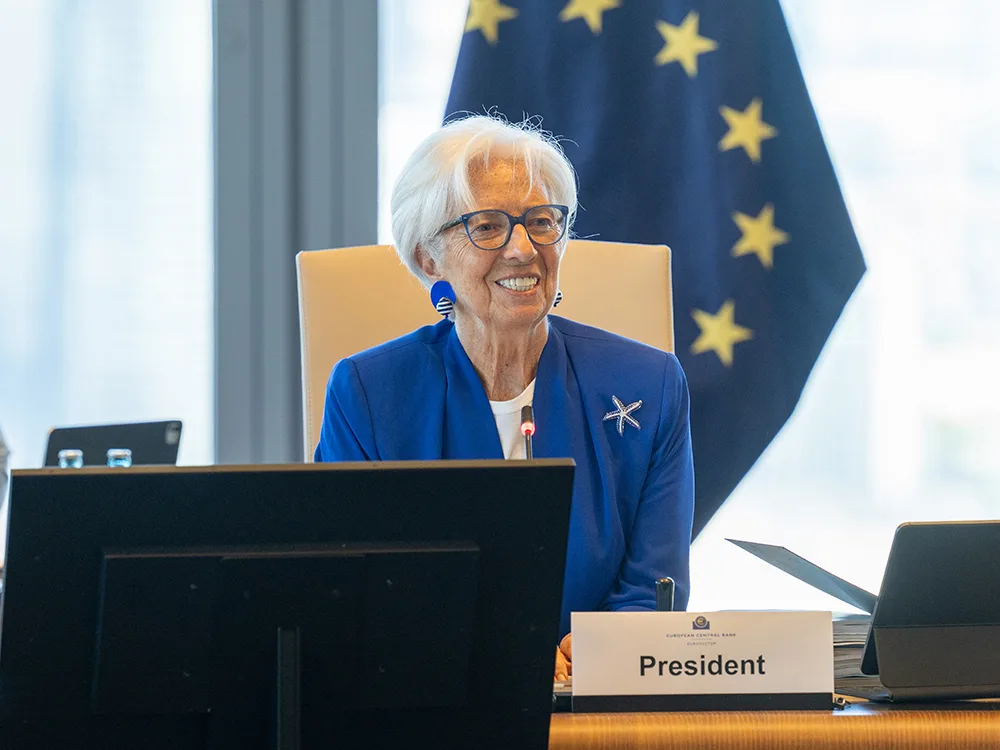
Savers stand to gain as banks pass on part of the increase to deposit rates, although that usually happens more slowly. President Christine Lagarde is due to explain the decision at a press conference in Frankfurt at 14:45.