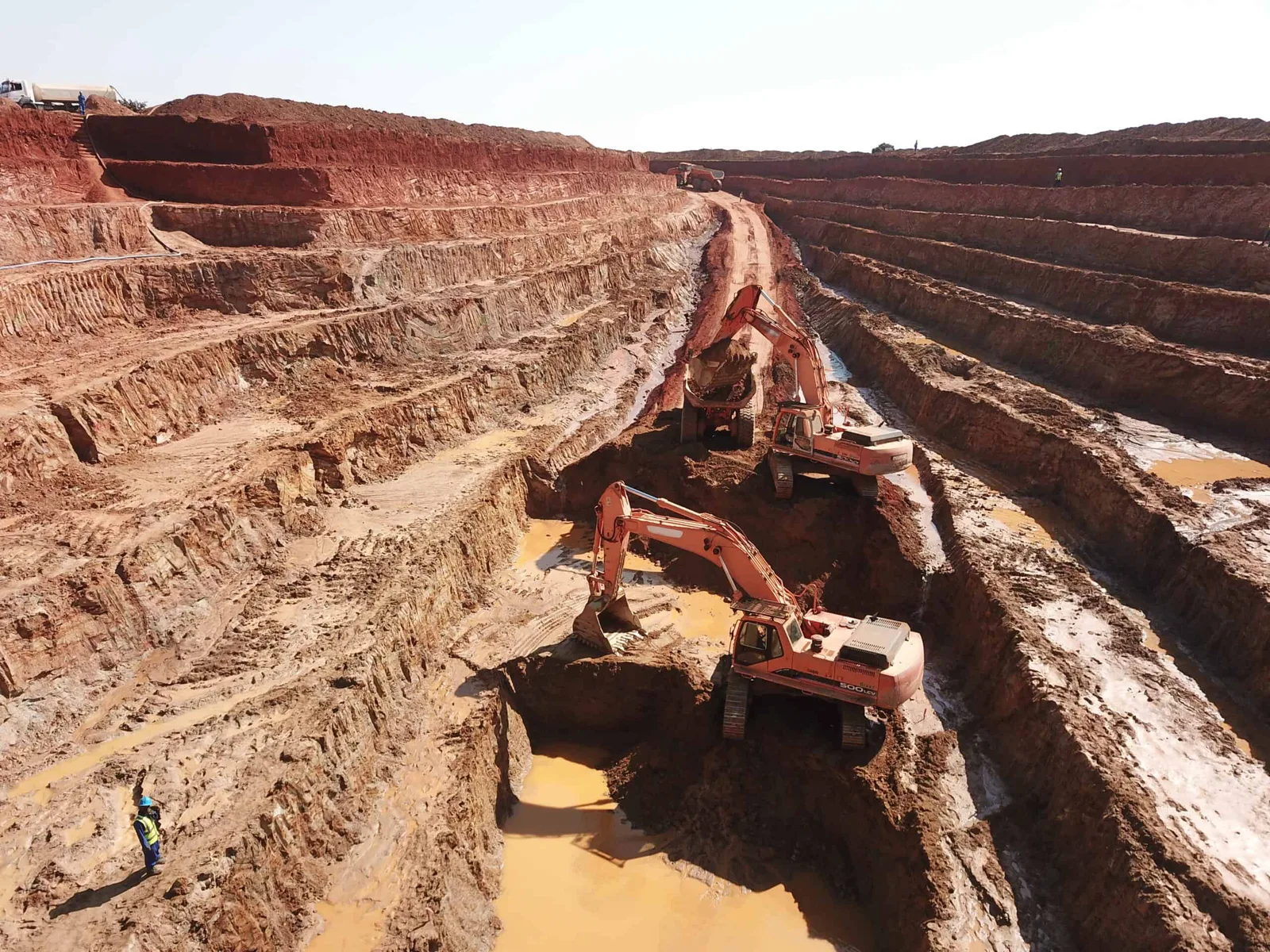
Sovereign Metals says its Kasiya project in Malawi could recover a rare earth concentrate rich in heavy rare earths as a by-product of its planned rutile and graphite mine. A scoping study puts the added pre-tax value at about US$722m for roughly US$29m of extra capital.
What the study found
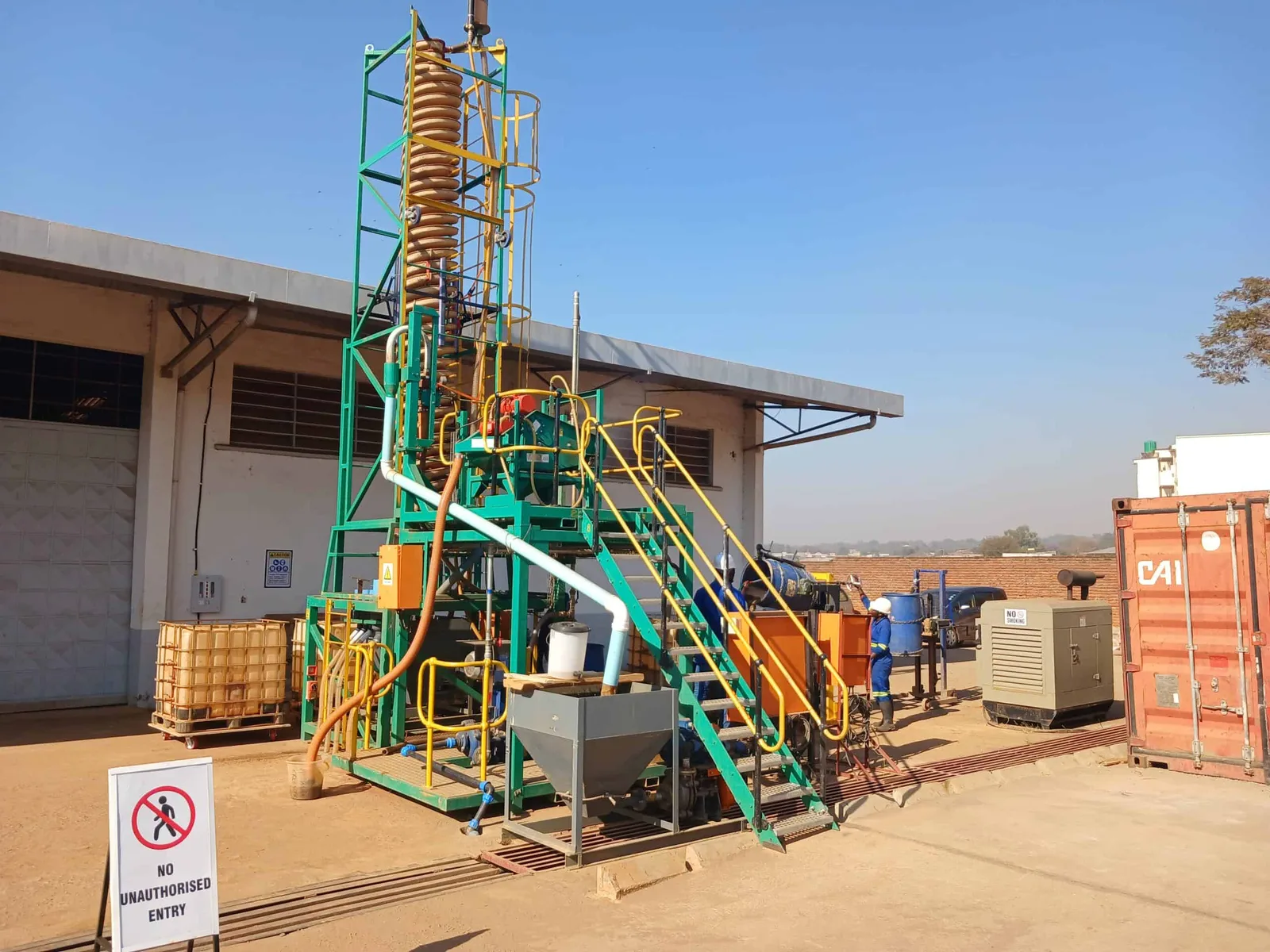
Sovereign Metals, listed in Sydney (SVM) and on London's AIM (SVML) and quoted on the OTCQX (SVMLF), published the scoping study on 9 September. It assesses recovering a monazite rare earth concentrate from a mineral stream that the plant in Kasiya's April 2026 definitive feasibility study (DFS) would already produce. No extra mining is involved. The company has renamed the project the Kasiya Critical Minerals Project.
At steady state the new circuit would make about 2,626 tonnes a year of concentrate containing 1,485 tonnes of total rare earth oxides. That includes about 310 tonnes of neodymium-praseodymium oxide, used in permanent magnets, 36 tonnes of dysprosium and terbium oxide and 193 tonnes of yttrium oxide. The study runs over 23 years, two fewer than the DFS, because more than half the plant feed in the final two years would come from Inferred resources.
Rare earth scoping study, base case
- US$722m incremental pre-tax NPV at 8%
- US$29m extra capital to first production
- 151% incremental pre-tax IRR
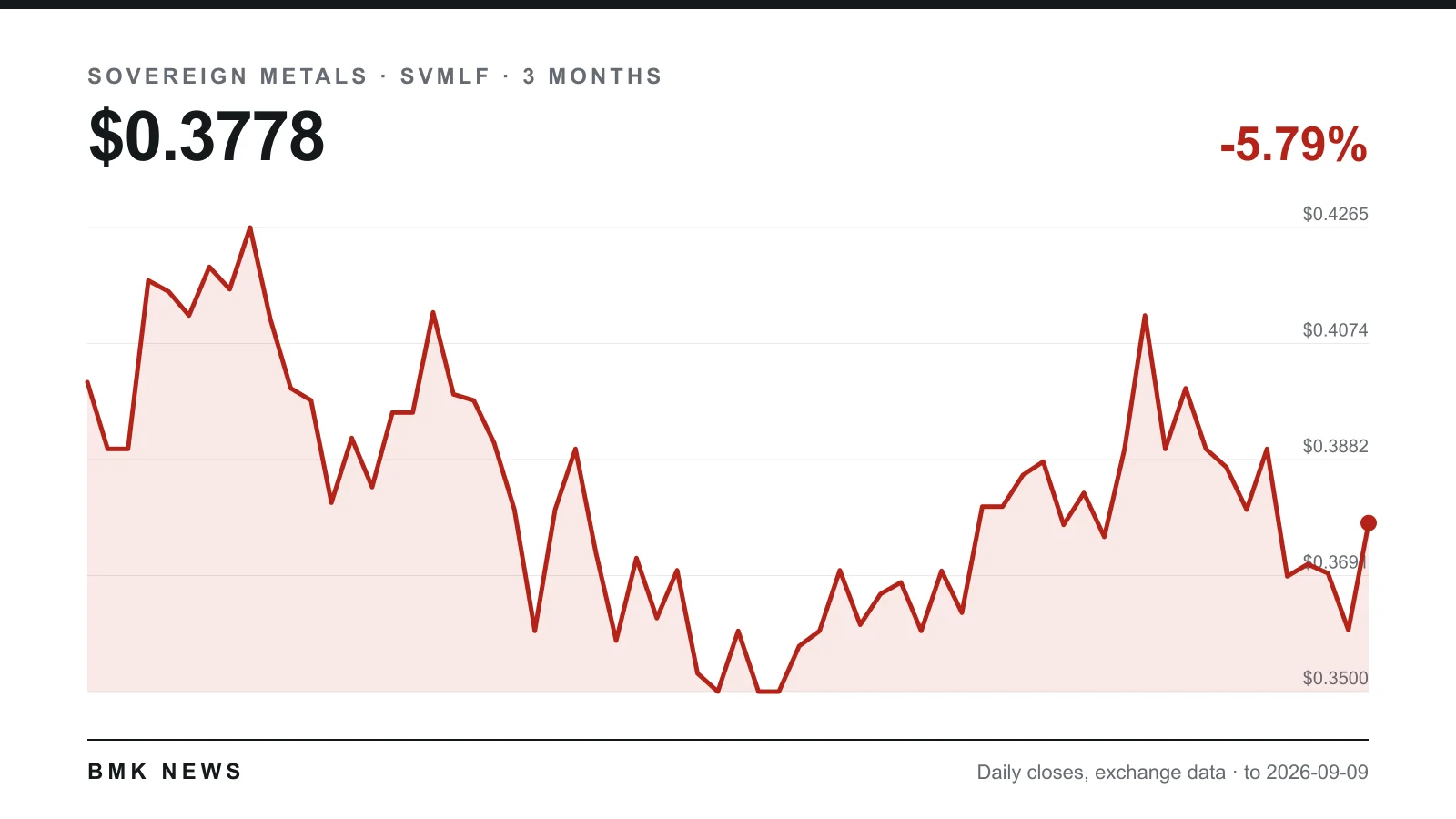
Sovereign Metals: share price, chart and news
The economics and their limits
The base case uses Argus rare earth price forecasts with 50% payability, giving a basket price of US$39.45 per kilogram of concentrate delivered to Texas. On that basis Sovereign estimates steady-state annual EBITDA of about US$84m and payback in about 1.5 years. A second case with 60% payability, meant to reflect value for supply from outside China, gives an NPV of US$883m. With the whole basket price 25% lower, the study still shows an NPV of US$521m.
The study is accurate only to plus or minus 30% and is not enough to support Ore Reserves for the new product. It assumes the rutile-graphite mine is funded and built broadly as scheduled. The concentrate contains naturally occurring thorium and uranium, so the study assumes radioactive-material (Class 7) controls for storage and transport, which still need approvals in Malawi and in Tanzania, whose port of Dar es Salaam is the planned export route for the concentrate.
Managing director Frank Eagar said "This Study shows the same resource can potentially deliver rare earths", and added that the company would take the results into talks with potential partners.
The main project still needs funding
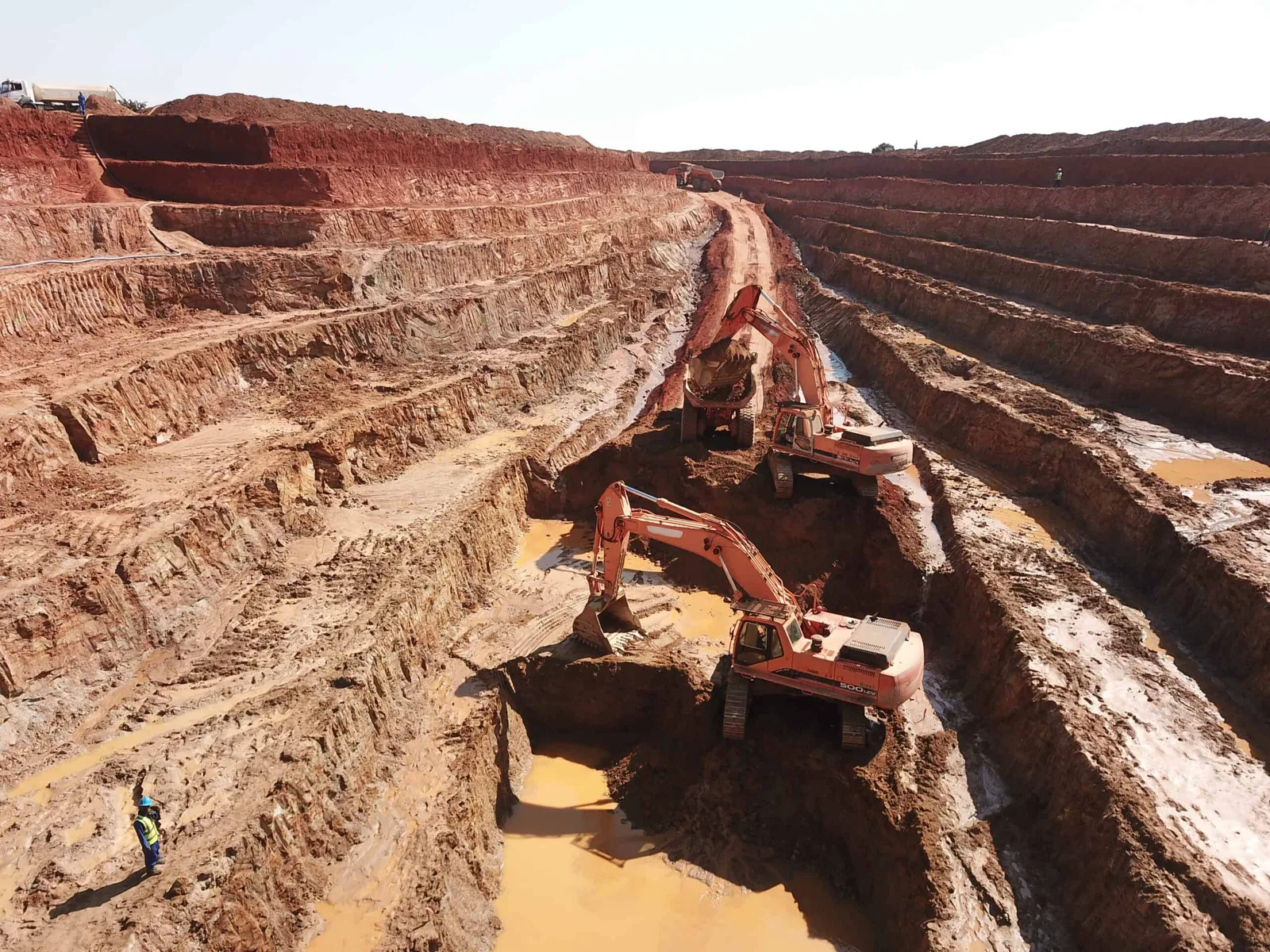
The DFS, released on 16 April 2026, describes a 25-year dry-mining operation about 30km north-west of Lilongwe. At steady state it would produce about 222,000 tonnes a year of natural rutile and 275,000 tonnes of natural flake graphite, exported by road and rail through the port of Nacala in Mozambique. It gives a pre-tax NPV at 8% of US$2.204bn and an IRR of 23.4%, with US$727m of Phase 1 capital and US$511m for a Phase 2 expansion. Sovereign puts the combined pre-tax NPV including rare earths at US$2.9bn.
Those figures compare with cash of about A$25.1m at 30 June 2026, unaudited at the time of the study. Sovereign states that more funding will likely be needed, that there is no certainty it can be raised and that new equity could dilute shareholders. It has a collaboration agreement with the International Finance Corporation focused on debt funding. In July, Rio Tinto said it would not take up its option to become operator, so Sovereign continues to run the project itself.
Permits, tax and next steps
Sovereign applied for a mining licence after the DFS, and the application covers rare earth oxides. It has not signed a Mine Development Agreement with Malawi's government, which would set fiscal terms. Under the 2023 Mines Act the state has a right to negotiate equity in large mines, and a proposed supernormal profits tax would raise the rate on profits above MWK 10bn from 30% to 40%.
Next, Sovereign plans variability testwork on the concentrate, marketing and offtake talks starting now, and a pre-feasibility study including rare earths in 2027.
Sources
- Sovereign Metals: Scoping Study Confirms Kasiya's Potential as a Globally Significant and Strategic Source of Critical Rare Earths (ASX, 9 September 2026)
- Sovereign Metals via Investegate: Scoping Study Shows Strategic Rare Earth Potential (RNS, 9 September 2026)
- Proactive Investors: Sovereign Metals advances US-focused critical minerals strategy for Kasiya (8 July 2026)